
About the Red-crowned Crane
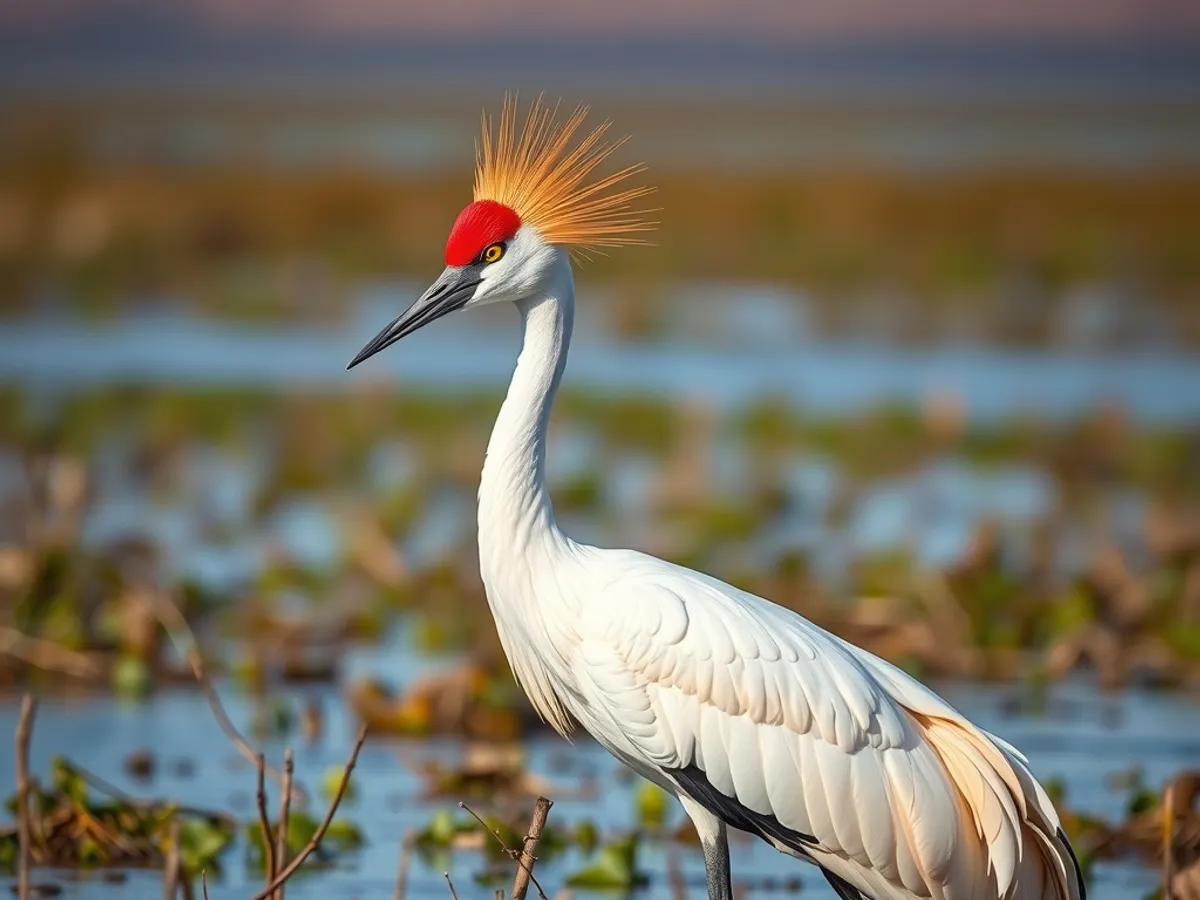
Grus japonensis is the second-rarest crane in the world, with roughly 3,000 birds left, and it exists in two populations with completely different behaviour. The mainland population breeds in the wetlands of the Amur basin on the Russia-China border and migrates south to the Korean Peninsula and coastal China, wintering in a shrinking patchwork of tidal flat and reedbed. The Japanese population, on Hokkaido, does not migrate at all: it was reduced to about 20 birds in the early twentieth century, rediscovered in the Kushiro marsh in 1924, and pulled back to over 1,500 by decades of winter feeding by local farmers, who scatter corn on the snow — which is why the iconic photographs of cranes dancing in a blizzard all come from a handful of feeding stations. The red crown is not feathers but bare skin, and it becomes brighter and can be expanded when the bird is excited, an unambiguous mood signal. Pairs perform a unison call, throwing their heads back and vocalising in a precisely coordinated duet, with the male's and female's notes interleaved at fixed intervals; the pattern is species-specific and is used to reinforce the pair bond and advertise territory. Cranes have an elongated trachea coiled into the sternum, which is what gives the call its penetrating, trumpeting resonance.
Fascinating facts
Spectacular Dancers
Red-crowned Cranes engage in elaborate courtship dances, involving coordinated leaps, flapping, and calls to strengthen pair bonds.
Wetland Dependence
They depend heavily on healthy wetlands for nesting and feeding, making them highly sensitive to habitat loss and environmental changes.
Cultural Symbol
Red-crowned Cranes are deeply embedded in East Asian folklore, symbolizing longevity, fidelity, and good fortune.
Detailed description
The Red-crowned Crane (Grus japonensis) is one of the largest and most elegant crane species, standing 150–158 cm (59–62 in) tall with a wingspan of 220–250 cm (7.2–8.2 ft) and weighing between 7–10 kg (15–22 lbs). Its plumage is predominantly snow-white, accentuated by black secondary wing feathers, a black neck, and a striking patch of bare red skin on the crown, which intensifies in color during social displays. The bill is long, straight, and olive-green to horn-colored, adapted for probing in mud and shallow water. Legs are long and black, facilitating wading in wetlands. Red-crowned Cranes are renowned for their elaborate courtship dances, involving synchronized leaps, bows, and calls, which reinforce pair bonds and social cohesion. These cranes are highly vocal, producing resonant, trumpeting calls that can carry over several kilometers. They are primarily diurnal, foraging during daylight hours and roosting in shallow water at night. Socially, they are monogamous, forming lifelong pair bonds, and often seen in small family groups or larger flocks during migration and wintering. Their lifespan in the wild can exceed 30 years, making them among the longest-lived of all bird species.
Did you know?
Despite their size, Red-crowned Cranes can fly long distances and migrate hundreds of kilometers between breeding and wintering grounds.
Research & sources
Wikipedia summary
The red-crowned crane, also called the Manchurian crane, is a large East Asian crane among the rarest cranes in the world. In some parts of its range, it is known as a symbol of luck, longevity, and fidelity.
Behaviour & social structure
Red-crowned Cranes exhibit complex social behaviors, especially during the breeding season when pairs engage in intricate duets and synchronized dances that serve both as courtship and territory defense. Outside the breeding season, they may form loose flocks, particularly at wintering grounds. Their daily routine includes early morning and late afternoon foraging, with midday periods spent preening, resting, or engaging in social interactions. Their omnivorous diet consists of aquatic invertebrates, fish, amphibians, small mammals, grains, and various plant materials, with dietary composition shifting seasonally and regionally. Foraging is typically done by slow, deliberate walking and probing in shallow water or mud. They are known for their vigilance and strong site fidelity, often returning to the same nesting and wintering sites year after year.
Reproduction & life cycle
Red-crowned Cranes are monogamous, with pairs forming long-term bonds that may last for life. The breeding season occurs from April to June, depending on latitude. Nests are large mounds of reeds and grasses built in shallow wetlands or marshes, often surrounded by water for protection. Females typically lay 1–2 eggs, with both parents sharing incubation duties over a period of 29–34 days. After hatching, both parents care for the chicks, which are precocial and leave the nest within a day but remain dependent for food and protection for several months. Fledging occurs at around 70–95 days, but juveniles may stay with parents through their first winter. Breeding success is closely tied to wetland quality and water levels.
Adaptations & survival
Red-crowned Cranes possess several adaptations for their wetland habitats, including long legs and toes for wading and stability on soft substrates, and a long, pointed bill for probing mud and capturing prey. Their white plumage provides camouflage against snowy or open wetland backgrounds, while the red crown is used in visual signaling during social and mating displays. They have a highly developed syrinx, enabling their powerful, far-carrying calls. Behavioral adaptations include strong territoriality during breeding and migratory flexibility, with some populations (notably in Hokkaido, Japan) becoming largely resident due to supplementary feeding by humans.
Cultural significance
Red-crowned Cranes hold profound cultural importance in East Asia, symbolizing longevity, fidelity, and good fortune in Japanese, Chinese, and Korean traditions. They feature prominently in art, literature, folklore, and religious iconography, often depicted as companions of immortals or as motifs in wedding ceremonies and New Year celebrations. In Japan, the crane (tsuru) is a national symbol, and origami cranes are believed to grant wishes and bring healing. Conservation efforts have benefited from this cultural reverence, with local communities and governments supporting habitat protection and crane festivals.
Recent research
Recent research has focused on the effects of climate change and habitat fragmentation on crane migration and breeding success. Satellite tracking has revealed distinct migratory routes and critical stopover sites, informing international conservation strategies. Studies on vocal communication have elucidated the role of duet calls in pair bonding and territory maintenance. Genetic analyses indicate low genetic diversity in some populations, raising concerns about inbreeding and resilience. Conservation programs in Japan and China have pioneered captive breeding, reintroduction, and community-based wetland management, with ongoing monitoring of population trends and habitat quality.
Videos
Habitat
Wetlands and marshes


Conservation
The Red-crowned Crane is currently classified as Endangered on the IUCN Red List.
Threats & challenges
The primary threats to Red-crowned Cranes are habitat loss and degradation, particularly the drainage of wetlands for agriculture, industrial development, and urbanization. Pollution, especially from pesticides and heavy metals, further degrades their habitats. Human disturbance, including infrastructure development and tourism, can disrupt breeding and feeding. Climate change poses additional risks through altered hydrology and increased frequency of droughts. Illegal hunting and egg collection, though less common today, have historically impacted populations. The global population is estimated at 2,800–3,300 individuals, with a declining trend, leading to their classification as Endangered (IUCN) and inclusion in CITES Appendix I.
Taxonomy
Scientific name
Grus japonensis
- Kingdom
- Animalia
- Phylum
- Chordata
- Class
- Aves
- Order
- Gruiformes
- Family
- Gruidae
- Genus
- Grus
- Species
- japonensis
Where to see a red-crowned crane
10 zoos and aquariums in 7 countries are recorded as keeping this species.
 Tallinn Zoo🇪🇪 Tallinn, Estonia
 Houston Zoo🇺🇸 Houston, United States
 Kansas City Zoo & Aquarium🇺🇸 Kansas City, United States
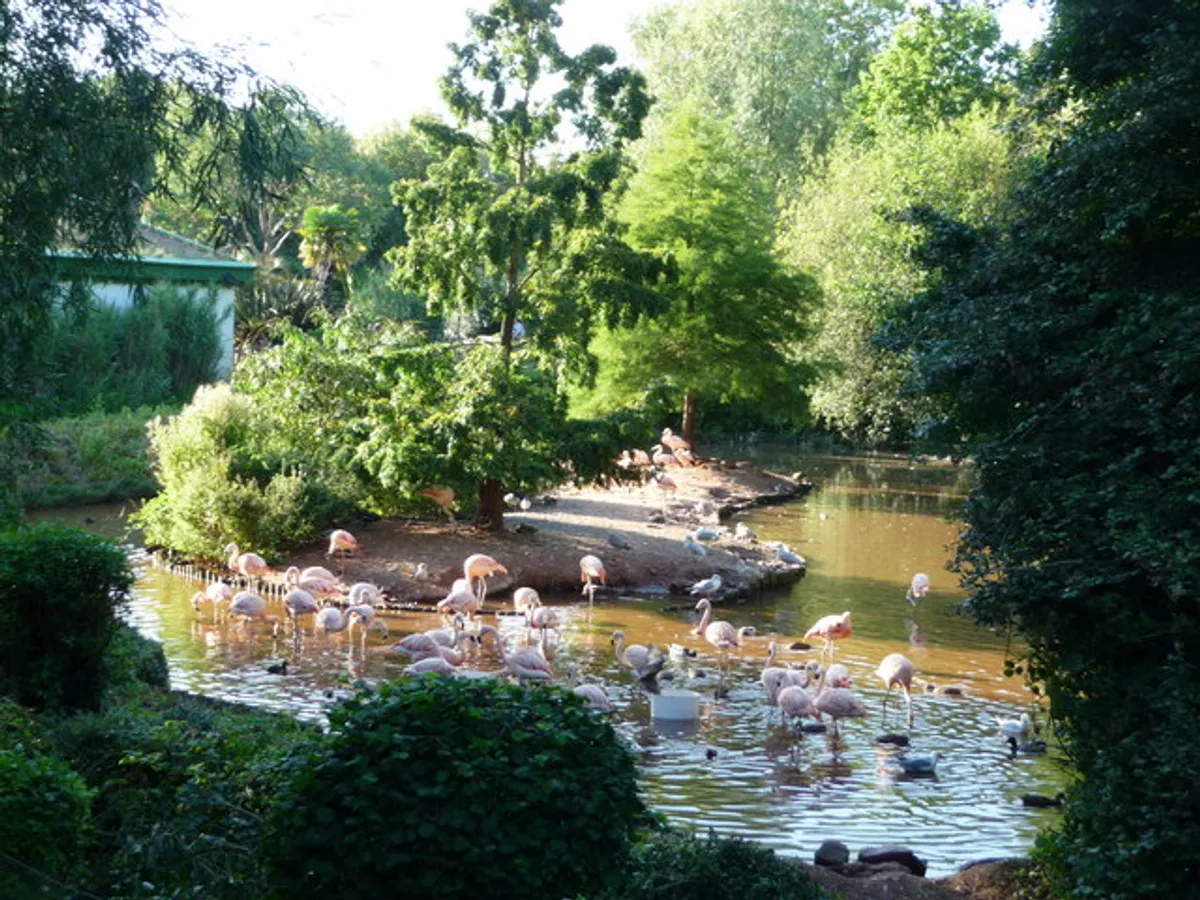 Paignton Zoo🇬🇧 Paignton, United Kingdom
 Śląski Ogród Zoologiczny🇵🇱 Chorzów, Poland
Community notes
Share your observations about the Red-crowned Crane.
No community notes yet. Be the first!
Discover more wildlife
More fascinating animals from the encyclopedia.