
About the Red-eyed Tree Frog
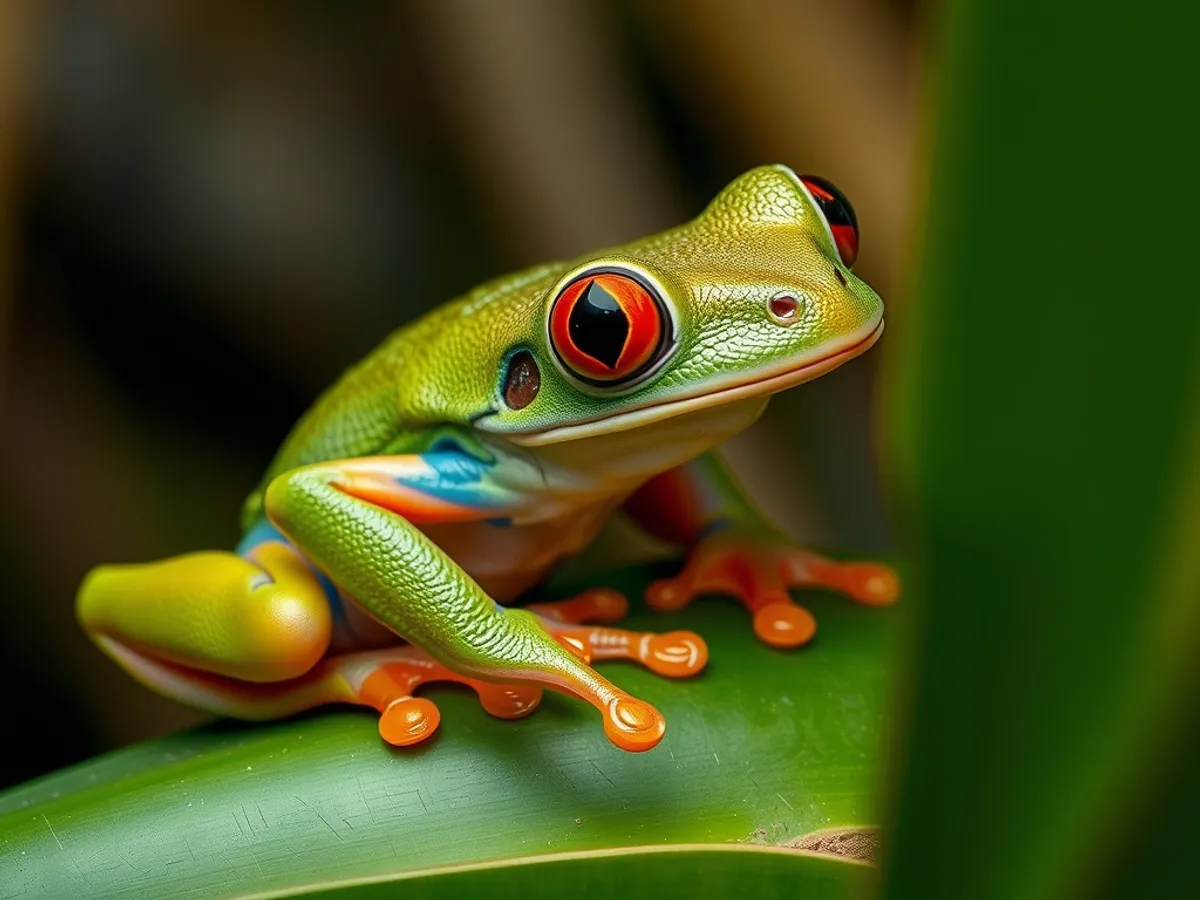
Agalychnis callidryas sleeps by day plastered to the underside of a leaf, eyes shut and green limbs tucked in so that the animal is a featureless green lump. The startling red eyes, orange feet and blue-and-cream flanks only appear when the frog is disturbed and snaps them open — a deimatic display, sometimes called startle colouration, that is thought to buy a fraction of a second of hesitation from a snake or bird, long enough for the frog to leap. It is not a warning of toxicity; the frog is not meaningfully poisonous. The species' most remarkable feature is invisible from outside: its embryos can decide when to hatch. Karen Warkentin's work in Panama showed that eggs laid on leaves above water, when attacked by a cat-eyed snake or a wasp, will hatch prematurely and drop into the pond in seconds — as much as 30 percent ahead of schedule — trading the risk of being an underdeveloped tadpole for certain death in the egg. The embryos distinguish the specific low-frequency vibration pattern of an attacking snake from rain or wind using vestibular hair cells, so they do not evacuate for a thunderstorm. Adults have vertically slit pupils, cup-like toe discs, and reach about 5 to 7 cm, with females noticeably larger.
Fascinating facts
Startle Display
Their bright red eyes and colorful sides can startle and confuse predators, giving the frog a chance to escape.
Rainforest Dweller
Red-eyed Tree Frogs thrive in the humid, lush canopies of Central American rainforests, rarely descending to the forest floor.
Expert Climber
Specialized sticky pads on their toes allow them to climb and cling to smooth leaves and branches with ease.
Detailed description
The Red-eyed Tree Frog (Agalychnis callidryas) is a medium-sized arboreal amphibian, with adults typically measuring 4.0–7.5 cm (1.5–3 in) in length, females being larger than males. Its most distinctive features are its large, protruding red eyes with vertically elliptical pupils and its vivid coloration: a bright green dorsum, blue and yellow vertical flank stripes, orange or red webbed feet, and a white or pale underside. The skin is smooth and moist, with a thin, permeable cuticle typical of amphibians, facilitating cutaneous respiration. The species exhibits sexual dimorphism, with females reaching up to 7.5 cm and males averaging around 5.6 cm. Red-eyed Tree Frogs are primarily nocturnal and arboreal, spending daylight hours camouflaged on the undersides of leaves. Their limbs are long and slender, equipped with expanded adhesive toe pads that enable precise climbing on smooth vegetation. The species has a lightweight, streamlined body adapted for leaping between branches. Their coloration serves both as camouflage and as a startle display (deimatic behavior) to deter predators. The frog's high reflectance in the near-infrared spectrum is unique among amphibians and may play a role in thermoregulation or communication. This species is generally solitary except during breeding aggregations, and it relies heavily on its acute vision and sensitivity to vibrations for detecting prey and predators.
Did you know?
Red-eyed Tree Frog eggs can hatch early if they sense vibrations from approaching predators, allowing tadpoles to escape danger.
Research & sources
Wikipedia summary
Agalychnis callidryas, commonly known as the red-eyed tree frog or red-eyed leaf frog, is a species of frog in the subfamily Phyllomedusinae. It is one of the most recognizable frogs. It is native to forests from Central America to north-western South America. This species is known for its bright coloration, namely its vibrant green body with blue and yellow stripes on the side. It has a white underside, brightly red and orange colored feet, and is named after its distinctive bright red eyes. One particular and special feature of the frogs coloration is its exceptional high reflectance in the near-infrared.
Behaviour & social structure
Red-eyed Tree Frogs are nocturnal, becoming active at dusk when humidity is high. During the day, they remain motionless on the undersides of leaves, tucking in their limbs and closing their eyes to minimize visibility. At night, they emerge to hunt, primarily feeding on insects such as crickets, moths, and flies, but occasionally consuming smaller frogs or other invertebrates. They employ a sit-and-wait predatory strategy, using their sticky tongues to capture prey. Social interactions are most pronounced during the breeding season, when males gather at water bodies and call to attract females, producing a series of 'chack' or 'chuck' vocalizations. Males may engage in physical contests for optimal calling sites. Outside of breeding, individuals are largely solitary and territorial. The species exhibits a strong homing instinct, often returning to the same resting sites nightly. They are sensitive to environmental changes, such as rainfall and temperature, which cue their activity patterns.
Reproduction & life cycle
Breeding occurs during the rainy season, typically from May to October, when temporary pools and water-filled depressions are abundant. Males establish territories near suitable oviposition sites and call to attract females. Amplexus is axillary, with the male grasping the female behind her forelimbs. Females lay clutches of 20–40 eggs on the undersides of leaves overhanging water. Embryonic development is rapid, with hatching occurring in 6–10 days depending on temperature and humidity. Remarkably, embryos can hatch prematurely in response to vibrations from predators, such as snakes or wasps, dropping into the water below as a survival mechanism. Tadpoles are aquatic, feeding on algae and detritus, and undergo metamorphosis in 45–60 days. There is no parental care post-oviposition, but the selection of oviposition sites by females is critical for offspring survival.
Adaptations & survival
Agalychnis callidryas displays several key adaptations: its bright coloration provides both camouflage among foliage and a startle display to disorient predators (deimatic behavior). The large red eyes are thought to startle predators when suddenly exposed (startle coloration), giving the frog a chance to escape. Specialized toe pads secrete mucus, enhancing adhesion to smooth, wet leaves and branches. The species’ skin is highly permeable, allowing for efficient cutaneous respiration in humid environments. Embryonic plasticity enables premature hatching in response to predation threats, a rare adaptation among amphibians. The frog's high reflectance in the near-infrared may assist in thermoregulation or intraspecific signaling, though the function is still under investigation. Their nocturnal habits reduce predation risk and desiccation.
Cultural significance
The Red-eyed Tree Frog is an iconic symbol of Central American rainforests and is widely used in conservation campaigns to promote amphibian and habitat protection. Its striking appearance has made it a popular subject in ecotourism, photography, and environmental education. The species is often featured in art, advertising, and as a mascot for biodiversity. In local folklore, frogs are sometimes associated with rain and fertility, though Agalychnis callidryas itself is not a major figure in indigenous mythology. The species is also a common ambassador in zoos and educational programs worldwide, raising awareness about amphibian conservation.
Recent research
Recent research has focused on the species’ embryonic plasticity, particularly the ability of embryos to detect and respond to predator cues by hatching early—a rare and sophisticated anti-predator adaptation. Studies have also examined the genetic diversity of populations across its range, revealing significant regional variation. The function of the frog’s near-infrared reflectance is an active area of investigation, with hypotheses relating to communication and thermoregulation. Ongoing research is assessing the species’ resilience to chytrid fungus and environmental contaminants. The Red-eyed Tree Frog is also a model organism in studies of visual ecology, given its unique eye morphology and color vision.
Videos
Habitat
Tropical rainforest
 Tropical Regions
Rainforest
Dense, wet forests with the highest biodiversity on Earth, containing more than half of the world's plant and animal species.
 Global
Forest
Wooded areas with significant tree cover and diverse plant and animal communities.
 Global
Freshwater
Lakes, rivers, and wetlands with diverse aquatic ecosystems.
Conservation
The Red-eyed Tree Frog is currently classified as Least Concern on the IUCN Red List.
Threats & challenges
Although currently listed as Least Concern by the IUCN, Red-eyed Tree Frogs face several threats. Habitat loss due to deforestation, agricultural expansion, and urbanization is the primary concern, leading to fragmentation of breeding and foraging habitats. Pollution, particularly from pesticides and fertilizers, can impact both adults and developing tadpoles. The species is susceptible to chytridiomycosis, a fungal disease devastating to many amphibian populations, though Red-eyed Tree Frogs appear less affected than some relatives. Collection for the pet trade, while regulated, poses localized threats. Climate change, altering rainfall patterns and breeding seasonality, may impact reproductive success. Despite these challenges, populations remain relatively stable across much of their range, but ongoing habitat protection is essential.
Taxonomy
Scientific name
Agalychnis callidryas
- Kingdom
- Animalia
- Phylum
- Chordata
- Class
- Amphibia
- Order
- Anura
- Family
- Phyllomedusidae
- Genus
- Agalychnis
- Species
- callidryas
Where to see a red-eyed tree frog
5 zoos and aquariums in 2 countries are recorded as keeping this species.
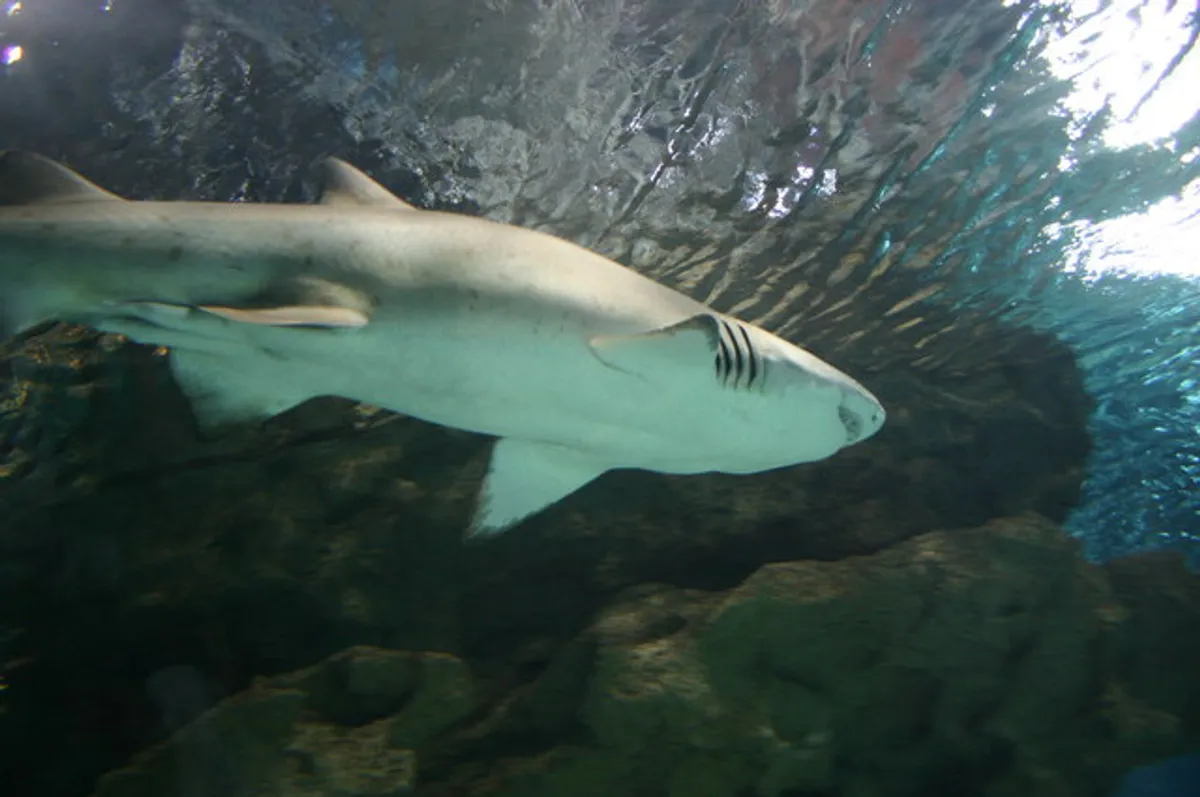 Blue Planet Aquarium🇬🇧 Ellesmere Port, United Kingdom
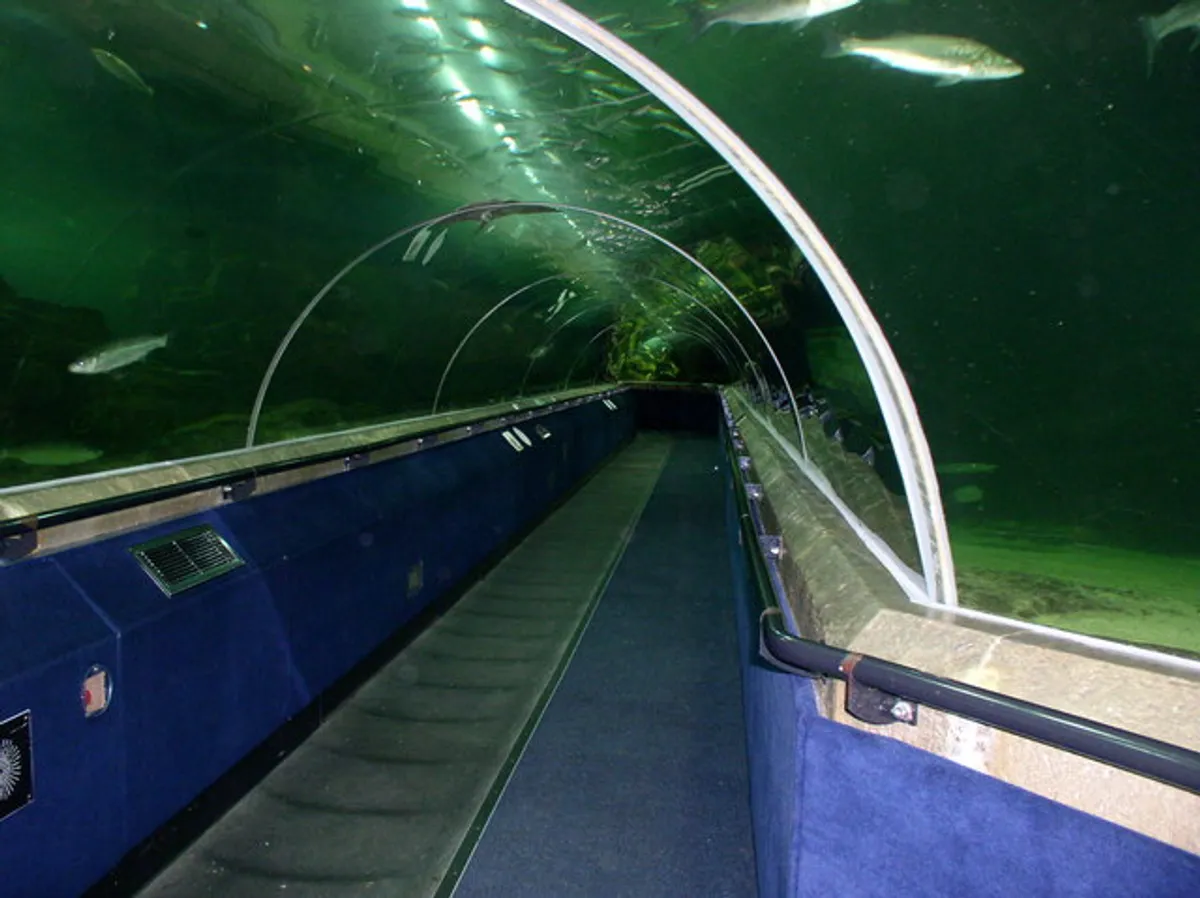 Deep Sea World🇬🇧 North Queensferry, United Kingdom
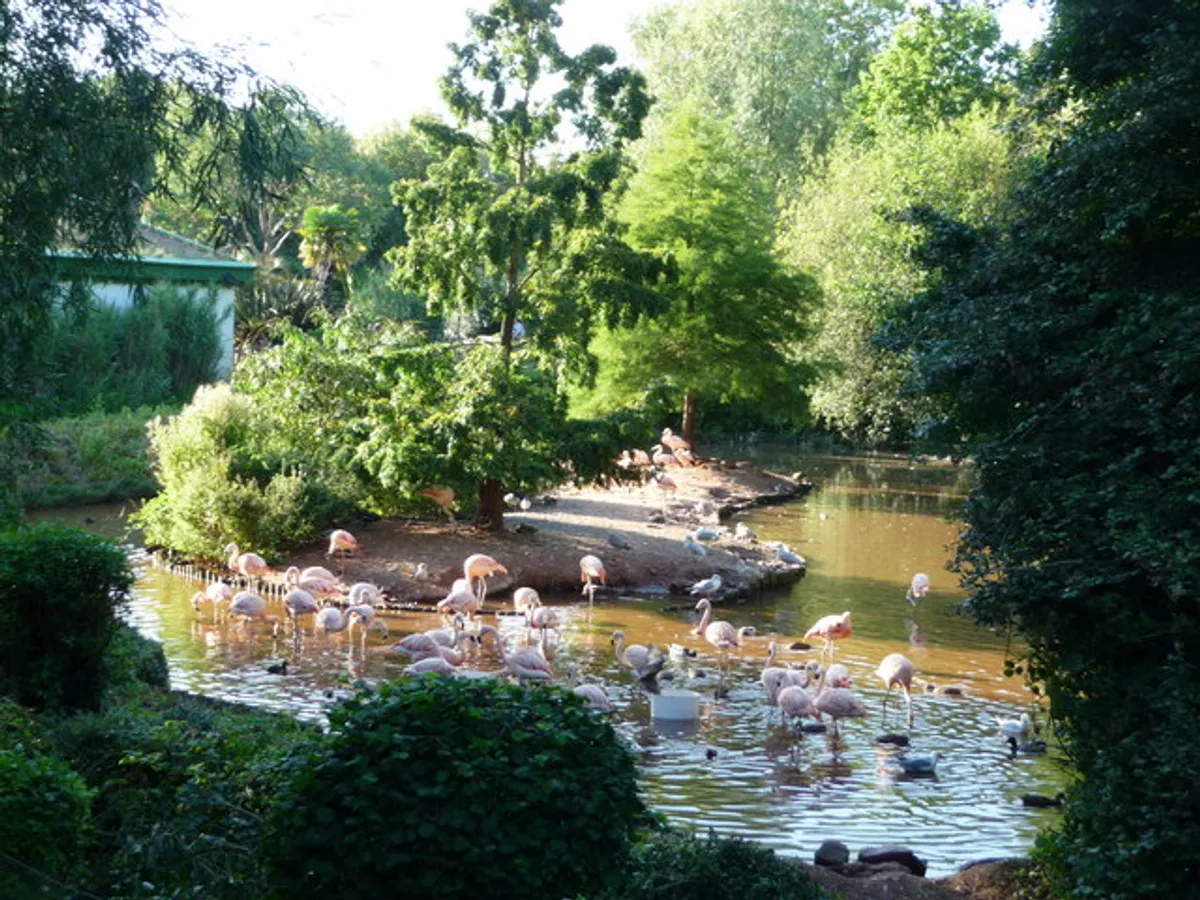 Paignton Zoo🇬🇧 Paignton, United Kingdom
- 🦁Cheyenne Mountain Zoo🇺🇸 United States
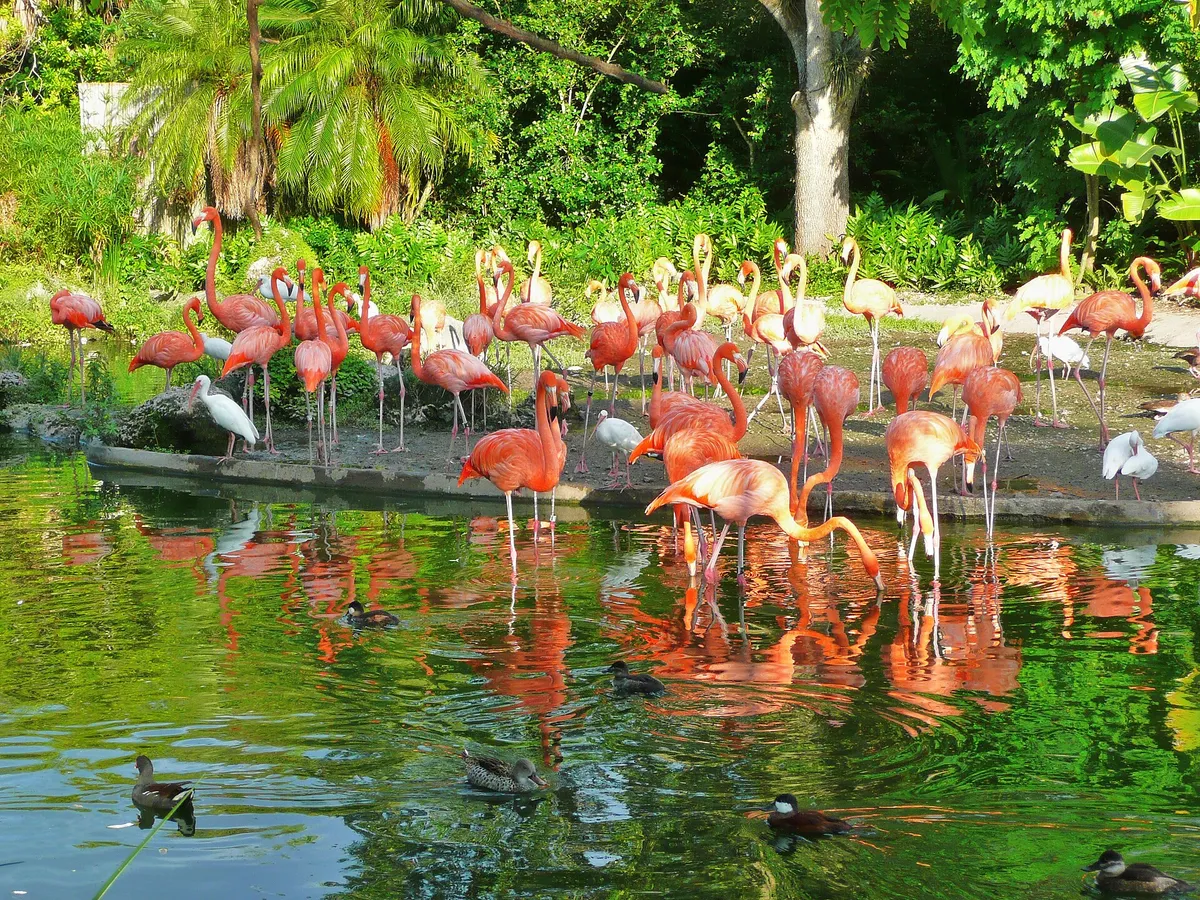 The Miami-Dade Zoological Park and Gardens🇺🇸 United States
Community notes
Share your observations about the Red-eyed Tree Frog.
No community notes yet. Be the first!
Discover more wildlife
More fascinating animals from the encyclopedia.