
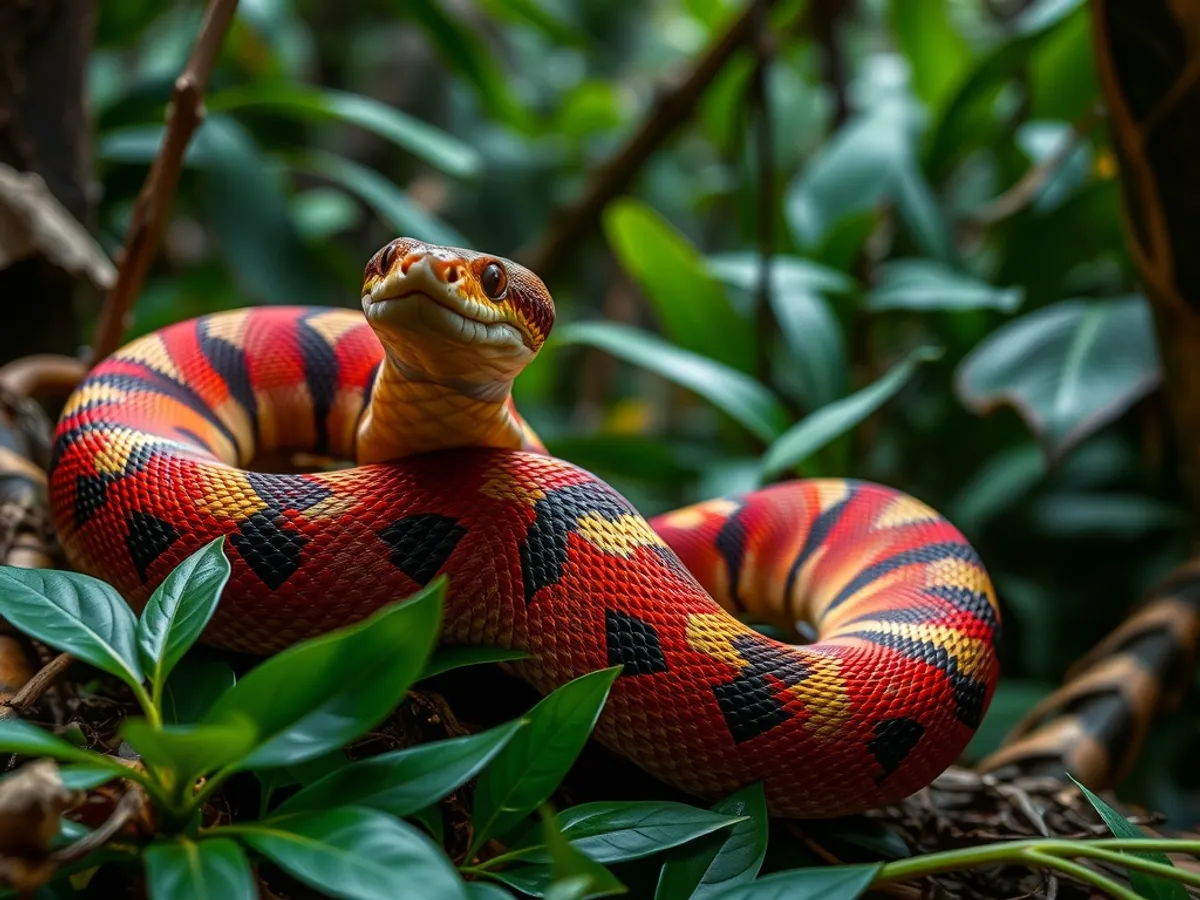
About the Red-tailed Boa
The Red-tailed Boa is a large, non-venomous snake native to Central and South America, recognized for the distinctive reddish-brown markings on its tail. This robust constrictor is highly adaptable and is often found in a variety of habitats, from tropical rainforests to arid savannas. Growing up to 13 feet in length, the Red-tailed Boa is a slow-moving ambush predator that subdues its prey by coiling around it and suffocating it. Its striking appearance and manageable temperament in captivity have made it a popular choice among reptile enthusiasts.
Fascinating facts
Live Birth
Unlike many snakes, the Red-tailed Boa is ovoviviparous, meaning it gives birth to live young rather than laying eggs.
Excellent Climbers
Although often found on the ground, these boas are skilled at climbing trees and shrubs, especially when young.
Heat Sensing
Tiny pits along their lips allow Red-tailed Boas to sense the infrared radiation (heat) from warm-blooded prey.
Detailed description
The Red-tailed Boa (Boa constrictor) is a large, heavy-bodied snake, with adults typically ranging from 2 to 3 meters (6.5–10 feet) in length, though exceptionally large individuals can exceed 4 meters (13 feet) and weigh over 27 kilograms (60 pounds). Its coloration is highly variable, generally featuring a tan or grayish background with darker brown or reddish-brown 'saddle' markings along the back, culminating in a distinctive reddish tail. The scales are smooth and glossy, aiding in camouflage among leaf litter and branches. The head is triangular with prominent heat-sensitive labial pits that assist in detecting warm-blooded prey. Boa constrictors possess strong, muscular bodies adapted for constriction, and their jaws are highly flexible, allowing them to consume prey much larger than their head diameter. They have vestigial pelvic spurs, remnants of hind limbs, which are more pronounced in males and used during courtship. This species is primarily nocturnal and crepuscular, relying on stealth and ambush to capture prey. While generally solitary, boas may share basking sites or shelter during cooler periods. Their adaptability allows them to thrive in diverse habitats, from humid rainforests and river edges to dry scrublands and agricultural areas.
Did you know?
Red-tailed Boas can go weeks or even months without eating after a large meal, thanks to their slow metabolism.
Research & sources
Wikipedia summary
The boa constrictor, also known as the common boa, is a species of large, non-venomous, heavy-bodied snake that is frequently kept and bred in captivity. The boa constrictor is a member of the family Boidae. The species is native to tropical South America. A staple of private collections and public displays, its color pattern is highly variable yet distinctive. Four subspecies are recognized.
Behaviour & social structure
Red-tailed Boas are solitary ambush predators, spending much of their time motionless, concealed under foliage, logs, or in burrows, waiting for prey to approach. They are primarily nocturnal but may bask during the day, especially in cooler weather. Their diet consists mainly of small to medium-sized mammals, birds, and occasionally lizards and amphibians; juveniles may also prey on rodents and small birds. Boas strike quickly, seizing prey with their teeth and rapidly coiling around it to induce circulatory arrest via constriction, a process that is more efficient than previously thought. After feeding, they may remain inactive for days or weeks while digesting. Boas are generally non-aggressive, relying on cryptic coloration and stillness to avoid detection, but will hiss loudly, strike, or musk if threatened. Social interactions are limited to breeding periods, and there is no evidence of territoriality.
Reproduction & life cycle
Boa constrictors are ovoviviparous, meaning females retain eggs internally and give birth to live young. Breeding typically occurs during the dry season (November to April in much of their range), triggered by environmental cues such as temperature and photoperiod. Males locate receptive females using tongue-flicking and pheromone trails, and courtship involves tactile stimulation with pelvic spurs. Copulation can last several hours, and females may store sperm for several months. Gestation lasts between 100 and 120 days, after which the female gives birth to 10–65 live young, each measuring 38–51 cm (15–20 inches) at birth. Neonates are independent from birth and receive no parental care. Sexual maturity is reached at 3–4 years, with females generally maturing later and at larger sizes than males.
Adaptations & survival
The Red-tailed Boa exhibits several adaptations for survival. Its cryptic coloration provides effective camouflage in leaf litter and among branches, while heat-sensitive labial pits enable detection of endothermic prey in low-light conditions. The muscular body and specialized vertebrae allow for powerful constriction, and the flexible jaw structure (quadrate bone and elastic ligaments) permits ingestion of large prey. Vestigial pelvic spurs aid in mating. Boas are excellent swimmers and climbers, allowing them to exploit a range of ecological niches. Their slow metabolism enables them to survive long periods without food, and their ability to regulate body temperature behaviorally (basking, seeking shade) is crucial in variable environments.
Cultural significance
Boa constrictors have significant cultural presence in indigenous mythologies throughout Central and South America, often symbolizing power, fertility, or the underworld. They are featured in folklore as guardians of the forest or as transformative beings. In modern times, boas are popular in the exotic pet trade and are frequently displayed in zoos and educational programs. Their striking appearance and docile temperament have made them emblematic of tropical wildlife, but their popularity has also contributed to overcollection in some regions. In some cultures, boa skins are used for ceremonial attire or traditional crafts.
Recent research
Recent research has focused on the biomechanics of constriction, revealing that boas kill prey by inducing cardiac arrest rather than suffocation alone. Genetic studies have clarified subspecies boundaries and revealed significant cryptic diversity within the species complex. Ongoing research is examining the impacts of habitat fragmentation and climate change on population genetics and distribution. Studies on captive breeding have improved husbandry and welfare standards, reducing pressure on wild populations. Additionally, boas are used as model organisms in studies of vertebrate muscle physiology and evolutionary adaptation.
Videos
Habitat
Tropical rainforest
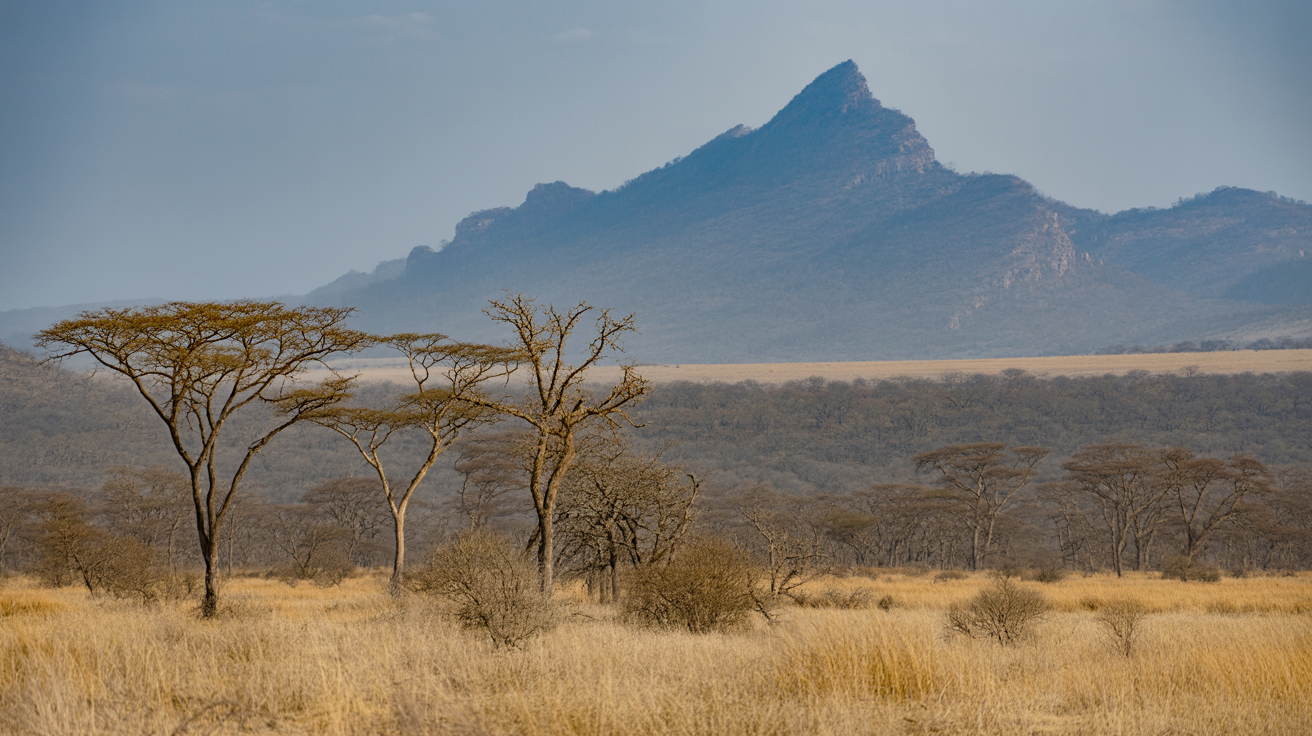 Africa
Savanna
Grasslands with scattered trees, characterized by seasonal rainfall and home to diverse grazing animals and predators.
 Various Continental Regions
Grassland
Open areas dominated by grasses rather than trees, supporting numerous herbivores and their predators.
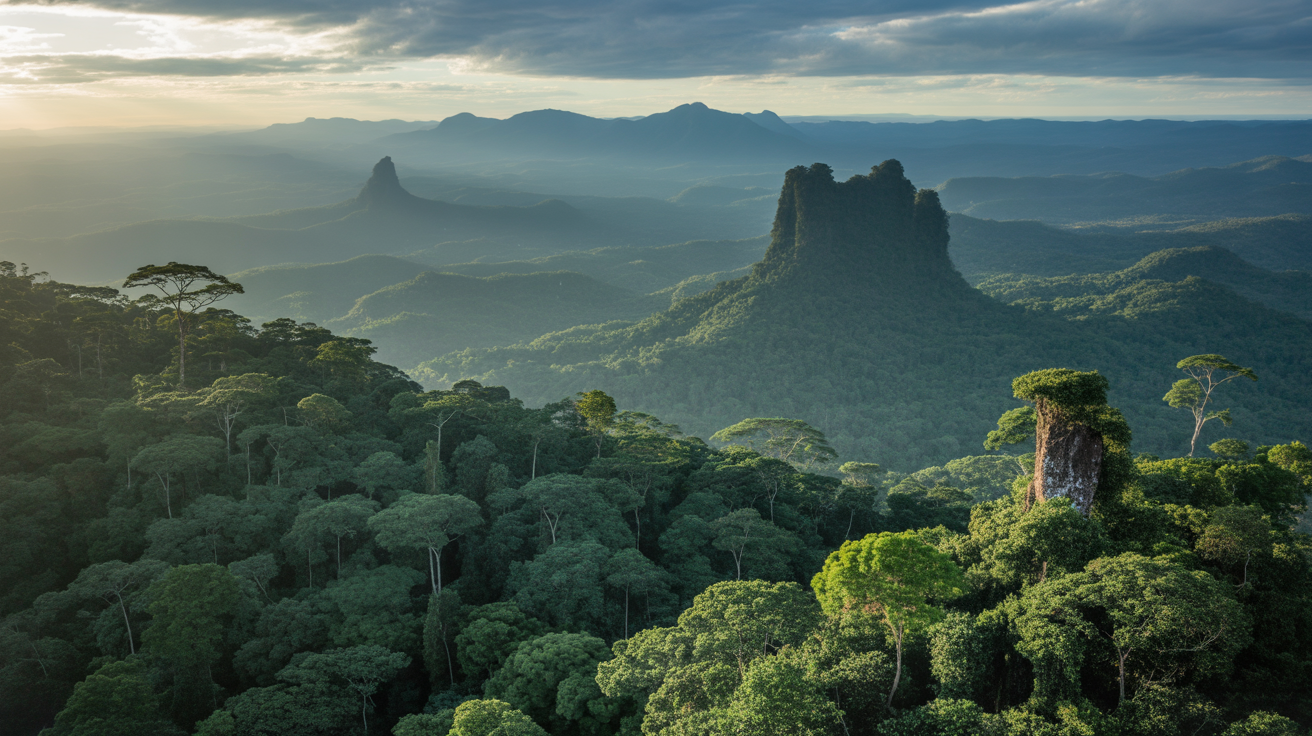 Tropical Regions
Rainforest
Dense, wet forests with the highest biodiversity on Earth, containing more than half of the world's plant and animal species.
 Global
Forest
Wooded areas with significant tree cover and diverse plant and animal communities.
Conservation
The Red-tailed Boa is currently classified as Least Concern on the IUCN Red List.
Threats & challenges
While classified as Least Concern by the IUCN, Boa constrictors face localized threats from habitat destruction, fragmentation, and hunting for the pet trade, leather, and traditional medicine. Road mortality and persecution due to fear or misunderstanding also impact populations. Overcollection in some regions has led to declines, prompting protective measures such as CITES Appendix II listing. Hybridization with introduced populations and illegal trade remain ongoing concerns. Despite these pressures, the species' wide distribution and adaptability have allowed it to maintain stable populations in many areas, though some island and isolated populations are more vulnerable.
Taxonomy
Scientific name
Boa constrictor
- Kingdom
- Animalia
- Phylum
- Chordata
- Class
- Reptilia
- Order
- Squamata
- Family
- Boidae
- Genus
- Boa
- Species
- constrictor
Where to see a red-tailed boa
13 zoos and aquariums in 2 countries are recorded as keeping this species.
 Texas State Aquarium🇺🇸 Corpus Christi, United States
 National Zoological Park🇺🇸 Washington, United States
 Śląski Ogród Zoologiczny🇵🇱 Chorzów, Poland
 Brevard Zoo🇺🇸 Melbourne, United States
- 🦁The Maryland Zoo in Baltimore🇺🇸 Baltimore, United States
Community notes
Share your observations about the Red-tailed Boa.
No community notes yet. Be the first!
Discover more wildlife
More fascinating animals from the encyclopedia.