
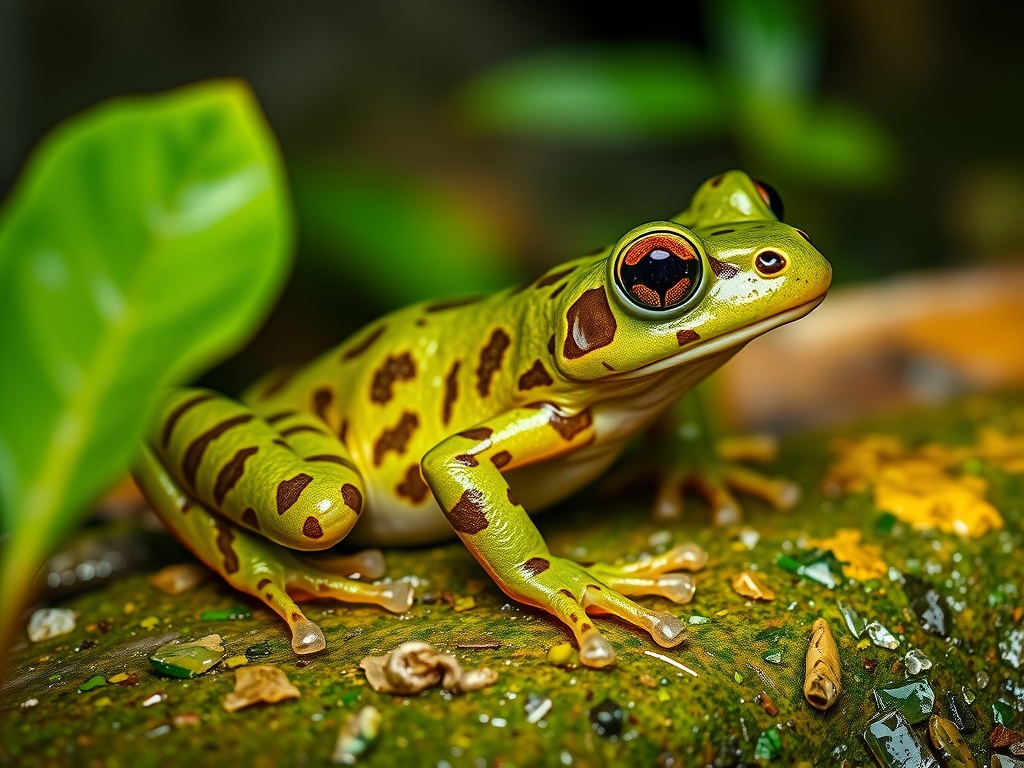
About the Reticulated Glass Frog
The glass frog is translucent from below: through the skin of its belly you can see the heart beating, the liver, and the loops of the intestine. But the transparency is stranger than it looks, because blood is red and red is not transparent. In 2022 researchers found the answer, and it is remarkable. When a glass frog goes to sleep on a leaf, it removes almost all of the red blood cells from its circulation and packs them into its liver, whose surface is mirrored with reflective crystals that hide them — making the sleeping frog two to three times more transparent than the active one. Concentrating blood cells like that should cause fatal clotting, and somehow it does not, which is why the mechanism is now being studied for human medicine. The frog lays its eggs on leaves overhanging streams so the hatching tadpoles drop straight into the water, and the male stands guard over them. Even its bones carry a greenish tint.
Fascinating facts
Transparent Skin
The Reticulated Glass Frog's abdominal skin is so transparent that its internal organs, including the heart and liver, are clearly visible.
Egg Guardian
Male Reticulated Glass Frogs vigilantly guard their eggs on leaf undersides, fending off predators and keeping them moist until they hatch.
Rainforest Camouflage
Their green coloration with yellow spots and reticulated pattern enables them to blend seamlessly with the foliage above rainforest streams.
Detailed description
The Reticulated Glass Frog (Hyalinobatrachium valerioi) is a small amphibian, with adults typically measuring 2.1–2.6 cm in snout-vent length. Its dorsal surface is a vibrant lime-green adorned with yellow or pale spots arranged in a distinctive reticulated pattern, providing effective camouflage among the foliage. The ventral skin is translucent, allowing clear visibility of internal organs such as the heart, liver, and gastrointestinal tract—a hallmark of glass frogs. The species has large, forward-facing eyes with horizontal pupils, enhancing its nocturnal vision. Its slender limbs and expanded toe pads facilitate adept climbing and adherence to smooth, wet leaves. Hyalinobatrachium valerioi is primarily arboreal and is most active at night, when it descends to vegetation overhanging streams to breed. Males are territorial and use high-pitched, pulsed calls to attract females and deter rivals. The species exhibits remarkable parental care, with males vigilantly guarding egg clutches from predation and desiccation. This frog is distributed across the humid lowland rainforests of Central and northern South America, including Costa Rica, Panama, Colombia, and Ecuador, typically at elevations below 600 meters. Its specialized reproductive and behavioral adaptations make it a key indicator species for healthy riparian forest ecosystems.
Did you know?
Despite their fragile appearance, Reticulated Glass Frogs can leap impressive distances to escape threats or reach new perches.
Research & sources
Behaviour & social structure
Reticulated Glass Frogs are predominantly nocturnal, spending daylight hours concealed on the undersides of leaves to avoid predators and desiccation. At night, males establish small territories on vegetation overhanging streams and engage in vocal displays to attract females and ward off competitors. Their calls are short, high-frequency pulses, often repeated in rapid succession. Males may physically confront intruding males through wrestling or pushing matches. Feeding occurs at night and consists mainly of small arthropods such as ants, spiders, and flies, which are captured using their sticky tongues. The species is generally solitary outside of the breeding season, but during peak reproductive periods, multiple males may be found calling in close proximity. Parental males exhibit site fidelity, remaining with egg clutches for several days to over a week, moistening the eggs with their bodies and deterring egg predators such as wasps and ants.
Reproduction & life cycle
Breeding in Hyalinobatrachium valerioi is closely tied to the rainy season, typically from May to November, when stream levels are high. Males call from the undersides of leaves overhanging streams to attract females. Courtship involves the female inspecting the male and his territory before oviposition. Females lay clutches of 18–30 eggs on the lower surfaces of leaves, usually 1–3 meters above water. After fertilization, the female departs, and the male assumes sole responsibility for guarding the eggs. The incubation period lasts 10–14 days, during which the male hydrates the eggs and protects them from predators and fungal infections. Upon hatching, tadpoles drop directly into the stream below, where they continue development in the aquatic environment for several weeks before metamorphosing into juvenile frogs.
Adaptations & survival
The Reticulated Glass Frog's translucent ventral skin is an evolutionary adaptation that provides camouflage from both aerial and aquatic predators by breaking up its outline against the leaf substrate. Its cryptic dorsal coloration and reticulated pattern further enhance concealment among foliage. Enlarged toe pads and long, slender limbs facilitate arboreal locomotion and adherence to smooth, wet leaves. Nocturnal activity reduces predation risk and desiccation stress. The species' unique reproductive strategy—laying eggs on leaves overhanging streams and male parental care—minimizes egg predation and ensures rapid dispersal of tadpoles into aquatic habitats. Males' territoriality and vocalizations are adaptations for mate attraction and reproductive success in dense rainforest environments.
Cultural significance
Glass frogs, including Hyalinobatrachium valerioi, are often highlighted in environmental education and ecotourism for their unique appearance and fascinating reproductive behaviors. While not central to indigenous folklore, their translucent bodies have inspired curiosity and wonder, sometimes symbolizing transparency and fragility in local conservation messaging. In some regions, they serve as flagship species for rainforest and stream conservation initiatives, emphasizing the importance of preserving riparian habitats.
Recent research
Recent research on Hyalinobatrachium valerioi has focused on its complex parental care behaviors, with studies documenting the hormonal and environmental cues that trigger male egg attendance. Genetic analyses have clarified its phylogenetic relationships within the Centrolenidae family, revealing cryptic diversity among glass frogs. Ongoing ecological studies are investigating the species' sensitivity to habitat fragmentation and water quality, as well as its role as a bioindicator for healthy stream ecosystems. Notably, a 2017 study highlighted the effectiveness of male parental care in reducing egg predation and fungal infection, underscoring the evolutionary significance of this behavior.
Sources
Systematics of the glassfrog genus Hyalinobatrachium (Centrolenidae) in Central and South America
Guayasamin, J.M., Castroviejo-Fisher, S., et al. (2008)
scientificHyalinobatrachium valerioi: The IUCN Red List of Threatened Species 2020
IUCN SSC Amphibian Specialist Group
conservationParental care and reproductive behavior in Hyalinobatrachium valerioi
Delia, J., Bravo-Valencia, L., Warkentin, K. (2017)
scientificVideos
Habitat
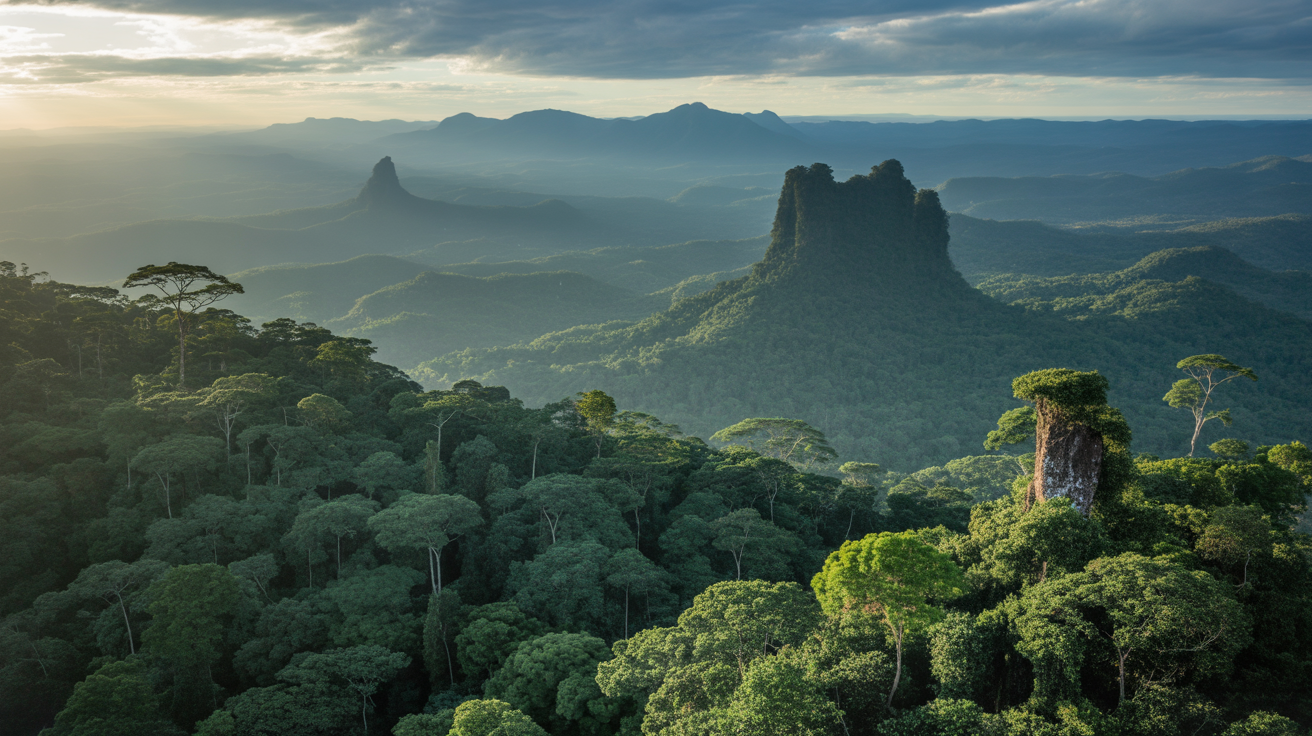
Humid lowland rainforest near streams
 Tropical Regions
Rainforest
Dense, wet forests with the highest biodiversity on Earth, containing more than half of the world's plant and animal species.
 Global
Forest
Wooded areas with significant tree cover and diverse plant and animal communities.
 Global
Freshwater
Lakes, rivers, and wetlands with diverse aquatic ecosystems.
Conservation
The Reticulated Glass Frog is currently classified as Least Concern on the IUCN Red List.
Threats & challenges
Although currently listed as Least Concern by the IUCN, Hyalinobatrachium valerioi faces localized threats from habitat loss due to deforestation, agricultural expansion, and pollution of stream habitats. Fragmentation of riparian forests can disrupt breeding sites and reduce population connectivity. The species is also potentially vulnerable to emerging infectious diseases such as chytridiomycosis (caused by Batrachochytrium dendrobatidis), which has impacted many amphibian populations globally. Climate change may alter rainfall patterns and stream dynamics, further challenging reproductive success. Despite these threats, the species remains relatively widespread and locally abundant in protected areas, but ongoing monitoring is recommended.
Taxonomy
Scientific name
Hyalinobatrachium valerioi
- Kingdom
- Animalia
- Phylum
- Chordata
- Class
- Amphibia
- Order
- Anura
- Family
- Centrolenidae
- Genus
- Hyalinobatrachium
- Species
- valerioi
Community notes
Share your observations about the Reticulated Glass Frog.
No community notes yet. Be the first!
Discover more wildlife
More fascinating animals from the encyclopedia.