
About the Royal Albatross
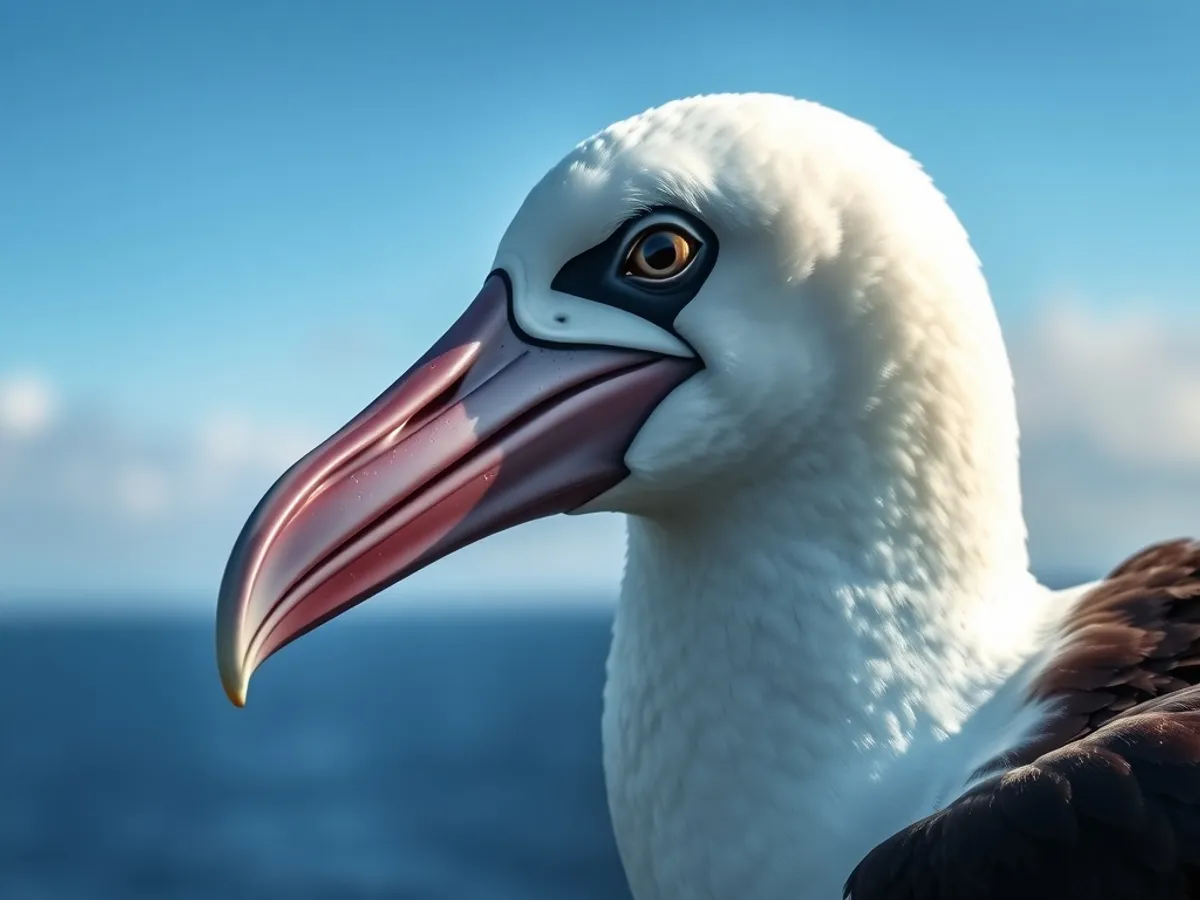
The Royal Albatross is one of the world's largest seabirds, distinguished by its massive wingspan, white plumage, and black upper wing markings. Found predominantly in the Southern Ocean, these impressive birds are masters of dynamic soaring, traveling thousands of kilometers over open waters with minimal energy expenditure. They breed on remote subantarctic islands, where pairs form long-term bonds and raise a single chick every two years. The Royal Albatross faces threats from longline fishing and habitat disturbance, but sustained conservation efforts are helping populations recover.
Fascinating facts
Record Wingspan
The Southern Royal Albatross can have a wingspan exceeding 3.5 meters (11.5 feet), making it one of the largest flying birds on Earth.
Ocean Wanderers
Royal Albatrosses spend the majority of their lives at sea, only coming to land to breed every two years on isolated islands.
Courtship Dance
Mating pairs perform a complex courtship dance involving synchronized movements, vocalizations, and bill clattering to strengthen their lifelong bond.
Detailed description
The Southern Royal Albatross (Diomedea epomophora) is among the largest flying birds, with adults boasting an impressive wingspan averaging 3.0–3.5 meters (9.8–11.5 ft), and some individuals reaching up to 3.7 meters (12 ft). Adults typically weigh 8–10 kg (17.6–22 lbs), with females slightly smaller than males. Their plumage is predominantly white, with distinctive black markings on the upper surface of the wings and a pinkish, robust bill. The species exhibits pronounced sexual monomorphism, with both sexes appearing similar. Royal Albatrosses are highly pelagic, spending the majority of their lives gliding over the Southern Ocean, only returning to land to breed. They are known for their extraordinary longevity, often living 40–60 years, and for their slow reproductive rate. Socially, they are generally solitary at sea but form loose colonies during the breeding season. Their flight is characterized by dynamic soaring, allowing them to cover vast distances with minimal energy, often circumnavigating the Southern Ocean. Their eyes are adapted for keen vision over open water, aiding in the detection of prey and navigation. The Royal Albatross is a flagship species for seabird conservation due to its size, charisma, and sensitivity to environmental change.
Did you know?
A Royal Albatross chick takes nearly a year to fledge, making it one of the slowest-growing seabird chicks in the world.
Research & sources
Behaviour & social structure
Southern Royal Albatrosses are diurnal and highly aerial, spending most of their non-breeding life in solitary flight over open ocean. They employ dynamic soaring and slope soaring techniques, using wind gradients above waves to travel thousands of kilometers without flapping. Foraging is primarily surface-seizing, targeting squid, fish, crustaceans, and occasionally carrion or refuse from fishing vessels. They are known to follow ships for food scraps. At breeding colonies, they exhibit elaborate courtship displays, including synchronized bill-circling, sky-pointing, and vocalizations. Outside the breeding season, social interactions are minimal, but at colonies, they show strong site fidelity and pair bonds. Daily routines at sea involve long-distance travel interspersed with bouts of rest on the water. Aggression is rare, but territorial disputes may occur at nesting sites.
Reproduction & life cycle
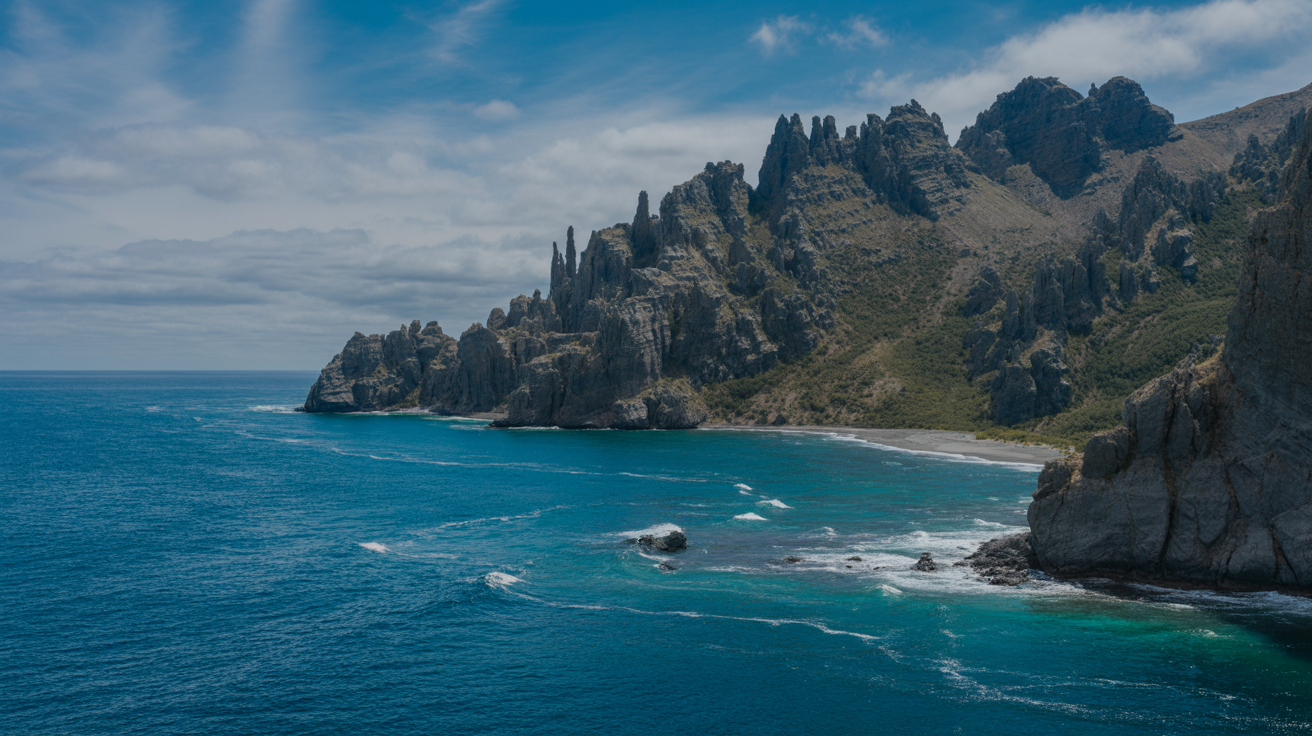
Royal Albatrosses are monogamous, forming lifelong pair bonds after elaborate courtship rituals that may last several years. Breeding occurs biennially, with colonies established on remote subantarctic islands such as Campbell, Auckland, and Enderby Islands. The breeding season begins in October–November, when pairs reunite at nesting sites. Nests are large, grassy mounds built on open tussock slopes. A single white egg is laid per breeding attempt, with both parents sharing incubation duties over 78–80 days. After hatching, chicks are brooded for several weeks and then left alone while both parents forage, returning periodically to feed the chick with regurgitated food. Fledging occurs after 240–260 days, typically in late autumn. Juveniles may spend 4–8 years at sea before returning to breed.
Adaptations & survival
The Royal Albatross is superbly adapted for a pelagic lifestyle. Its long, narrow wings enable dynamic soaring, minimizing energy expenditure during long flights. The nasal tubes (naricorns) on the bill enhance olfactory capabilities, aiding in the detection of prey and navigation over featureless ocean expanses. Their salt glands, located above the nasal passages, efficiently excrete excess salt from ingested seawater. The robust, hooked bill is adapted for grasping slippery prey. Strong pair bonds and high nest-site fidelity increase reproductive success in a challenging environment. Their delayed maturity and extended parental care reflect adaptation to low-resource, high-risk breeding environments.
Cultural significance
The Royal Albatross holds a prominent place in maritime folklore and literature, often symbolizing endurance, freedom, and the mysteries of the open ocean. In Māori culture, the bird (known as 'toroa') is revered, featuring in traditional stories and as a symbol of navigation and guardianship. Albatross feathers were historically used in ceremonial attire. The species also features in environmental campaigns as an emblem of ocean conservation.
Recent research
Recent research has focused on satellite tracking to map migration routes and foraging ranges, revealing that individuals can circumnavigate the Southern Ocean multiple times between breeding seasons. Genetic studies have clarified the taxonomy of royal albatrosses, distinguishing Diomedea epomophora from the closely related Northern Royal Albatross (D. sanfordi). Ongoing studies monitor the impacts of fisheries bycatch mitigation measures and climate variability on breeding success. Long-term demographic monitoring on Campbell Island has provided valuable data on survival rates, reproductive output, and population trends. Stable isotope analysis has been used to investigate diet and foraging ecology.
Videos
Habitat
Subantarctic islands and open Southern Ocean

Conservation
The Royal Albatross is currently classified as Endangered on the IUCN Red List.
Threats & challenges
Major threats include bycatch in longline fisheries, which can result in significant adult mortality, and introduced predators (such as rats, cats, and pigs) on breeding islands, which prey on eggs and chicks. Habitat degradation from invasive plant species and human disturbance also pose risks. Climate change impacts, such as altered ocean productivity and increased storm frequency, may affect food availability and breeding success. While some populations are stable due to intensive conservation (e.g., predator eradication, fisheries management), others remain vulnerable, and the global population is estimated at 17,000–28,000 mature individuals. The IUCN currently lists the Southern Royal Albatross as Endangered.
Taxonomy
Scientific name
Diomedea epomophora
- Kingdom
- Animalia
- Phylum
- Chordata
- Class
- Aves
- Order
- Procellariiformes
- Family
- Diomedeidae
- Genus
- Diomedea
- Species
- epomophora
Community notes
Share your observations about the Royal Albatross.
No community notes yet. Be the first!
Discover more wildlife
More fascinating animals from the encyclopedia.