
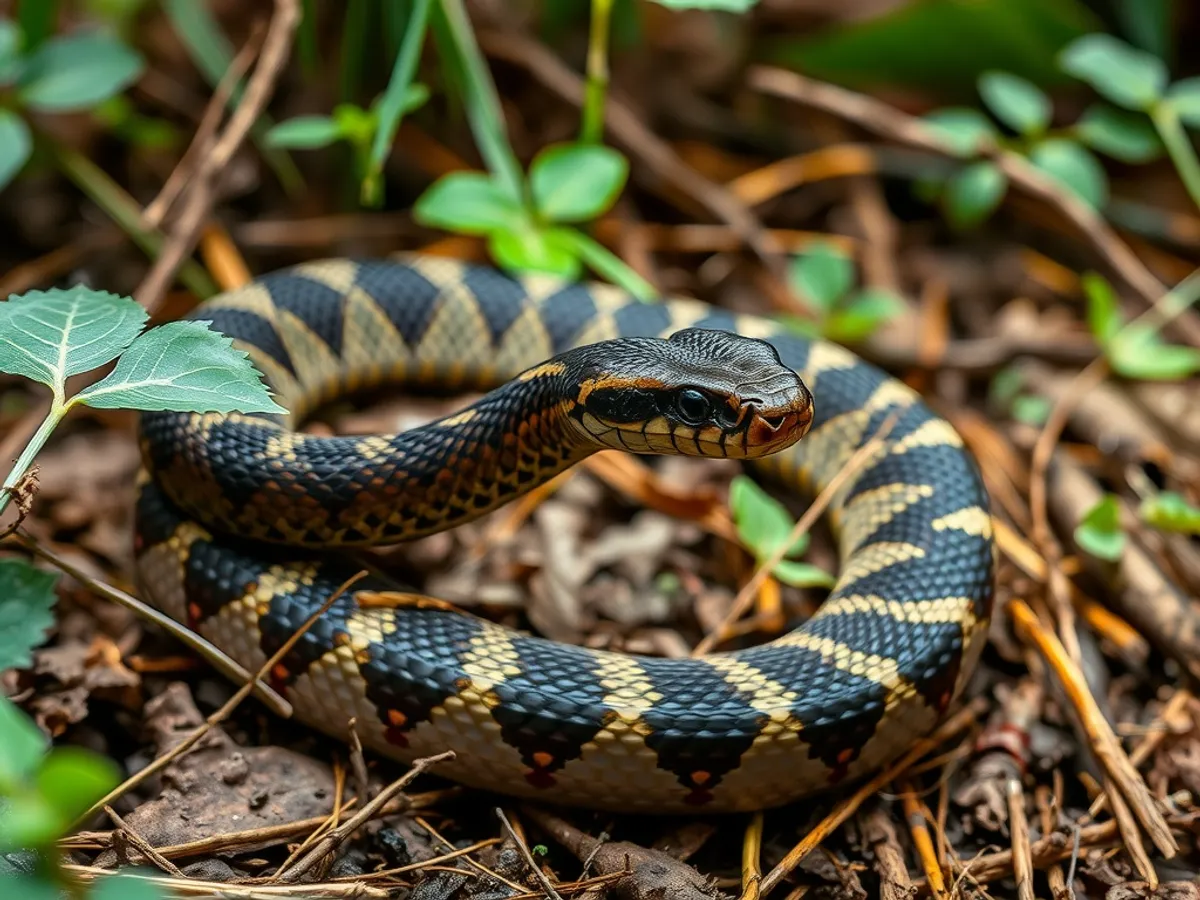
About the Samar cobra
The Samar cobra is a highly venomous species of spitting cobra endemic to the Visayas and Mindanao islands in the Philippines. It is recognized by its relatively slender body, hood, and olive green to yellowish coloration, often with dark banding. This snake is notorious for its ability to accurately spray venom at the eyes of perceived threats as a defense mechanism. The Samar cobra is primarily terrestrial, frequenting lowland forests and agricultural areas, where it preys on small vertebrates. Due to habitat loss and persecution, its populations are facing increasing pressure in the wild.
Fascinating facts
Spitting Defense
The Samar cobra can spit its venom with remarkable accuracy, aiming for the eyes of predators or threats to induce pain and temporary or permanent blindness.
Endemic Range
This cobra is found only in certain Philippine islands, particularly Samar, Leyte, and Mindanao, making its distribution quite limited.
Potent Venom
The venom of the Samar cobra contains both neurotoxins and cytotoxins, making its bite and spit dangerous not only to its prey but also to humans and larger animals.
Detailed description
The Samar cobra (Naja samarensis) is a medium-sized elapid snake, typically reaching total lengths of 1.0 to 1.4 meters, though some individuals may exceed 1.5 meters. Its body is slender and laterally compressed, with a distinct, moderately broad hood that it can flare when threatened. The dorsal coloration varies from olive green to yellowish or pale green, often marked with irregular dark crossbands, especially in juveniles, which tend to fade with age. The ventral surface is lighter, sometimes with scattered dark blotches. The head is slightly distinct from the neck, with large, round eyes and circular pupils, adapted for both diurnal and nocturnal activity. Scales are smooth, contributing to its glossy appearance. The Samar cobra is equipped with specialized fangs that can eject venom in a fine spray, targeting the eyes of predators or threats with remarkable accuracy up to 2 meters. Its venom is primarily neurotoxic, with cytotoxic components, and is considered highly potent among Asian cobras. This species is primarily terrestrial but is capable of climbing low vegetation and swimming. It is secretive and generally avoids human contact, becoming aggressive only when cornered or threatened.
Did you know?
Unlike many other cobras, the Samar cobra's venom is primarily designed for defense, often blinding predators rather than killing prey.
Research & sources
Wikipedia summary
The Samar cobra also called Peters' cobra, southern Philippine cobra or Visayan cobra, is a highly venomous species of spitting cobra native to the Visayas and Mindanao island groups of the Philippines.
Behaviour & social structure
The Samar cobra is predominantly crepuscular and nocturnal, emerging at dusk and during the night to hunt. It preys mainly on small mammals, amphibians, lizards, and occasionally birds, using both ambush and active foraging strategies. The snake relies on its keen sense of smell and vision to locate prey, subduing it with a rapid strike and envenomation. When threatened, it displays classic cobra defensive behaviors: raising the anterior third of its body, spreading its hood, hissing loudly, and, if provoked further, spitting venom towards the eyes of the aggressor. Social interactions are minimal outside of the breeding season, as the species is solitary by nature. It spends daylight hours concealed under leaf litter, fallen logs, or in burrows, emerging only when conditions are favorable. The Samar cobra is known to exploit human-modified landscapes, such as rice paddies and coconut plantations, where rodents are abundant.
Reproduction & life cycle
Naja samarensis is oviparous, with breeding activity typically occurring at the onset of the rainy season (May to July). Males engage in ritualized combat for access to receptive females, involving wrestling and intertwining their bodies. After successful copulation, females lay clutches of 10 to 20 eggs in concealed, humid locations such as under decaying vegetation or in abandoned burrows. The incubation period ranges from 60 to 80 days, depending on environmental conditions. Females do not exhibit parental care beyond egg-laying, and hatchlings are fully independent at birth, measuring 25–30 cm in length and already capable of spitting venom. Juveniles are more boldly patterned than adults, which may serve as a warning to potential predators.
Adaptations & survival
The Samar cobra possesses several notable adaptations for survival. Its ability to spit venom is a highly specialized defensive mechanism, facilitated by forward-facing orifices in its fangs that eject venom in a targeted spray. This adaptation deters predators, particularly mammals and birds, by causing intense pain and potential blindness if the venom contacts the eyes. The snake's cryptic coloration provides effective camouflage among leaf litter and undergrowth. Its neurotoxic venom rapidly immobilizes prey, reducing the risk of injury during hunting. The species' tolerance for disturbed habitats, such as agricultural fields, demonstrates ecological flexibility. Additionally, its nocturnal habits help avoid peak human activity and predation by diurnal animals.
Cultural significance
In Filipino culture, the Samar cobra is both feared and respected, often featuring in local folklore as a symbol of danger and protection. Stories of its spitting ability and potent venom contribute to its reputation as a formidable animal. In some rural communities, cobras are believed to guard treasures or serve as omens. There is little evidence of widespread use in traditional medicine, but occasional reports suggest that cobra parts are used in folk remedies. The species' presence in agricultural areas has led to both conflict and a degree of coexistence, as it helps control rodent populations.
Recent research
Recent research on Naja samarensis has focused on venom composition and its medical implications. Studies have identified unique neurotoxins and cytotoxins, with ongoing work to develop more effective antivenoms specific to Philippine cobras. Ecological surveys have improved understanding of its distribution, habitat preferences, and adaptability to anthropogenic environments. Genetic analyses are underway to clarify its relationships with other Southeast Asian cobras, revealing significant divergence and supporting its status as a distinct species. Conservation research highlights the need for habitat protection and community-based education to reduce human-snake conflict and promote coexistence.
Videos
Habitat
Lowland forests and agricultural areas


Conservation
The Samar cobra is currently classified as Vulnerable on the IUCN Red List.
Threats & challenges
The Samar cobra faces significant threats from habitat loss due to deforestation, agricultural expansion, and urbanization in the Visayas and Mindanao. Persecution by humans, driven by fear and the risk of envenomation, further reduces local populations. The illegal wildlife trade, both for the exotic pet market and traditional medicine, poses additional risks. Road mortality is increasingly reported as infrastructure expands into rural areas. Despite its adaptability, the species is experiencing population declines, leading to its IUCN Red List status as Vulnerable. Conservation challenges include limited public awareness, lack of effective legal protection, and insufficient data on population trends and distribution.
Taxonomy
Scientific name
Naja samarensis
- Kingdom
- Animalia
- Phylum
- Chordata
- Class
- Reptilia
- Order
- Squamata
- Family
- Elapidae
- Genus
- Naja
- Species
- samarensis
Community notes
Share your observations about the Samar cobra.
No community notes yet. Be the first!
Discover more wildlife
More fascinating animals from the encyclopedia.