

Search the encyclopedia
11 animals
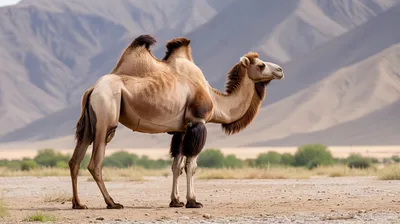
Bactrian Camel
Camelus bactrianus
The two humps of a Bactrian camel are fat, not water — a strategic decision to store the body's insulation in two lumps on the back rather than spread beneath the skin, so that the rest of the body can radiate heat freely. A well-fed camel's humps stand firm; a starved one's flop over. The camel's water tricks are elsewhere. It can lose up to about 30 percent of its body water, a level that would kill most mammals through blood thickening, because its red blood cells are oval rather than round and unusually elastic — they resist rupturing when the animal rehydrates and can swell enormously. That is what lets a camel drink over 100 litres in a few minutes without its cells bursting. Nostrils close against blowing sand, double rows of eyelashes screen the eyes, and the woolly winter coat sheds in great hanging sheets in spring. The domestic Bactrian is common, but the wild Bactrian camel is now recognised as a separate species with only around a thousand individuals left in the Gobi.
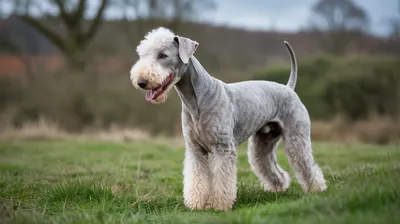
Bedlington Terrier
Canis lupus familiaris
The Bedlington Terrier is a distinctive breed of dog known for its unique, lamb-like appearance and curly, crisp coat. Originating in Northumberland, England, this breed was initially developed for hunting vermin in mines but quickly gained popularity as a companion and show dog. Bedlington Terriers are agile, energetic, and good-natured, making them excellent family pets. Their non-shedding coat and hypoallergenic qualities further add to their appeal among dog lovers.
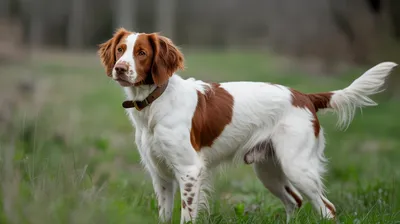
Brittany Spaniel
Canis lupus familiaris
The Brittany Spaniel, commonly known simply as the Brittany, is an energetic and versatile breed of gundog originating from the Brittany region of France. Renowned for its keen nose and remarkable agility, the Brittany is equally adept at pointing and retrieving game, making it a favorite among hunters. This medium-sized dog has a compact, athletic build, expressive eyes, and a dense, often orange and white or liver and white coat. Brittanys are also known for their friendly disposition, intelligence, and eagerness to please, making them excellent family companions.

Chihuahua Dog
Canis lupus familiaris
The Chihuahua is the smallest recognized breed of dog, originating in the Mexican state of the same name. Known for their alertness, lively personality, and devotion to their owners, Chihuahuas are popular as companion animals worldwide. Despite their tiny stature, Chihuahuas are bold, confident, and often exhibit a 'big dog' attitude. They have a variety of coat colors and can have either smooth or long hair. These dogs thrive best in indoor environments and form strong bonds with their families.
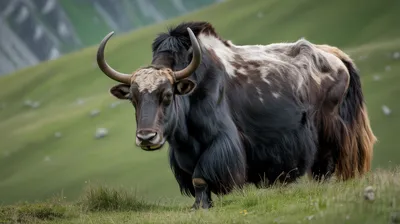
Domestic Yak
Bos grunniens
The domestic yak is a large, long-haired bovine native to the high-altitude regions of the Himalayas and Central Asia. Adapted to cold mountainous environments, yaks possess a thick woolly coat and large lungs that help them thrive at elevations above 3,000 meters. They are integral to the livelihoods of people living in Tibet, Nepal, Mongolia, and surrounding areas, providing milk, meat, wool, and serving as pack animals. Yaks are known for their gentle temperament and impressive stamina, allowing them to navigate rugged terrain with ease.
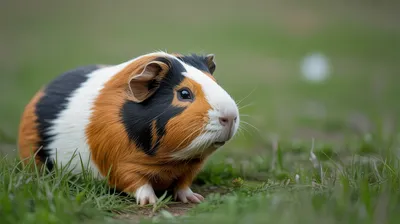
Guinea Pig
Cavia porcellus
Cavia porcellus is a fully domesticated animal with no wild population anywhere - it was bred from wild cavies in the Andes at least 3,000 years ago, primarily as food, and cuy remains an everyday meat in Peru, Ecuador and Bolivia, where an estimated tens of millions are eaten each year and where a colonial-era painting of the Last Supper in Cusco Cathedral shows a roasted guinea pig on the table. It is neither a pig nor from Guinea; the name is likely a corruption of Guiana or a reference to the ships that carried them, and "pig" to the squealing and the shape. Guinea pigs share a rare handicap with humans, other primates and a few bats: a broken GULO gene, meaning they cannot synthesise vitamin C and must get it from their diet or develop scurvy - which is precisely why they became a laboratory staple, and why the phrase "guinea pig" entered English at all. They are highly social, hyper-vocal - the wheek, the purr, the tooth-chatter each carry distinct meaning - and precocial to a striking degree: newborns arrive furred, eyes open, teeth in, and are running and nibbling solids within hours. Their teeth grow continuously and must be worn down on fibrous hay.

Maltese Dog
Canis lupus familiaris
The Maltese is a small breed of dog known for its long, silky white coat and lively personality. Originally bred as a companion animal, the Maltese has a history dating back thousands of years and was favored by royalty and aristocrats across the Mediterranean. Despite its delicate appearance, the breed is spirited, playful, and surprisingly sturdy. Maltese dogs are highly affectionate and often form strong bonds with their owners, making them excellent lapdogs. Their hypoallergenic coats also make them a popular choice for people with allergies.
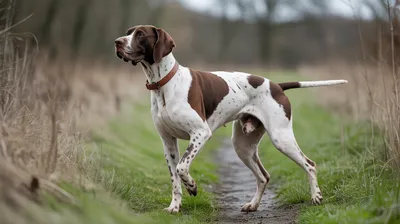
Pointer (English Pointer)
Canis lupus familiaris
The Pointer, often called the English Pointer, is a medium-to-large breed of dog renowned for its athletic build, keen sense of smell, and strong hunting instincts. Developed in England for locating game birds, Pointers are easily recognized by their graceful stance and the characteristic pose of standing still with their nose pointing towards game. They are highly energetic, intelligent, and require ample exercise, making them excellent companions for active families and hunters alike. Their affectionate and even temperament also make them good family pets when given enough mental and physical stimulation.
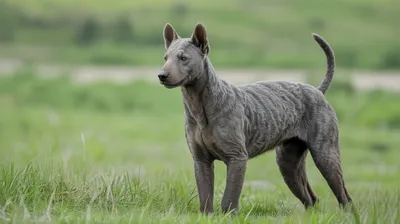
Pumi
Canis lupus familiaris
The Pumi is a lively and intelligent herding dog breed originating from Hungary. Distinguished by its curly, dense coat and expressive, upright ears, the Pumi is agile, energetic, and highly alert, making it an excellent working dog and companion. Traditionally used for herding sheep and cattle, the Pumi is known for its quick movements and keen sense of hearing. Its playful yet focused nature makes it well-suited to active families and various canine sports. With proper training and socialization, the Pumi thrives as both a working dog and a devoted family member.

Water Buffalo
Bubalus bubalis
The domestic water buffalo (Bubalus bubalis) numbers around 200 million animals and quietly underpins agriculture across Asia. It comes in two distinct types that are usually lumped together but are genetically well separated: the river buffalo of India, Pakistan and the Mediterranean, kept mainly for milk, and the swamp buffalo of Southeast Asia and China, kept mainly for draught. They even differ in chromosome number, 50 in the river type and 48 in the swamp type, and hybrids carry 49 and have reduced fertility, so the two are close to being separate species. Buffalo milk supplies a substantial share of the world's milk, most of it in South Asia, and it is far richer than cow's milk at 7 to 8 per cent fat, which is exactly why authentic mozzarella di bufala is made from it. The animal has very few functional sweat glands, roughly a tenth the density found in cattle, and so it cannot cool itself by sweating; wallowing is not a luxury but a physiological necessity, and a coat of drying mud also shields it from biting flies and from sunburn on its thinly haired black skin. Wide, splayed hooves and unusually flexible pastern joints let it work in deep mud where a bullock would founder. Its wild ancestor, the endangered wild water buffalo Bubalus arnee, now numbers only a few thousand animals.

West Highland White Terrier
Canis lupus familiaris
The West Highland White Terrier, affectionately known as the 'Westie,' is a small, sturdy and energetic breed of dog originating from Scotland. Recognized for its distinctive bright white double coat, pointed ears, and lively expression, the Westie was originally bred for hunting vermin such as rats and foxes. They are known for their intelligence, confidence, and friendly temperament, making them popular as both working dogs and family companions. Westies require regular grooming to maintain their signature coat and thrive in active households where they get ample attention and exercise.