
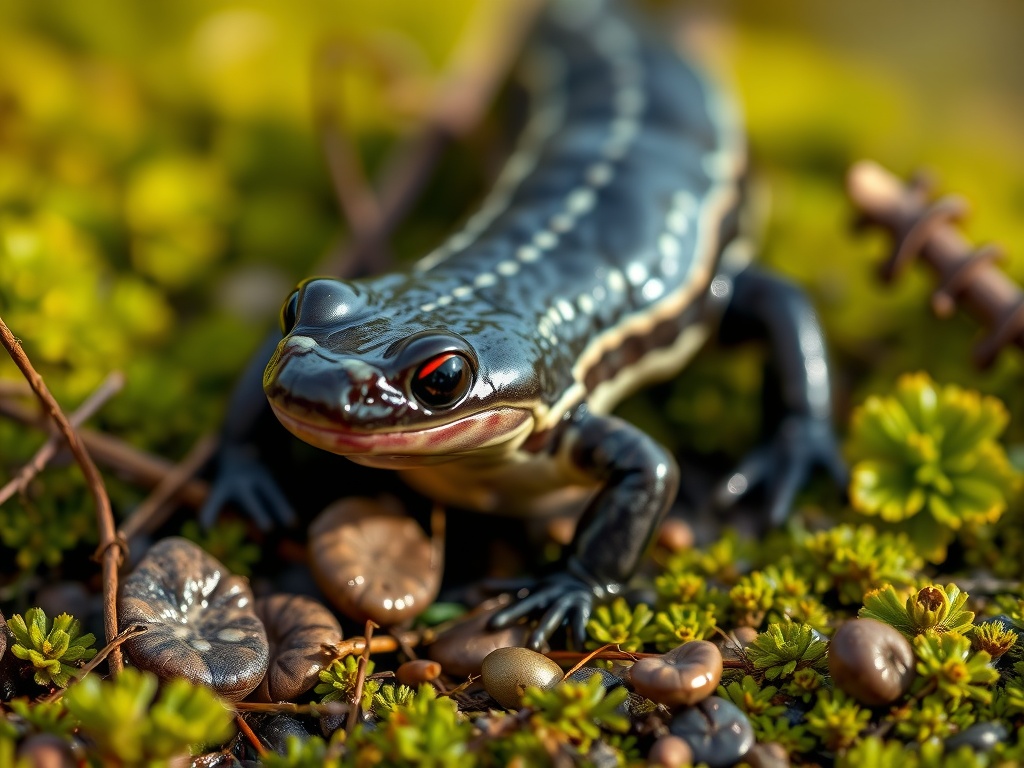
About the Siberian Salamander
The Siberian Salamander is a cold-adapted amphibian native to northern Asia, particularly Siberia and parts of northeastern China and northern Mongolia. It is renowned for its remarkable ability to survive extreme cold, even tolerating being frozen solid for extended periods. This small, slender salamander is typically brownish-gray with a pale underside and reaches lengths of up to 13 centimeters. They are secretive and terrestrial, spending most of their lives hidden under logs, leaf litter, or in burrows, emerging primarily during the breeding season.
Fascinating facts
Freeze Tolerance
The Siberian Salamander is capable of surviving subzero temperatures by allowing its body fluids to freeze and later thawing out unharmed.
Habitat Choice
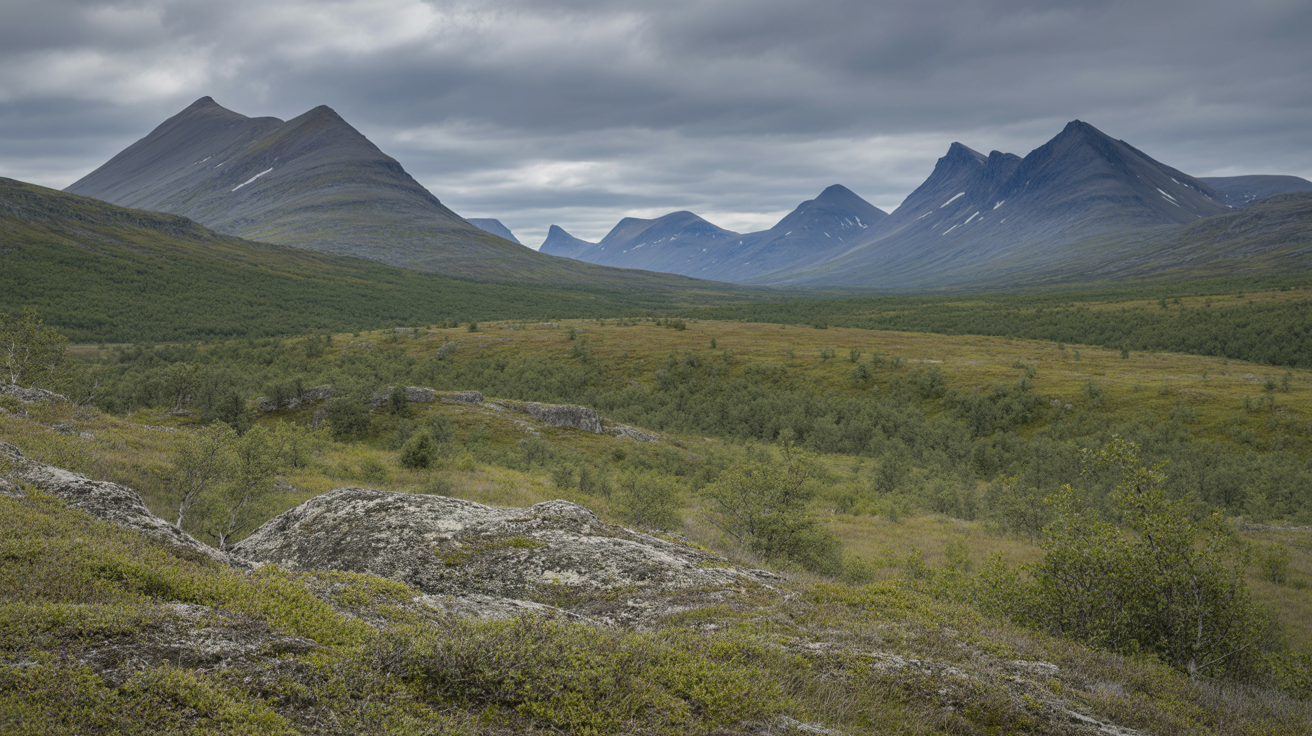
It is found in cold, moist habitats such as taiga forests, bogs, and tundra wetlands across Siberia and the Russian Far East.
Secretive Lifestyle
This salamander is mainly nocturnal and terrestrial, spending most of its time hidden beneath leaf litter, logs, or in underground burrows.
Detailed description
The Siberian salamander (Salamandrella keyserlingii) is a small, slender amphibian, typically measuring 9–13 cm in total length, with females generally larger than males. Its body is elongated and cylindrical, with short, well-developed limbs and a laterally compressed tail that aids in swimming. The skin is smooth and moist, colored brownish or grayish dorsally, often with a faint, lighter dorsal stripe, and a pale, unmarked ventral surface. The head is relatively flat with small, lidless eyes adapted for low-light environments. This species is primarily terrestrial outside the breeding season, seeking shelter under logs, stones, or within moss and leaf litter in moist boreal forests and taiga wetlands. It is highly secretive and nocturnal, emerging mainly at night or during periods of high humidity. Notably, S. keyserlingii is renowned for its extreme cold tolerance, capable of surviving freezing of body fluids and tissues during harsh Siberian winters. Its organs can withstand temperatures as low as −45°C, with individuals documented surviving months encased in permafrost. The Siberian salamander is a carnivore, preying on a variety of small invertebrates. During the brief breeding season, it migrates to temporary ponds and slow-moving streams, where external fertilization and egg-laying occur. Larvae are aquatic, undergoing metamorphosis within a few months. This species exhibits little sexual dimorphism aside from size, and lacks vocal sacs or elaborate courtship displays typical of some other salamanders.
Did you know?
The Siberian Salamander’s eggs can survive being frozen in permafrost and still hatch when thawed, a rare trait among amphibians.
Research & sources
Wikipedia summary
Salamandrella keyserlingii, the Siberian salamander, is a species of salamander found in Northeast Asia. It lives in wet woods and riparian groves.
Behaviour & social structure
Siberian salamanders are primarily solitary and exhibit crepuscular to nocturnal activity patterns, remaining hidden during the day to avoid desiccation and predation. They are opportunistic feeders, foraging at night for small invertebrates such as insects, spiders, worms, and mollusks, using a sit-and-wait or slow stalking strategy. Feeding is facilitated by a protrusible tongue and rapid jaw movements. During the non-breeding season, individuals are largely sedentary, conserving energy and moisture by remaining in moist microhabitats. Social interactions are minimal outside the breeding season, though temporary aggregations may form at optimal shelter sites. In winter, they enter a state of torpor, often burrowing below the frost line or utilizing natural crevices, but are unique in their ability to survive complete freezing. Breeding migrations are synchronized with snowmelt and spring rains, with adults traveling en masse to breeding ponds.
Reproduction & life cycle
Breeding occurs in early spring, typically from late April to June, coinciding with thawing of snow and ice. Males arrive at breeding sites first, followed by females. Courtship involves tactile stimulation, with males nudging and circling females in shallow water. Fertilization is external: females lay elongated, gelatinous egg sacs (up to 30–60 eggs per sac) attached to submerged vegetation or debris. Embryonic development is rapid, with hatching occurring after 2–3 weeks, depending on water temperature. Larvae are fully aquatic, possessing external gills and feeding on plankton and small aquatic invertebrates. Metamorphosis into terrestrial juveniles occurs after 2–3 months, generally before the onset of autumn. There is no parental care post-oviposition, and reproductive success is strongly influenced by the availability and stability of ephemeral breeding pools.
Adaptations & survival
The most remarkable adaptation of S. keyserlingii is its extreme freeze tolerance. It accumulates high concentrations of cryoprotectants such as glucose and glycerol in its tissues, which prevent intracellular ice formation and reduce cellular damage during freezing. This adaptation allows survival at temperatures as low as −45°C, unique among amphibians. The salamander’s skin is highly permeable, facilitating cutaneous respiration in cold, oxygen-rich water. Its reproductive timing is synchronized with the brief arctic spring, ensuring larval development is completed before pools dry or freeze. Morphologically, the flattened head and streamlined body aid in burrowing and navigating dense ground cover. Behavioral adaptations include nocturnality and secretive habits to minimize water loss and predation risk.
Cultural significance
The Siberian salamander is not widely featured in folklore or traditional practices, likely due to its secretive nature and remote habitat. However, in some indigenous Siberian cultures, amphibians are regarded as symbols of resilience and transformation, and the salamander’s ability to survive freezing winters has occasionally been referenced in local tales as a metaphor for endurance. There is no evidence of significant use in traditional medicine or as a food source.
Recent research
Recent research has focused on the molecular and physiological mechanisms underlying the salamander’s freeze tolerance, with studies identifying specific cryoprotectant compounds and gene expressions involved in freeze survival. Genomic and transcriptomic analyses are ongoing to elucidate evolutionary pathways of cold adaptation. Ecological studies have examined the impacts of climate change on breeding phenology and larval development. The species is also used as a model organism in comparative studies of amphibian cold tolerance and hibernation strategies.
Videos
Habitat
Boreal forest and tundra wetlands


Conservation
The Siberian Salamander is currently classified as Least Concern on the IUCN Red List.
Threats & challenges
Currently, the Siberian salamander is classified as Least Concern by the IUCN, with stable populations across its vast range. However, localized threats include habitat degradation from logging, wetland drainage, and pollution, particularly near expanding human settlements. Climate change poses a potential long-term threat, as altered precipitation and temperature regimes may reduce the availability of suitable breeding sites and disrupt freeze-thaw cycles critical for its life history. Road mortality during breeding migrations and introduction of predatory fish to breeding ponds are additional concerns. Despite these challenges, the species’ wide distribution and adaptability afford it a degree of resilience.
Taxonomy
Scientific name
Salamandrella keyserlingii
- Kingdom
- Animalia
- Phylum
- Chordata
- Class
- Amphibia
- Order
- Caudata
- Family
- Hynobiidae
- Genus
- Salamandrella
- Species
- keyserlingii
Community notes
Share your observations about the Siberian Salamander.
No community notes yet. Be the first!
Discover more wildlife
More fascinating animals from the encyclopedia.