
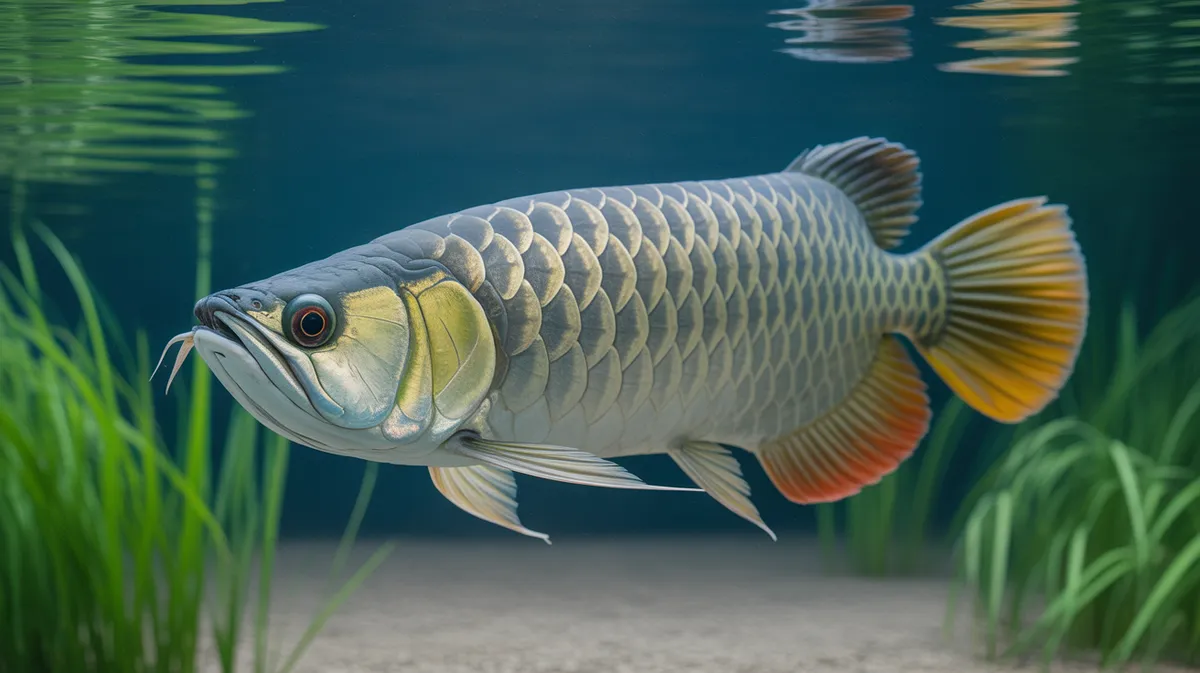
About the Silver Arowana
The silver arowana (Osteoglossum bicirrhosum) is a metre-long, ribbon-flat predator of Amazonian floodplains, and it is a member of the bony-tongue fishes, an ancient lineage whose fossil record runs back well past the breakup of Gondwana. Its name refers to a toothed, bony structure on the floor of the mouth that bites upward against teeth on the roof, so the fish crushes prey between its tongue and palate rather than between jaws in the usual way. In flooded forest it cruises just under the surface, its upturned mouth and two chin barbels reading the meniscus for movement, and it will launch itself more than a metre clear of the water to snatch beetles, spiders and even small birds and bats from overhanging branches; Amazonian fishermen call it the water monkey for this. The mouth opens like a drawbridge, hinged so wide it can engulf prey nearly a third of its own length. Males are mouthbrooders: after spawning, the male takes 100 to 200 large eggs into his mouth and holds them for six to eight weeks, barely feeding, releasing the fry to forage and gathering them back in at any alarm. Juveniles in the trade still carry the remains of a large orange yolk sac slung under the belly.
Fascinating facts
Surface Hunter
Silver Arowanas are specialized surface feeders, using their upturned mouths to catch prey right at the water’s edge.
Mouthbrooding Dads
After spawning, male Silver Arowanas incubate hundreds of eggs in their mouths, protecting the young until they are fully developed.
Record Jumper
These fish can leap over 2 meters out of the water, a skill they use in the wild to catch food and in captivity can make them escape risks for open tanks.
Detailed description
The Silver Arowana (Osteoglossum bicirrhosum) is a large, predatory freshwater fish endemic to the Amazon and Essequibo river basins in South America. Adults typically reach lengths of 90–120 cm (35–47 in), with some individuals exceeding 130 cm (51 in), and can weigh up to 6 kg (13 lbs). Its elongated, laterally compressed body is covered in large, iridescent silver scales, which provide both camouflage and a striking appearance. The dorsal and anal fins are long and run parallel to the body, converging near the caudal fin, which aids in swift, agile swimming near the water's surface. The Silver Arowana is distinguished by its prominent upturned mouth and two sensory barbels on the lower jaw, which are used to detect vibrations and locate prey. This species is primarily crepuscular, being most active during dawn and dusk. It is renowned for its ability to leap up to 2 meters (6.5 feet) out of the water to capture insects, small mammals, or birds perched on overhanging branches. Silver Arowanas are solitary and territorial, especially as adults, and exhibit complex parental care, with males practicing mouthbrooding to protect eggs and fry. Their unique adaptations and predatory prowess make them apex surface predators in their native habitats.
Did you know?
Silver Arowanas can jump up to 2 meters (over 6 feet) out of the water to catch insects and even small birds from overhanging branches.
Research & sources
Behaviour & social structure
Silver Arowanas are primarily solitary and highly territorial, particularly during the breeding season. They patrol the upper water column, using their acute vision and sensitive barbels to detect prey movements at or above the water's surface. Their diet in the wild is diverse, consisting of fish, crustaceans, insects, spiders, and occasionally small terrestrial vertebrates such as birds or bats that venture close to the water. Hunting is characterized by stealthy surface swimming followed by rapid upward lunges or leaps. They are most active during twilight hours (crepuscular), often resting in deeper or shaded areas during the heat of the day. Social interactions are minimal outside of the breeding season, and juveniles may form loose aggregations for protection, but adults are generally intolerant of conspecifics. In captivity, they may display aggression towards tankmates, especially those of similar size or appearance.
Reproduction & life cycle
Silver Arowanas exhibit seasonal breeding, typically coinciding with the onset of the rainy season (December to March) when floodplains expand and food becomes abundant. Courtship involves synchronized swimming and displays of fin extension. Females lay between 50 and 250 large, yolk-rich eggs, each measuring up to 1.5 cm in diameter. The male collects the fertilized eggs in his mouth, where he incubates them for approximately 50–60 days, a behavior known as paternal mouthbrooding. During this period, the male refrains from feeding and provides protection and oxygenation for the developing embryos. After hatching, the fry remain in the male's mouth for an additional 2–3 weeks until their yolk sacs are absorbed and they are capable of independent feeding. Parental care ceases once the juveniles disperse.
Adaptations & survival
The Silver Arowana possesses several remarkable adaptations for survival in its dynamic floodplain environment. Its upturned mouth and elongated body facilitate surface feeding and rapid lunges at prey. The two mandibular barbels are highly sensitive to water vibrations, aiding in prey detection even in turbid conditions. As an obligate air-breather, the Silver Arowana has a modified swim bladder that functions as a primitive lung, allowing it to gulp atmospheric oxygen during hypoxic (low-oxygen) periods common in flooded forests. Its leaping ability is an evolutionary specialization for exploiting aerial or terrestrial prey, reducing competition with other aquatic predators. The reflective scales provide camouflage by mirroring the dappled light of the water's surface, while mouthbrooding ensures high offspring survival in a predator-rich environment.
Cultural significance
The Silver Arowana holds significant cultural value in South America and beyond. In Amazonian folklore, it is sometimes regarded as a 'water dragon' and is believed to bring good luck and prosperity. In the international aquarium trade, it is highly prized for its beauty and unique behaviors, often symbolizing wealth and status, particularly in East and Southeast Asian cultures where it is sometimes called the 'dragon fish.' However, its popularity has also driven illegal and unsustainable collection practices. In some indigenous communities, the Arowana is occasionally used as a food source, though this is less common than its ornamental use.
Recent research
Recent research has focused on the genetic diversity and population structure of Silver Arowana across its range, revealing significant genetic differentiation between populations in the Amazon and Essequibo basins. Studies on their air-breathing physiology have provided insights into adaptations to hypoxic environments. Ongoing research is investigating the impacts of habitat fragmentation and hydrological changes on their reproductive success. Advances in captive breeding techniques are being developed to reduce pressure on wild populations and support sustainable trade. Additionally, behavioral studies have explored their learning abilities and social interactions in captivity, contributing to improved husbandry practices.
Sources
Osteoglossum bicirrhosum (Silver Arowana): Natural History, Ecology, and Conservation
Jégu, M. & Keith, P. (2019)
scientificOsteoglossum bicirrhosum: The IUCN Red List of Threatened Species 2020
IUCN SSC Freshwater Fish Specialist Group
conservationOsteoglossum bicirrhosum (Silver Arowana): Taxonomy, Ecology, and Conservation
Jégu, M. & Keith, P. (2017)
scientificOsteoglossum bicirrhosum: The IUCN Red List of Threatened Species 2020
IUCN SSC Freshwater Fish Specialist Group
conservationVideos
Habitat
Slow-moving freshwater rivers, floodplains, and lakes


Conservation
The Silver Arowana is currently classified as Least Concern on the IUCN Red List.
Threats & challenges
Although currently listed as Least Concern by the IUCN, Silver Arowana populations face localized threats from overfishing for the aquarium trade, habitat degradation due to deforestation and dam construction, and pollution from agricultural runoff. In some regions, unsustainable harvesting of juveniles and adults for export has led to population declines. The species is also vulnerable to changes in floodplain dynamics caused by climate change and river regulation, which can disrupt breeding cycles and reduce available habitat. Conservation challenges include enforcing sustainable harvest quotas, protecting critical breeding habitats, and monitoring wild populations to prevent overexploitation.
Taxonomy
Scientific name
Osteoglossum bicirrhosum
- Kingdom
- Animalia
- Phylum
- Chordata
- Class
- Actinopterygii
- Order
- Osteoglossiformes
- Family
- Osteoglossidae
- Genus
- Osteoglossum
- Species
- bicirrhosum
Where to see a silver arowana
3 zoos and aquariums in 2 countries are recorded as keeping this species.
 Dallas World Aquarium🇺🇸 Dallas, United States
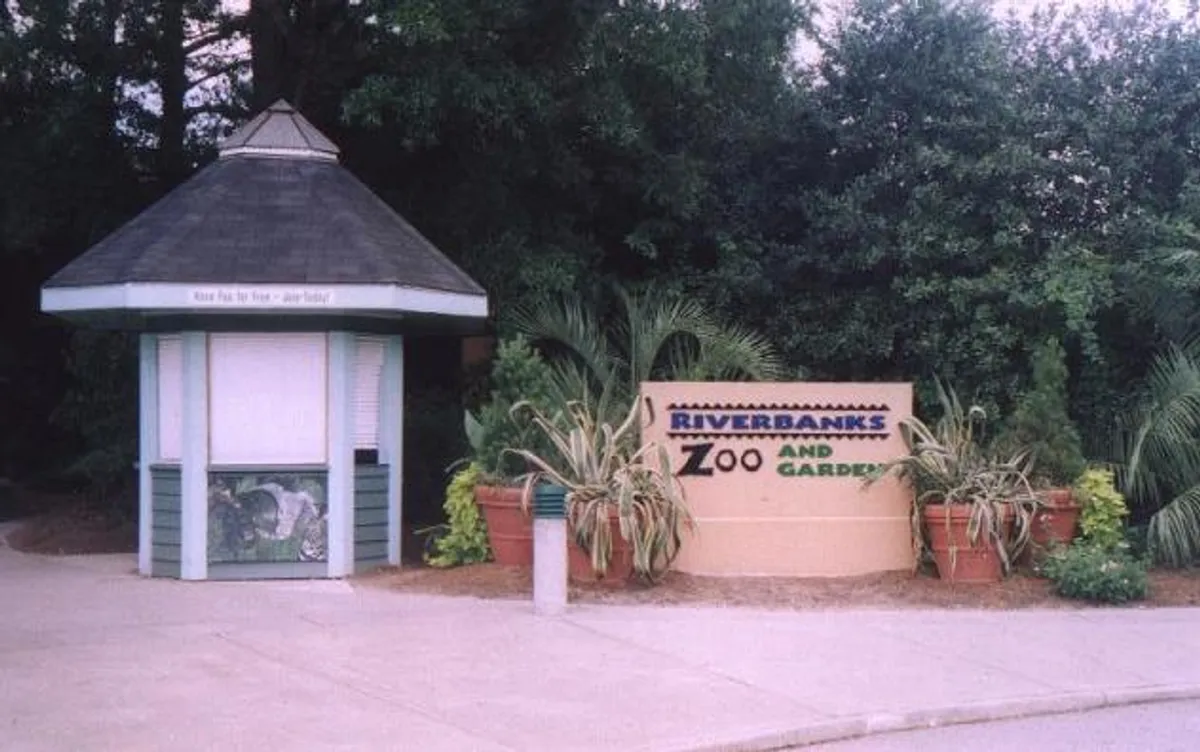 Riverbanks Zoo🇺🇸 Columbia, United States
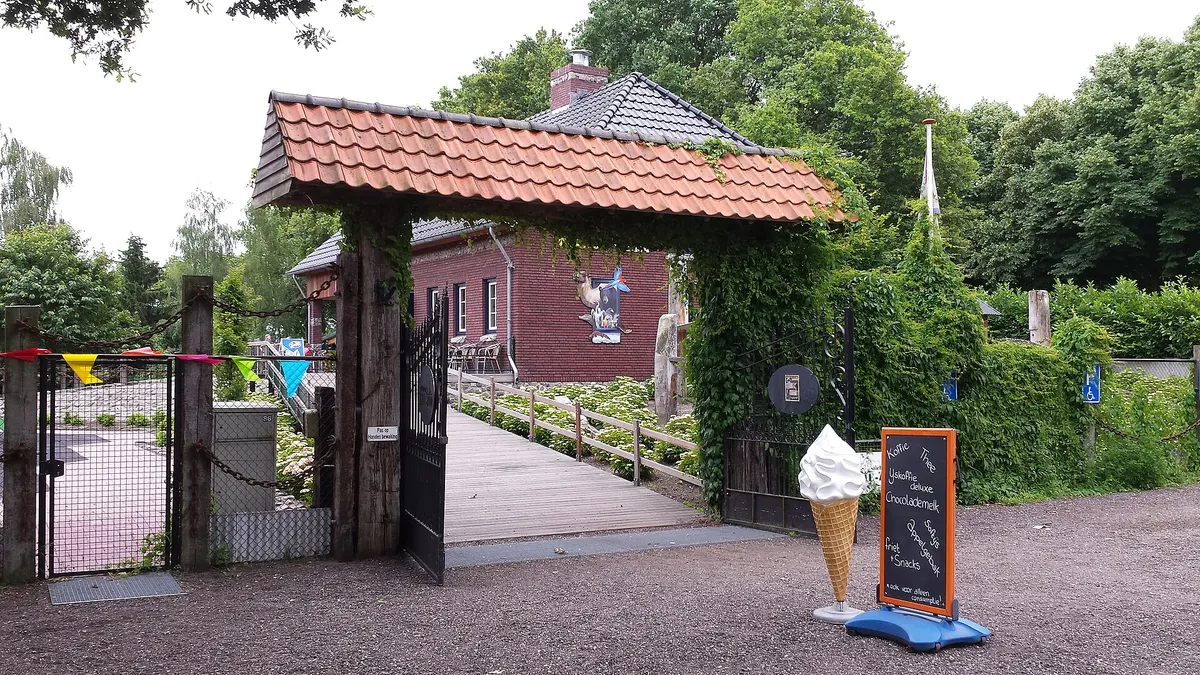 Dierenpark ZieZoo🇳🇱 Netherlands
Community notes
Share your observations about the Silver Arowana.
No community notes yet. Be the first!
Discover more wildlife
More fascinating animals from the encyclopedia.