
About the Smooth Guardian Frog
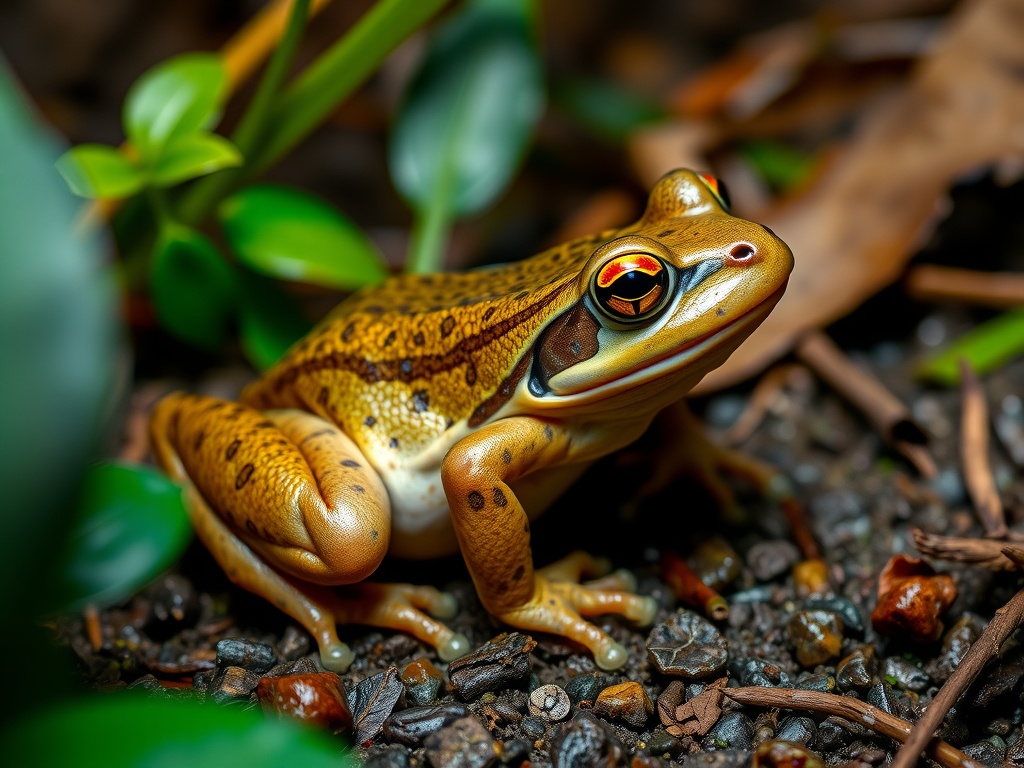
The Smooth Guardian Frog is a small amphibian native to Southeast Asia, particularly found on the island of Borneo, the Palawan region of the Philippines, and parts of Indonesia and Malaysia. It is notable for its smooth skin, slender legs, and relatively small size, usually sporting a brownish or grayish coloration with subtle patterning. This species is best known for its unique parental care, where males guard and transport their developing tadpoles on their backs to safe aquatic sites. They inhabit moist lowland and hill forests, relying on leaf litter and slow-moving streams for shelter and breeding. Despite facing habitat loss, the species is currently considered widespread and locally common in suitable habitats.
Fascinating facts
Parental Care
Male Smooth Guardian Frogs guard the eggs laid by females and carry the hatched tadpoles on their backs to suitable water bodies.
Forest Dweller
These frogs are most commonly found in the moist leaf litter of primary and secondary forests, often near small streams.
Vocal Callers
Males produce a series of high-pitched chirps during the breeding season to attract females and defend territory.
Detailed description
The Smooth Guardian Frog (Limnonectes palavanensis) is a small to medium-sized dicroglossid frog, with adults typically measuring 30–45 mm in snout-vent length. Its skin is notably smooth and moist, lacking the prominent dorsal ridges or warts seen in some related species. The coloration is generally brownish to grayish, often with faint mottling or subtle patterning that provides camouflage among leaf litter. The head is broad and slightly flattened, with large, laterally positioned eyes that enhance nocturnal vision. Limbs are slender and relatively long, with unwebbed fingers and moderately webbed toes, facilitating both terrestrial movement and limited swimming. The species is primarily terrestrial, spending much of its life in the leaf litter of primary and secondary lowland and hill rainforests, but it is closely associated with small, slow-moving streams and seepages for breeding. Males are distinguished by their vocal sacs and a unique behavioral adaptation: they exhibit remarkable parental care by guarding eggs and transporting newly hatched tadpoles on their backs to suitable aquatic microhabitats. This species is generally secretive and crepuscular to nocturnal, emerging at dusk to forage. Its ecological role includes regulating invertebrate populations and serving as prey for larger predators, contributing to the complex food web of Southeast Asian rainforests.
Did you know?
Unlike most frogs, Smooth Guardian Frogs do not lay their eggs directly in water—males guard eggs on land and later transport the tadpoles to water sources.
Research & sources
Behaviour & social structure
Smooth Guardian Frogs are primarily nocturnal, emerging at dusk to forage for small invertebrates such as insects, spiders, and other arthropods. They exhibit sit-and-wait predation, remaining motionless among leaf litter until prey approaches, then lunging with a rapid extension of the tongue. Social interactions are limited outside the breeding season, as individuals are generally solitary and territorial. Males establish small territories near suitable breeding sites, which they defend from rivals through vocalizations and occasional physical displays. During the breeding season, males become more vocal, producing a series of soft, low-frequency calls to attract females and deter competitors. Daily routines involve remaining hidden under leaf litter or debris during the day to avoid desiccation and predation, with peak activity occurring during humid nights.
Reproduction & life cycle
Breeding typically coincides with the onset of the rainy season, when increased humidity and water availability facilitate reproductive activities. Males call from concealed positions near streams or seepages to attract females. After amplexus (mating embrace), females lay small clutches of eggs (usually 10–30) in moist terrestrial sites close to water. The male then assumes responsibility for the eggs, guarding them from predators and desiccation. Upon hatching, the male carries the tadpoles on his back, often for several days, until he locates a suitable aquatic microhabitat—such as a small pool or slow-moving stream—where he releases them to continue their development. This form of male parental care is rare among amphibians and enhances offspring survival by reducing predation and desiccation risks during vulnerable early life stages.
Adaptations & survival
Limnonectes palavanensis exhibits several notable adaptations. Its smooth, moist skin facilitates cutaneous respiration and water absorption, critical for survival in humid but sometimes unpredictable rainforest environments. The cryptic coloration and patterning provide effective camouflage against the forest floor, reducing predation risk. The species' unique reproductive strategy—male egg guarding and tadpole transport—minimizes egg and larval mortality from desiccation, predation, and flooding. Moderately webbed toes allow for efficient movement in both terrestrial and semi-aquatic habitats. Behavioral adaptations include nocturnality, which helps avoid diurnal predators and reduces water loss, and the use of vocalizations for territory defense and mate attraction.
Cultural significance
There is limited documented cultural significance for Limnonectes palavanensis specifically. However, frogs in general are often regarded as indicators of environmental health in Southeast Asian cultures, and their presence is sometimes associated with the onset of rains and agricultural fertility. In some local communities, frogs may be used in traditional medicine or as food, but there are no specific records of such uses for this species. The unique parental care behavior has attracted scientific and educational interest, highlighting the species as an example of amphibian diversity and adaptation.
Recent research
Recent studies have focused on the reproductive ecology and parental care strategies of Limnonectes palavanensis, contributing to a broader understanding of the evolution of parental care in amphibians. Molecular phylogenetic analyses have clarified its relationships within the Limnonectes kuhlii complex, revealing cryptic diversity and the need for further taxonomic revision in the group. Ongoing research is examining the impacts of habitat fragmentation on population genetics and dispersal. The species' sensitivity to environmental changes makes it a useful bioindicator for monitoring rainforest ecosystem health. Additionally, its unique reproductive behavior continues to be a subject of ethological and evolutionary interest.
Sources
The Limnonectes kuhlii complex (Anura: Dicroglossidae) in Borneo: phylogeny, species boundaries, and description of a new species
Matsui, M., Shimada, T., Sudin, A., et al. (2010)
scientificLimnonectes palavanensis: The IUCN Red List of Threatened Species 2018
IUCN SSC Amphibian Specialist Group
conservationVideos
Habitat
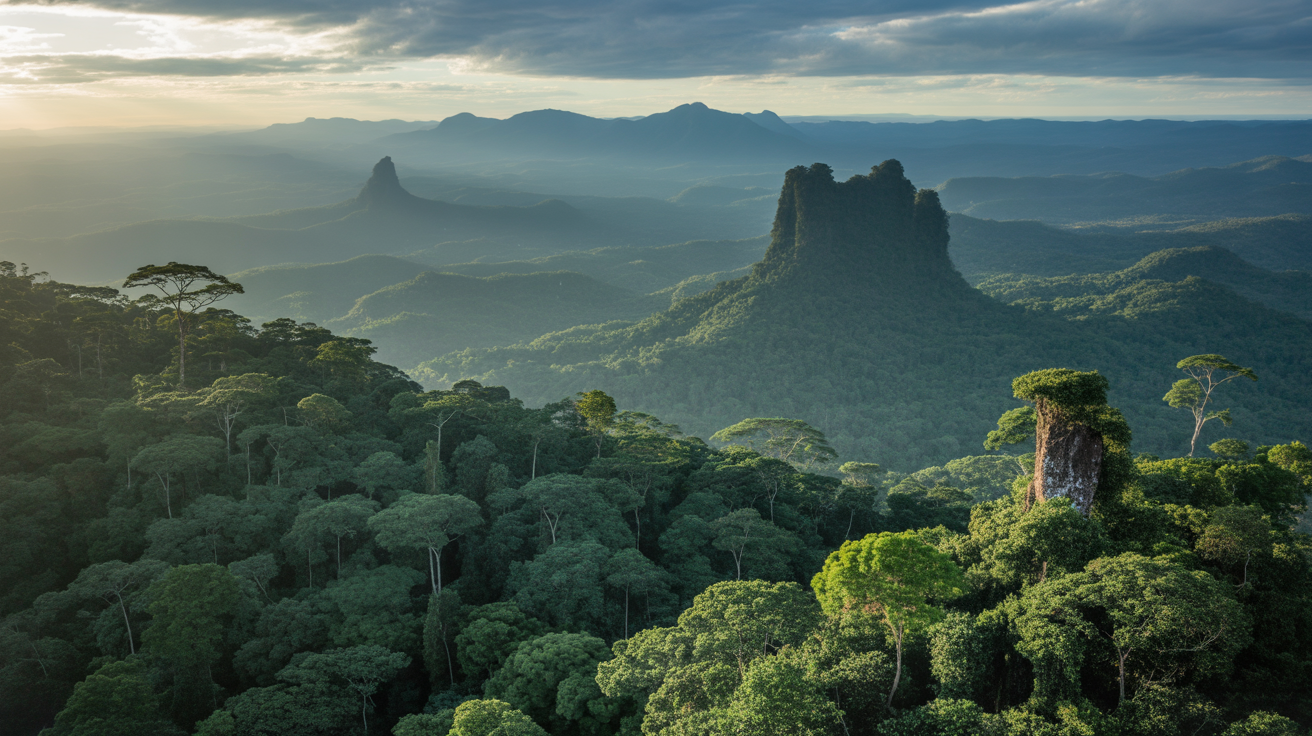
Moist lowland and hill rainforest
 Tropical Regions
Rainforest
Dense, wet forests with the highest biodiversity on Earth, containing more than half of the world's plant and animal species.
 Global
Forest
Wooded areas with significant tree cover and diverse plant and animal communities.
 Global
Freshwater
Lakes, rivers, and wetlands with diverse aquatic ecosystems.
Conservation
The Smooth Guardian Frog is currently classified as Least Concern on the IUCN Red List.
Threats & challenges
While currently listed as Least Concern by the IUCN, the Smooth Guardian Frog faces localized threats from habitat loss due to deforestation, agricultural expansion (notably oil palm plantations), and infrastructure development across its range in Borneo, Palawan, and parts of Indonesia and Malaysia. Stream pollution and siltation from logging activities can degrade breeding habitats. The species is sensitive to microhabitat changes, particularly the loss of moist leaf litter and clean, slow-moving streams required for breeding. Although populations are stable in well-protected forests, ongoing habitat fragmentation and degradation could pose future risks. There is no evidence of significant collection for the pet trade or direct exploitation.
Taxonomy
Scientific name
Limnonectes palavanensis
- Kingdom
- Animalia
- Phylum
- Chordata
- Class
- Amphibia
- Order
- Anura
- Family
- Dicroglossidae
- Genus
- Limnonectes
- Species
- palavanensis
Community notes
Share your observations about the Smooth Guardian Frog.
No community notes yet. Be the first!
Discover more wildlife
More fascinating animals from the encyclopedia.