
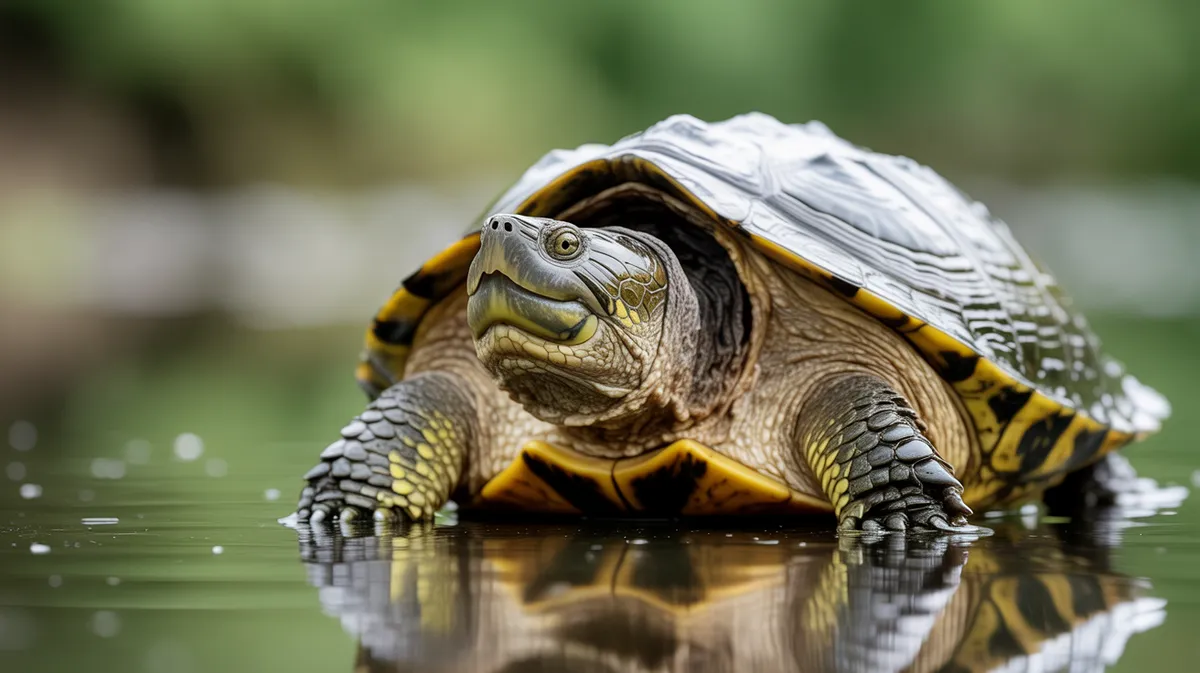
About the Snapping Turtle
The snapping turtle is a large freshwater turtle native to North America, known for its powerful beak-like jaws and aggressive disposition when threatened. It has a rugged, ridged shell and a long, muscular tail, often nearly as long as its carapace. Snapping turtles are primarily aquatic and are most frequently found buried in mud or lurking under water with only their nostrils exposed. They play a crucial role in their ecosystems by controlling populations of fish, amphibians, and aquatic plants. Despite their intimidating reputation, they are generally shy and prefer to avoid human interaction unless provoked.
Fascinating facts
Powerful Bite
Snapping turtles have one of the strongest bites among turtles, capable of crushing prey and defending themselves from predators.
Aquatic Lifestyle
They spend most of their lives in water and have webbed feet and a streamlined shell for efficient swimming.
Egg Laying
Females travel long distances from water to lay eggs, burying them in sandy or soft soil where they incubate for 9-18 weeks.
Detailed description
The common snapping turtle (Chelydra serpentina) is a large, robust freshwater turtle distinguished by its massive head, powerful hooked jaws, and highly flexible neck. Adults typically have a carapace length ranging from 20 to 36 cm (8–14 in), though some individuals may exceed 45 cm (18 in), with weights commonly between 4.5 and 16 kg (10–35 lbs); exceptional specimens can reach over 34 kg (75 lbs). The carapace is dark brown to black, often covered in algae, and features three low, longitudinal keels that become less prominent with age. The plastron is notably small, leaving much of the turtle's underside exposed, a feature unique among North American turtles. The tail is long and saw-toothed, sometimes exceeding the length of the carapace. Snapping turtles possess highly developed limb musculature and webbed feet with sharp claws, facilitating both aquatic locomotion and terrestrial movement during nesting. Their eyes are positioned high on the head, allowing them to remain mostly submerged while observing their surroundings. Behaviorally, they are primarily nocturnal and solitary, spending most of their lives concealed in muddy substrates or under aquatic vegetation. Their lifespan in the wild can exceed 30 years, with some individuals documented at over 50 years in captivity. As apex omnivores, they play a pivotal ecological role in regulating prey populations and scavenging carrion, contributing to ecosystem health.
Did you know?
Snapping turtles can breathe through their skin and the lining of their throat, allowing them to stay submerged for extended periods.
Research & sources
Wikipedia summary
The Chelydridae is a family of turtles that has seven extinct and two extant genera. The extant genera are the snapping turtles, Chelydra and Macrochelys. Both are endemic to the Western Hemisphere. The extinct genera are Acherontemys, Chelydrops, Chelydropsis, Emarginachelys, Macrocephalochelys, Planiplastron, and Protochelydra.
Behaviour & social structure
Snapping turtles are predominantly solitary and display territorial behavior, especially during the breeding season. They are largely sedentary, often remaining motionless for hours while partially buried in mud or submerged with only their nostrils and eyes exposed. Their hunting strategy is primarily ambush predation; they use their highly sensitive olfactory and tactile senses to detect prey, striking rapidly with their powerful jaws. Their diet is opportunistic and includes fish, amphibians, aquatic invertebrates, small mammals, birds, carrion, and a significant proportion of aquatic vegetation. Juveniles are more active hunters, while adults rely more on scavenging. Social interactions are minimal outside of the breeding season, and aggressive encounters are rare except during competition for mates or nesting sites. On land, snapping turtles are more vulnerable and exhibit defensive behaviors, including hissing, lunging, and biting. They are most active during warmer months and may enter a state of brumation (dormancy) during winter, burrowing into the substrate of ponds or rivers.
Reproduction & life cycle
Breeding occurs from April to November, with peak mating activity in late spring and early summer. Males reach sexual maturity at 4–7 years, females at 8–10 years, depending on environmental conditions. Courtship involves tactile and olfactory cues, with males pursuing and mounting receptive females in shallow water. Females migrate overland, sometimes traveling more than a kilometer, to find suitable nesting sites with sandy or loose soil. Nesting occurs from May to July, with females excavating a flask-shaped cavity using their hind limbs. Clutch sizes range from 20 to 40 eggs, though up to 80 have been recorded in large females. Eggs are spherical, leathery, and incubate for 75–95 days, with temperature influencing sex determination (warmer nests produce more females). There is no parental care post-oviposition; hatchlings emerge in late summer or early autumn and must make their way to water unaided, facing high predation rates.
Adaptations & survival
Chelydra serpentina exhibits several key adaptations for survival. Its powerful jaws and neck musculature enable rapid, forceful strikes, compensating for its relatively slow terrestrial movement. The reduced plastron allows greater limb mobility for both swimming and defense. Camouflaged coloration and the tendency to remain motionless aid in avoiding detection by predators and prey. The turtle's ability to respire through cloacal bursae (specialized structures in the cloaca) allows limited underwater gas exchange, facilitating prolonged submersion. Its omnivorous diet and tolerance for a wide range of aquatic habitats, including polluted or eutrophic waters, contribute to its ecological success. The species also demonstrates remarkable resilience to hypoxia, surviving in low-oxygen environments during winter brumation.
Cultural significance
Snapping turtles hold a complex place in North American culture. Indigenous peoples have traditionally used them for food, tools, and in ceremonial contexts, with the turtle often symbolizing longevity, resilience, and the Earth in Native American mythology. In some folklore, the snapping turtle is portrayed as a trickster or a symbol of patience and strength. The species has also been featured in local legends and as a subject of fascination due to its formidable appearance and behavior. However, negative perceptions persist, sometimes leading to unwarranted persecution.
Recent research
Recent research has focused on the snapping turtle's role as an ecological indicator species, particularly in monitoring wetland health and contaminant levels. Studies on temperature-dependent sex determination have provided insights into the potential impacts of climate change on population dynamics. Advances in telemetry and genetic analysis have improved understanding of their movement patterns, population structure, and connectivity between habitats. Ongoing research addresses the effects of environmental pollutants on reproductive success and immune function. Conservation efforts increasingly emphasize the importance of protecting nesting sites and mitigating road mortality.
Sources
Turtles of the World: Annotated Checklist and Atlas of Taxonomy, Synonymy, Distribution, and Conservation Status (8th Edition)
Rhodin, A.G.J., van Dijk, P.P., Iverson, J.B., Shaffer, H.B., and Bour, R. (2021)
scientificVideos
Habitat
Freshwater ponds, lakes, marshes, and slow-moving rivers


Conservation
The Snapping Turtle is currently classified as Least Concern on the IUCN Red List.
Threats & challenges
While the common snapping turtle is currently listed as Least Concern by the IUCN, it faces several localized threats. Habitat loss and fragmentation due to wetland drainage, pollution, and urbanization reduce available nesting and foraging sites. Road mortality is significant, particularly for nesting females crossing terrestrial habitats. Eggs and hatchlings are vulnerable to predation by raccoons, skunks, foxes, and birds. In some regions, overharvesting for meat and the pet trade has led to population declines. Environmental contaminants, such as heavy metals and pesticides, bioaccumulate in their tissues, potentially impacting reproductive success and longevity. Climate change may alter sex ratios and nesting phenology, posing long-term challenges.
Taxonomy
Scientific name
Chelydra serpentina
- Kingdom
- Animalia
- Phylum
- Chordata
- Class
- Reptilia
- Order
- Testudines
- Family
- Chelydridae
- Genus
- Chelydra
- Species
- serpentina
Where to see a snapping turtle
3 zoos and aquariums in 3 countries are recorded as keeping this species.
 Tennessee Aquarium🇺🇸 Chattanooga, United States
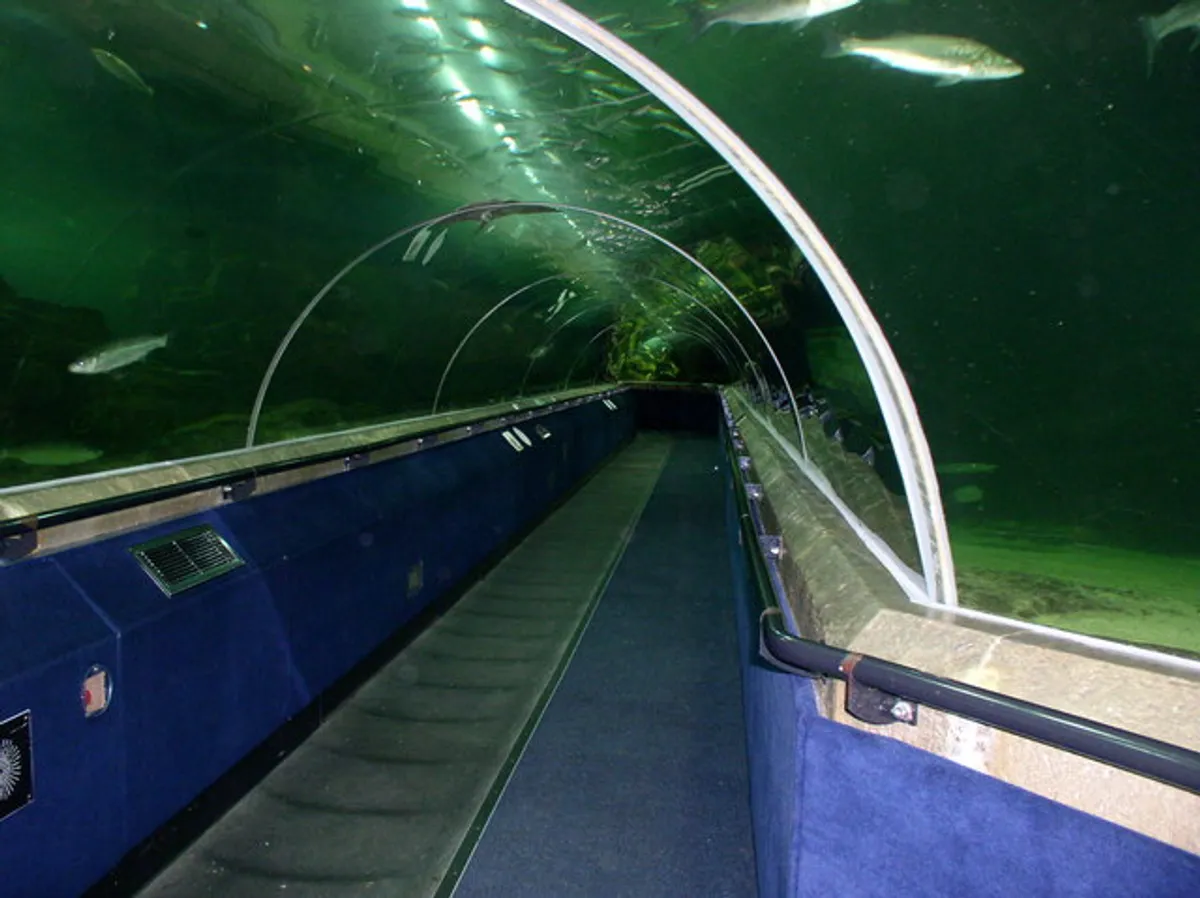 Deep Sea World🇬🇧 North Queensferry, United Kingdom
 Zoo Arche Noah🇩🇪 Germany
Community notes
Share your observations about the Snapping Turtle.
No community notes yet. Be the first!
Discover more wildlife
More fascinating animals from the encyclopedia.