
About the Sockeye Salmon
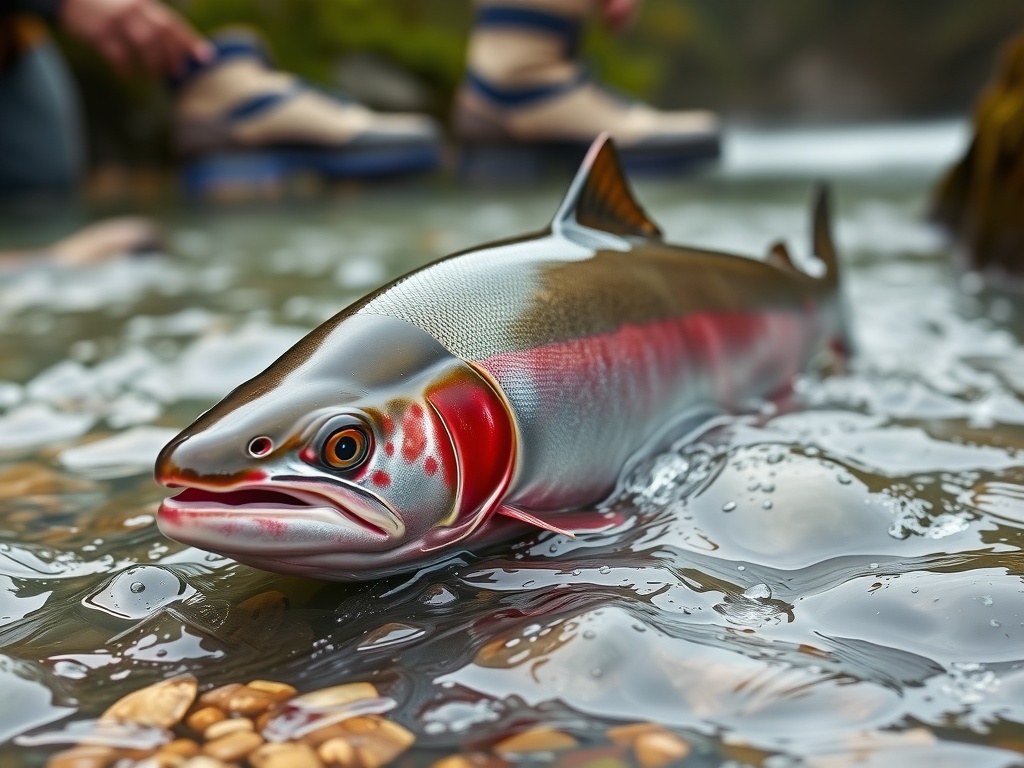
The sockeye (Oncorhynchus nerka) is the only Pacific salmon whose life cycle usually requires a lake. Fry hatch in a stream, drop down into a nursery lake and spend one to three years feeding on zooplankton before going to sea, which is why sockeye runs exist only in river systems with lakes in them and why one blocked lake outlet can erase a run. Their famous transformation is a redistribution, not a new pigment: the carotenoid astaxanthin they have accumulated from a diet of krill and copepods is stripped out of the muscle and moved into the skin, so a spawning sockeye turns crimson while its flesh pales, and the male grows a humped back and a hooked jaw, the kype. Bristol Bay in Alaska carries the largest sockeye run on Earth, in some years exceeding 60 million fish returning at once. Homing is achieved by imprinting on the chemical signature of the natal stream as a smolt and re-reading it years later, guided on the open-ocean leg by an inherited magnetic map. The run's ecological consequence extends far beyond the water: bears, eagles and gulls drag carcasses into the forest, and nitrogen of marine origin can be traced in the wood of streamside spruce, so the trees along a sockeye river are, in part, built out of ocean.
Fascinating facts
Epic Migration
Sockeye salmon migrate thousands of kilometers, navigating from the ocean back to the exact freshwater streams where they were born to spawn.
Brilliant Colors
During spawning season, sockeye salmon dramatically change color, turning vivid red with green heads to attract mates.
Nutrient Transporters
Sockeye salmon transport vital marine nutrients upstream, enriching river ecosystems and supporting a variety of terrestrial and aquatic life.
Detailed description
The sockeye salmon (Oncorhynchus nerka) is a medium-sized Pacific salmon distinguished by its streamlined, laterally compressed body and, during spawning, its vivid transformation to a bright red body with an olive-green head. Adults typically measure 60–84 cm in length and weigh between 2.3 and 7 kg, though exceptional individuals may exceed these ranges. Juveniles, known as fry and parr, display a silvery coloration with faint parr marks for camouflage in freshwater habitats. Sockeye salmon are renowned for their anadromous life cycle: they hatch in freshwater, migrate to the ocean as smolts, and return to their natal streams to spawn. Their migrations can span over 1,600 km and require navigation through complex riverine and marine environments. Sockeye exhibit strong homing behavior, using olfactory cues to locate their birthplace. In the ocean, they form large schools and feed primarily on zooplankton, supplementing their diet with small crustaceans and occasionally fish larvae. During spawning, males develop pronounced kypes (hooked jaws) and humped backs, while both sexes undergo dramatic color changes. After spawning, all anadromous sockeye die, a reproductive strategy known as semelparity. A unique freshwater-resident form, the kokanee, completes its entire life cycle in lakes and does not migrate to the ocean.
Did you know?
Some sockeye salmon populations never leave freshwater and spend their entire lives in lakes—these are known as 'kokanee' salmon.
Research & sources
Wikipedia summary
The sockeye salmon, also called red salmon, kokanee salmon, blueback salmon, or simply sockeye, is an anadromous species of salmon found in the Northern Pacific Ocean and rivers discharging into it. This species is a Pacific salmon that is primarily red in hue during spawning. They can grow up to 84 cm in length and weigh 2.3 to 7 kg (5–15 lb). Juveniles remain in freshwater until they are ready to migrate to the ocean, over distances of up to 1,600 km (1,000 mi). Their diet consists primarily of zooplankton. Sockeye salmon are semelparous, dying after they spawn. Some populations, referred to as kokanee, do not migrate to the ocean and live their entire lives in fresh water.
Behaviour & social structure
Sockeye salmon exhibit complex migratory and social behaviors. In freshwater, juveniles are generally solitary or form loose aggregations, feeding on aquatic insects and plankton. Upon reaching smolt stage, they migrate downstream, often at night to avoid predation. In the ocean, sockeye form large, pelagic schools, which may provide protection from predators and increase foraging efficiency. Their feeding is primarily filter-based, targeting dense zooplankton blooms, especially copepods and euphausiids. Sockeye are known for their precise homing ability, returning to their natal streams after 1–4 years at sea. Spawning behavior is highly ritualized: males compete for access to females, establishing and defending territories, while females excavate nests (redds) in gravel beds. Courtship involves synchronized swimming, quivering, and body vibrations. After spawning, both sexes cease feeding and rapidly deteriorate, dying within days to weeks.
Reproduction & life cycle
Sockeye salmon spawn once in their lifetime, typically between July and December, depending on latitude and local conditions. Females select gravel substrates in shallow, flowing water and use their tails to dig redds. Each female lays between 2,000 and 4,500 eggs, which are fertilized externally by one or more males. Incubation lasts 6–9 weeks, influenced by water temperature, after which alevins (larvae) emerge and remain in the gravel, subsisting on yolk sacs for several weeks. Juveniles may reside in freshwater lakes for 1–3 years (or less for kokanee) before migrating to the ocean. There is no parental care post-spawning; adults die, providing nutrients to the ecosystem. The entire life cycle from egg to returning adult typically spans 4–5 years.
Adaptations & survival
Sockeye salmon possess numerous adaptations for their anadromous lifestyle. Their streamlined bodies and powerful musculature facilitate long-distance swimming and leaping over obstacles. Smolts undergo physiological changes (smoltification) to transition from freshwater to saltwater, including alterations in gill function and osmoregulation. Their keen sense of smell enables precise homing to natal streams. During oceanic life, their gill rakers are adapted for efficient filter-feeding on small plankton. The dramatic color change during spawning serves as a visual signal for mate selection and species recognition. Semelparity maximizes reproductive output in a single event, while the post-spawning die-off recycles marine nutrients into freshwater ecosystems.
Cultural significance
Sockeye salmon hold profound cultural, economic, and ecological significance, especially for Indigenous peoples of the Pacific Northwest and Siberia. They are central to traditional diets, ceremonies, and art, symbolizing abundance, renewal, and the interconnectedness of life. Sockeye runs support commercial and recreational fisheries, contributing billions to local economies. Their annual migrations are celebrated in festivals and have inspired numerous myths and legends. The ecological role of sockeye is equally vital, as their carcasses deliver marine-derived nutrients to freshwater and terrestrial ecosystems, supporting a diverse array of wildlife and plant communities.
Recent research
Recent research has focused on the genetic basis of homing and migratory behavior, revealing distinct population structures and local adaptations. Studies using telemetry and otolith microchemistry have elucidated migration routes, timing, and survival bottlenecks. Climate change impacts, such as altered river temperatures and ocean productivity, are active areas of investigation, with evidence suggesting shifts in run timing and reduced marine survival in some regions. Genomic studies have identified key genes involved in smoltification, disease resistance, and reproductive timing. Conservation genetics is being applied to manage and restore declining stocks, while ecosystem studies highlight the importance of salmon-derived nutrients for riparian food webs.
Videos
Habitat
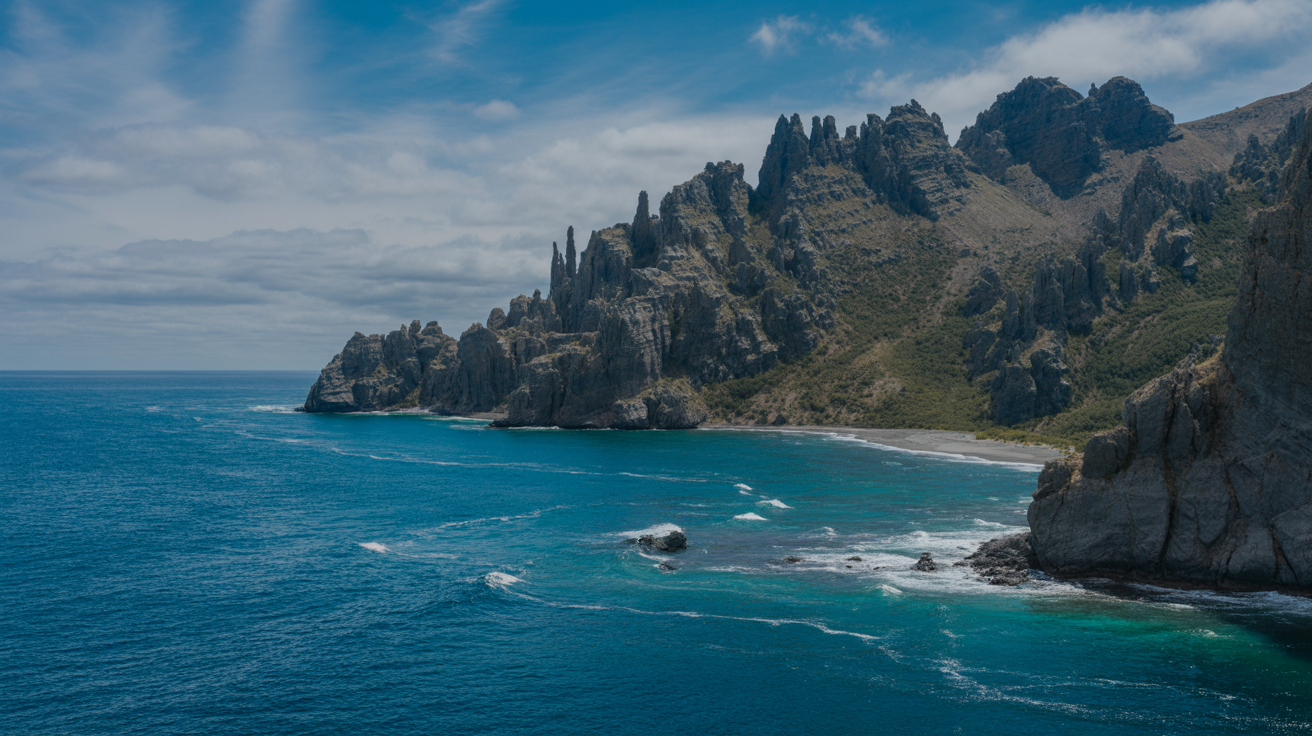
Cold freshwater rivers, lakes, and the northern Pacific Ocean


Conservation
The Sockeye Salmon is currently classified as Least Concern on the IUCN Red List.
Threats & challenges
Sockeye salmon face a range of threats, including habitat degradation (dams, logging, water extraction), climate change (altered stream temperatures and flows), overfishing, and competition or predation from introduced species. Oceanic conditions, such as temperature anomalies and food web shifts, can impact survival rates. Disease outbreaks and parasites, exacerbated by aquaculture, also pose risks. While global populations are listed as Least Concern by the IUCN, some regional stocks are threatened or endangered, particularly in the southern part of their range. Conservation challenges include maintaining migratory corridors, restoring spawning habitats, and managing fisheries sustainably.
Taxonomy
Scientific name
Oncorhynchus nerka
- Kingdom
- Animalia
- Phylum
- Chordata
- Class
- Actinopterygii
- Order
- Salmoniformes
- Family
- Salmonidae
- Genus
- Oncorhynchus
- Species
- nerka
Community notes
Share your observations about the Sockeye Salmon.
No community notes yet. Be the first!
Discover more wildlife
More fascinating animals from the encyclopedia.