
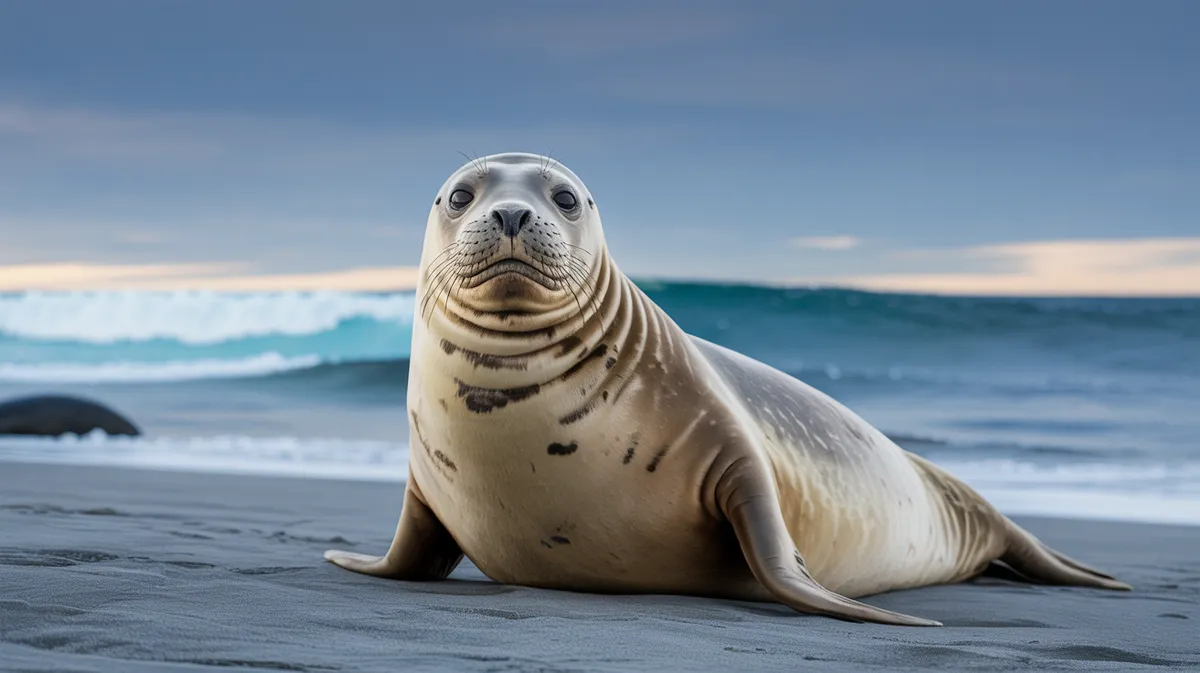
About the Southern Elephant Seal
The southern elephant seal (Mirounga leonina) is the largest carnivoran that has ever lived, and it holds the record for the most extreme sexual size dimorphism of any mammal: a beachmaster bull can reach 5 metres and 3,000 to 4,000 kilograms, six to eight times the mass of a female. That imbalance is a direct consequence of the breeding system. Bulls fight, rearing chest to chest and slamming their inflatable proboscis-tipped heads together, and the winner monopolises a harem of dozens of cows, so a handful of males father almost everything on a beach while the great majority of males never breed at all. Away from the beach the species is a deep-diving specialist. Individuals routinely dive for 20 to 60 minutes and to depths of 400 to 1,000 metres, with recorded dives beyond 2,000 metres and lasting over two hours, hunting squid and fish in near-total darkness; they spend roughly 90 per cent of their lives underwater, surfacing for only a couple of minutes between dives. They achieve this by collapsing their lungs on descent and storing oxygen in blood and muscle rather than in air. Once a year they haul out for a catastrophic moult, shedding skin and hair in ragged sheets over several weeks while fasting. South Georgia alone holds roughly half the world's population.
Fascinating facts
World's Largest Seal
Southern Elephant Seals hold the title for the largest seal species, with some males reaching lengths of over 6 meters.
Extreme Divers
They are capable of diving deeper than 2,000 meters and can stay submerged for up to two hours while hunting for food.
Loud Roar
Males use their large proboscis to produce loud roars during the breeding season, which helps establish dominance and attract females.
Detailed description
The Southern Elephant Seal (Mirounga leonina) is the largest pinniped and the largest carnivoran alive today, with adult males (bulls) reaching lengths of up to 6 meters (20 ft) and weighing as much as 4,000 kg (8,800 lbs). Females are much smaller, typically measuring 2.5–3 meters (8–10 ft) and weighing 400–900 kg (880–1,980 lbs). The species is named for the adult male's distinctive proboscis, an inflatable, trunk-like nose used to amplify vocalizations during the breeding season. Their bodies are robust and streamlined, covered in short, dense fur that is shed annually during a catastrophic molt. Southern Elephant Seals have large, forward-facing eyes adapted for low-light vision in deep ocean waters, and their nostrils can close tightly to prevent water entry during dives. They possess a thick layer of blubber, up to 10 cm (4 in) deep, which insulates them from frigid Antarctic waters and serves as an energy reserve during fasting periods. These seals are highly sexually dimorphic, with males displaying pronounced secondary sexual characteristics and engaging in fierce battles for dominance and breeding rights. Social structure is hierarchical, particularly during the breeding season, when dominant bulls control harems of up to 50 females. Southern Elephant Seals are exceptional divers, routinely descending to depths of 400–1,000 meters (1,300–3,300 ft), with recorded dives exceeding 2,000 meters (6,600 ft) and lasting up to two hours. Their life at sea is solitary and pelagic, with individuals spending up to 10 months each year foraging in the open ocean, often traveling thousands of kilometers between haul-out sites.
Did you know?
Southern Elephant Seals spend about 90% of their lives underwater, often diving continuously for weeks at a time.
Research & sources
Wikipedia summary
The southern elephant seal is one of two species of elephant seals. It is the largest member of the clade Pinnipedia and the order Carnivora, as well as the largest extant marine mammal that is not a cetacean. It gets its name from its massive size and the large proboscis of the adult male, which is used to produce very loud roars, especially during the breeding season. A bull southern elephant seal is about 40% heavier than a male northern elephant seal, which is nearly twice the weight of a male walrus, or 6–7 times heavier than the largest living mostly terrestrial carnivorans, the Kodiak bear and the polar bear.
Behaviour & social structure
Southern Elephant Seals are primarily solitary outside the breeding and molting seasons, spending most of their lives at sea. They exhibit a diel vertical migration pattern, diving deeper during the day (average 500–1,000 m) and shallower at night (200–400 m), likely following prey movements. Their diet consists mainly of mesopelagic and bathypelagic squid and fish, such as Antarctic toothfish and lanternfish, with occasional consumption of crustaceans. Foraging dives are typically silent and methodical, with seals using their sensitive vibrissae (whiskers) to detect prey in the darkness. On land, social interactions are most intense during the breeding season, when males establish dominance hierarchies through vocalizations, displays, and physical combat. Females form loosely aggregated groups called harems, while subordinate males and juveniles remain at the periphery. Daily routines on land involve long periods of rest interspersed with brief bouts of activity, such as moving between the water and resting sites or engaging in social interactions.
Reproduction & life cycle
Breeding occurs annually between September and November, primarily on subantarctic islands such as South Georgia, Macquarie, and Kerguelen. Adult males arrive first to establish territories and compete for access to females, often engaging in violent fights that can result in serious injuries. Dominant bulls control harems of 10–50 females and mate with them during the breeding season. Females give birth to a single pup after an 11-month gestation, which includes a delayed implantation period of about 3 months. Pups are born with a dark, woolly lanugo coat and weigh 40–50 kg (88–110 lbs) at birth. Mothers nurse their pups for about 23 days, during which time they fast and rely on stored blubber reserves. Pups gain weight rapidly, sometimes tripling their mass before weaning. After weaning, mothers return to sea, and the pups remain ashore for several weeks before entering the water. Sexual maturity is reached at 3–5 years for females and 6–8 years for males, though only the largest and most dominant males typically breed.
Adaptations & survival
Southern Elephant Seals exhibit a suite of adaptations for deep, prolonged diving and survival in extreme environments. Their blood has a high volume of hemoglobin and myoglobin, allowing for exceptional oxygen storage, while their muscles and organs can tolerate high levels of carbon dioxide and lactic acid. They are capable of reducing their heart rate (bradycardia) and redirecting blood flow to vital organs during dives. Their large eyes are adapted for low-light vision, and their vibrissae are highly sensitive to detect prey in the dark. The thick blubber layer provides insulation and energy storage, crucial for fasting during breeding and molting. Their nostrils and larynx can close to prevent water entry, and their streamlined bodies minimize drag during swimming. Behavioral adaptations include synchronized haul-outs for molting and breeding, and the ability to fast for weeks to months while on land.
Cultural significance
Southern Elephant Seals have played a role in the history of Antarctic exploration and the sealing industry, with their blubber once being a valuable source of oil for lighting and lubrication. They feature in the folklore and oral histories of subantarctic island communities. In modern times, they are a focus of ecotourism and scientific research, symbolizing the remote and extreme environments of the Southern Ocean. Their impressive size and dramatic breeding behavior have made them iconic subjects in wildlife documentaries and conservation campaigns.
Recent research
Recent research has focused on the foraging ecology of Southern Elephant Seals using satellite telemetry and time-depth recorders, revealing extensive migrations and deep-diving behavior. Studies have documented their role as top predators in the Southern Ocean ecosystem and their sensitivity to changes in sea ice and prey distribution. Genetic analyses have provided insights into population structure and connectivity among breeding colonies. Ongoing research is investigating the physiological mechanisms underlying their diving endurance and fasting capabilities, as well as the potential impacts of climate change on their life history and distribution.
Sources
Mirounga leonina (Southern Elephant Seal): Taxonomy, Ecology, and Behavior
Hofmeyr, G.J.G. et al., IUCN Red List (2015)
scientificDiving behaviour of southern elephant seals (Mirounga leonina) at Macquarie Island
Hindell, M.A., Slip, D.J., Burton, H.R. (1991)
scientificVideos
Habitat
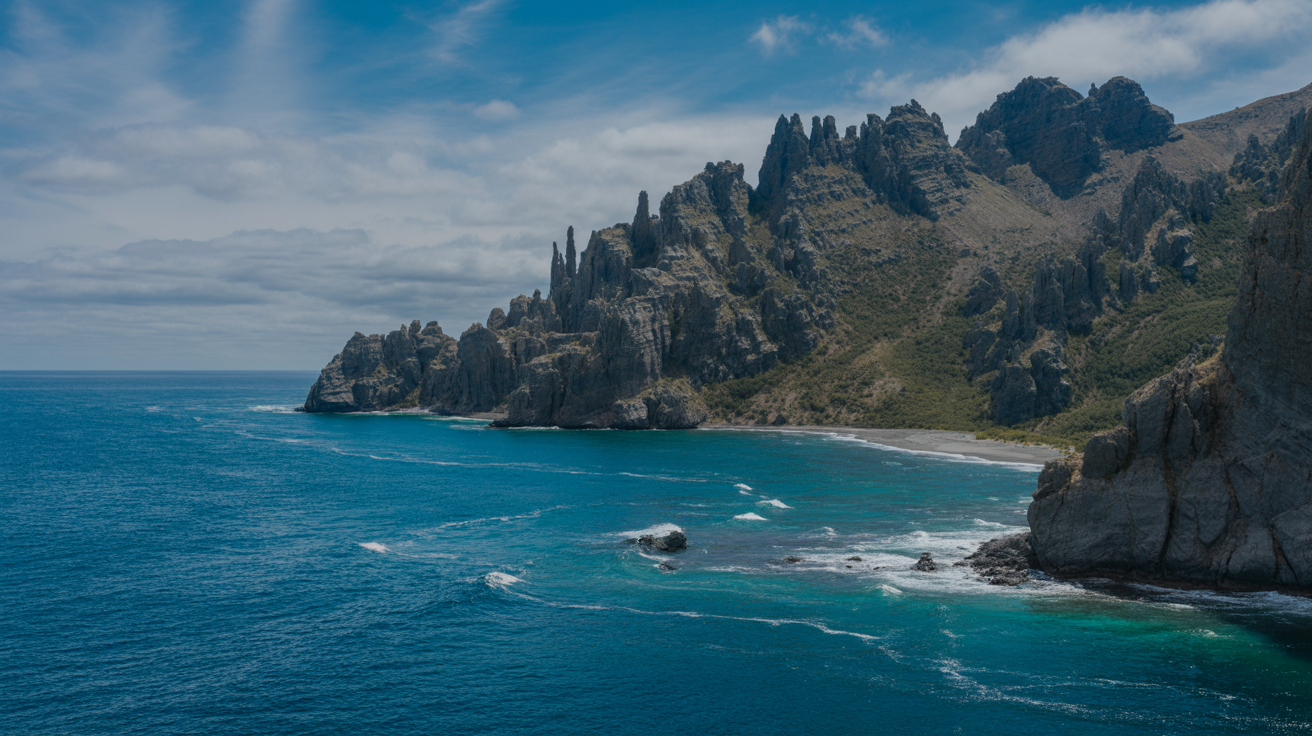
Subantarctic and Antarctic islands and surrounding ocean

Conservation
The Southern Elephant Seal is currently classified as Least Concern on the IUCN Red List.
Threats & challenges
Historically, Southern Elephant Seals were heavily exploited for their blubber oil in the 18th and 19th centuries, leading to dramatic population declines. Today, populations have largely recovered and are classified as Least Concern by the IUCN, with an estimated global population of 650,000–800,000 individuals. However, some regional populations, such as those on Macquarie Island, have shown declines, possibly due to changes in prey availability linked to climate change and competition with fisheries. Other threats include entanglement in marine debris, disturbance from human activities, and potential impacts from disease. Their remote breeding sites offer some protection, but ongoing monitoring is necessary to detect and respond to emerging threats.
Taxonomy
Scientific name
Mirounga leonina
- Kingdom
- Animalia
- Phylum
- Chordata
- Class
- Mammalia
- Order
- Carnivora
- Family
- Phocidae
- Genus
- Mirounga
- Species
- leonina
Community notes
Share your observations about the Southern Elephant Seal.
No community notes yet. Be the first!
Discover more wildlife
More fascinating animals from the encyclopedia.