
About the Southern Leopard Frog
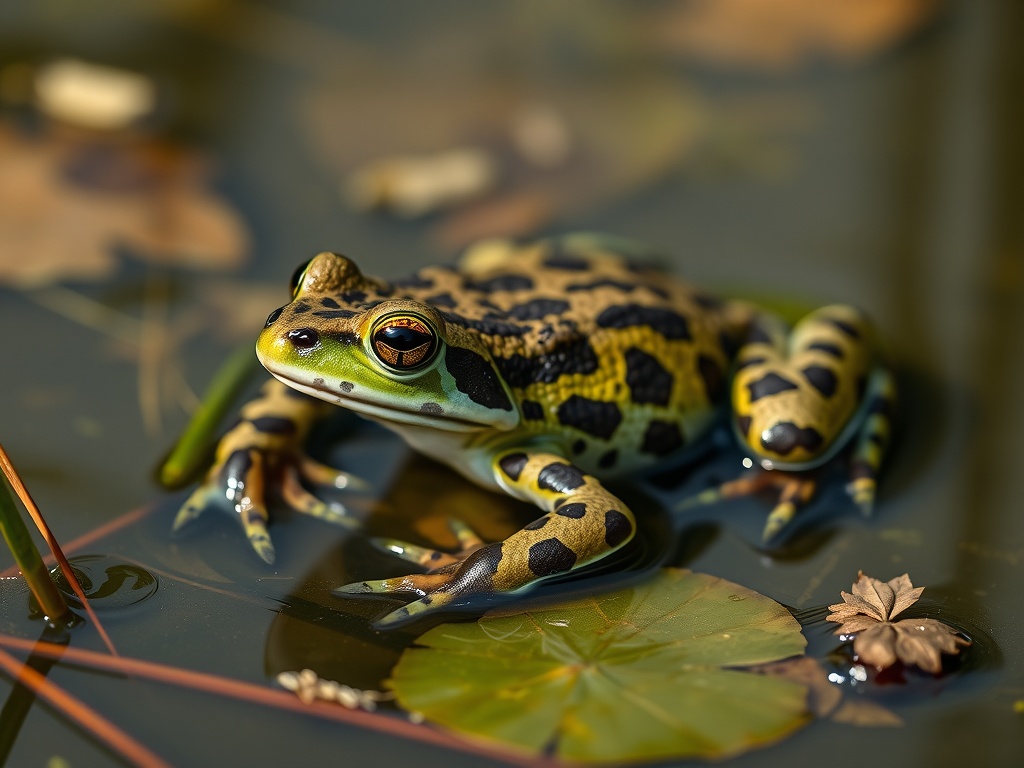
The Southern Leopard Frog is a medium-sized amphibian distinguished by its slender body, long legs, and prominent dark spots on a green or brown background. This adaptable frog is commonly found in the southeastern United States, inhabiting a variety of freshwater environments such as ponds, swamps, marshes, and streams. Southern Leopard Frogs are known for their powerful leaps and their ability to quickly escape predators. During the warmer months, they are often heard producing their characteristic 'chuckling' call, especially during breeding season. Their cryptic coloration helps them blend into vegetation, making them difficult to spot in the wild.
Fascinating facts
Unique Spot Patterns
Each Southern Leopard Frog has a unique pattern of dark spots, much like a fingerprint, which helps with individual identification.
Distinctive Calls
Their breeding call is a rapid, chuckling sound, often described as resembling laughter, especially heard during spring and summer nights.
Aquatic Adaptability
This frog can thrive in both permanent and temporary water bodies and is frequently one of the first amphibians to colonize newly formed ponds.
Detailed description
The Southern Leopard Frog (Lithobates sphenocephalus) is a medium-sized member of the true frog family (Ranidae), typically reaching 5–13 cm (2–5 in) in snout-vent length, with females generally larger than males. Its slender, streamlined body is marked by prominent, irregular dark spots on a green, brown, or occasionally tan background, and it features a distinctive light dorsolateral fold running from behind the eye to the hip. The tympanum (external eardrum) is conspicuous, and the hind legs are long and muscular, adapted for powerful leaps. The ventral surface is pale, often white or cream, and the groin area may show a yellowish wash. Southern Leopard Frogs are semi-aquatic, spending much of their time near the water’s edge but capable of moving considerable distances overland, especially during wet weather. Their eyes are positioned high on the head, providing a wide field of vision to detect predators and prey. These frogs are primarily nocturnal, becoming most active at dusk and during the night, although they may be seen basking or foraging during rainy days. Their cryptic coloration and rapid escape response make them difficult to capture, and they are known for their distinctive, chuckling breeding call. Socially, they are generally solitary outside of the breeding season, but may aggregate in large numbers at breeding sites.
Did you know?
Southern Leopard Frogs can travel long distances over land to find new breeding sites or escape drying habitats.
Research & sources
Wikipedia summary
Lithobates sphenocephalus or Rana sphenocephala, commonly known as the southern leopard frog, is a medium-sized anuran in the family Ranidae. The southern leopard frog is one of the 36 species currently or formerly classified in the Rana genus found in North America. It is native to eastern North America from Kansas to New York to Florida. It is also an introduced species in some areas. This species lives in cool, clear water in the north, whereas in the south it occurs in warmer turbid and murky waters of coastal and floodplain swamps, twilight zones of caves, and abandoned mines.
Behaviour & social structure
Southern Leopard Frogs are opportunistic carnivores, feeding on a wide variety of invertebrates such as insects, spiders, worms, and crustaceans, as well as occasionally preying on smaller amphibians and even small fish. They employ a sit-and-wait hunting strategy, remaining motionless until prey comes within striking distance, then lunging with a rapid extension of the tongue. Foraging occurs primarily at night, but may extend into daylight hours during wet or overcast conditions. Outside the breeding season, individuals are largely solitary and territorial, but show little aggression except when competing for prime basking or feeding spots. During the breeding season, males congregate in shallow water and call to attract females, often forming loose choruses. The species is known for its agility and speed both in water and on land, and when threatened, it will leap into water and dive to the bottom or seek refuge in dense vegetation. They are also capable of burrowing into moist substrate to avoid desiccation during dry periods.
Reproduction & life cycle
Breeding typically occurs from late winter to early spring (January–April in the southern range, March–June in the north), triggered by rising temperatures and increased rainfall. Males arrive at breeding sites first and produce a distinctive, guttural 'chuckling' call to attract females. Amplexus (the mating embrace) is axillary, with the male grasping the female behind the forelimbs. Females lay large, globular egg masses containing 300–5,000 eggs, which are attached to submerged vegetation or debris in shallow water. Embryonic development is rapid, with eggs hatching in 4–14 days depending on water temperature. Tadpoles are herbivorous, feeding on algae and detritus, and undergo metamorphosis into juvenile frogs after 2–3 months. There is no parental care after egg-laying; survival of the young depends on environmental conditions and predation pressure. Southern Leopard Frogs may breed multiple times per year in favorable climates.
Adaptations & survival
Southern Leopard Frogs exhibit several adaptations for survival in variable and sometimes ephemeral aquatic habitats. Their cryptic coloration and irregular spotting provide camouflage among aquatic vegetation and leaf litter. Long, muscular hind limbs enable rapid, long-distance jumps to escape predators. The species can tolerate a wide range of water conditions, from cool, clear northern streams to warm, turbid southern swamps, and is capable of aestivation (dormancy) in mud during droughts. Their permeable skin allows for cutaneous respiration, which is important in low-oxygen environments. Tadpoles possess keratinized mouthparts for scraping algae and can develop rapidly to exploit temporary pools. Adults are also able to travel overland to colonize new habitats, contributing to their wide distribution.
Cultural significance
The Southern Leopard Frog has been a familiar presence in the folklore and natural history of the southeastern United States. Its distinctive call is a hallmark of spring and is often cited in regional literature and music as a symbol of wetland renewal. The species is sometimes used in educational settings and biological research due to its abundance and ease of observation. While not widely featured in mythology, frogs in general are associated with transformation and fertility in various cultures. There is no significant record of traditional medicinal or culinary use for this species.
Recent research
Recent research on Lithobates sphenocephalus has focused on its adaptability to anthropogenic environments, genetic variation across its range, and responses to environmental contaminants. Studies have examined the impact of agricultural runoff on larval development and the species’ role as a bioindicator of wetland health. Ongoing work is investigating the effects of climate change on breeding phenology and range shifts. Molecular studies have clarified its taxonomic status, distinguishing it from closely related leopard frog species. The species is also being monitored for susceptibility to emerging amphibian diseases, including ranavirus and chytrid fungus.
Videos
Habitat
Freshwater wetlands, ponds, marshes, streams, and temporary pools
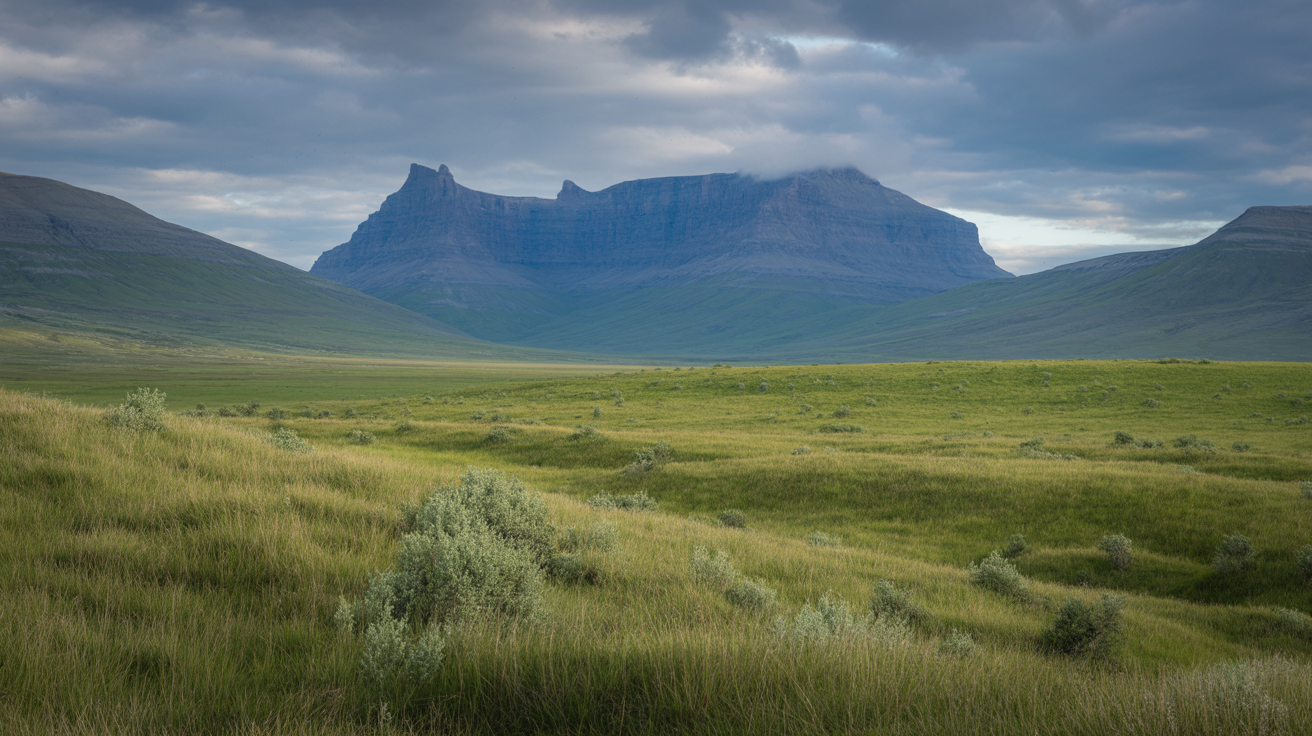 Various Continental Regions
Grassland
Open areas dominated by grasses rather than trees, supporting numerous herbivores and their predators.
 Global
Forest
Wooded areas with significant tree cover and diverse plant and animal communities.
 Global
Freshwater
Lakes, rivers, and wetlands with diverse aquatic ecosystems.
Conservation
The Southern Leopard Frog is currently classified as Least Concern on the IUCN Red List.
Threats & challenges
Currently, the Southern Leopard Frog is considered widespread and abundant, with stable populations throughout much of its range. However, local declines have been reported due to habitat loss from wetland drainage, urbanization, and agricultural expansion. Pollution, particularly from pesticides and fertilizers, poses a risk to both adults and larvae. The species is susceptible to chytridiomycosis, a fungal disease affecting amphibians globally, though it appears less vulnerable than some other species. Road mortality during seasonal migrations and predation by introduced species (such as fish and bullfrogs) are additional challenges. Climate change may alter breeding phenology and reduce the availability of suitable aquatic habitats in the future.
Taxonomy
Scientific name
Lithobates sphenocephalus
- Kingdom
- Animalia
- Phylum
- Chordata
- Class
- Amphibia
- Order
- Anura
- Family
- Ranidae
- Genus
- Lithobates
- Species
- sphenocephalus
Community notes
Share your observations about the Southern Leopard Frog.
No community notes yet. Be the first!
Discover more wildlife
More fascinating animals from the encyclopedia.