
About the Springhare
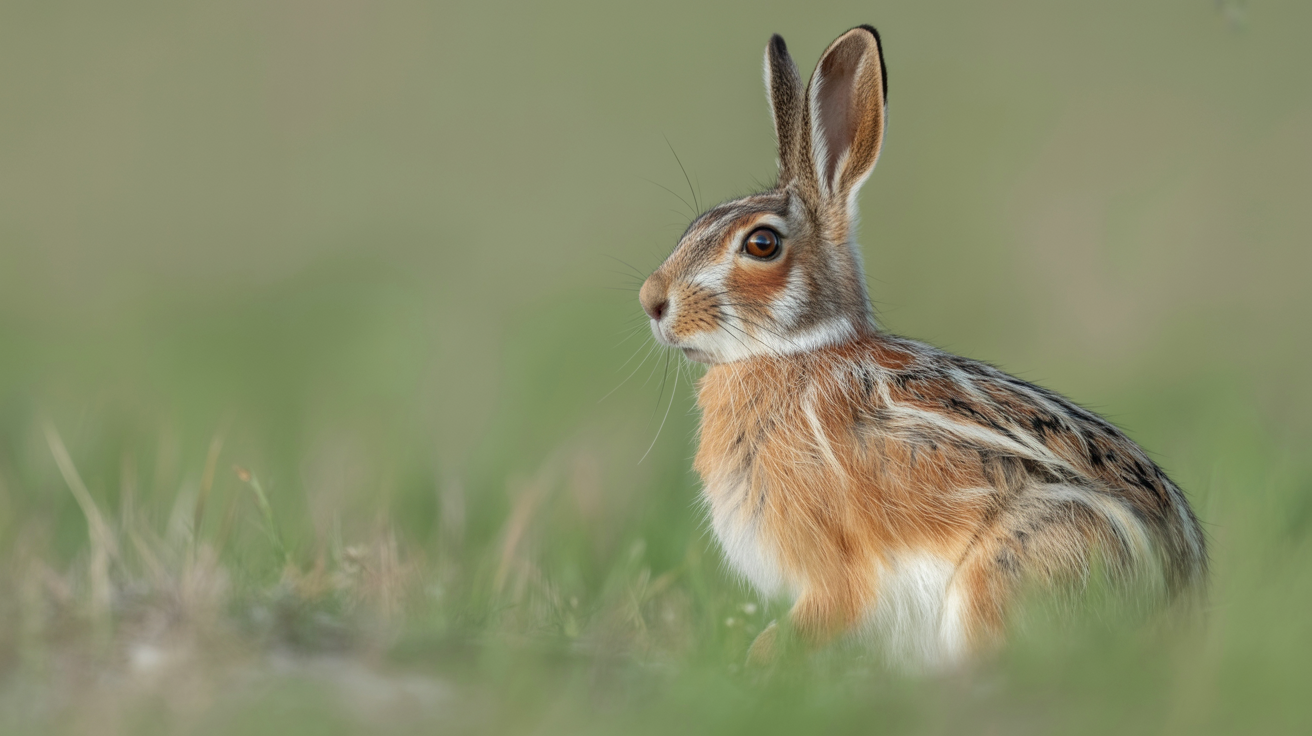
The springhare (Pedetes capensis) is a southern African rodent that looks and moves like a small kangaroo: it hops bipedally on greatly enlarged hind legs, covering 2 metres or more in a bound, and balances with a long, black-tipped tail. It is not a hare and is not related to kangaroos; it sits in its own family, Pedetidae, whose placement within the rodents was uncertain for a long time. The convergence with kangaroos and jerboas is a straight response to living in open country where a straight-line sprint is useless and an unpredictable series of leaps is the best escape from jackals and owls. Springhares are strictly nocturnal, spending the day plugged into a burrow whose entrance they seal behind them, and they emerge at dusk to graze grass and dig for roots and rhizomes. Their eyeshine is a brilliant orange and they are widely hunted for meat, being one of the most important sources of bushmeat protein in parts of Botswana and Namibia. In 2023 researchers reported that springhares are biofluorescent, glowing patchy pink and orange under ultraviolet light, the first Old World placental mammal shown to do so; the fluorescence comes from porphyrins in the fur, and its function, if any, is unknown.
Fascinating facts
Jumping Experts
Springhares can leap up to 3 meters in a single bound thanks to their long and muscular hind legs.
Nightlife
Springhares are strictly nocturnal, spending the day in burrows and emerging at night to forage for food.
Master Burrowers
They construct complex burrow systems with multiple exits to evade predators and regulate temperature.
Detailed description
The springhare (Pedetes capensis) is a large, nocturnal rodent characterized by a robust, elongated body measuring 35–45 cm in head-body length, with a bushy tail nearly as long (37–47 cm). Adults typically weigh between 2.5 and 4 kg. Its most distinctive features are its disproportionately large hind legs and feet, adapted for powerful saltatory (jumping) locomotion, and a long, thickly furred tail used for balance. The forelimbs are much shorter and equipped with strong claws for digging. Springhares have large, forward-facing eyes optimized for night vision, and prominent ears that provide acute hearing—both crucial for nocturnal activity. The soft fur is reddish-brown to sandy on the dorsal side and paler ventrally, providing camouflage in arid grassland habitats. The dental formula is adapted for a herbivorous diet, with ever-growing incisors and high-crowned cheek teeth. Springhares are solitary and territorial, spending daylight hours in complex burrow systems that can reach depths of 2–3 meters. They emerge at dusk to forage, using their keen senses to locate food and detect predators. Their leaping ability allows them to cover distances of up to 3 meters in a single bound, an effective means of evading threats. Despite their superficial resemblance to kangaroos and hares, springhares are phylogenetically distinct, representing a unique lineage within the order Rodentia.
Did you know?
Despite their kangaroo-like appearance and hopping locomotion, springhares are actually rodents and not marsupials.
Research & sources
Wikipedia summary
Pedetes is a genus of rodent, the springhares, in the family Pedetidae. Members of the genus are distributed across southern and Eastern Africa.
Behaviour & social structure
Springhares are strictly nocturnal, emerging from their burrows shortly after sunset. They spend the night foraging for food, primarily grasses, roots, bulbs, and occasionally cultivated crops. Feeding is typically solitary, although overlapping home ranges may result in occasional encounters. They use their powerful hind limbs to move in a series of long, bounding leaps, often pausing upright to scan for danger. When alarmed, springhares can rapidly zigzag and leap to evade predators such as jackals, owls, and snakes. Burrow maintenance is an important activity; individuals frequently excavate and expand their tunnels using their forelimbs. Vocalizations are rare, but they may produce low grunts or foot-thumping as alarm signals. Scent marking with glandular secretions is used to delineate territories. During the day, they rest in the cool, humid microclimate of their burrows, which also provide protection from extreme temperatures and predators.
Reproduction & life cycle
Springhares are generally solitary outside of the breeding season, but males and females come together for mating, which can occur year-round but peaks in the wet season (typically October to March in southern Africa). Females have a gestation period of approximately 78–82 days, after which a single, precocial young is born in the burrow. The newborn is well-furred, with eyes open, and is capable of limited movement within a few days. Maternal care is pronounced; the mother nurses the young for about 6–8 weeks, after which it is weaned and begins to forage independently. Sexual maturity is reached at around 6–12 months. Litter size is almost always one, which is unusual for rodents and reflects a K-selected reproductive strategy, likely related to the high investment in each offspring and the relatively stable environment of their burrows.
Adaptations & survival
Springhares exhibit several remarkable adaptations for their semi-fossorial and saltatory lifestyle. Their elongated hind limbs and reduced forelimbs are convergent with those of kangaroos, enabling efficient bipedal hopping. The tail acts as a dynamic counterbalance during leaps and as a support when sitting upright. Their burrowing behavior is facilitated by strong, clawed forelimbs and a compact body. Large eyes with a high density of rod cells enhance night vision, while large pinnae improve auditory acuity. The fur is dense and water-repellent, offering insulation against temperature extremes. Springhares can survive in arid environments by obtaining moisture from succulent roots and bulbs, reducing their dependence on free water. Their digestive system is adapted for a high-fiber diet, with a large cecum for microbial fermentation.
Cultural significance
Springhares have limited but notable cultural significance in southern Africa. In some rural communities, they are hunted for meat, which is considered a delicacy. Their skins have occasionally been used for clothing or ceremonial items. Folklore sometimes attributes springhares with agility and cleverness, and they may appear in traditional stories as trickster figures. However, their role in mythology is less prominent than that of other African mammals. In modern times, they are sometimes viewed negatively due to crop-raiding behavior.
Recent research
Recent genetic and morphological studies have clarified the evolutionary relationships of springhares, confirming their distinctiveness within the suborder Anomaluromorpha. Ongoing research focuses on their saltatory locomotion biomechanics, burrow microclimate regulation, and dietary flexibility in response to environmental change. Stable isotope analyses have revealed seasonal shifts in diet composition. There is also growing interest in their role as ecosystem engineers, as their burrowing activity influences soil aeration and plant community structure. Disease ecology is an emerging field, with studies examining their susceptibility to zoonotic pathogens.
Videos
Habitat
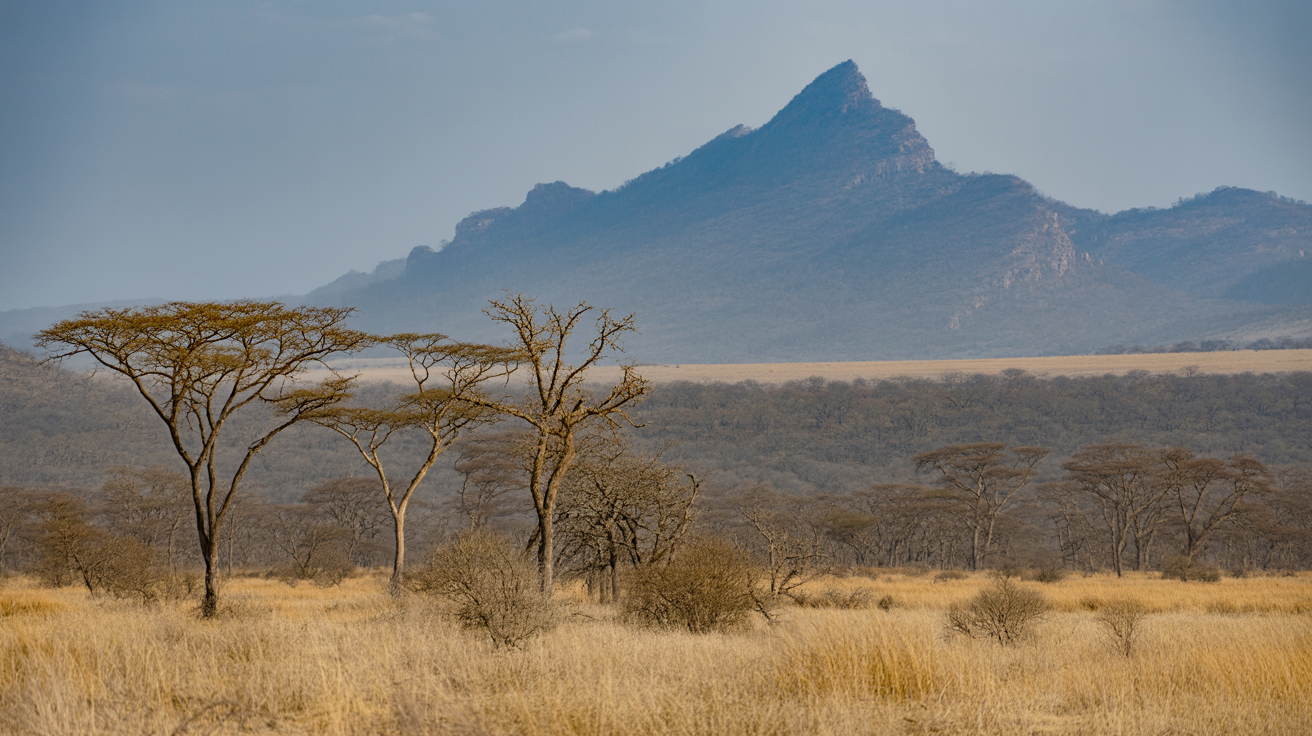
Open grasslands and savannas

Conservation
The Springhare is currently classified as Least Concern on the IUCN Red List.
Threats & challenges
Although currently classified as Least Concern by the IUCN, springhares face several localized threats. Habitat loss due to agricultural expansion, overgrazing, and urbanization can reduce suitable foraging and burrowing areas. They are sometimes considered agricultural pests and may be hunted or poisoned by farmers. Predation by native carnivores and birds of prey is natural, but increased predation pressure can occur in fragmented habitats. Disease outbreaks, such as those caused by parasites or viral infections, can impact local populations. Despite these challenges, springhares remain widespread and locally abundant, with stable overall population trends.
Taxonomy
Scientific name
Pedetes capensis
- Kingdom
- Animalia
- Phylum
- Chordata
- Class
- Mammalia
- Order
- Rodentia
- Family
- Pedetidae
- Genus
- Pedetes
- Species
- capensis
Community notes
Share your observations about the Springhare.
No community notes yet. Be the first!
Discover more wildlife
More fascinating animals from the encyclopedia.