
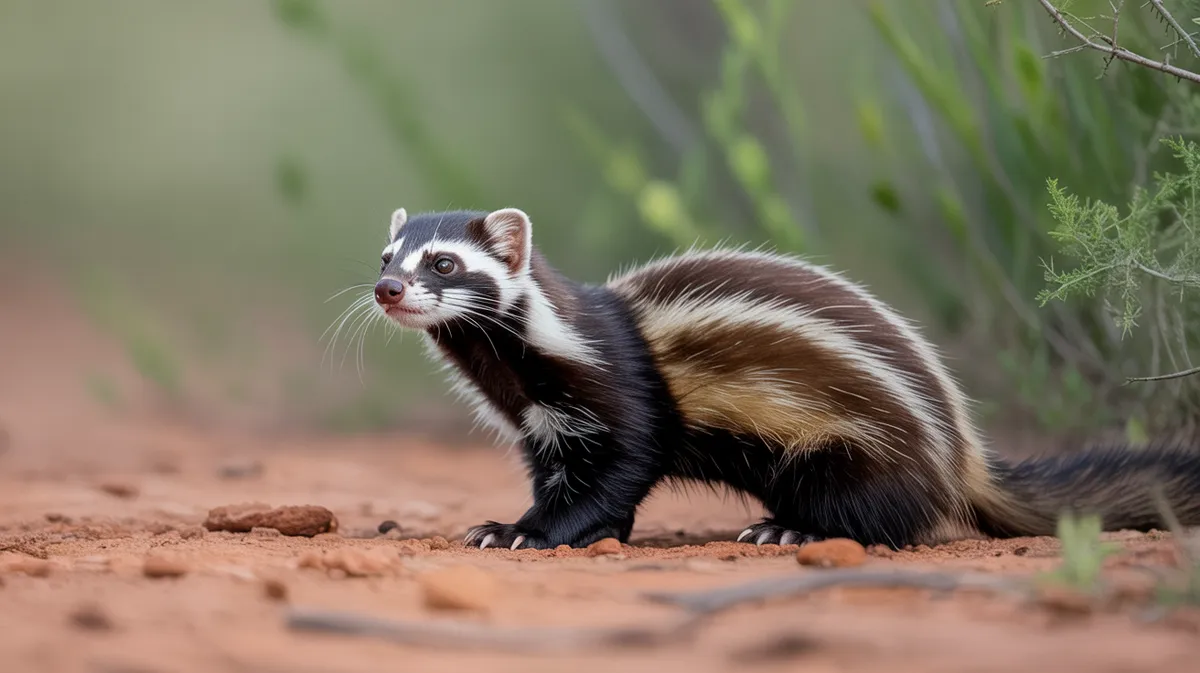
About the Striped Polecat
The striped polecat, commonly referred to as the zorilla, is a small carnivorous mammal native to sub-Saharan Africa. It is easily recognized by its striking black and white striped pattern, which runs along its body and serves as a warning to potential predators. Zorillas are primarily nocturnal and solitary, using their keen sense of smell to hunt insects, small mammals, and reptiles. When threatened, they can release a foul-smelling secretion from their anal glands, similar to skunks in the Americas.
Fascinating facts
Potent Defense
When threatened, the zorilla can spray a noxious fluid up to two meters, deterring most predators with its strong odor.
Night Hunter
Zorillas are mostly nocturnal, foraging for insects, small rodents, and amphibians under the cover of darkness.
Warning Colors
The bold black and white stripes of the zorilla serve as aposematic coloration, warning would-be attackers of its powerful chemical defense.
Detailed description
The striped polecat (Ictonyx striatus) is a small, slender mustelid, typically measuring 28–38 cm in body length with a tail of 20–30 cm, and weighing between 0.6 and 1.3 kg. Its pelage is characterized by bold black and white longitudinal stripes running from head to tail, with a distinctive white facial mask and a bushy tail tipped with white. The fur is coarse and dense, providing protection from both the elements and potential predators. The head is relatively small with short, rounded ears and a pointed snout, adapted for probing into crevices and burrows. The striped polecat possesses well-developed anal scent glands capable of ejecting a noxious secretion up to 2 meters, serving as a potent deterrent against predators. Primarily nocturnal, it is a solitary forager, relying on acute olfactory and auditory senses to locate prey such as rodents, birds, reptiles, amphibians, and invertebrates. Its limbs are short but powerful, equipped with strong claws for digging. The species exhibits a flexible social structure, with individuals typically solitary except during the breeding season or when females are accompanied by young. Striped polecats are highly adaptable, occupying a range of habitats from savannas and open woodlands to semi-arid scrublands, but they avoid dense forests and true deserts. Their home ranges can vary widely depending on habitat productivity and prey availability.
Did you know?
The zorilla's spray is so potent that it can cause temporary blindness in predators or humans if it gets into the eyes.
Research & sources
Wikipedia summary
The striped polecat, also called the African polecat, zoril, zorille, zorilla, African muishond, striped muishond, Cape polecat, and African skunk, is a species of mammal native to sub-Saharan Africa. Despite bearing some resemblance to a skunk, it actually belongs in a separate family known as the Mustelidae, and genetic analysis suggests that its closest living relative is the African striped weasel. Historically, this species has been wrongly classified as a type of skunk or sloth. It is adaptable and lives in a wide range of habitats and elevations, with a preference for open environments that have lower levels of shrubs, especially ones where large ungulates are present to control shrub growth. It avoids dense rainforests and deserts with no scrub cover, thus being absent from the Congo Basin, the more coastal areas of West Africa, and the driest parts of Somalia and Ethiopia.
Behaviour & social structure
Striped polecats are predominantly nocturnal and crepuscular, emerging at dusk to hunt and returning to shelter at dawn. They are opportunistic carnivores, employing a combination of stealth, speed, and acute senses to capture prey. Their diet is diverse, including small mammals (especially rodents), birds, eggs, reptiles, amphibians, insects, and occasionally carrion. Foraging is typically solitary, and individuals cover extensive distances each night, often following established routes. When threatened, the polecat exhibits a distinctive threat display: it arches its back, raises its tail, stamps its feet, and emits a series of hissing or growling vocalizations before deploying its malodorous spray. Social interactions are generally limited outside the breeding season, though home ranges may overlap. Communication is primarily chemical (scent marking) and vocal, with a repertoire of growls, squeaks, and hisses. Daytime is spent resting in abandoned burrows, rock crevices, or dense vegetation.
Reproduction & life cycle
Breeding in striped polecats is seasonal in some regions, typically coinciding with the rainy season when prey is abundant. Males and females come together briefly to mate, after which the male departs. Gestation lasts approximately 36–41 days, after which the female gives birth to a litter of 1–5 (usually 2–4) altricial young in a concealed den. The kits are born blind and hairless, opening their eyes at around 3–4 weeks. The mother provides all parental care, nursing the young and relocating them if the nest is threatened. Weaning occurs at 6–8 weeks, and juveniles begin to accompany the mother on foraging trips before dispersing at 3–4 months of age. Sexual maturity is reached at around 9–12 months. Reproductive success is closely tied to environmental conditions and prey availability.
Adaptations & survival
The striped polecat exhibits several notable adaptations for survival. Its bold aposematic coloration warns potential predators of its chemical defenses, a classic example of warning coloration in mammals. The highly developed anal scent glands produce a sulfurous secretion containing thiols and other volatile compounds, which can cause temporary blindness and severe discomfort. Its acute sense of smell aids in locating prey underground or in dense cover, while strong forelimbs and claws facilitate digging and burrowing. The species' flexible diet and habitat tolerance allow it to exploit a wide range of environments. Behavioral adaptations include nocturnality to avoid diurnal predators and extreme temperatures, as well as solitary habits to reduce competition for food.
Cultural significance
The striped polecat features in various African folklores, often regarded with a mixture of respect and aversion due to its formidable scent defense. In some regions, it is believed to possess magical or medicinal properties, and its skin or scent glands may be used in traditional medicine or rituals. The animal's reputation for ferocity and its ability to repel large predators have contributed to its symbolic association with protection and resilience. However, it is generally not hunted for food due to its odor.
Recent research
Recent genetic studies have clarified the phylogenetic relationships within the Ictonychinae, confirming that the striped polecat's closest relative is the African striped weasel (Poecilogale albinucha), not the skunks of the Americas. Ongoing research is examining the chemical composition and ecological function of its defensive secretion, as well as its role in rodent population control and ecosystem health. Camera trap surveys and radio telemetry are being used to better understand its home range, habitat use, and population dynamics. There is growing interest in the species' adaptability to human-altered landscapes and its potential role as a bioindicator of ecosystem integrity.
Videos
Habitat
Savanna
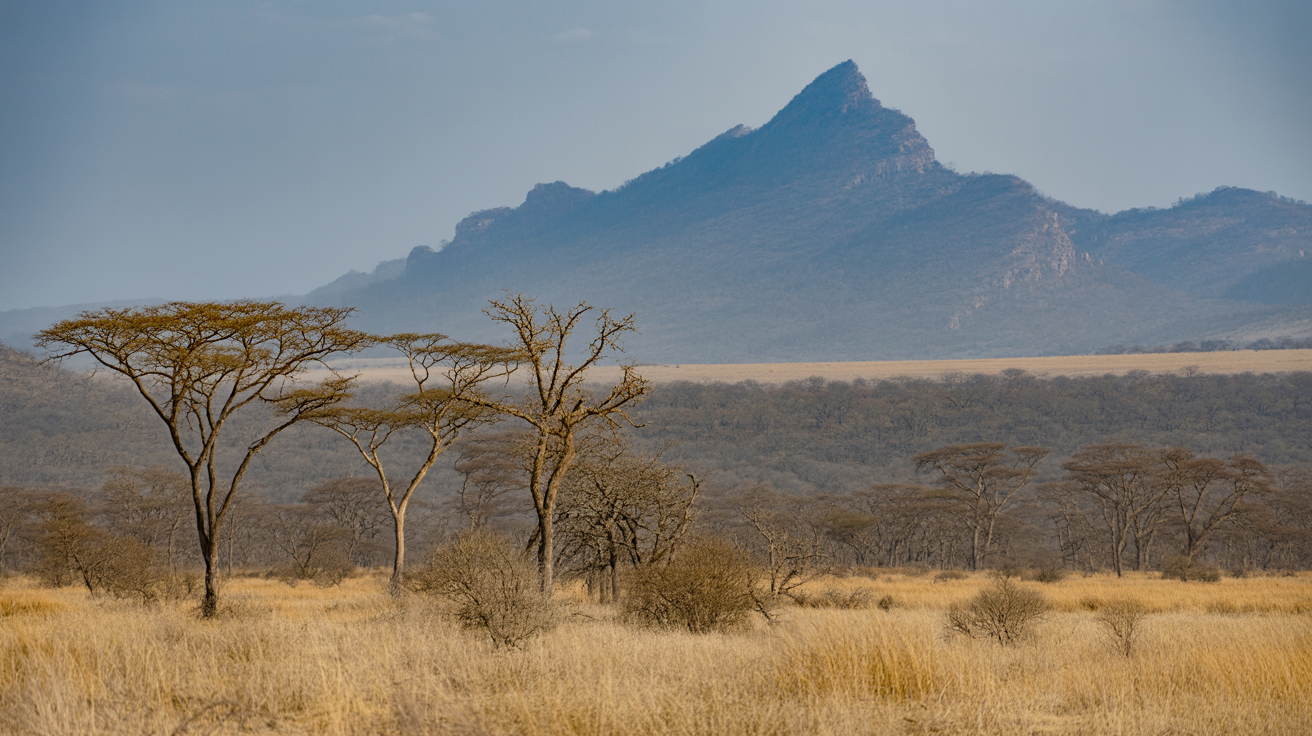 Africa
Savanna
Grasslands with scattered trees, characterized by seasonal rainfall and home to diverse grazing animals and predators.
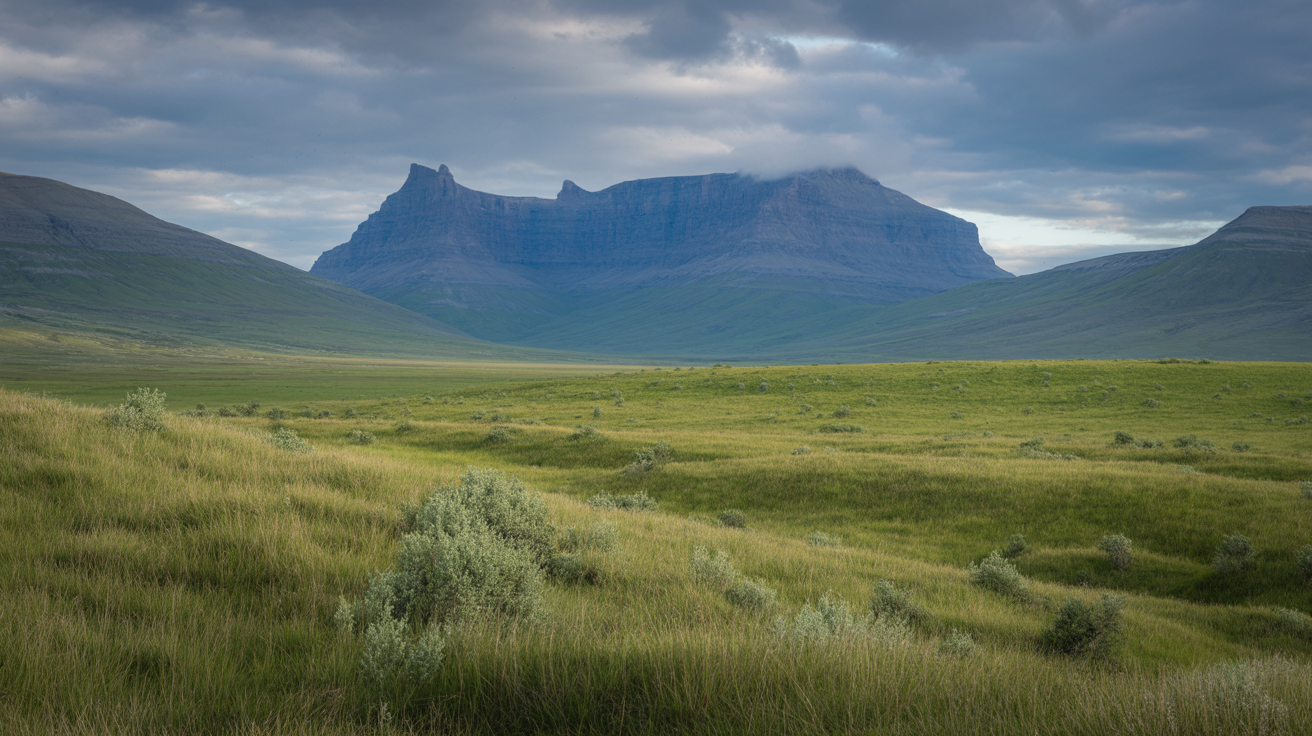 Various Continental Regions
Grassland
Open areas dominated by grasses rather than trees, supporting numerous herbivores and their predators.
 Global
Forest
Wooded areas with significant tree cover and diverse plant and animal communities.
Conservation
The Striped Polecat is currently classified as Least Concern on the IUCN Red List.
Threats & challenges
Currently assessed as Least Concern by the IUCN, the striped polecat faces localized threats including habitat loss due to agricultural expansion, urbanization, and overgrazing. Persecution by humans occurs when polecats are mistakenly believed to threaten poultry or livestock, or due to their strong odor. Road mortality and secondary poisoning from rodenticides also pose risks. Despite these pressures, the species remains widespread and adaptable, with stable populations across much of its range. However, ongoing habitat fragmentation and increased human-wildlife conflict could impact local populations, especially in areas of intensive land use.
Taxonomy
Scientific name
Ictonyx striatus
- Kingdom
- Animalia
- Phylum
- Chordata
- Class
- Mammalia
- Order
- Carnivora
- Family
- Mustelidae
- Genus
- Ictonyx
- Species
- striatus
Community notes
Share your observations about the Striped Polecat.
No community notes yet. Be the first!
Discover more wildlife
More fascinating animals from the encyclopedia.