
About the Sugar Glider
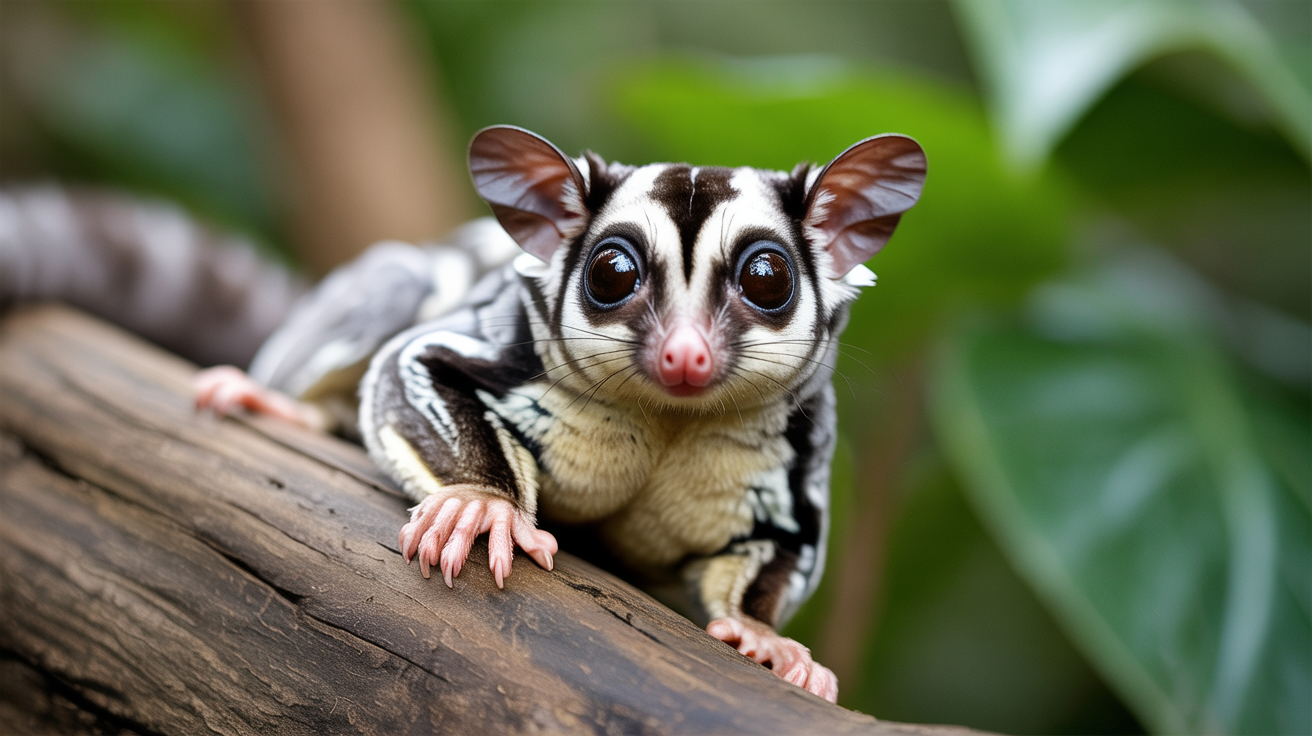
The sugar glider (Petaurus breviceps and relatives) is a small nocturnal marsupial that glides on a patagium, a membrane stretched between the wrist and the ankle on each side, which it deploys by leaping and spreading all four limbs. Glides of 50 metres are routine and much longer ones are recorded; the animal steers by changing the curvature of the membrane and by using the bushy tail as a rudder, and it lands by swooping up at the last moment to shed speed. Its name comes from its diet, which is dominated not by fruit but by plant exudates: it gouges the bark of acacias and eucalypts with sharp lower incisors to start a sap or gum flow, returns to the same wounds night after night, and supplements this with insects, nectar and the sugary honeydew of sap-sucking bugs. In cold weather it enters torpor, dropping its body temperature and metabolism for hours at a time to save energy. A colony of up to about seven adults plus young shares a leaf-lined nest hollow, and the dominant male marks the group with secretions from a bald frontal gland on the top of his head and a chest gland, giving every member a shared scent badge. Genetic work published in 2020 split the animal long called the sugar glider into at least three separate species.
Fascinating facts
Expert Gliders
Sugar Gliders use a skin membrane called the patagium to glide distances of up to 50 meters between trees, helping them find food and avoid ground predators.
Nocturnal Lifestyle
They are primarily active at night, using their large eyes to see in low light and their keen sense of smell to locate food.
Highly Social
Sugar Gliders live in groups and establish strong social bonds, often grooming each other and huddling together for warmth and protection.
Detailed description
The sugar glider (Petaurus breviceps) is a small, agile marsupial with a head-body length of 16–21 cm and a weight ranging from 90 to 150 grams in adults, with males typically larger than females. Its most distinctive anatomical feature is the patagium, a gliding membrane extending from the fifth finger to the ankle, allowing it to glide distances of up to 50–70 meters between trees. The sugar glider's fur is soft and silvery-gray with a characteristic dark dorsal stripe running from the nose to the mid-back, and its large, forward-facing eyes provide excellent night vision. The bushy, prehensile tail aids in steering during glides and functions as a fifth limb for grasping branches. Sugar gliders possess sharp, curved claws and opposable toes for efficient climbing and manipulation of food. Social by nature, they live in colonies of up to 12 individuals, often comprising several adults and their offspring, and communicate using a range of vocalizations, scent markings, and tactile signals. Nocturnal and arboreal, they spend daylight hours sleeping in tree hollows lined with leaves and bark, emerging at dusk to forage. Their omnivorous diet includes sap, nectar, pollen, insects, arachnids, and occasionally small vertebrates. Sugar gliders are marsupials, with females bearing underdeveloped young that complete development in the pouch. Their remarkable gliding ability is an adaptation for efficient movement, predator avoidance, and resource exploitation in the forest canopy.
Did you know?
Despite their name and appearance, Sugar Gliders are not related to flying squirrels, but are marsupials, carrying their young in a pouch.
Research & sources
Wikipedia summary
The sugar glider is a small, omnivorous, arboreal, and nocturnal gliding possum. The common name refers to its predilection for sugary foods such as sap and nectar and its ability to glide through the air, much like a flying squirrel. They have very similar habits and appearance to the flying squirrel, despite not being closely related—an example of convergent evolution. The scientific name, Petaurus breviceps, translates from Latin as "short-headed rope-dancer", a reference to their canopy acrobatics.
Behaviour & social structure
Sugar gliders exhibit complex social behaviors, including communal nesting, allogrooming, and cooperative care of young. They establish stable territories marked with scent glands located on the forehead, chest, and cloaca, which are used for both territory demarcation and social hierarchy. Foraging is typically conducted in groups, with individuals communicating via a repertoire of barks, hisses, and churring sounds to coordinate movement and alert others to danger. Their diet shifts seasonally, with a preference for eucalyptus and acacia sap during the dry season and increased insect consumption during the wet season. Sugar gliders are known to exhibit food caching and will defend valuable food sources aggressively. They are primarily active from dusk until dawn, spending up to 60% of the night foraging and the remainder engaging in social activities or resting. In colder climates, sugar gliders may enter daily torpor to conserve energy, reducing metabolic rate and body temperature for several hours.
Reproduction & life cycle
Sugar gliders are seasonally polyestrous in the wild, with breeding peaks typically occurring in late winter to early spring (June to November in Australia), although captive populations may breed year-round. Mating is preceded by courtship behaviors such as grooming and vocalizations. After a gestation period of approximately 15–17 days, the female gives birth to 1–2 tiny, altricial young, which immediately crawl into the pouch to continue development for about 60–70 days. After leaving the pouch, the young remain in the nest and are suckled for an additional 30–40 days before weaning. Both parents, and often other colony members, participate in caring for the young, a behavior known as cooperative breeding. Sexual maturity is reached at 8–14 months, with males maturing slightly earlier than females.
Adaptations & survival
Sugar gliders are highly adapted for an arboreal, nocturnal lifestyle. The patagium enables efficient gliding, reducing the need to descend to the ground and minimizing predation risk. Their large eyes are specialized for low-light vision, and their acute sense of smell aids in locating food and recognizing conspecifics. The opposable first toe and syndactylous (fused) second and third toes on the hind feet facilitate climbing and grooming. Their ability to enter torpor allows them to survive periods of food scarcity or cold temperatures. The dentition is adapted for gouging bark to access sap and for processing a varied diet. Social structure and communal nesting provide thermoregulatory benefits and enhance survival of young.
Cultural significance
Sugar gliders have cultural significance in Indigenous Australian traditions, where they are sometimes featured in folklore and as totems representing agility and resourcefulness. In recent decades, they have gained popularity as exotic pets in several countries, particularly the United States and Japan, though this has raised concerns about animal welfare and ecological impacts. In Australia, they are occasionally referenced in children's literature and educational materials as emblematic of the unique marsupial fauna. There is no significant history of traditional medicinal or dietary use.
Recent research
Recent research has focused on the biomechanics of gliding, revealing that sugar gliders can control glide angle and direction with remarkable precision, using subtle adjustments of the patagium and tail. Genetic studies have clarified the taxonomy of the Petaurus genus, identifying cryptic species and highlighting the need for region-specific conservation strategies. Investigations into their social structure have demonstrated complex communication and cooperative breeding behaviors, challenging earlier assumptions of simple pair-bonded systems. Studies on their dietary ecology have shown adaptability to changing resource availability, with implications for resilience to habitat modification. Ongoing research is examining the impacts of climate change and habitat fragmentation on population connectivity and genetic health.
Videos
Habitat
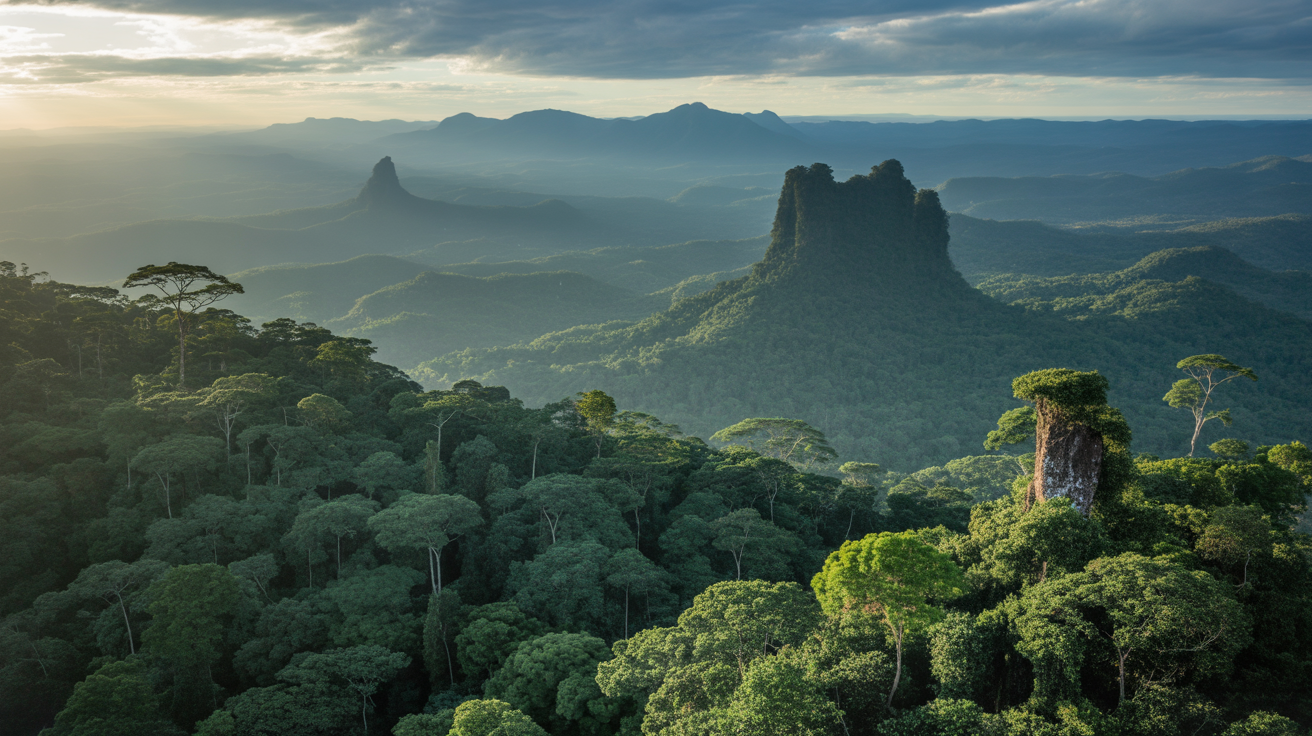
Forest

Conservation
The Sugar Glider is currently classified as Least Concern on the IUCN Red List.
Threats & challenges
While classified as Least Concern by the IUCN, sugar gliders face localized threats including habitat loss due to deforestation, land clearing for agriculture, and urbanization. Fragmentation of forest habitats can isolate populations, reducing genetic diversity and increasing vulnerability to environmental changes. Predation by introduced species such as cats and foxes poses additional risks. In some regions, sugar gliders are captured for the pet trade, which can impact wild populations if not managed sustainably. Climate change may alter the availability of key food resources and suitable nesting sites, presenting future challenges. Despite these threats, sugar gliders remain widespread and adaptable, with stable populations in many areas.
Taxonomy
Scientific name
Petaurus breviceps
- Kingdom
- Animalia
- Phylum
- Chordata
- Class
- Mammalia
- Order
- Diprotodontia
- Family
- Petauridae
- Genus
- Petaurus
- Species
- breviceps
Where to see a sugar glider
2 zoos and aquariums in 2 countries are recorded as keeping this species.

Community notes
Share your observations about the Sugar Glider.
No community notes yet. Be the first!
Discover more wildlife
More fascinating animals from the encyclopedia.