
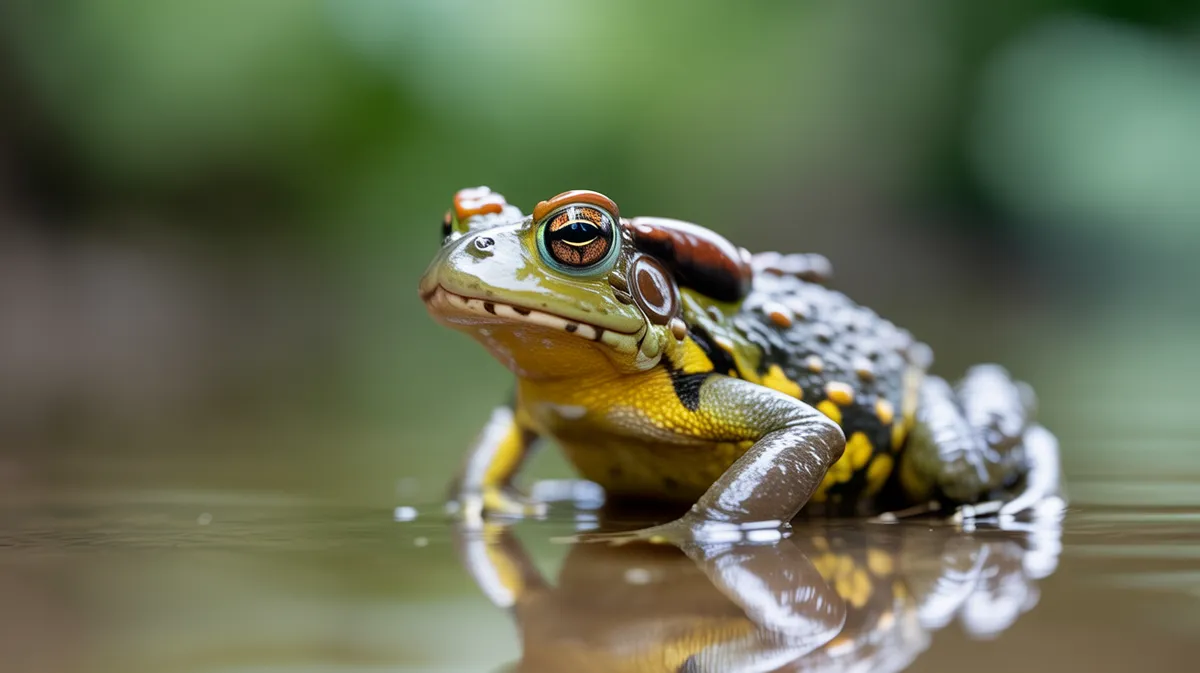
About the Surinam Toad
The Surinam toad (Pipa pipa) is a flat, brown, leaf-like aquatic frog of Amazonian and Guianan waters, and it has one of the most extraordinary reproductive systems of any vertebrate. During an underwater mating somersault, the male fertilises the eggs and then presses them onto the female's back with his belly. Her skin then swells and grows over them, so that within a day or two each egg sits in its own sealed pocket in her back. There is no free-swimming tadpole and no pond stage: the young develop entirely within their mother's skin for three to four months, passing through metamorphosis inside the pocket, and eventually push out through the skin as fully formed, thumbnail-sized toadlets. The female then sheds the used layer of skin. The adult is equally strange in feeding: it has no tongue and no teeth, and instead of a tongue-strike it uses suction, and the tips of its long, thin front fingers end in tiny star-shaped sensory structures, from which the family gets its other name, star-fingered toads. It hunts by touch and chemistry in murky water, sweeping its fingers about and vacuuming in whatever it contacts. Males call underwater by snapping a bony structure in the larynx, producing a rapid ticking sound rather than a croak.
Fascinating facts
Webbed Feet
The Surinam toad's broad, fully webbed feet are highly sensitive and help it detect vibrations from prey in muddy water.
Unusual Birth
Females carry developing young in honeycomb-like pockets on their backs, from where the tiny toadlets emerge fully formed.
Aquatic Lifestyle
This species rarely leaves water and is superbly adapted for life in slow-moving tropical rivers and swamps.
Detailed description
The Surinam toad (Pipa pipa) is a highly specialized, fully aquatic amphibian distinguished by its remarkably flattened, almost leaf-like body, which typically measures 10–17 cm in length. Its dorsoventrally compressed form, mottled brown to gray coloration, and rough, warty skin provide exceptional camouflage among submerged leaf litter and detritus in slow-moving, muddy waters. The head is triangular and lacks a tongue and teeth, while the small, lidless eyes are positioned dorsally, enhancing its ability to detect movement above while remaining concealed. The forelimbs are equipped with long, star-shaped finger tips, which are highly sensitive and aid in prey detection and manipulation. The hind limbs are robust and fully webbed, facilitating powerful swimming and rapid lunges during ambush predation. Pipa pipa is almost exclusively aquatic, rarely venturing onto land, and is capable of remaining submerged for extended periods due to cutaneous respiration, although it surfaces periodically to gulp air. Its unique reproductive strategy involves the female carrying fertilized eggs in honeycomb-like pockets embedded in the skin of her back, where the embryos develop directly into froglets, bypassing a free-swimming tadpole stage. This adaptation minimizes predation risk and enhances offspring survival in the dynamic aquatic environment. The Surinam toad is generally solitary outside of the breeding season and is most active at night, employing a sit-and-wait hunting strategy to capture a variety of aquatic invertebrates and small fish.
Did you know?
Unlike most amphibians, Surinam toadlets emerge fully developed from their mother's back, skipping the free-swimming tadpole stage.
Research & sources
Wikipedia summary
The common Surinam toad, the Suriname toad, or star-fingered toad, is a fully-aquatic species of frog, in the family Pipidae, with a widespread range across much of tropical South America and the island of Trinidad. The females of this species are well-known for "incubating" their eggs on their backs, in honeycomb-like depressions directly within the skin, releasing fully-formed froglets after a period of 4–5 months. Pipa pipa is an ambush predator, lying in-wait underwater for prey to inevitably wander too close, swiftly inhaling the unsuspecting creature using suction feeding. Additionally, the Surinam toad's rather flat body shape, combined with rather dark, dull coloration, serves as effective camouflage in the murky waters they inhabit, perfectly mimicking a dead leaf or piece of rotting wood as they await their next meal.
Behaviour & social structure
Surinam toads are predominantly nocturnal and exhibit sedentary, ambush-based predatory behavior. They remain motionless for long periods, blending seamlessly with the substrate, and rely on their sensitive star-shaped fingertips to detect vibrations and movements of potential prey in the water. When prey approaches, the toad rapidly opens its mouth, creating a powerful suction that draws the prey in whole. Feeding is opportunistic and includes aquatic insects, crustaceans, small fish, and other invertebrates. Social interactions are minimal outside of the breeding season, with individuals maintaining solitary territories. During the breeding period, males produce a series of clicking sounds by snapping the hyoid bone in their throat, as they lack vocal sacs. These sounds serve to attract females and establish breeding presence. Daily activity is closely tied to environmental conditions, with increased movement and foraging during periods of low light and high humidity.
Reproduction & life cycle
Reproduction in Pipa pipa is highly specialized and unique among amphibians. Breeding typically coincides with the onset of the rainy season, when water levels rise and conditions are optimal for egg and larval development. Courtship involves a complex underwater 'nuptial dance,' during which the male clasps the female in axillary amplexus and fertilizes the eggs as they are released. The male then presses the eggs onto the female's back, where the skin swells and envelops each egg in a separate chamber. Embryonic development occurs entirely within these dorsal pockets over a period of 12–20 weeks (typically 4–5 months), depending on water temperature and environmental conditions. The young emerge as fully formed, miniature toads, bypassing the free-swimming tadpole stage entirely. Parental care is limited to the female's role as an incubator; once the froglets emerge, they are independent and receive no further care.
Adaptations & survival
Pipa pipa exhibits a suite of remarkable adaptations for an aquatic lifestyle. Its flattened body and cryptic coloration provide effective camouflage among submerged debris, reducing predation risk. The absence of a tongue and the presence of a highly distensible mouth enable efficient suction feeding, allowing the toad to capture fast-moving prey in turbid water. The star-shaped fingertips are covered in mechanoreceptors, enhancing tactile sensitivity for prey detection. The fully webbed hind feet facilitate powerful swimming and sudden lunges. The unique reproductive adaptation of dorsal egg incubation protects developing embryos from aquatic predators and environmental fluctuations. Additionally, the toad's skin is highly permeable, allowing for significant cutaneous respiration, which is vital in low-oxygen aquatic environments.
Cultural significance
The Surinam toad has intrigued naturalists and indigenous peoples for centuries due to its bizarre appearance and extraordinary reproductive habits. In some South American cultures, it is regarded as a symbol of fertility and transformation, owing to the dramatic emergence of live young from the mother's back. The species has featured in scientific literature and popular media as a classic example of amphibian reproductive diversity. It is occasionally kept in public aquaria and research institutions for educational purposes, but has no significant role in traditional medicine or folklore beyond its symbolic associations.
Recent research
Recent research on Pipa pipa has focused on its reproductive physiology, particularly the molecular and hormonal mechanisms underlying dorsal skin pocket formation and embryonic development. Studies have also examined the biomechanics of suction feeding and the sensory capabilities of the star-shaped fingertips. Genetic analyses have clarified the evolutionary relationships within the Pipidae family, highlighting the Surinam toad's ancient lineage. Ongoing research is investigating the species' resilience to environmental change, susceptibility to emerging amphibian diseases, and the ecological role of Pipa pipa in Neotropical freshwater ecosystems.
Sources
Videos
Habitat
Freshwater rivers, swamps, and flooded forests


Conservation
The Surinam Toad is currently classified as Least Concern on the IUCN Red List.
Threats & challenges
Currently assessed as Least Concern by the IUCN, the Surinam toad maintains stable populations across its broad range. However, localized threats include habitat destruction from deforestation, pollution of freshwater systems, and drainage of wetlands for agriculture and urban development. The species is also susceptible to waterborne pollutants and pathogens, such as chytrid fungus (Batrachochytrium dendrobatidis), which has impacted amphibian populations globally. Climate change poses a long-term threat by altering rainfall patterns and water availability. Despite these challenges, the species' adaptability to a range of aquatic habitats and its unique reproductive strategy contribute to its resilience.
Taxonomy
Scientific name
Pipa pipa
- Kingdom
- Animalia
- Phylum
- Chordata
- Class
- Amphibia
- Order
- Anura
- Family
- Pipidae
- Genus
- Pipa
- Species
- pipa
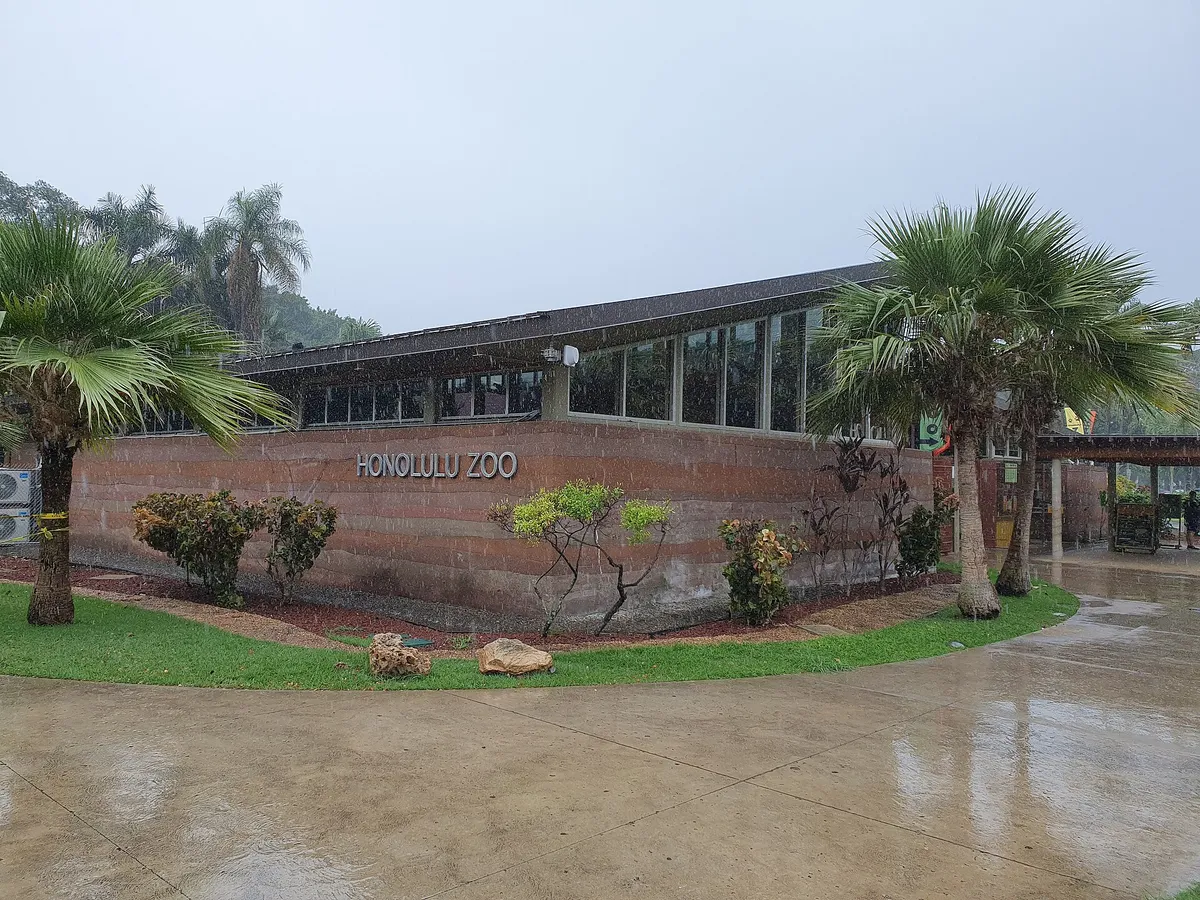
Where to see a surinam toad
2 zoos and aquariums in 1 country are recorded as keeping this species.
Community notes
Share your observations about the Surinam Toad.
No community notes yet. Be the first!
Discover more wildlife
More fascinating animals from the encyclopedia.