
About the Thorny Devil
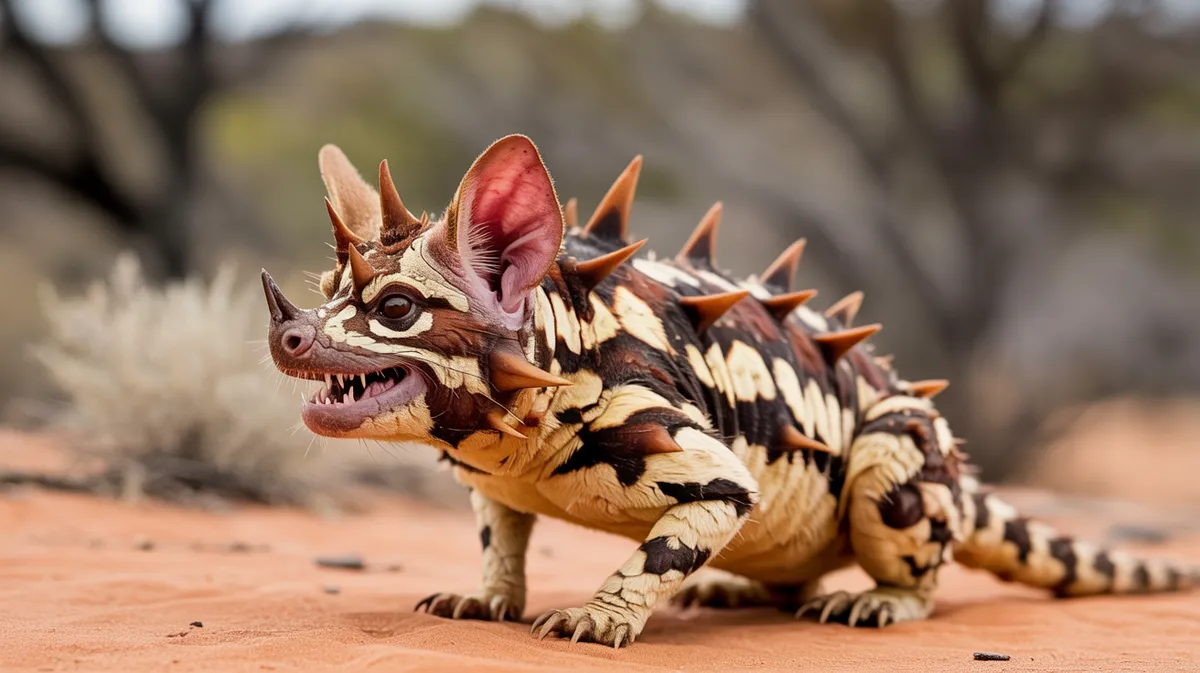
The thorny devil (Moloch horridus) of the Australian deserts is a slow, 20-centimetre lizard covered in conical spines, and it solves the two hardest problems of desert life in ways nothing else quite matches. The first is water. Between its scales runs a network of microscopic channels, hygroscopic grooves that draw water by capillary action across the entire surface of the body and up to the corners of the mouth, where the lizard's jaw movements pump it in. The channels move water against gravity, so a thorny devil standing on damp sand can draw moisture up its legs and drink from its own feet; it can also collect condensation and rain, and shovels wet sand onto its back to soak it up. The second is food. It eats nothing but small black ants, chiefly Ochetellus and Iridomyrmex, picking them up one at a time with a sticky tongue at a rate of about 45 a minute and taking between 600 and 2,500 in a sitting, which is why it can afford to be slow and armoured rather than fast. It also carries a false head, a spiny knob on the back of the neck, which it presents by tucking the real head down when threatened. It walks with a jerky, rocking freeze-and-step gait that resembles a leaf blown across the sand and appears to defeat the motion detection of predators.
Fascinating facts
Ant Specialist
A single Thorny Devil can eat up to 3,000 ants in one day, relying almost exclusively on ants for its diet.
Spiky Armor
Its body is covered in conical spines, which not only protect it from predators but also help with camouflage in the desert environment.
Water Collector
The Thorny Devil's skin is covered in tiny grooves that draw moisture from rain or dew directly to its mouth, enabling it to survive in extremely dry habitats.
Detailed description
The Thorny Devil (Moloch horridus) is a small, highly specialized agamid lizard endemic to the arid and semi-arid regions of central and western Australia. Adults typically measure 10–21 cm in total length, with females generally larger and more robust than males. Its most distinctive anatomical feature is the dense covering of conical spines and ridges across the entire body, including a prominent 'false head' on the nape, which serves as a predator deterrent. The coloration is a complex mosaic of browns, yellows, and reds, providing exceptional camouflage against sandy and stony desert substrates. The Thorny Devil's body is laterally compressed, and its limbs are relatively short, adapted for slow, deliberate movement. The skin is covered in hygroscopic grooves that channel water from rainfall, dew, or moist sand directly to the mouth via capillary action—a unique adaptation among terrestrial reptiles. The species is diurnal, with activity peaking during cooler morning and late afternoon hours to avoid extreme midday heat. Thorny Devils are solitary and exhibit a largely sedentary lifestyle, relying on their cryptic appearance for defense. Their diet consists almost exclusively of ants, particularly Iridomyrmex species, with an individual consuming up to 3,000 ants in a single meal. The Thorny Devil's lifespan in the wild is estimated at 12–20 years, though precise longevity data are limited.
Did you know?
Thorny Devils have a unique way of drinking: they collect water through their skin grooves, channeling it directly to their mouths by capillary action.
Research & sources
Wikipedia summary
The thorny devil, also known commonly as the mountain devil, thorny lizard, thorny dragon, and moloch, is a species of lizard in the family Agamidae. The species is endemic to Australia. It is the sole species in the genus Moloch. It grows up to 21 cm (8.3 in) in total length, with females generally larger than males.
Behaviour & social structure
Thorny Devils are primarily solitary and exhibit territorial behavior, especially during the breeding season. They are slow-moving and rely on a characteristic 'jerky' gait, often freezing or swaying to mimic vegetation in the wind, which helps avoid detection by predators. Foraging is conducted by positioning themselves along ant trails, using their sticky, protrusible tongues to capture ants one at a time. They do not actively hunt but rather employ a sit-and-wait strategy, remaining motionless for extended periods. Thorny Devils are known to bask in the sun during cooler hours to regulate body temperature, often burrowing shallowly into sand or seeking shade during peak heat. Social interactions are limited, with occasional aggressive displays between males during the breeding season. They communicate primarily through body posture and movement, lacking vocalizations.
Reproduction & life cycle
Breeding occurs annually, typically from September to December (Australian spring to early summer). Males engage in ritualized combat for access to females, involving posturing and biting. After mating, females excavate a burrow 10–15 cm deep in sandy soil, where they lay a clutch of 3–10 leathery eggs. Incubation lasts approximately 3–4 months, with hatching occurring from January to March. There is no parental care post-oviposition; hatchlings are fully independent and must fend for themselves immediately. Juveniles are vulnerable to predation and face high mortality rates in their first year. Sexual maturity is reached at approximately 3 years of age.
Adaptations & survival
The Thorny Devil exhibits several remarkable adaptations for desert survival. Its spiny armor deters predators and provides shade, reducing water loss. The false head on the back of the neck is presented to predators when threatened, protecting the true head. The skin's hygroscopic grooves enable the lizard to collect and transport water from any part of its body surface to the mouth, allowing it to exploit scarce moisture sources such as dew or rain. Camouflage coloration helps avoid detection by both predators and prey. Its highly specialized diet of ants is supported by a long, sticky tongue and a digestive system adapted for processing large quantities of small, chitinous prey. Behavioral adaptations include activity timing to avoid thermal extremes and burrowing to escape heat and predators.
Cultural significance
The Thorny Devil holds a place in Aboriginal Australian mythology, often depicted as a symbol of resilience and adaptation to harsh environments. It is sometimes featured in indigenous art and storytelling. The lizard's unique appearance has made it a subject of fascination in popular culture, natural history documentaries, and educational programs. There are no known traditional uses of the species for food or medicine, likely due to its small size and defensive morphology.
Recent research
Recent research has focused on the Thorny Devil's remarkable water-harvesting adaptations, with studies using scanning electron microscopy to analyze the microstructure of skin grooves and their efficiency in channeling water. Ongoing ecological studies are examining the impact of climate variability on ant populations and, consequently, Thorny Devil foraging success. Genetic analyses have confirmed the species' status as the sole member of the genus Moloch, with no close relatives among Australian agamids. Conservation research is monitoring population trends in response to habitat modification and climate change. The Thorny Devil is also being studied as a model organism for biomimetic applications, particularly in the development of water-harvesting materials.
Videos
Habitat
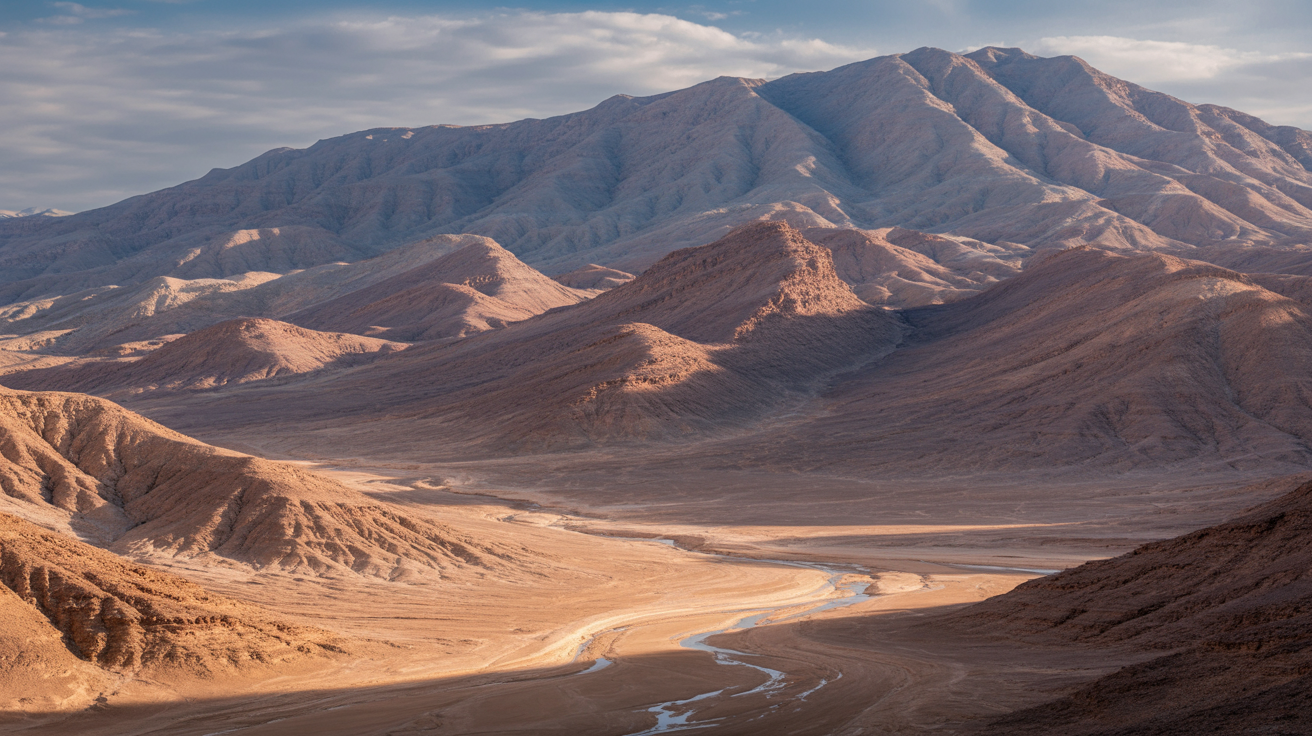
Desert
Conservation
The Thorny Devil is currently classified as Least Concern on the IUCN Red List.
Threats & challenges
Currently, the Thorny Devil is classified as Least Concern by the IUCN, with stable populations across its range. However, localized threats include habitat degradation from land clearing, overgrazing by livestock, and predation by introduced species such as foxes and feral cats. Climate change poses a potential long-term threat by altering rainfall patterns and ant populations, which could impact food availability. Road mortality is an emerging concern in areas of increased human activity. Despite these challenges, the species' wide distribution and adaptability have so far mitigated significant population declines.
Taxonomy
Scientific name
Moloch horridus
- Kingdom
- Animalia
- Phylum
- Chordata
- Class
- Reptilia
- Order
- Squamata
- Family
- Agamidae
- Genus
- Moloch
- Species
- horridus
Community notes
Share your observations about the Thorny Devil.
No community notes yet. Be the first!
Discover more wildlife
More fascinating animals from the encyclopedia.