
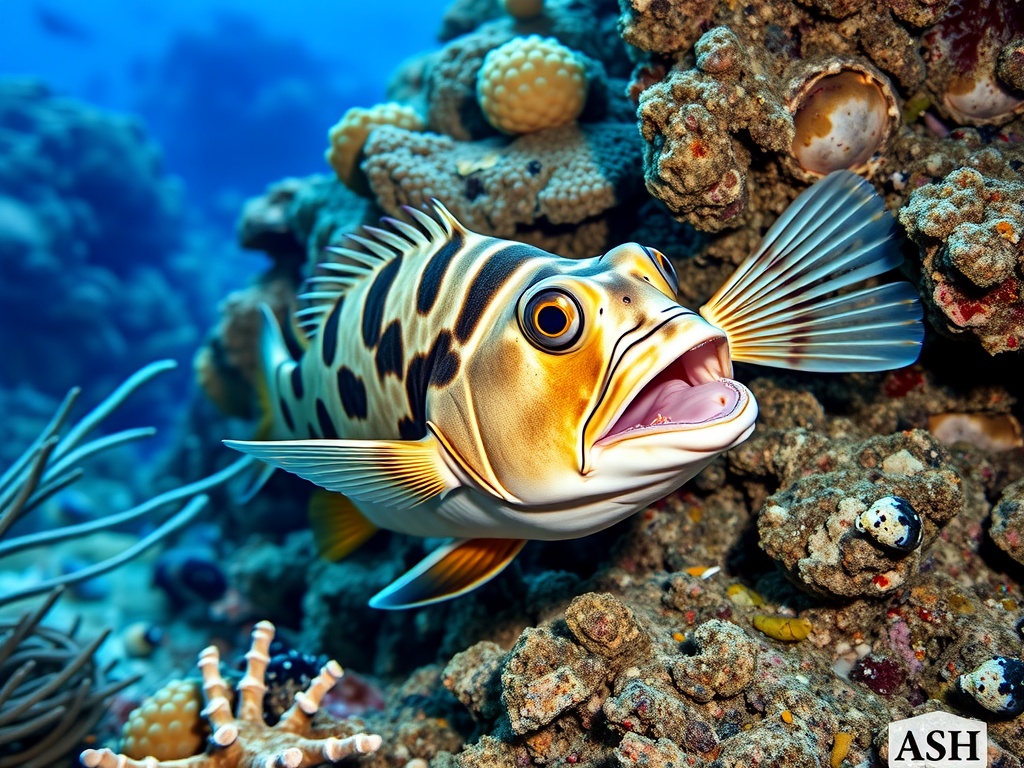
About the Triggerfish
Triggerfish are a group of brightly colored, oval-shaped marine fish known for their tough, leathery skin and distinctive dorsal fin spines. Found primarily in tropical and subtropical oceans, these fish are famous for their bold patterns and unique behaviors. They have strong jaws and teeth adapted for crushing hard-shelled prey, and are often seen navigating coral reefs with agility. Triggerfish are territorial and can be quite aggressive, especially when guarding their nests. Their fascinating appearance and complex behaviors make them popular among divers and aquarium enthusiasts.
Fascinating facts
Unique Defense
Triggerfish use their first dorsal spine as a 'trigger' to lock themselves into rocky crevices, making it difficult for predators to pull them out.
Powerful Jaws
Their strong teeth and jaws allow them to crush hard-shelled prey such as sea urchins, crabs, and mollusks with ease.
Protective Parents
Female triggerfish are fiercely protective of their eggs, aggressively defending their nests from intruders by charging and biting.
Detailed description
Triggerfish (family Balistidae) are a diverse group of approximately 40 species of marine ray-finned fishes, easily recognized by their laterally compressed, oval-shaped bodies and striking coloration, which often includes vivid blues, yellows, and intricate patterns of lines and spots. Adult triggerfish typically range from 20 to 50 cm in length, though the largest species, the stone triggerfish (Pseudobalistes naufragium), can reach up to 1 meter. Their skin is exceptionally tough and covered with small, rough scales, providing protection against predators and abrasive reef environments. A hallmark feature is their unique dorsal fin mechanism: the first dorsal spine can be locked upright by the second spine, forming a 'trigger' system that helps wedge the fish into crevices for defense. Triggerfish possess powerful jaws and specialized teeth—incisiform and molariform—adapted for crushing hard-shelled prey such as mollusks, crustaceans, echinoderms, and sea urchins. Their small, terminal mouths and independently moving eyes contribute to precise foraging and vigilance. Most species are solitary and highly territorial, especially during breeding, exhibiting aggressive defense of nesting sites. Despite their robust appearance, triggerfish are agile swimmers, using undulating dorsal and anal fins for fine maneuvering among coral branches. Their complex behaviors, including nest building, parental care, and sophisticated communication displays, make them a subject of ongoing behavioral research.
Did you know?
Triggerfish can rotate their eyes independently, allowing them to scan for predators and prey at the same time.
Research & sources
Wikipedia summary
Triggerfish are about 40 species of often brightly colored marine ray-finned fishes belonging to the family Balistidae. Often marked by lines and spots, they inhabit tropical and subtropical oceans throughout the world, with the greatest species richness in the Indo-Pacific. Most are found in relatively shallow, coastal habitats, especially at coral reefs, but a few, such as the oceanic triggerfish, are pelagic. While several species from this family are popular in the marine aquarium trade, they are often notoriously ill-tempered.
Behaviour & social structure
Triggerfish are primarily diurnal, spending daylight hours actively foraging and patrolling territories. They exhibit pronounced territoriality, with individuals—especially females during nesting—aggressively defending defined areas against conspecifics and intruders, including much larger animals and divers. Their feeding strategy involves overturning rocks, blowing jets of water to expose buried prey, and using their strong teeth to break open hard shells. Some species, such as the titan triggerfish (Balistoides viridescens), are known for their intelligence and problem-solving abilities, including cooperative hunting with other reef species. Social structure is generally solitary, though temporary aggregations may occur at rich feeding sites or during spawning. Communication includes visual displays (fin erection, color changes), acoustic signals (grunting), and even tactile interactions. Daily routines involve periods of rest in reef crevices, where they may wedge themselves in using their dorsal spine mechanism for security.
Reproduction & life cycle
Triggerfish are oviparous, with most species exhibiting distinct seasonal breeding correlated with lunar cycles and water temperature. Courtship involves elaborate displays, including circling, color intensification, and nest preparation—often a shallow depression excavated in sand or rubble by the female. After external fertilization, females lay hundreds to thousands of adhesive eggs, which are fiercely guarded by one or both parents, depending on the species. Incubation lasts 24–48 hours, after which larvae are planktonic and highly vulnerable. Parental care is notable: females (and sometimes males) fan the eggs to oxygenate them and aggressively deter predators, including other fish and invertebrates. Breeding seasons vary by region, but in the Indo-Pacific, peak spawning often coincides with the warmer months and specific lunar phases.
Adaptations & survival
Triggerfish have evolved several unique adaptations for survival in complex reef environments. Their robust, leathery skin and dense scales provide armor against predators and abrasive surfaces. The trigger mechanism of their dorsal spines allows them to lock themselves into crevices, making extraction by predators nearly impossible. Their powerful jaws and specialized teeth enable them to exploit hard-shelled prey unavailable to many other reef fishes, reducing competition. Independently movable eyes enhance their ability to scan for threats and prey simultaneously. Behavioral adaptations include sophisticated nest defense, water-jetting to uncover prey, and the use of visual and acoustic signals for communication and deterrence.
Cultural significance
Triggerfish hold various roles in human culture. In Hawaiian mythology, the humuhumunukunukuāpuaʻa (Rhinecanthus rectangulus) is the state fish and features in traditional stories and songs. Their bold appearance and behaviors have made them popular subjects in art and folklore throughout the Indo-Pacific. In some regions, triggerfish are consumed as food, though caution is advised due to the risk of ciguatera toxin accumulation. Their striking colors and personalities make them sought-after in the marine aquarium trade, though their aggression and specialized care requirements limit their suitability to experienced aquarists.
Recent research
Recent research has focused on the biomechanics of the trigger mechanism, revealing evolutionary convergence with other reef fishes in defensive strategies. Studies on feeding ecology have highlighted their role as key regulators of invertebrate populations, particularly sea urchins, thus influencing coral reef health. Behavioral studies have documented complex learning and problem-solving abilities, including tool use in some species. Ongoing genetic and phylogenetic research is refining the taxonomy of Balistidae, clarifying relationships within the Tetraodontiformes. Climate change impacts on reproductive timing and larval dispersal are active areas of investigation, with implications for future population resilience.
Videos
Habitat
Coral reefs and rocky coastal areas

Conservation
The Triggerfish is currently classified as Least Concern on the IUCN Red List.
Threats & challenges
While most triggerfish populations are currently stable and listed as Least Concern by the IUCN, localized threats exist. Overfishing for the aquarium trade and as a food source (notably in some Pacific regions) can impact certain species. Habitat degradation—especially coral reef loss due to climate change, ocean acidification, and destructive fishing practices—poses significant risks. Some species are also susceptible to ciguatera poisoning, which can affect both fish and human consumers. Population trends are generally stable, but ongoing monitoring is necessary, particularly for species with restricted ranges or specialized habitat requirements.
Taxonomy
Scientific name
Balistidae spp.
- Kingdom
- Animalia
- Phylum
- Chordata
- Class
- Actinopterygii
- Order
- Tetraodontiformes
- Family
- Balistidae
- Genus
- Balistes
- Species
- spp.
Community notes
Share your observations about the Triggerfish.
No community notes yet. Be the first!
Discover more wildlife
More fascinating animals from the encyclopedia.