
About the Veiled Chameleon
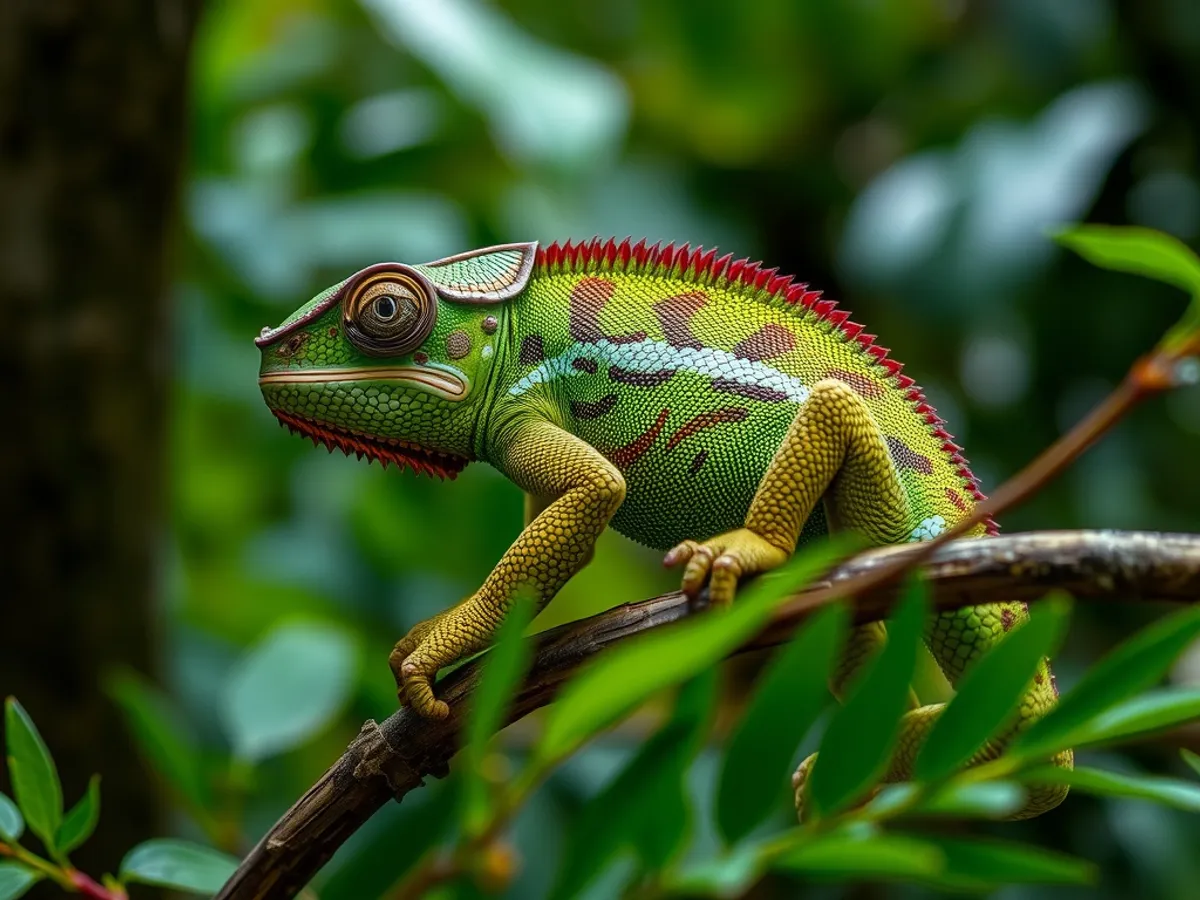
The veiled chameleon (Chamaeleo calyptratus) of Yemen and southwest Saudi Arabia is the chameleon most people have actually seen, and it corrects two persistent myths. The first is that chameleons change colour to match their background. They do not, in any general sense; the colour change is driven by iridophores, layers of skin cells containing a lattice of guanine nanocrystals, and the animal actively changes the spacing of that lattice, which shifts which wavelengths are reflected. It uses this for signalling, above all in male contests and courtship, and for thermoregulation, going dark to absorb heat and pale to reflect it. The second myth is that the tongue is a sticky whip. It is a hydrostatic projectile: elastic collagen sheaths, wound like springs around a bony spike, are loaded and released, and the tongue accelerates off the spike faster than any car, hitting a target more than one and a half body lengths away in a few hundredths of a second. It grips with both a mucus about 400 times more viscous than human saliva and a suction cup formed by the tongue tip. The huge helmet-like casque on the head grows to 8 centimetres in males. Unusually among chameleons, veiled chameleons eat a substantial amount of plant matter, which is thought to be a source of water in a very dry country.
Fascinating facts
Independent Eyes
Veiled Chameleons can move each eye separately, giving them a 360-degree field of vision to spot predators and prey.
Color Communication
Their skin color changes are influenced by mood, temperature, health, and social interactions, not just for camouflage.
Incredible Tongue
Their projectile tongue can extend rapidly to snatch insects from a distance, making them efficient hunters.
Detailed description
The Veiled Chameleon (Chamaeleo calyptratus) is a medium to large arboreal lizard, with adult males reaching 43–61 cm (17–24 in) in total length, while females are generally smaller, averaging 35–45 cm (14–18 in). Its most distinctive feature is the prominent casque, a helmet-like structure atop the head, which can reach up to 5 cm (2 in) in height in mature males and is thought to aid in water collection and sexual display. The body is laterally compressed, facilitating movement among branches, and is covered in granular, overlapping scales. Coloration is highly variable: juveniles are pastel green, while adults display vivid bands and patches of green, yellow, blue, and brown, with males typically more vibrant than females. Their zygodactylous feet and prehensile tail provide excellent grip for climbing. The eyes are large, independently mobile, and provide a nearly 360-degree field of vision, crucial for spotting prey and predators. Veiled Chameleons are primarily diurnal and solitary, exhibiting territoriality, especially among males. Their long, projectile tongue, which can extend up to twice the body length, is used to capture insects with remarkable speed and accuracy. This species is native to the southwestern Arabian Peninsula, occupying a range of habitats from humid mountain slopes to arid scrublands, often near vegetation that provides cover and hunting grounds.
Did you know?
Unlike many lizards, Veiled Chameleons have a long, sticky tongue that can shoot out up to twice the length of their body to capture prey with incredible accuracy.
Research & sources
Wikipedia summary
The veiled chameleon is a species of chameleon native to the Arabian Peninsula in Yemen and Saudi Arabia. Other common names include cone-head chameleon, Yemen chameleon, and Yemeni chameleon. They are born pastel green and without their distinctive casques on their head.
Behaviour & social structure
Veiled Chameleons are solitary and highly territorial, with males displaying aggressive behaviors such as color changes, body inflation, and head bobbing to deter rivals. They are primarily ambush predators, remaining motionless and blending into foliage while scanning for prey with their independently moving eyes. When prey is detected, they execute a rapid tongue projection to capture insects, small vertebrates, and occasionally plant matter. Feeding typically occurs in the morning and late afternoon. Hydration is obtained mainly from dew and rainwater collected on leaves, which they lap up using specialized lip structures. Activity peaks during daylight hours, with chameleons basking to thermoregulate and seeking shade during the hottest periods. Social interactions are limited to mating encounters and occasional territorial disputes. Stress or perceived threats elicit rapid color changes and defensive postures.
Reproduction & life cycle
Veiled Chameleons are oviparous, with breeding typically occurring during the rainy season in their native range (spring and autumn). Courtship involves males displaying vibrant coloration and performing head bobbing and lateral swaying to attract females. After successful copulation, females undergo a gestation period of 20–30 days before laying eggs. Clutch sizes are large, ranging from 20 to over 70 eggs, depending on the female's size and age. Eggs are deposited in shallow burrows dug in moist soil, where they incubate for 150–200 days at 24–29°C (75–84°F). There is no parental care post-oviposition; hatchlings are independent from birth. Females can lay multiple clutches per year, even without subsequent mating, due to sperm storage. Sexual maturity is reached at 4–6 months for males and 5–7 months for females, though early breeding can negatively impact female health.
Adaptations & survival
The Veiled Chameleon exhibits several remarkable adaptations: its independently rotating eyes allow for panoramic vision and precise depth perception, critical for hunting and predator avoidance. The projectile tongue, powered by specialized accelerator muscles, enables prey capture at distances up to twice the body length. The prehensile tail and zygodactylous feet provide strong grasping ability for navigating branches. Color-changing skin, controlled by chromatophores, serves for camouflage, thermoregulation, and social signaling. The tall casque may help in channeling dew and rainwater toward the mouth, aiding hydration in arid environments. Additionally, their ability to reduce metabolic rates during periods of food scarcity enhances survival in fluctuating climates.
Cultural significance
In their native range, Veiled Chameleons have limited direct cultural significance, but chameleons in general are often featured in local folklore and symbolism, representing adaptability, patience, and transformation. Globally, the species is popular in the exotic pet trade, admired for its striking appearance and unique behaviors. Chameleons have also been used in educational contexts to illustrate evolutionary adaptations and animal physiology. There are no known traditional medicinal or utilitarian uses specific to this species.
Recent research
Recent research has focused on the biomechanics of chameleon tongue projection, revealing specialized muscle and collagen arrangements that enable rapid acceleration and high accuracy. Studies on color change mechanisms have advanced understanding of chromatophore function and hormonal control. Genetic analyses have clarified phylogenetic relationships within the Chamaeleonidae family. Ecological studies in introduced populations (e.g., Hawaii) are examining their impact on local ecosystems and potential as invasive species. Ongoing research is also exploring the effects of captive breeding on health, longevity, and behavior, as well as the species’ adaptability to changing environmental conditions.
Sources
Videos
Habitat
Tropical and subtropical forests, scrublands, and mountainous regions
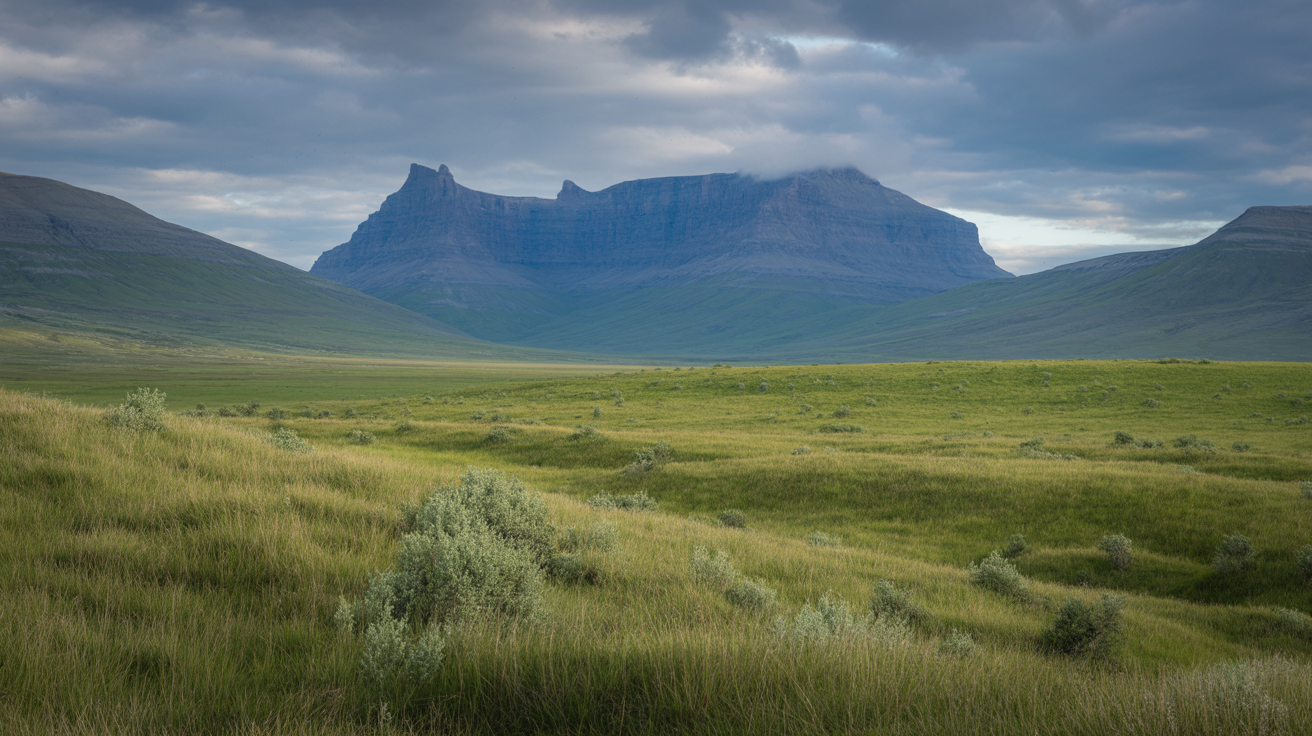 Various Continental Regions
Grassland
Open areas dominated by grasses rather than trees, supporting numerous herbivores and their predators.
 Elevated Terrain
Mountain
High-altitude environments with varying climates and specialized wildlife adapted to rugged terrain and thin air.
 Global
Forest
Wooded areas with significant tree cover and diverse plant and animal communities.
Conservation
The Veiled Chameleon is currently classified as Least Concern on the IUCN Red List.
Threats & challenges
Currently classified as Least Concern by the IUCN, Veiled Chameleons face localized threats including habitat degradation due to agricultural expansion, overgrazing, and urbanization in their native range. Collection for the international pet trade has historically impacted wild populations, though many individuals in captivity are now captive-bred. Introduced populations in regions such as Florida and Hawaii pose ecological concerns due to potential competition with native species. Climate change and water scarcity may further challenge their survival in arid habitats. Despite these pressures, the species remains widespread and adaptable, with stable population trends in most areas.
Taxonomy
Scientific name
Chamaeleo calyptratus
- Kingdom
- Animalia
- Phylum
- Chordata
- Class
- Reptilia
- Order
- Squamata
- Family
- Chamaeleonidae
- Genus
- Chamaeleo
- Species
- calyptratus
Where to see a veiled chameleon
5 zoos and aquariums in 3 countries are recorded as keeping this species.
 National Zoological Park🇺🇸 Washington, United States
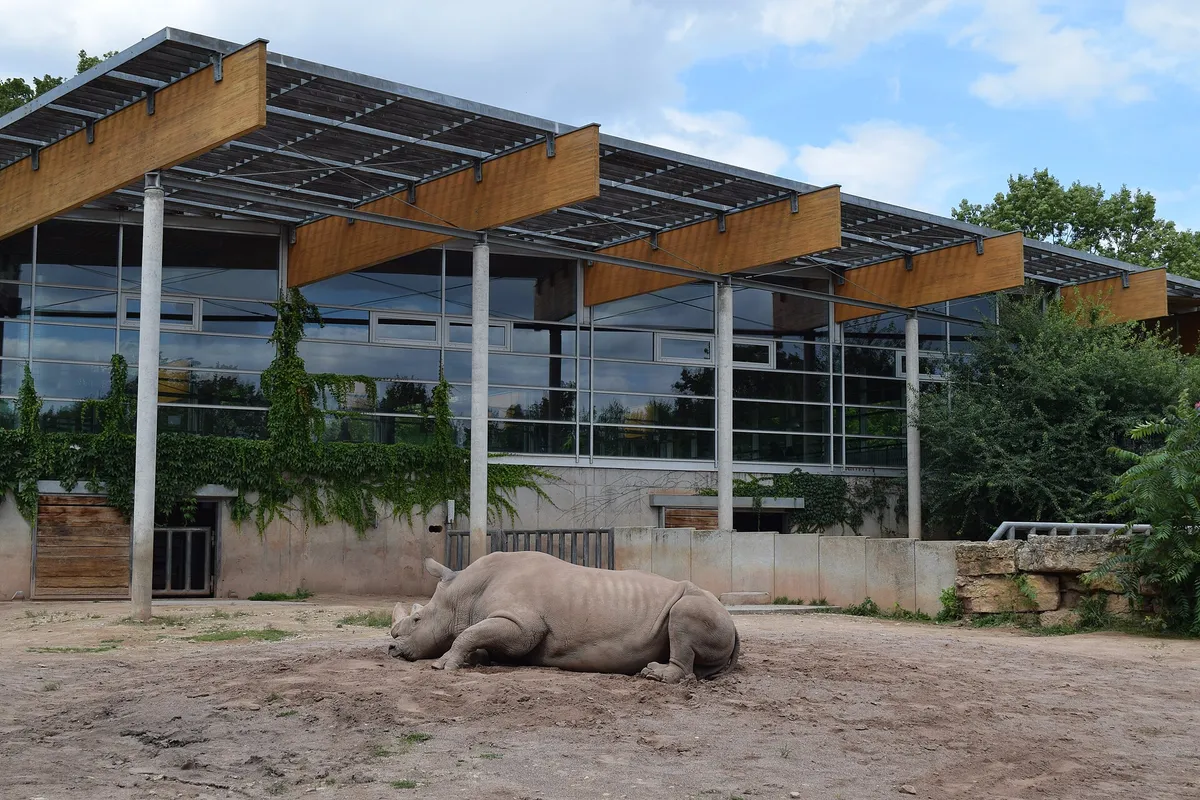 Thüringer Zoopark Erfurt🇩🇪 Erfurt, Germany
 Adelaide Zoo🇦🇺 Australia
- 🦁Cheyenne Mountain Zoo🇺🇸 United States
- 🦁Lake Superior Zoo🇺🇸 Duluth, United States
Community notes
Share your observations about the Veiled Chameleon.
No community notes yet. Be the first!
Discover more wildlife
More fascinating animals from the encyclopedia.