
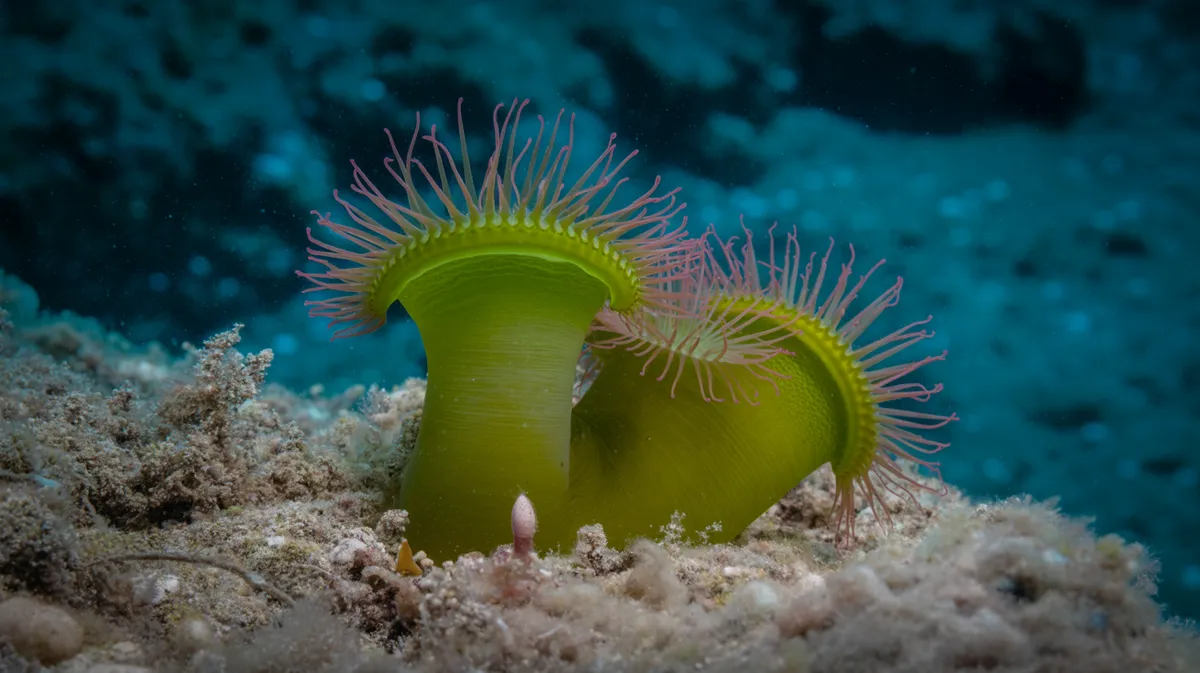
About the Venus flytrap sea anemone
The Venus flytrap sea anemone is a deep-sea invertebrate named for its striking resemblance to the carnivorous Venus flytrap plant. It has a large, cup-shaped body with tentacles that curve inward, enabling it to trap and consume drifting prey such as plankton and small marine animals. This anemone anchors itself to the ocean floor, often on soft sediments or rocky outcrops at great depths, and extends its tentacles to capture food from the passing currents. Its unusual appearance and feeding strategy make it a fascinating example of deep-sea adaptation.
Fascinating facts
Deep-Sea Dweller
This anemone is typically found at depths between 1,000 and 6,000 meters, making it one of the deepest-dwelling sea anemones.
Passive Hunter
The Venus flytrap sea anemone captures prey by waiting with its tentacles open and snapping them shut when food drifts by.
Diet
It feeds on zooplankton, small crustaceans, and organic debris that falls from upper layers of the ocean, known as 'marine snow.'
Detailed description
The Venus flytrap sea anemone (Actinoscyphia aurelia) is a striking deep-sea anthozoan notable for its large, goblet-shaped body and inward-curving tentacles, which closely resemble the terrestrial Venus flytrap plant. Adult individuals typically reach heights of 20–30 cm, with oral discs spanning up to 25 cm in diameter. The body is composed of a columnar stalk anchored to soft sediments or rocky substrates, and a broad oral disc fringed by two distinct whorls of tentacles—one inner and one outer—numbering up to 200 in total. The tentacles are equipped with cnidocytes, specialized stinging cells that immobilize prey. The anemone's coloration is generally pale to translucent white, sometimes tinged with pink or lavender hues, which may provide camouflage in the low-light conditions of the bathyal and abyssal zones (typically 1,000–6,000 meters depth). Actinoscyphia aurelia is a solitary species, rarely found in dense aggregations, and is sessile for most of its life. It exhibits a unique feeding strategy, closing its tentacles rapidly to envelop and trap zooplankton, small crustaceans, and marine snow drifting in the current. The species is adapted to the high-pressure, low-temperature, and low-light environment of the deep ocean, with a slow metabolism and infrequent feeding opportunities. Its anatomy and behavior represent remarkable evolutionary convergence with terrestrial carnivorous plants, despite being only distantly related.
Did you know?
Despite its plant-like appearance, the Venus flytrap sea anemone is a predatory animal that uses stinging cells to immobilize its prey.
Research & sources
Wikipedia summary
The Venus flytrap sea anemone is a large sea anemone that superficially resembles a Venus flytrap. It closes its tentacles to capture prey or to protect itself. It is a deep ocean species.
Behaviour & social structure
Actinoscyphia aurelia is primarily a passive ambush predator. It remains largely motionless, extending its tentacles into the water column to maximize surface area for prey capture. When prey contacts the tentacles, the anemone rapidly contracts them, forming a cup-like enclosure that prevents escape. The nematocysts on the tentacles inject toxins to immobilize prey, which is then transported to the central mouth for digestion. This closing response also serves as a defensive mechanism against potential threats or sediment disturbance. The species is largely solitary, showing little evidence of social interaction or coordinated behavior, and does not exhibit diurnal or nocturnal activity patterns due to the constant darkness of its habitat. Feeding events are sporadic, dictated by the unpredictable arrival of organic matter and planktonic organisms in the deep sea.
Reproduction & life cycle
Reproduction in Actinoscyphia aurelia is not fully documented, but as with most deep-sea actiniarians, it is believed to be primarily sexual, involving external fertilization. Individuals are likely dioecious (separate sexes), releasing eggs and sperm into the water column where fertilization occurs. The resulting planula larvae are planktonic, drifting with ocean currents before settling onto suitable substrates and metamorphosing into juvenile anemones. There is no evidence of parental care, and breeding may occur seasonally or in response to environmental cues such as food availability. Some related deep-sea anemones are known to reproduce asexually via budding or fission, but this has not been observed in A. aurelia.
Adaptations & survival
Key adaptations of the Venus flytrap sea anemone include its highly flexible, muscular tentacles capable of rapid closure to trap prey, and the presence of potent nematocysts for immobilizing food. Its pale, sometimes translucent coloration reduces visibility to predators and prey in the deep sea. The species' slow metabolic rate allows it to survive long periods between feeding events, a necessity in the nutrient-scarce deep ocean. Its ability to anchor to both soft and hard substrates enables it to colonize a range of deep-sea environments. The cup-shaped morphology increases the efficiency of capturing falling detritus and planktonic organisms, while minimizing energy expenditure.
Cultural significance
The Venus flytrap sea anemone has limited direct cultural significance, but its unique appearance and feeding behavior have made it a subject of fascination in marine biology and popular science. It is occasionally featured in documentaries and educational materials highlighting deep-sea biodiversity and adaptation. There are no known traditional uses or mythological associations with this species.
Recent research
Recent research on Actinoscyphia aurelia has focused on its ecological role in deep-sea benthic communities and its convergent evolution with terrestrial carnivorous plants. Advances in deep-sea exploration technology, such as remotely operated vehicles (ROVs), have enabled more frequent observations and specimen collection, providing new insights into its distribution, feeding behavior, and reproductive biology. Genetic studies are ongoing to clarify its phylogenetic relationships within Actiniaria. The species is also of interest in studies of deep-sea adaptation, particularly regarding its responses to extreme pressure and low nutrient availability.
Videos
Habitat
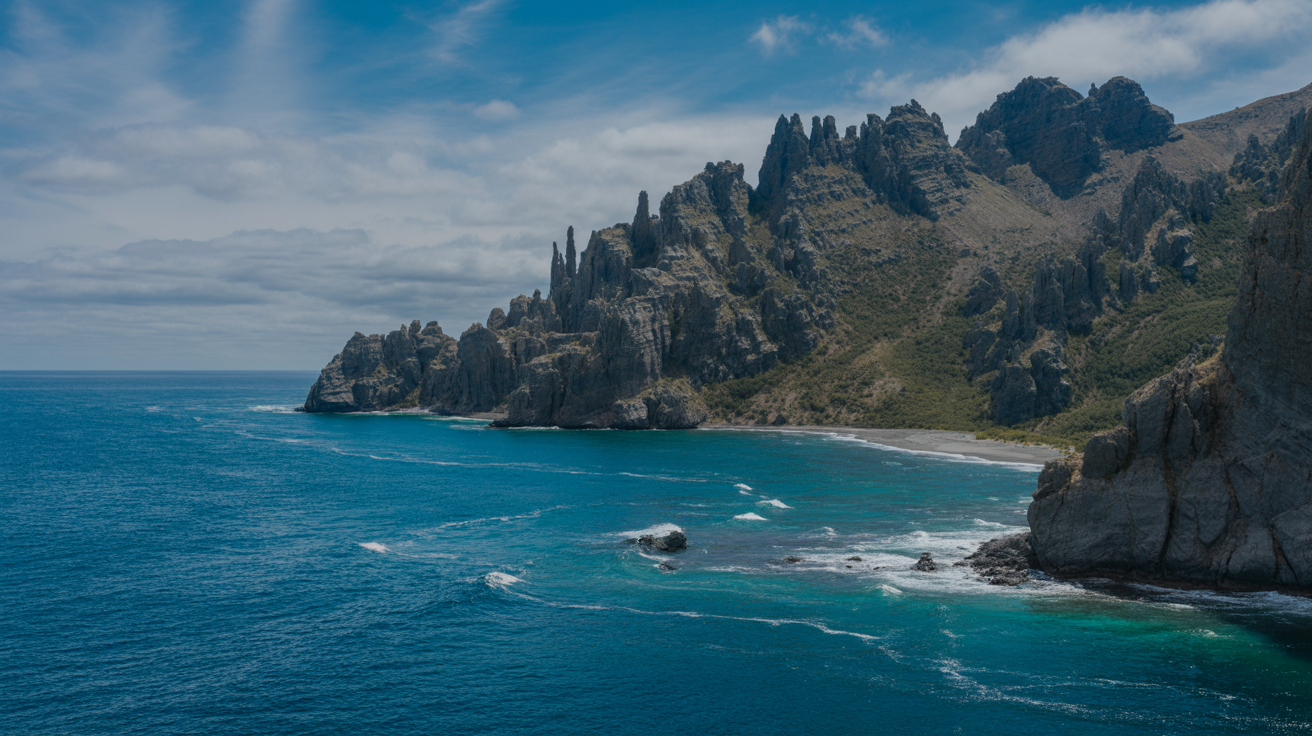
Deep ocean
Conservation
The Venus flytrap sea anemone is currently classified as Least Concern on the IUCN Red List.
Threats & challenges
Currently, Actinoscyphia aurelia faces minimal direct threats due to its deep-sea habitat, which is largely inaccessible to human activities. However, deep-sea mining, trawling, and climate change-driven alterations in ocean chemistry and food supply could pose future risks. The species is not targeted by fisheries and is considered of Least Concern, but the overall health of deep-sea ecosystems is increasingly threatened by anthropogenic impacts. Population trends are poorly understood due to the logistical challenges of deep-sea research.
Taxonomy
Scientific name
Actinoscyphia aurelia
- Kingdom
- Animalia
- Phylum
- Cnidaria
- Class
- Hexacorallia
- Order
- Actiniaria
- Family
- Actinoscyphiidae
- Genus
- Actinoscyphia
- Species
- aurelia
Community notes
Share your observations about the Venus flytrap sea anemone.
No community notes yet. Be the first!
Discover more wildlife
More fascinating animals from the encyclopedia.