
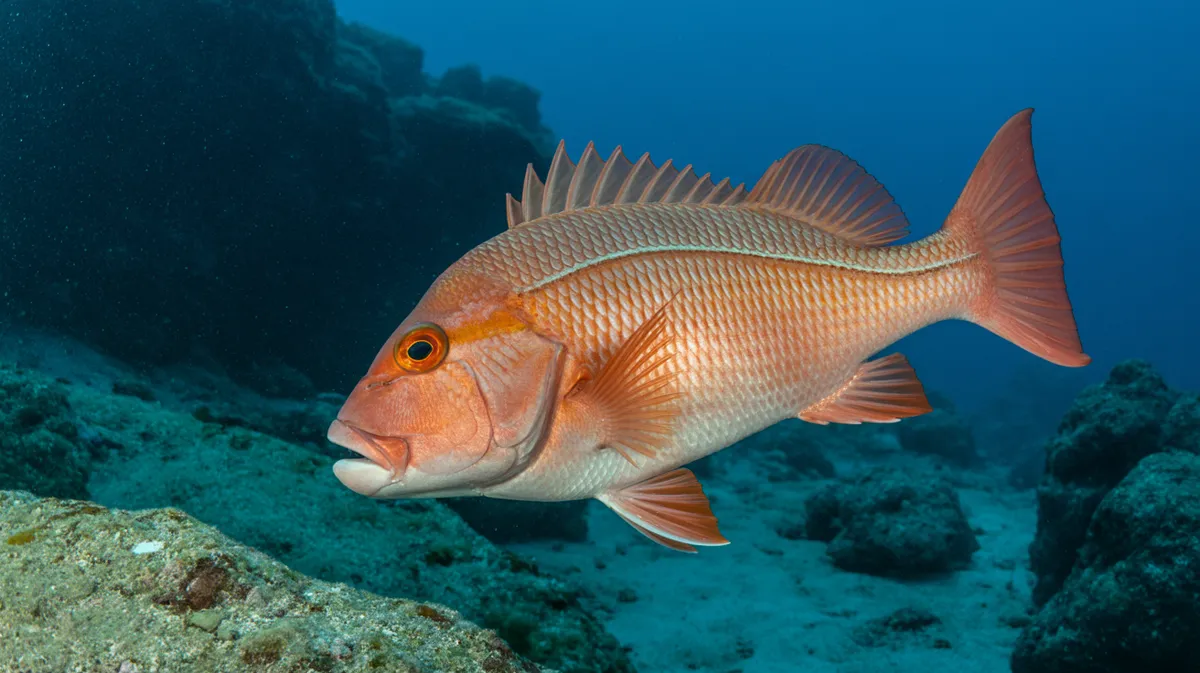
About the Vermilion Snapper
The Vermilion Snapper is a vibrant, medium-sized marine fish recognized by its bright red to vermilion coloration and slender, streamlined body. It inhabits the western Atlantic Ocean, particularly along the continental shelf from North Carolina to Brazil, including the Gulf of Mexico and the Caribbean Sea. Vermilion Snappers form large schools near reefs or rocky bottoms, often mixing with other snapper species. This species is an important commercial and recreational catch due to its mild, flaky flesh. Despite fishing pressures, its populations remain relatively stable, attributed to its fast growth and wide distribution.
Fascinating facts
Schooling Behavior
Vermilion Snappers form large, dense schools, often with hundreds of individuals, which helps protect them from predators and increases foraging success.
Popular Catch
They are a favorite among anglers and commercial fisheries due to their abundance and tasty flesh, often caught using bottom lines and traps.
Wide Distribution
This species is found from the waters of North Carolina in the United States all the way down to southeastern Brazil, including the Gulf of Mexico and Caribbean Sea.
Detailed description
The Vermilion Snapper (Rhomboplites aurorubens) is a medium-sized lutjanid fish, typically reaching lengths of 35–60 cm (14–24 in), with maximum recorded lengths up to 61 cm (24 in) and weights of around 3.2 kg (7 lbs). Its body is slender and laterally compressed, with a pointed snout and a continuous dorsal fin containing 12–13 spines and 10–11 soft rays. The species is distinguished by its vivid red to vermilion coloration, with faint diagonal yellow lines along the flanks and a pale, silvery belly. The caudal fin is deeply forked, aiding in swift maneuvering. Vermilion Snappers possess large eyes adapted for foraging in deeper, dimly lit waters, typically inhabiting depths of 20–300 m (66–984 ft), though most commonly found between 60–150 m (197–492 ft). They are highly social, forming dense, multi-species aggregations over hard-bottom habitats, shipwrecks, and natural reefs. Their schooling behavior provides protection from predators and enhances foraging efficiency. Anatomically, they have sharp, conical teeth and a protrusible mouth suited for capturing small, agile prey. Vermilion Snappers exhibit rapid growth rates, reaching sexual maturity within 1–2 years, and are known for their high reproductive output. Their streamlined bodies and well-developed lateral lines are evolutionary adaptations for detecting prey and avoiding predators in complex reef environments.
Did you know?
Unlike many other snappers, Vermilion Snappers lack prominent canine teeth, giving their mouth a less formidable appearance.
Research & sources
Behaviour & social structure
Vermilion Snappers are diurnal and display pronounced schooling behavior, often forming large, mixed-species groups with other snappers and reef fishes. They are opportunistic carnivores, feeding primarily on small fishes, crustaceans (such as shrimp and crabs), cephalopods, and zooplankton. Foraging typically occurs during daylight hours, with individuals dispersing slightly from the school to hunt, then regrouping for safety. Feeding is often most intense at dawn and dusk. Social hierarchies within schools are not well-defined, but larger individuals may dominate access to preferred feeding areas. At night, schools tend to disperse and individuals seek shelter within reef crevices. Vermilion Snappers are known for their site fidelity, often returning to the same reef structures. They exhibit seasonal movements related to spawning and food availability, sometimes migrating to deeper waters during colder months.
Reproduction & life cycle
Vermilion Snappers are broadcast spawners, with external fertilization occurring in the water column. Spawning typically peaks from late spring through early fall (May to September), though timing varies with latitude and local environmental conditions. Males and females aggregate in large groups over reef edges or drop-offs during spawning events, releasing gametes simultaneously to maximize fertilization success. Females are highly fecund, producing hundreds of thousands to several million eggs per season, depending on size and age. Eggs are pelagic, hatching within 24–48 hours. Larvae are planktonic for several weeks, drifting with currents before settling onto suitable benthic habitats. There is no parental care; survival of offspring depends on dispersal, predation, and environmental conditions. Sexual maturity is typically reached at 1–2 years of age, contributing to the species' resilience to fishing pressure.
Adaptations & survival
The Vermilion Snapper's bright coloration provides camouflage among the vibrant reef environment, while its streamlined body and deeply forked tail facilitate agile swimming and rapid escape from predators. Large eyes enhance visual acuity in deeper, low-light habitats. The species' protrusible jaws and sharp teeth allow for efficient capture of a variety of prey. Schooling behavior reduces individual predation risk and increases foraging efficiency. High fecundity and early maturity are evolutionary strategies that buffer populations against high juvenile mortality and fishing pressures. Their ability to exploit a wide range of depths and habitats further increases their ecological resilience.
Cultural significance
Vermilion Snapper is a valued food fish throughout its range, prized for its mild, flaky flesh. It supports significant commercial and recreational fisheries, particularly in the Gulf of Mexico and southeastern United States. The species is often featured in local seafood cuisine and is a staple in fish markets. While it does not hold notable roles in mythology or symbolism, its economic importance has led to its inclusion in fisheries management and conservation discussions. In some regions, it is colloquially known as 'beeliner' or 'mingo.'
Recent research
Recent research has focused on the population dynamics, genetic structure, and stock assessments of Vermilion Snapper across its range, revealing distinct subpopulations in the Gulf of Mexico and Atlantic. Studies using otolith microchemistry and genetic markers have improved understanding of larval dispersal and connectivity between populations. Ongoing research investigates the impacts of fishing pressure, habitat changes, and climate variability on recruitment and growth rates. There is also interest in the species' role in reef ecosystem functioning and its interactions with other snapper species. Advances in electronic tagging and remote sensing are providing new insights into movement patterns, habitat use, and spawning aggregations.
Videos
Habitat
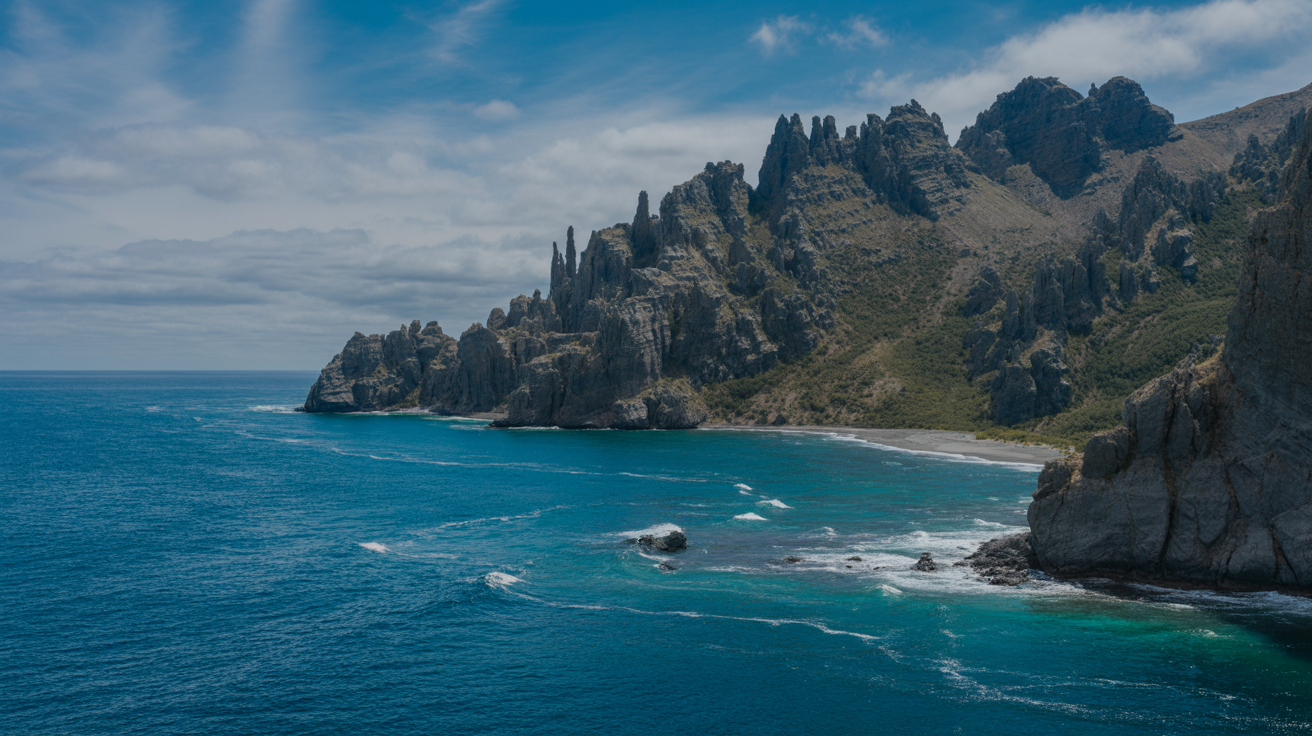
Marine reefs and rocky bottoms
Conservation
The Vermilion Snapper is currently classified as Least Concern on the IUCN Red List.
Threats & challenges
Although currently listed as Least Concern by the IUCN, Vermilion Snappers face localized threats from overfishing, particularly in areas with intensive commercial and recreational harvest. Bycatch in trawl and longline fisheries also poses a risk. Habitat degradation, including coral reef loss and bottom trawling, can reduce available shelter and spawning sites. Regulatory measures such as size and bag limits, seasonal closures, and marine protected areas have helped stabilize populations in some regions. However, continued monitoring is necessary, as some local stocks show signs of decline due to high fishing pressure and slow recovery rates following depletion.
Taxonomy
Scientific name
Rhomboplites aurorubens
- Kingdom
- Animalia
- Phylum
- Chordata
- Class
- Actinopterygii
- Order
- Perciformes
- Family
- Lutjanidae
- Genus
- Rhomboplites
- Species
- aurorubens
Community notes
Share your observations about the Vermilion Snapper.
No community notes yet. Be the first!
Discover more wildlife
More fascinating animals from the encyclopedia.