
About the Wandering Sea Hare
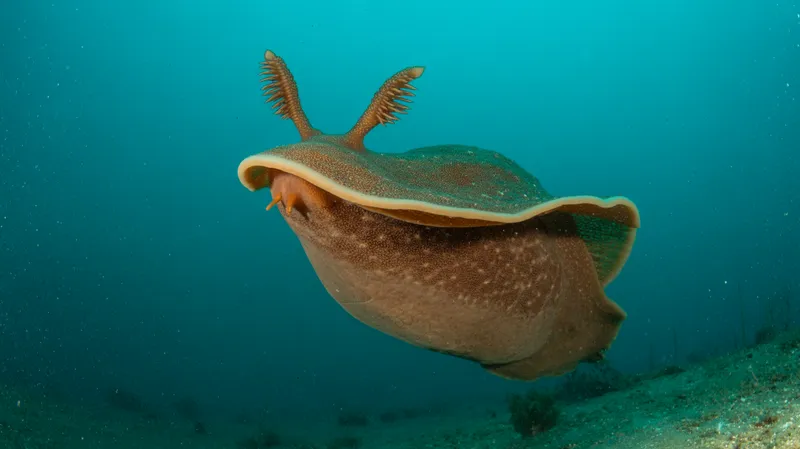
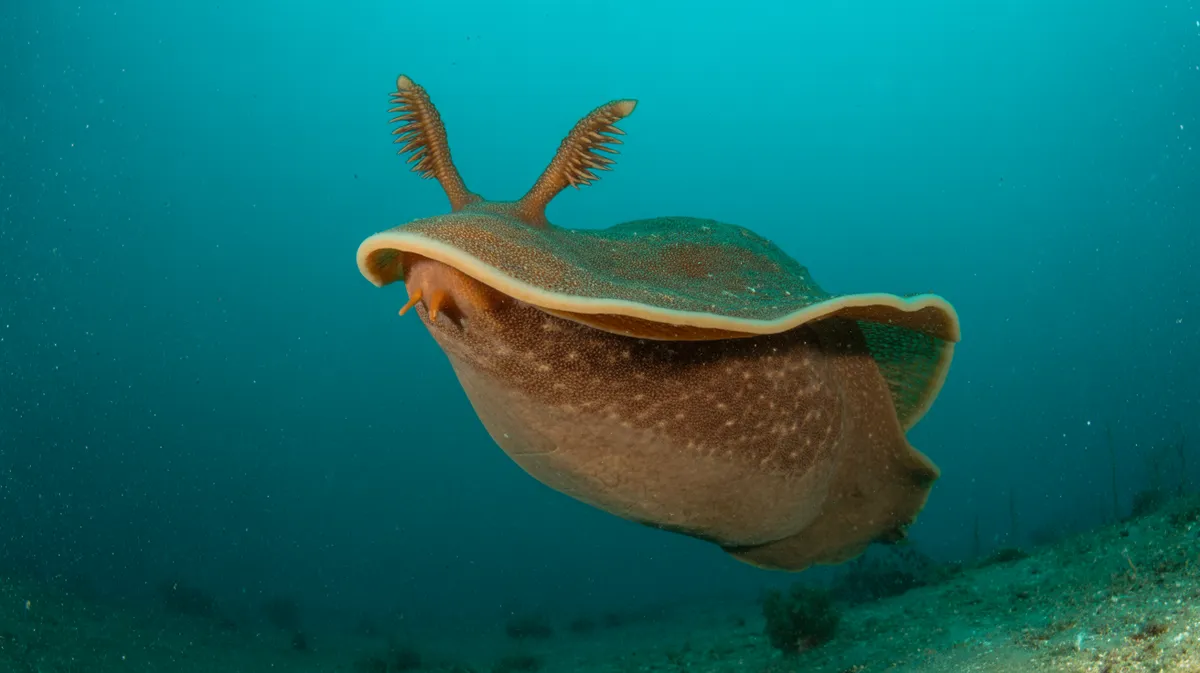
The wandering sea hare is a large marine mollusk known for its soft, elongated body and wing-like flaps called parapodia. Typically olive green to reddish-brown in color, it can reach lengths of up to 20 cm and often displays dark markings. This species is found in shallow coastal waters, where it feeds primarily on algae. It is notable for its ability to release a purple ink when threatened, serving as a defense mechanism against predators. The wandering sea hare plays an important ecological role in controlling algal growth in its habitat.
Fascinating facts
Colorful Defenses
When threatened, the wandering sea hare releases a cloud of purple ink to confuse predators and escape danger.
Algae Eater
This sea hare feeds mainly on algae, helping to regulate algal blooms in coastal ecosystems.
Hermaphroditic Reproduction
Wandering sea hares are simultaneous hermaphrodites, allowing any two individuals to mate and exchange genetic material.
Detailed description
The Wandering Sea Hare (Aplysia brasiliana) is a large opisthobranch gastropod mollusk belonging to the family Aplysiidae. Its soft, elongated body can reach up to 20–25 cm in length and is characterized by a pair of broad, wing-like parapodia that extend along the sides, aiding in swimming and respiration. The coloration ranges from olive green to reddish-brown, often with irregular dark blotches and spots that provide camouflage among seagrass and algae. The head bears two pairs of tentacles: the anterior rhinophores, which function as chemosensory organs, and the oral tentacles, which assist in locating food. The mantle cavity houses a reduced internal shell, which is thin and fragile. Aplysia brasiliana possesses a highly developed nervous system for an invertebrate, making it a model organism in neurobiological research. Its body is covered in a thin layer of mucus, which helps deter predators and prevent desiccation. When threatened, it can expel a cloud of purple ink, composed of various bioactive compounds, to confuse predators and mask its escape. The species is primarily nocturnal, spending daylight hours hidden under rocks or within seagrass beds. It plays a vital ecological role as a grazer, helping to regulate algal growth in coastal ecosystems.
Did you know?
The wandering sea hare is a simultaneous hermaphrodite, meaning it possesses both male and female reproductive organs and can mate with any mature individual of its species.
Research & sources
Behaviour & social structure
Aplysia brasiliana is primarily solitary but may aggregate in areas with abundant food resources, especially during breeding seasons. It exhibits crepuscular and nocturnal activity patterns, foraging mainly at dusk and night to avoid diurnal predators. Its feeding behavior involves using a rasping radula to scrape algae and seagrasses from substrates. The sea hare moves by crawling along the substrate using its muscular foot, but it is also capable of swimming short distances by undulating its parapodia in a graceful, flapping motion. When disturbed, it adopts a defensive posture and releases ink. Social interactions are generally limited to mating events, where multiple individuals may form mating chains. The species exhibits limited territoriality and does not defend specific feeding grounds. Daily routines include periods of rest concealed in vegetation or under rocks, interspersed with active foraging.
Reproduction & life cycle
Aplysia brasiliana is a simultaneous hermaphrodite, possessing both male and female reproductive organs. During the breeding season, which typically peaks in warmer months (spring and summer), individuals engage in reciprocal copulation, often forming chains where one individual acts as a male to one partner and as a female to another. Fertilization is internal, and after mating, the animal lays long, gelatinous strings of yellow to greenish eggs, which are attached to seagrass, rocks, or other substrates. Each egg string can contain thousands of eggs. Embryonic development is rapid, with planktonic veliger larvae hatching within 7–14 days, depending on water temperature. The larvae are free-swimming for a brief period before settling and metamorphosing into juvenile sea hares. There is no parental care post-oviposition; the adults do not guard or tend to the eggs or larvae.
Adaptations & survival
The Wandering Sea Hare has evolved several notable adaptations for survival in dynamic coastal environments. Its cryptic coloration and irregular markings provide effective camouflage among algae and seagrass, reducing predation risk. The ability to secrete a viscous, purple ink when threatened is a key defense mechanism; the ink contains aplysioviolin and other compounds that can impair predator sensory systems and act as a decoy. The parapodia not only facilitate swimming but also increase respiratory surface area, aiding gas exchange in low-oxygen environments. The reduced internal shell offers some protection without compromising mobility. As a herbivore, its radula is specialized for efficiently grazing on a variety of macroalgae. Its simultaneous hermaphroditism increases reproductive success in sparse populations, as any encounter with a conspecific can result in mating.
Cultural significance
While Aplysia brasiliana does not have a prominent role in traditional human culture or mythology, it is of considerable scientific importance. The genus Aplysia, including A. brasiliana, has been extensively used in neurobiological research due to its large, easily accessible neurons, which have contributed to foundational discoveries in learning and memory. Nobel laureate Eric Kandel's work on Aplysia californica, a close relative, has led to significant advances in understanding the molecular basis of memory. In some coastal communities, sea hares are occasionally referenced in folklore as mysterious or unusual sea creatures, but there is little evidence of direct traditional use.
Recent research
Recent research on Aplysia brasiliana has focused on its neurophysiology, chemical ecology, and reproductive biology. Studies have explored the composition and ecological function of its ink, revealing complex mixtures of deterrent compounds. Ongoing research investigates the impacts of environmental stressors, such as ocean acidification and warming, on its physiology and behavior. Comparative genomics and transcriptomics are being used to understand evolutionary relationships within Aplysiidae and adaptations to herbivory. The species continues to serve as a model for studying neural circuits underlying simple behaviors, such as habituation and sensitization.
Sources
Aplysia brasiliana: Taxonomy, Distribution, and Neurobiology
Kandel, E.R. et al., Journal of Experimental Biology (2020)
scientificAplysia brasiliana: The IUCN Red List of Threatened Species 2023
IUCN Marine Invertebrates Specialist Group
conservationAplysia brasiliana: Taxonomy, Distribution, and Biology
Bouchet, P.; Rosenberg, G. (World Register of Marine Species) (2023)
scientificVideos
Habitat
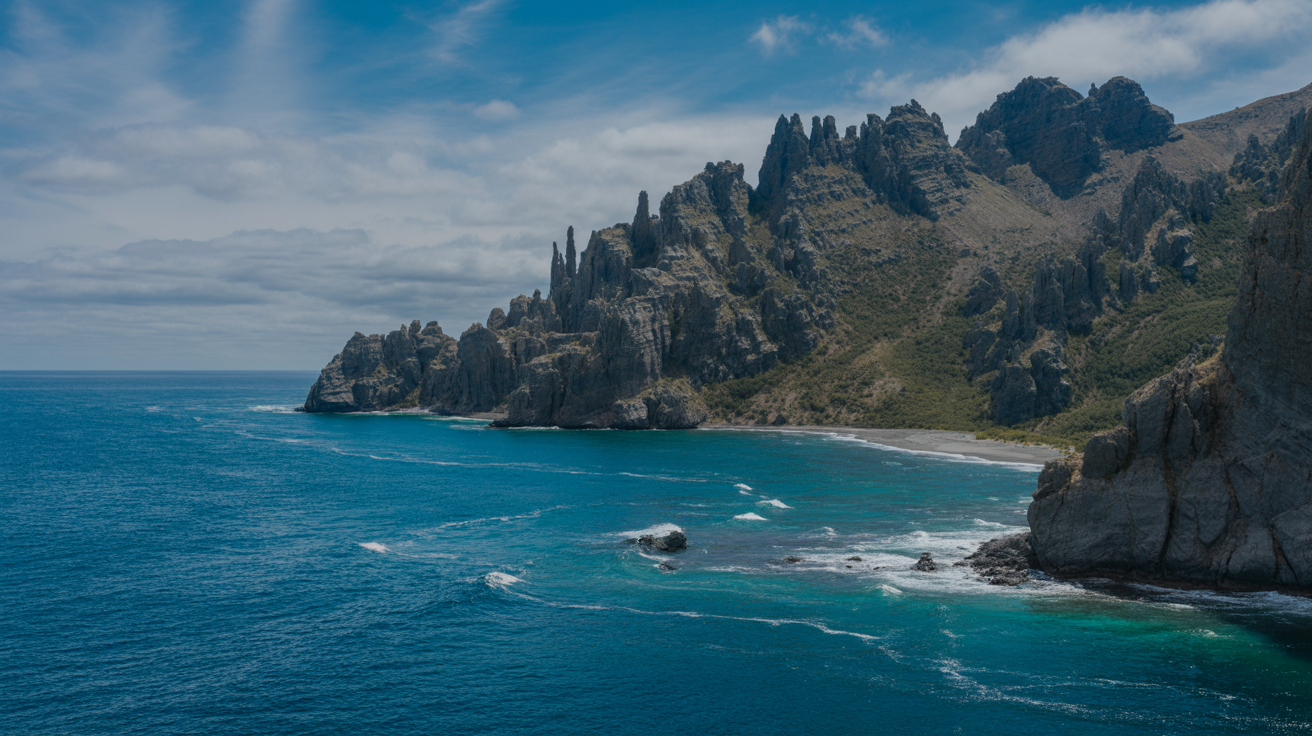
Shallow coastal waters, seagrass beds, and rocky substrates
Conservation
The Wandering Sea Hare is currently classified as Least Concern on the IUCN Red List.
Threats & challenges
Currently, Aplysia brasiliana is listed as Least Concern, with stable populations throughout its range in the Western Atlantic, from North Carolina and Bermuda to Brazil. However, local populations may be affected by habitat degradation, coastal development, pollution (especially nutrient runoff leading to harmful algal blooms), and climate change, which can alter seagrass and algal communities. Collection for scientific research and the aquarium trade is generally not significant enough to threaten populations. Natural predators include fish, crabs, and sea stars, but the species' chemical defenses provide substantial protection. Monitoring is recommended in areas experiencing rapid environmental change.
Taxonomy
Scientific name
Aplysia brasiliana
- Kingdom
- Animalia
- Phylum
- Mollusca
- Class
- Gastropoda
- Order
- Anaspidea
- Family
- Aplysiidae
- Genus
- Aplysia
- Species
- brasiliana
Community notes
Share your observations about the Wandering Sea Hare.
No community notes yet. Be the first!
Discover more wildlife
More fascinating animals from the encyclopedia.