
About the Western Bearded Dragon
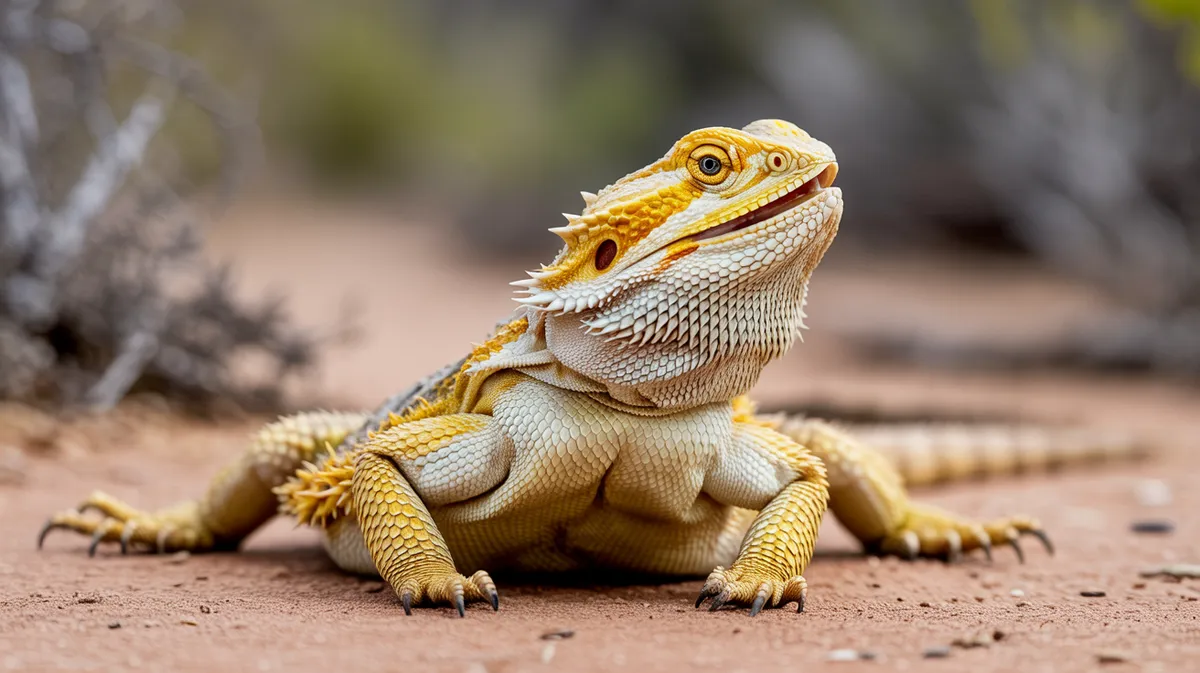
The Western Bearded Dragon is a medium-sized agamid lizard native to arid and semi-arid regions of Western Australia. Easily recognized by its spiny 'beard' that puffs out when threatened, this species exhibits a range of earthy colors that help it blend into its dry surroundings. Western Bearded Dragons are diurnal, spending their days basking on rocks or branches and foraging for food. They are social reptiles, often seen perching in visible locations to survey their territory.
Fascinating facts
Temperature Regulation
Western Bearded Dragons are ectothermic and often bask in the sun to raise their body temperature, but will retreat to shade or burrows to avoid overheating.
Unique Communication
These lizards use arm waving, head bobbing, and color changes to communicate with others, signaling submission or dominance.
Adapted to Dry Environments
They are well-adapted to survive in arid conditions and can go long periods without water, obtaining moisture from their food.
Detailed description
The Western Bearded Dragon (Pogona minor) is a robust, medium-sized lizard, typically reaching a snout-to-vent length of 14–18 cm and a total length of up to 40–45 cm, with males generally larger than females. Its body is dorsoventrally flattened, aiding in thermoregulation and camouflage among rocks and leaf litter. The species is distinguished by a series of spiny scales along the lateral body and a prominent, expandable 'beard' under the throat, which darkens and flares during displays of aggression or courtship. Coloration ranges from sandy brown to reddish or gray, often with subtle banding or mottling, providing effective concealment in arid habitats. The limbs are strong and well-adapted for climbing, with sharp claws for gripping bark and rocky surfaces. Pogona minor is diurnal and exhibits heliothermic behavior, basking in direct sunlight to regulate body temperature, but retreats to burrows or shaded crevices during peak heat. Socially, individuals are often observed in loose aggregations, maintaining visual contact through head-bobbing, arm-waving, and other body language. Their omnivorous diet includes insects, small vertebrates, flowers, fruits, and leaves, reflecting opportunistic foraging strategies. The species is oviparous, with females laying clutches of eggs in shallow nests excavated in sandy soil. Western Bearded Dragons play a key ecological role as both predator and prey within their ecosystem.
Did you know?
Despite their fierce appearance when displaying their beard, Western Bearded Dragons are generally calm and gentle when handled by humans.
Research & sources
Behaviour & social structure
Western Bearded Dragons are primarily solitary but tolerate the presence of conspecifics, especially during basking or in resource-rich areas. They are territorial, with dominant individuals securing prime basking and feeding sites. Communication is highly visual, involving rapid head-bobs (dominance), slow arm-waves (submission), and beard displays (threat or courtship). Foraging occurs mainly in the morning and late afternoon, with prey including orthopterans, beetles, ants, and occasional small lizards, supplemented by plant material such as flowers and leaves. They employ a sit-and-wait hunting strategy, remaining motionless before lunging at prey. During the hottest part of the day, they seek shelter in burrows, under logs, or within rock crevices to avoid overheating. Seasonal activity is influenced by temperature and rainfall, with periods of brumation (dormancy) during cooler months.
Reproduction & life cycle
Breeding in Pogona minor typically occurs in late spring to early summer (October–January in Western Australia), triggered by increasing temperatures and photoperiod. Males engage in elaborate courtship displays, including head-bobbing, beard extension, and circling the female. After successful copulation, females lay 6–18 leathery eggs per clutch in a self-dug burrow, usually 10–20 cm deep. Incubation lasts 50–75 days, depending on soil temperature, with higher temperatures accelerating development. There is no parental care post-oviposition; hatchlings are fully independent and disperse quickly to avoid predation. Females may produce multiple clutches per season if conditions are favorable.
Adaptations & survival
Pogona minor exhibits several adaptations for arid environments, including a flattened body for efficient basking and rapid heat absorption, and cryptic coloration for camouflage. The expandable beard serves as a deterrent to predators and a signal in social interactions. Their omnivorous diet allows flexibility in resource-scarce habitats. Behavioral thermoregulation is highly developed, with precise basking and sheltering routines. The species can conserve water by excreting uric acid instead of urea, minimizing water loss. Climbing ability enables access to elevated basking sites and escape from ground-based threats. Brumation during unfavorable conditions conserves energy and reduces metabolic demands.
Cultural significance
The Western Bearded Dragon holds modest cultural significance in Australia, primarily as a subject of interest for naturalists, educators, and reptile enthusiasts. It is occasionally featured in Aboriginal art and local folklore, symbolizing adaptability and resilience. In recent years, it has gained popularity in the pet trade, though less so than the Central Bearded Dragon (Pogona vitticeps). There are no known traditional medicinal or dietary uses.
Recent research
Recent research on Pogona minor has focused on phylogenetic relationships within the genus Pogona, revealing distinct genetic lineages and clarifying species boundaries. Studies have examined the effects of habitat fragmentation on genetic diversity and dispersal. Behavioral research has documented complex visual signaling and social hierarchies, contributing to broader understanding of agamid communication. Ongoing ecological studies are investigating the impacts of climate variability on activity patterns and reproductive success. There is also interest in the species' physiological adaptations to aridity and temperature extremes.
Sources
A review of the genus Pogona (Reptilia: Agamidae) in Western Australia with the description of two new species
Storr, G.M. (1982)
scientificA Review of the Genus Pogona (Reptilia: Agamidae) in Western Australia
Paul Doughty, Western Australian Museum (2012)
scientificPogona minor: The IUCN Red List of Threatened Species 2017
IUCN SSC Amphibian Specialist Group
conservationVideos
Habitat
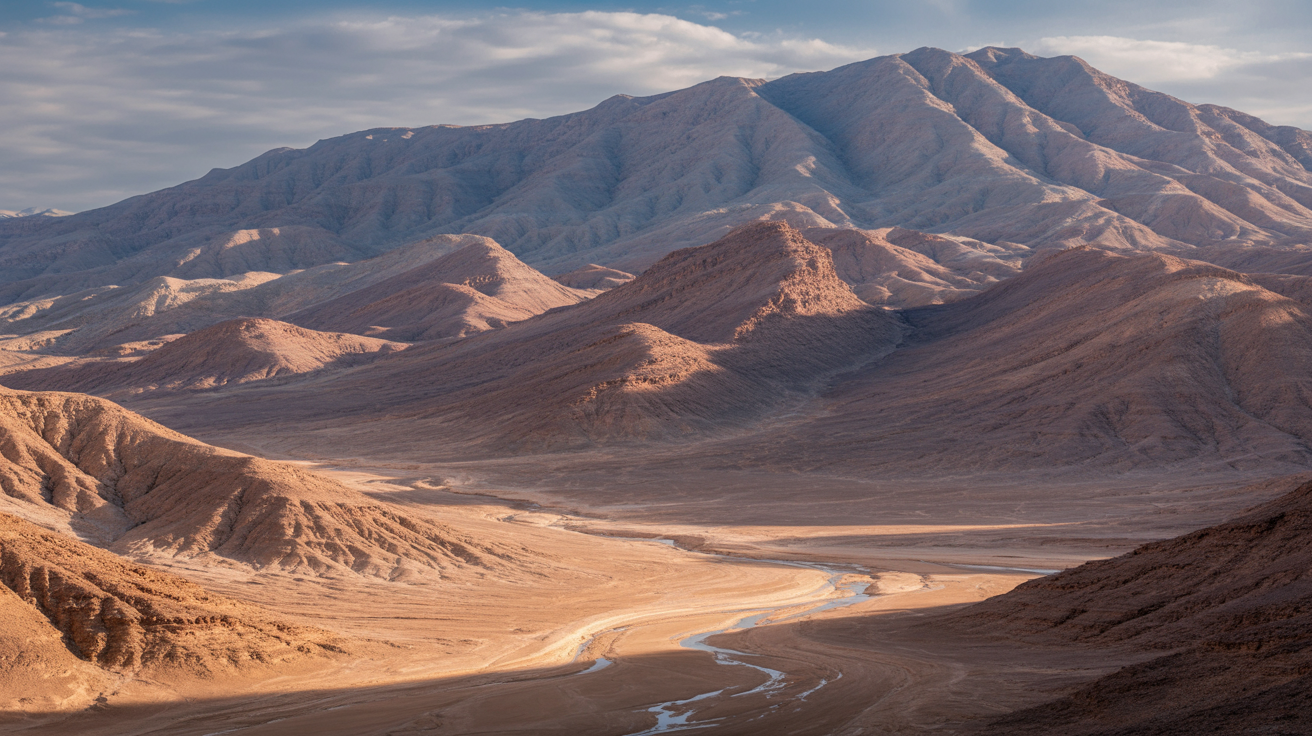
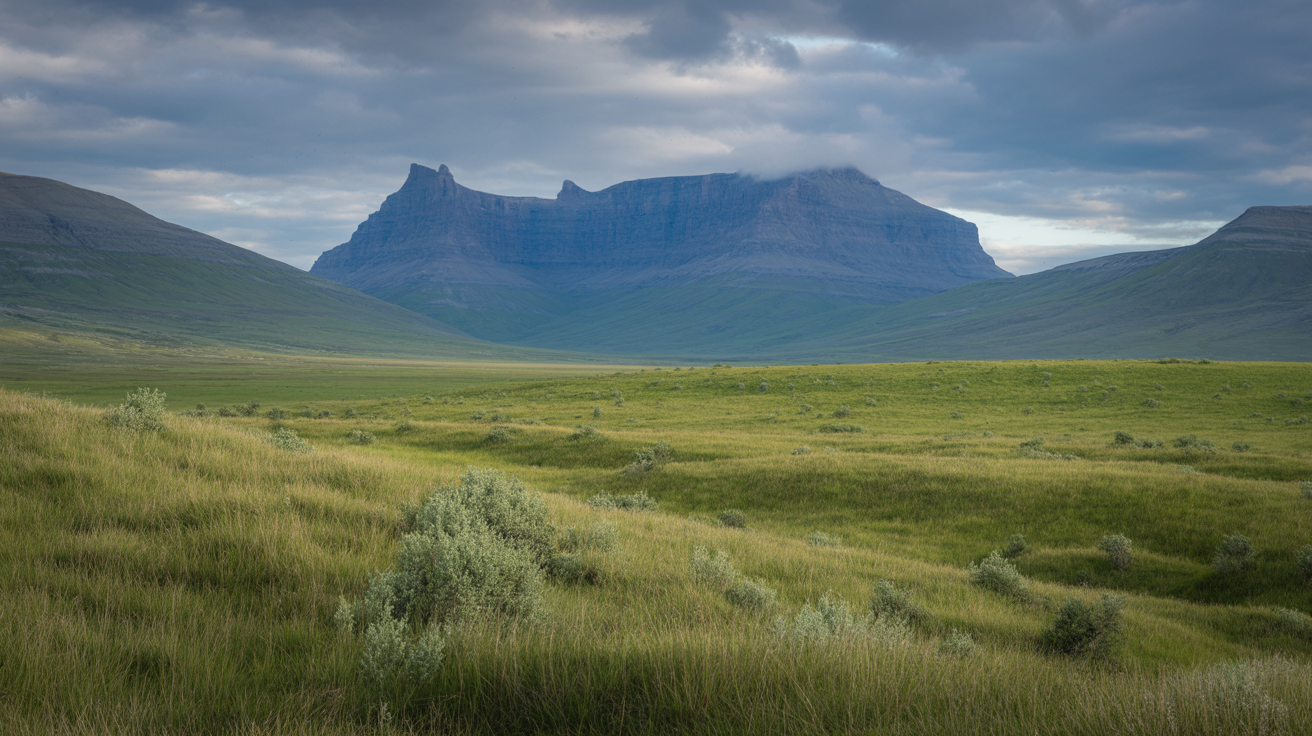
Arid woodland, shrubland, and desert regions
Conservation
The Western Bearded Dragon is currently classified as Least Concern on the IUCN Red List.
Threats & challenges
While currently listed as Least Concern, Pogona minor faces localized threats from habitat degradation due to agricultural expansion, mining, and urban development. Predation by introduced species such as feral cats and foxes poses additional risks, especially to eggs and juveniles. Road mortality and illegal collection for the pet trade, though less significant than for other Pogona species, can impact some populations. Climate change may alter habitat suitability and seasonal activity patterns. Overall, populations remain stable, but ongoing monitoring is recommended.
Taxonomy
Scientific name
Pogona minor
- Kingdom
- Animalia
- Phylum
- Chordata
- Class
- Reptilia
- Order
- Squamata
- Family
- Agamidae
- Genus
- Pogona
- Species
- minor
Community notes
Share your observations about the Western Bearded Dragon.
No community notes yet. Be the first!
Discover more wildlife
More fascinating animals from the encyclopedia.