
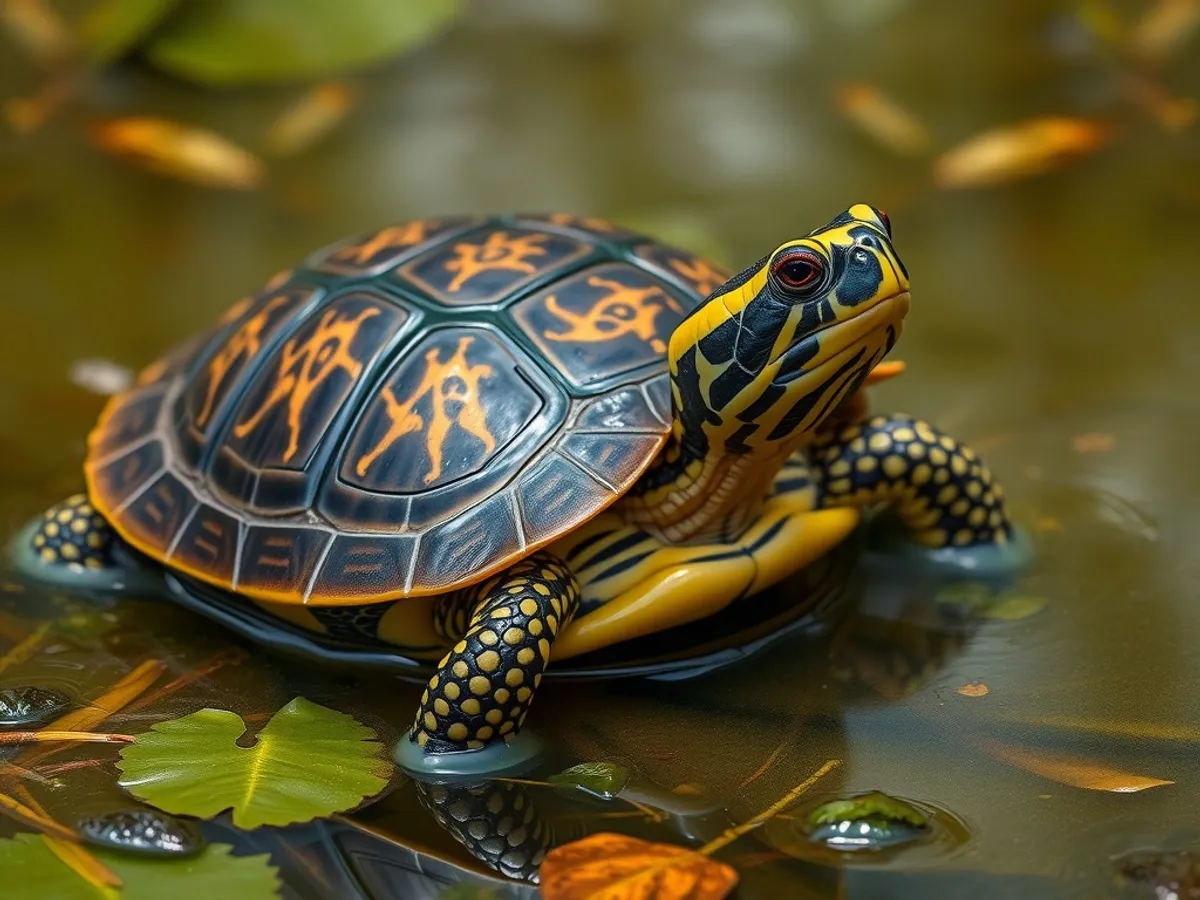
About the Yellow-headed Temple Turtle
The Yellow-headed Temple Turtle is a large, freshwater turtle native to Southeast Asia, noted for its striking yellowish head and dark, domed carapace. Often found in slow-moving rivers, marshes, and ponds, it is named for its frequent presence near Buddhist temples, where they are sometimes released as part of religious rituals. This species is primarily aquatic but can be seen basking on logs or riverbanks. Due to habitat destruction, overharvesting for the pet trade, and collection for traditional medicine, its populations have declined sharply. The Yellow-headed Temple Turtle is now classified as Critically Endangered and is rarely seen in the wild.
Fascinating facts
Temple Tradition
The species is commonly associated with Buddhist temples, where they are often released as part of religious ceremonies for good karma.
Plant-based Diet
Yellow-headed Temple Turtles primarily consume aquatic plants, fruits, and occasionally soft vegetation, making them herbivores.
Critical Status
Due to habitat loss and overexploitation, the Yellow-headed Temple Turtle is listed as Critically Endangered by the IUCN.
Detailed description
The Yellow-headed Temple Turtle (Heosemys annandalii) is a large, semi-aquatic turtle, with adults typically reaching carapace lengths of 40–50 cm and weights up to 12–15 kg, though some individuals may exceed these sizes. Its most distinctive feature is the pale yellow to cream coloration of the head, which contrasts sharply with the dark olive to black, highly domed carapace. The plastron is usually yellowish with dark markings. The limbs are robust and webbed, well-adapted for swimming, and the tail is relatively short. The species exhibits sexual dimorphism, with females generally larger than males, and males possessing longer, thicker tails. Heosemys annandalii is primarily herbivorous, feeding on aquatic vegetation, fruits, and occasionally invertebrates. It is mostly aquatic but will bask on logs or banks, especially during cooler periods. The species is generally solitary outside of the breeding season, displaying limited social interaction. Its slow movement and cryptic coloration help it avoid predation. The turtle’s lifespan in the wild is estimated to be over 40 years, with some individuals in captivity living even longer. Its distribution spans lowland floodplains, slow-moving rivers, marshes, and swamps across Cambodia, Laos, Thailand, and Vietnam.
Did you know?
Despite being aquatic, this turtle is an excellent climber and can sometimes be found perched on roots or low branches above the water.
Research & sources
Wikipedia summary
The yellow-headed temple turtle is a large species of turtle in the family Geoemydidae. The species is native to Southeast Asia.
Behaviour & social structure
Yellow-headed Temple Turtles are diurnal, becoming most active during the early morning and late afternoon. They spend the majority of their time submerged or partially hidden among aquatic vegetation, emerging to bask when temperatures are favorable. Feeding occurs both in water and at the water’s edge, where they graze on soft plants, fallen fruits, and occasionally carrion or small invertebrates. They are generally non-aggressive and avoid confrontation, relying on their hard shell and aquatic escape for defense. Social interactions are minimal, with individuals maintaining loose territories. During the dry season, they may burrow into mud or seek refuge in deeper water to avoid desiccation. Basking is important for thermoregulation and parasite control.
Reproduction & life cycle
Breeding typically occurs during the onset of the rainy season (May to July), when water levels rise. Courtship involves males following and gently biting females. Females lay 6–18 eggs per clutch, often in sandy or loamy soil near water, and may produce 1–3 clutches per season. Incubation lasts 70–110 days, depending on temperature and humidity. Hatchlings are about 5–6 cm in carapace length and are highly vulnerable to predation. There is no parental care after egg-laying; hatchlings are independent from birth. Sexual maturity is reached at 8–12 years, with females maturing later than males.
Adaptations & survival
Heosemys annandalii has evolved several adaptations for an aquatic lifestyle, including webbed feet for efficient swimming and a streamlined, domed carapace that offers protection from predators and facilitates movement through dense vegetation. Its cryptic coloration provides camouflage in murky waters. The species’ herbivorous diet is supported by strong jaws capable of crushing tough plant material. Behavioral adaptations include seasonal movements to avoid drought and the ability to remain submerged for extended periods, reducing predation risk. Its tolerance for a range of freshwater habitats, from rivers to marshes, reflects ecological flexibility.
Cultural significance
The Yellow-headed Temple Turtle holds significant cultural value in Southeast Asia, particularly in Buddhist communities where turtles are released at temples as acts of merit and compassion. This practice, while well-intentioned, has contributed to unsustainable removal from the wild and poor survival rates in captivity. The turtle is sometimes featured in local folklore as a symbol of longevity and wisdom. In some regions, it is also used in traditional medicine, further increasing exploitation pressure.
Recent research
Recent research has focused on population genetics, revealing low genetic diversity in fragmented populations, which may impact long-term viability. Conservation programs are investigating head-starting and captive breeding as potential recovery strategies. Studies on habitat use have highlighted the species’ dependence on seasonal floodplains and the importance of wetland connectivity. Ongoing research is assessing the impact of temple release practices and developing guidelines for ethical wildlife release. There is also interest in the species’ role in aquatic ecosystem functioning, particularly as a seed disperser.
Videos
Habitat
Freshwater rivers, swamps, and marshes


Conservation
The Yellow-headed Temple Turtle is currently classified as Critically Endangered on the IUCN Red List.
Threats & challenges
The species faces severe threats from habitat destruction due to wetland drainage, dam construction, and agricultural expansion. Overharvesting for the pet trade, traditional medicine, and consumption as food has caused drastic population declines. Collection for religious release at temples, while culturally significant, often results in high post-release mortality due to poor husbandry and unsuitable habitats. Pollution and waterway modification further degrade its environment. Population surveys indicate a sharp decline, with the species now considered Critically Endangered by the IUCN. Fragmented populations and low reproductive rates hinder recovery.
Taxonomy
Scientific name
Heosemys annandalii
- Kingdom
- Animalia
- Phylum
- Chordata
- Class
- Reptilia
- Order
- Testudines
- Family
- Geoemydidae
- Genus
- Heosemys
- Species
- annandalii
Where to see a yellow-headed temple turtle
1 zoo and aquarium in 1 country are recorded as keeping this species.

Community notes
Share your observations about the Yellow-headed Temple Turtle.
No community notes yet. Be the first!
Discover more wildlife
More fascinating animals from the encyclopedia.