
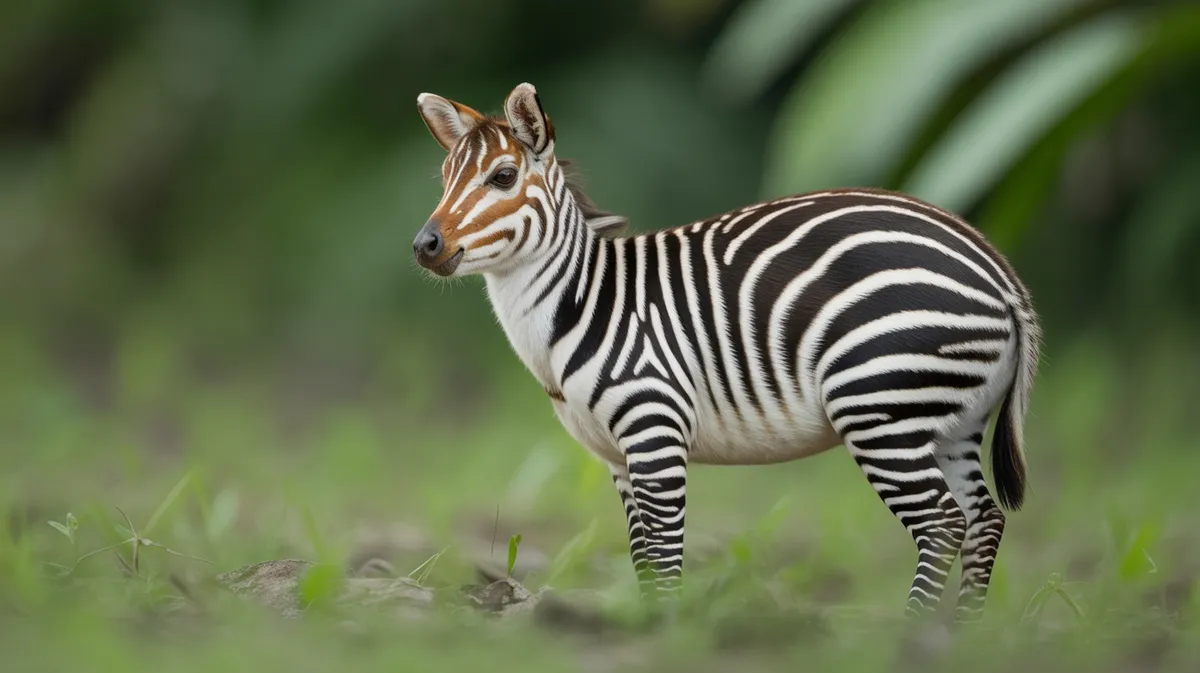
About the Zebra Duiker
The zebra duiker is a small, elusive antelope native to the dense lowland rainforests of West Africa. Its most distinctive feature is the striking pattern of black and white stripes running across its golden-brown body, reminiscent of a zebra, which provides camouflage among the forest undergrowth. Zebra duikers are solitary or found in pairs, and are known for their shy and secretive behavior, making them rarely seen in the wild. They play an important role in forest ecology by dispersing seeds from the fruits they consume.
Fascinating facts
Striped Camouflage
The zebra-like stripes on their backs help them blend seamlessly into the dappled light of the rainforest, providing excellent camouflage from predators.
Fruit Specialists
Zebra duikers feed mainly on fallen fruits, seeds, and leaves, and are particularly adept at breaking open tough fruit shells with their strong noses.
Forest Dwellers
They are strictly forest-dependent and are rarely, if ever, seen outside dense, undisturbed rainforests in countries like Liberia, Sierra Leone, Côte d'Ivoire, and Guinea.
Detailed description
The zebra duiker (Cephalophus zebra) is a small, robust antelope, typically weighing between 17 and 20 kg (37–44 lbs) and standing about 40–50 cm (16–20 in) at the shoulder. Its most distinctive feature is the series of 12–16 prominent black or dark brown transverse stripes running across its golden to reddish-brown back and flanks, a unique adaptation among duikers that provides disruptive camouflage in the dappled light of dense rainforest undergrowth. The head is relatively large with a short, broad muzzle and a prominent nasal bridge, while the eyes are large and positioned laterally, enhancing peripheral vision. Both sexes possess short, backward-curving horns, rarely exceeding 5 cm (2 in) in length, though females' horns are often smaller or absent. The zebra duiker has a compact, muscular build, with powerful limbs adapted for quick bursts of speed and agility through tangled vegetation. Its hooves are narrow and pointed, aiding movement on soft, leaf-littered forest floors. The species is primarily crepuscular, being most active during dawn and dusk, and is highly secretive, relying on its cryptic coloration and stealth to avoid predators. Zebra duikers are solitary or form monogamous pairs, with each individual or pair maintaining a well-defined territory marked by scent glands. Their diet consists mainly of fallen fruits, seeds, leaves, and occasionally fungi, making them important seed dispersers in their ecosystem.
Did you know?
Unlike most antelopes, both male and female zebra duikers have short, backward-curving horns.
Research & sources
Wikipedia summary
The zebra duiker is a small antelope found primarily in Liberia, as well as the Ivory Coast, Sierra Leone, and occasionally Guinea. They are sometimes referred to as the banded duiker or striped-back duiker. It is believed to be one of the earliest duiker species to have evolved.
Behaviour & social structure
Zebra duikers are predominantly solitary, though pairs—often a mated male and female—may share overlapping territories. They are territorial and use preorbital glands to mark boundaries and communicate with conspecifics. Activity peaks during early morning and late afternoon (crepuscular), with individuals spending much of the day resting in dense cover. Foraging involves slow, deliberate movement through the undergrowth, using their acute sense of smell to locate fallen fruit and edible vegetation. They are known to use their strong, reinforced nasal bones to crack open hard-shelled fruits, a rare adaptation among duikers. Zebra duikers are highly vigilant, freezing or fleeing at the slightest disturbance; when alarmed, they emit a sharp bark and may bound away in zigzag patterns to evade predators such as leopards, golden cats, and large raptors. Social interactions are generally limited to mating pairs or mothers with offspring, with little tolerance for intruders.
Reproduction & life cycle
Zebra duikers are believed to be monogamous, with pairs maintaining long-term bonds and shared territories. Breeding can occur year-round, but peaks are observed during the rainy season when food is abundant. After a gestation period of approximately 221–229 days (about 7.5 months), females give birth to a single fawn, which weighs around 1.5–2 kg (3.3–4.4 lbs) at birth. The newborn is precocial but remains hidden in dense vegetation for the first few weeks, visited and nursed by the mother several times a day. Weaning occurs at about 3–4 months, though the young may remain with the mother for up to a year before dispersing. Both parents may participate in territorial defense, but direct paternal care is limited. Sexual maturity is typically reached at 1–1.5 years of age.
Adaptations & survival
The zebra duiker exhibits several unique adaptations for survival in dense rainforest habitats. Its striking striped pattern provides effective camouflage by breaking up the body outline in the patchy light of the forest floor. The reinforced nasal bones and strong facial musculature allow it to crack open tough fruits and seeds, giving access to food resources unavailable to many sympatric species. Its compact body and short limbs facilitate agile movement through thick undergrowth, while the lateral placement of the eyes enhances vigilance against predators. The species' solitary and secretive nature reduces detection by both predators and human hunters. Scent-marking and vocalizations are used for territory maintenance and communication in low-visibility environments.
Cultural significance
While the zebra duiker does not feature prominently in West African folklore or mythology, it is an important source of bushmeat for local communities, and its skins are sometimes used in traditional crafts. The animal's rarity and striking appearance have made it a symbol of the unique biodiversity of West African rainforests, and it is occasionally referenced in conservation education materials. There are no known widespread taboos or spiritual associations specifically linked to the zebra duiker.
Recent research
Recent research has focused on the zebra duiker's role as a seed disperser and its dietary preferences, revealing its importance in maintaining forest composition and regeneration. Genetic studies indicate that C. zebra is one of the most basal (early-diverging) members of the duiker lineage, providing insights into duiker evolution and biogeography. Camera trap surveys and non-invasive genetic sampling are increasingly used to monitor populations and assess the impact of hunting and habitat loss. Ongoing studies are investigating reproductive physiology and the effects of habitat fragmentation on genetic diversity. Conservation programs are exploring community-based management and the establishment of protected areas to safeguard remaining populations.
Videos
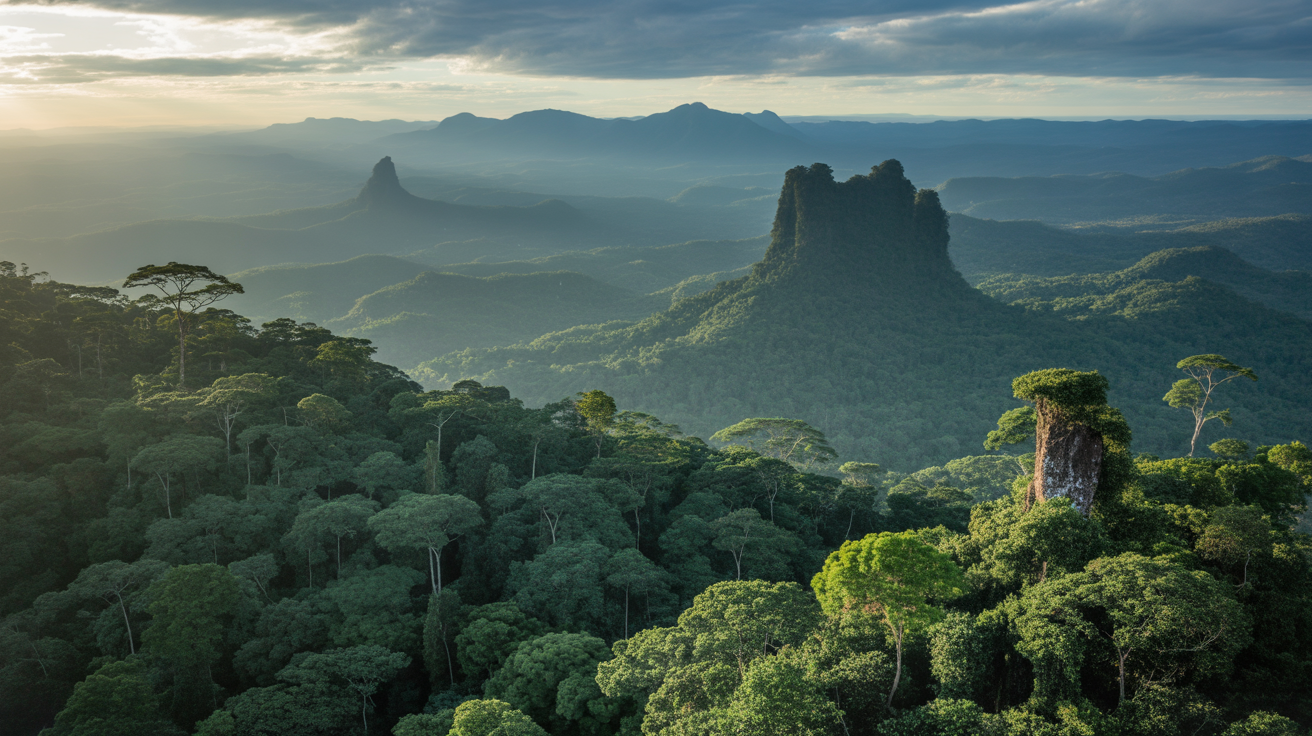
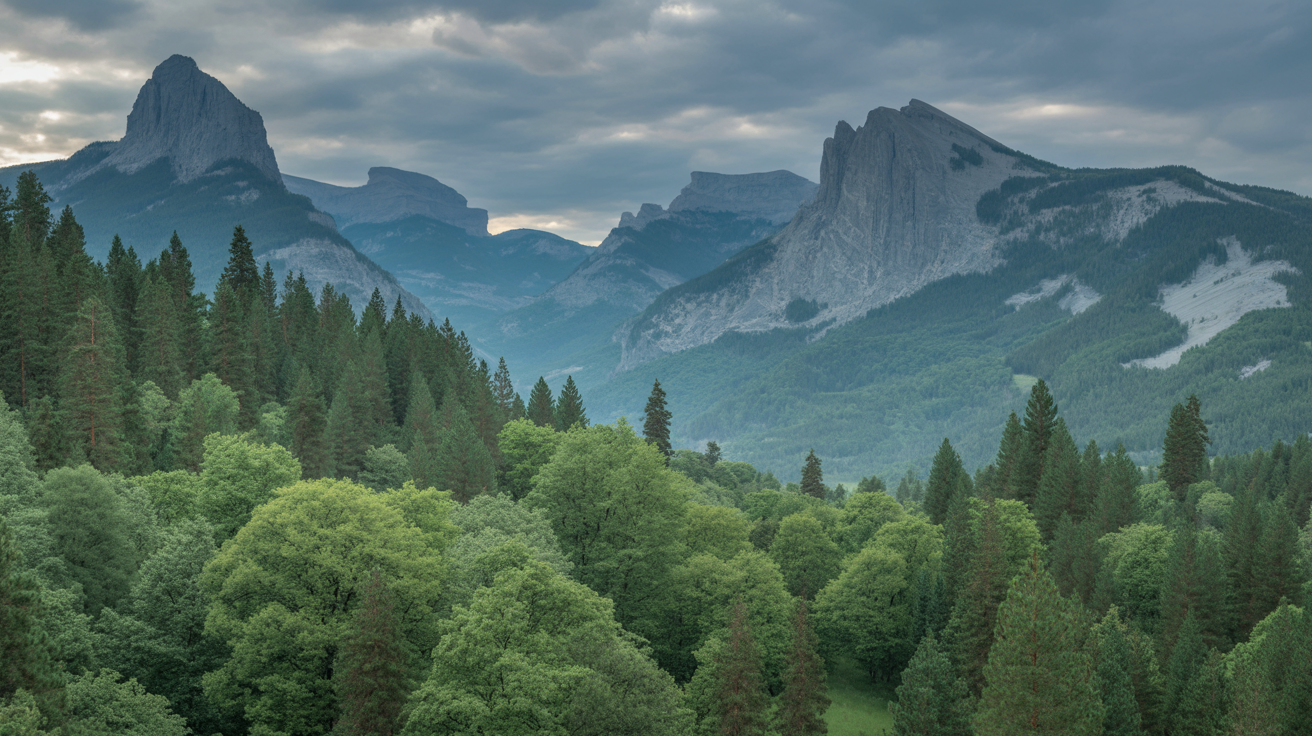
Habitat
Lowland rainforest
Conservation
The Zebra Duiker is currently classified as Endangered on the IUCN Red List.
Threats & challenges
The zebra duiker faces significant threats from habitat loss due to logging, agricultural expansion, and human settlement, leading to fragmentation of its lowland rainforest habitat. It is also heavily hunted for bushmeat throughout its range, with snares and traps posing a particular threat. The species is listed as Vulnerable by the IUCN, with population estimates suggesting a continuing decline; some local populations are now highly fragmented and isolated. Additional challenges include predation by natural predators and competition with other frugivorous mammals. Conservation efforts are hampered by the species' elusive behavior and the difficulty of conducting population surveys in dense forests.
Taxonomy
Scientific name
Cephalophus zebra
- Kingdom
- Animalia
- Phylum
- Chordata
- Class
- Mammalia
- Order
- Artiodactyla
- Family
- Bovidae
- Genus
- Cephalophus
- Species
- zebra
Community notes
Share your observations about the Zebra Duiker.
No community notes yet. Be the first!
Discover more wildlife
More fascinating animals from the encyclopedia.