
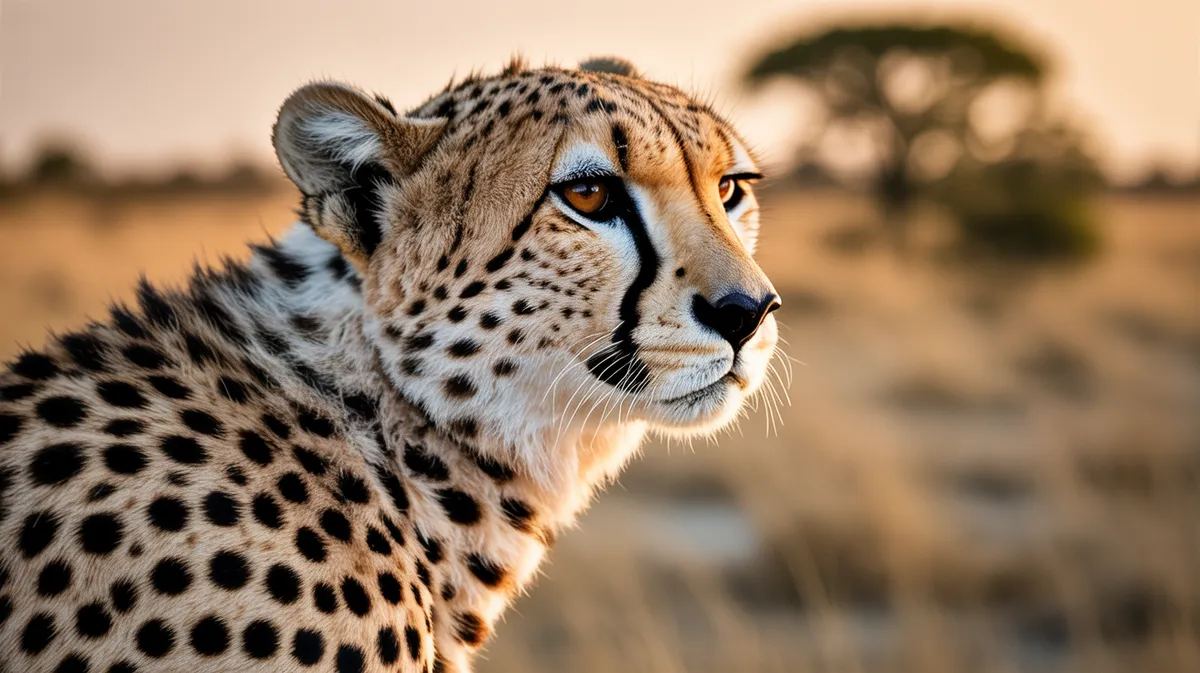
The cheetah is the fastest land animal on Earth, but speed is the easy part — surviving on the open savanna, surrounded by bigger, stronger predators, is the real challenge. Its day is carefully timed to hunt when it can and hide when it must. In this entry of our A Day in the Life series, we follow a cheetah mother through one day on the African plains.
Every choice she makes is shaped by two pressures: catching food, and keeping her cubs alive. See also the cooperative a day in the life of a meerkat and the night-hunting a day in the life of a red fox.
Before dawn
In the cool dark before sunrise, our cheetah rests with her cubs hidden in long grass. Unlike lions, she has no pride to back her up, so secrecy is her shield through the dangerous night.
As the sky lightens, she lifts her head and begins scanning the plain, already thinking about the morning hunt.
A mother cheetah moves her litter between hiding spots every few days, carrying the cubs one by one to keep their scent from building up where a predator might find it.
Sunrise
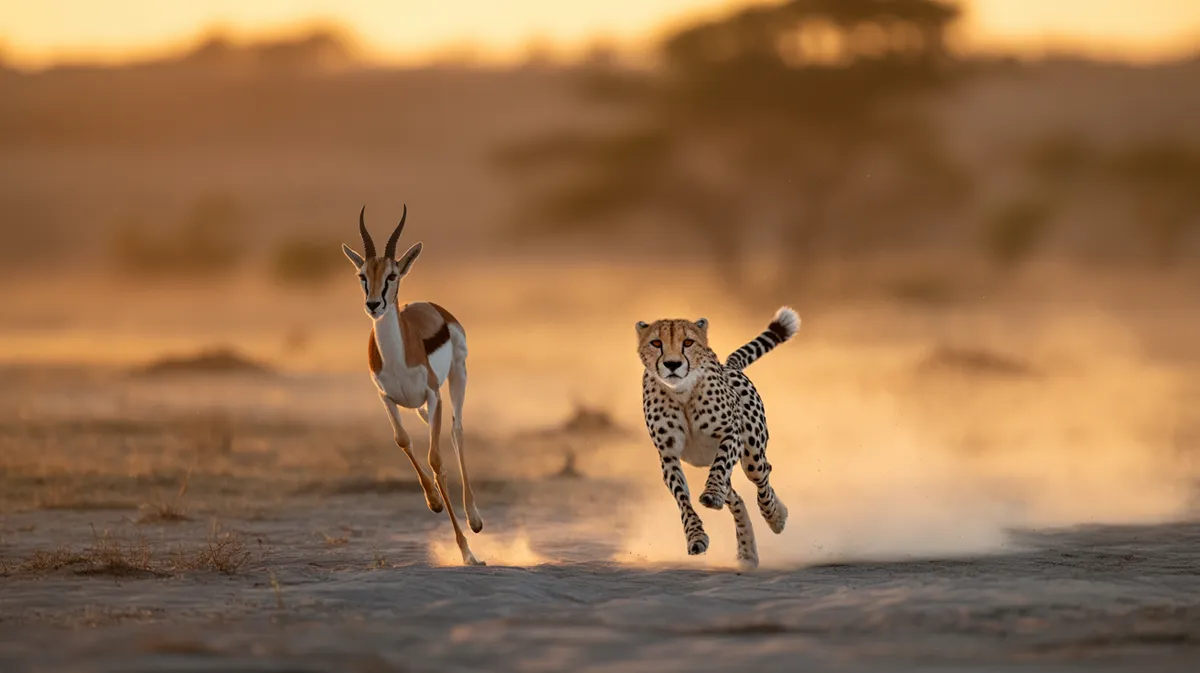
The cool early light is prime hunting time. The cheetah hunts by daylight precisely to avoid the lions and hyenas that rule the night, using her eyes to pick out a gazelle and stalk close before exploding into her famous sprint.
That sprint is breathtaking — well over 100 km/h — but it can only last twenty or thirty seconds before her body overheats, so everything depends on getting close first and timing the rush perfectly.
Her body is built entirely for the chase — a flexible spine, semi-retractable claws for grip, and oversized heart and lungs — but all of it is useless if she can't creep within striking distance first.
Midday
If the hunt succeeds, she must eat fast. A cheetah will often drag her kill into cover and bolt down as much as she can, because larger predators will steal it the moment they notice.
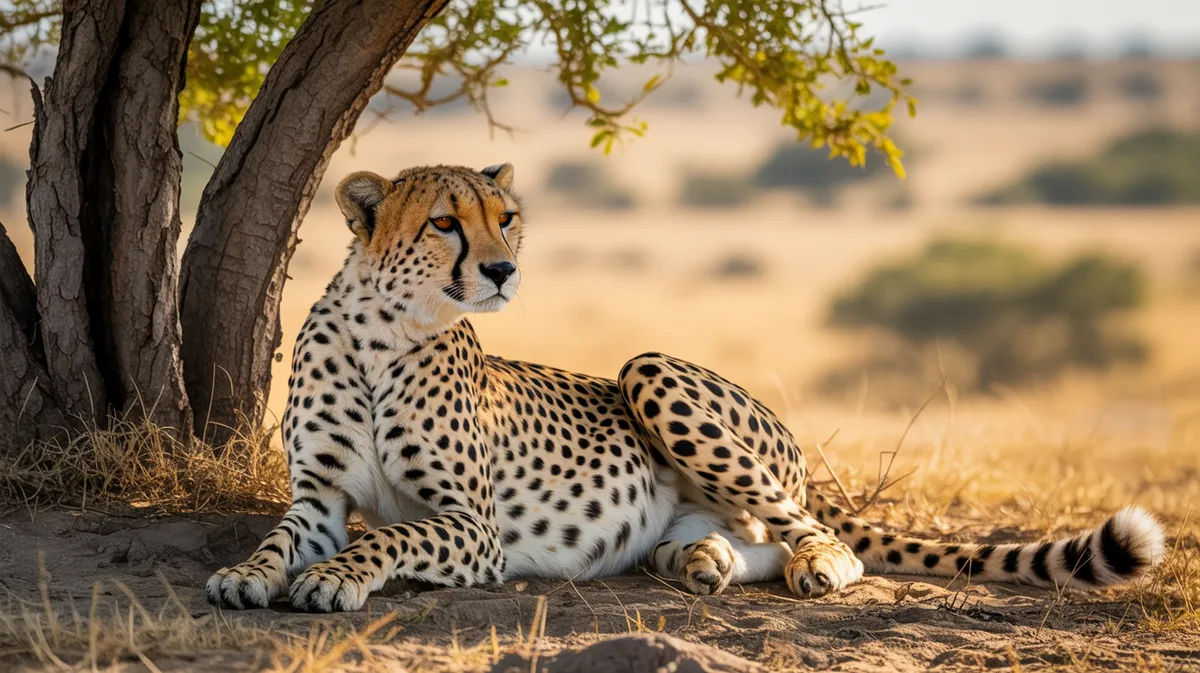
As the heat builds, she rests in the shade, panting hard to shed the enormous body temperature her sprint generated. The midday sun is for recovering, not hunting.
Cheetahs rarely need to drink, getting much of their water from the blood and moisture of their prey, which lets them survive in surprisingly dry country.
Afternoon
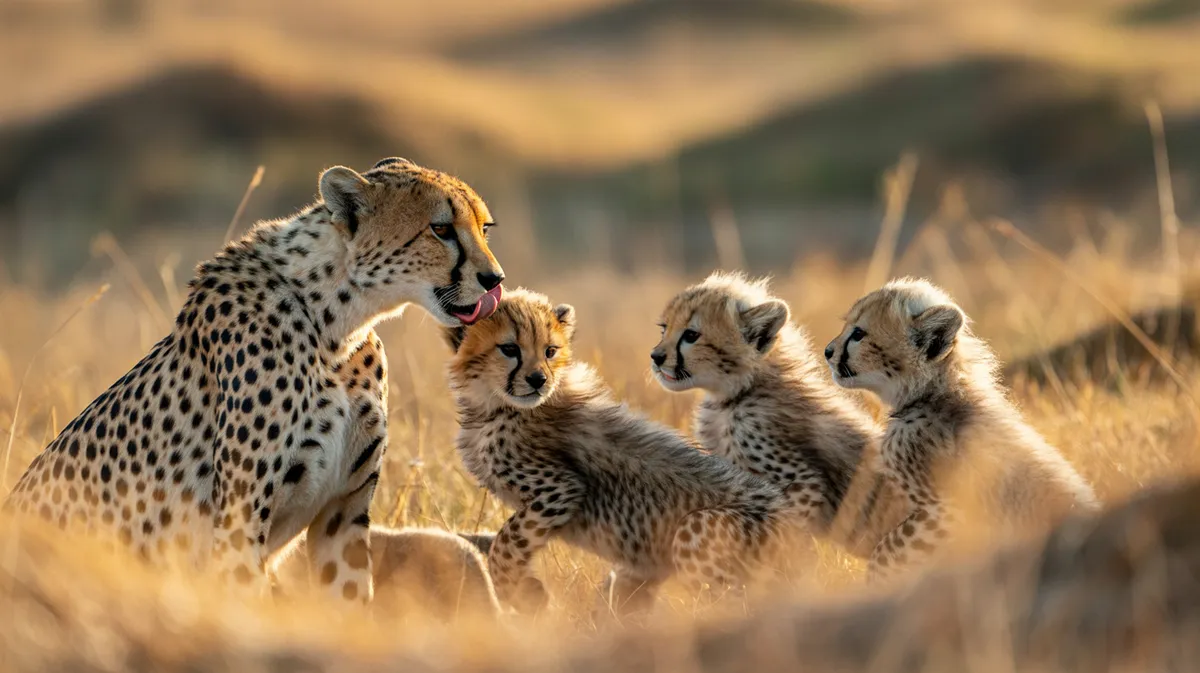
The afternoon is for the cubs. She nurses and grooms them, and as they grow she brings them live prey to practise on, teaching the chase-and-trip skills they'll need to feed themselves.
It's a perilous time of life: most cheetah cubs don't survive their first year, lost to the very lions and hyenas their mother works so hard to avoid.
She communicates with her cubs using a soft, bird-like chirp rather than a roar — cheetahs can't roar at all, a quirk that sets them apart from the big cats.
Dusk
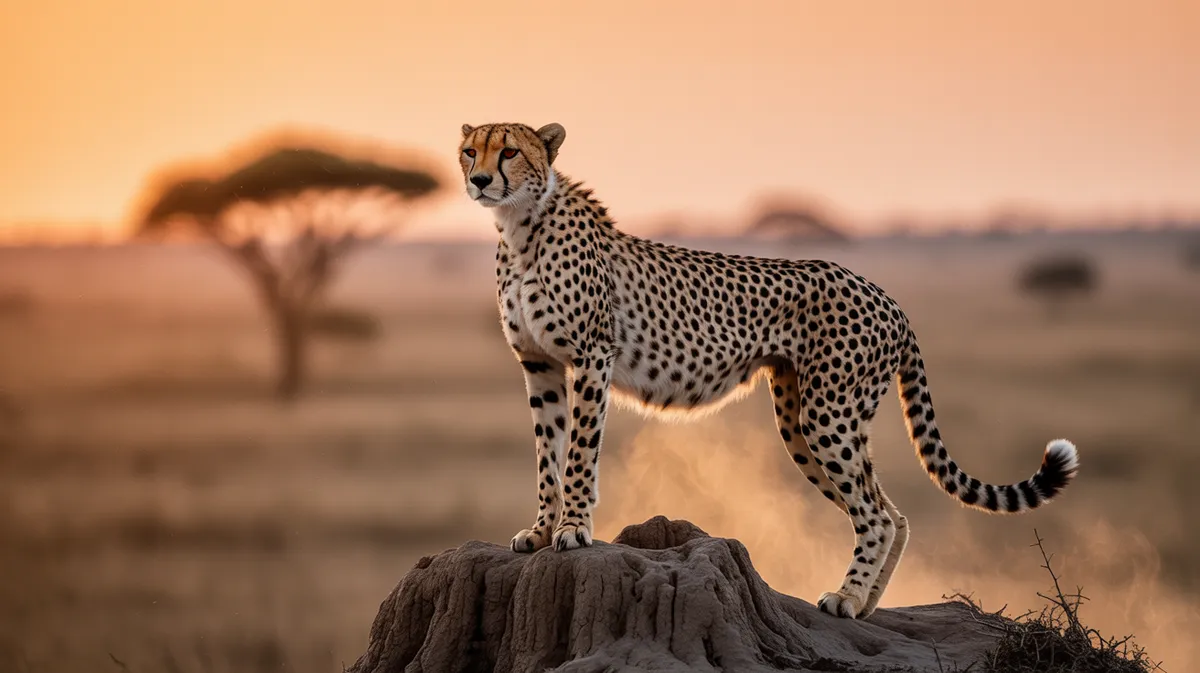
As the day cools again, a second hunting window opens. The cheetah rouses, scans for a careless gazelle, and may launch one more sprint before the light goes.
She must finish her hunting before true darkness, when the balance of power on the savanna tips toward the bigger night predators.
Each failed hunt is costly, burning energy she can barely spare, so she picks her targets with care and abandons a chase the instant it turns hopeless.
After dark
With night falling, the cheetah leads her cubs to a new hiding spot, moving them often so no predator can learn their location. She cannot defend them in a fight, so concealment is everything.
Through the night she stays alert and still, a slender, vulnerable hunter waiting out the hours until the safer light of dawn returns.
Sleeping lightly and waking often, she stays ready to gather her cubs and slip away at the first hint of a lion or hyena moving through the dark.
A Species Running Out of Room
The cheetah's daily struggle is now compounded by a much larger one: there are very few of them left. Fewer than around 7,000 remain in the wild, scattered across a fraction of their historic range.
They also carry a genetic problem. Cheetahs passed through a severe population bottleneck thousands of years ago, leaving them with unusually low genetic diversity — so low that individuals can accept skin grafts from unrelated cheetahs.
Add habitat loss, conflict with farmers, the illegal pet trade, and a cub mortality rate that can exceed 90% in some areas, and the fastest land animal is running the hardest race of all.
What a day reveals
A cheetah's day is a masterclass in living by daylight in a world ruled, after dark, by stronger rivals. Her incredible speed is only half the story — the rest is timing, stealth, and the relentless effort of raising cubs alone.
Frequently asked questions
Do cheetahs hunt during the day? Yes — they hunt mostly at dawn and dusk to avoid the lions and hyenas active at night.
How long can a cheetah sprint? Only about 20–30 seconds before overheating, so it must stalk close first.
Why do cheetahs lose so many kills? They're lightly built and can't defend a kill, so lions and hyenas often steal it.
How fast can a cheetah run? Around 110 km/h, but only for 20 to 30 seconds before it must stop.
Can cheetahs roar? No. They chirp, purr, and growl — but roaring is beyond them.
How many cheetahs are left? Fewer than about 7,000 in the wild, and the number is falling.
Why do cheetahs have black "tear marks"? They likely cut glare from the sun, helping the cat focus during a daylight chase.
Do cheetahs hunt alone? Females usually do; males sometimes form small coalitions, often brothers.
How long do cheetahs live? Around 10 to 12 years in the wild, if they survive cubhood.
Why do cheetahs lose their kills? They are lightly built and cannot defend a carcass from lions or hyenas.
Continue with a day in the life of an emperor penguin, or revisit a day in the life of an octopus.