
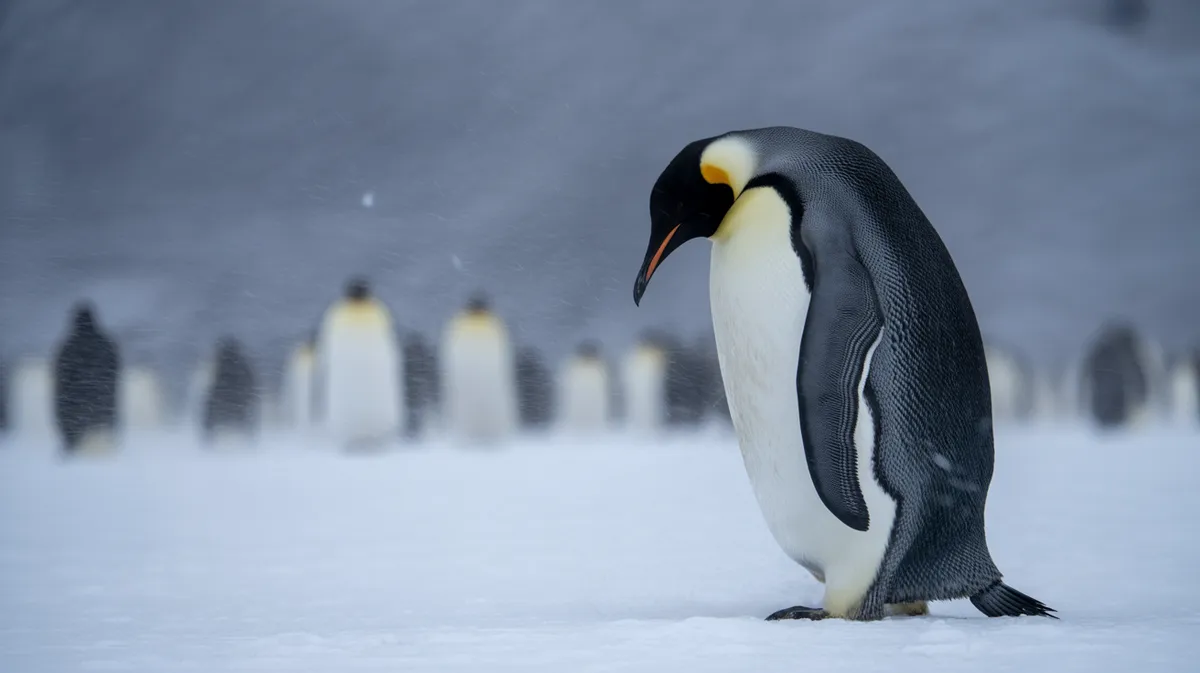
While almost every other animal flees the Antarctic winter, the emperor penguin walks straight into it. It breeds in the coldest, darkest, windiest place on Earth, and its survival hinges on one of the most extraordinary feats of endurance and cooperation in nature. In this entry of our A Day in the Life series, we follow a male emperor penguin through a single midwinter day, an egg balanced on his feet.
In this season the sun barely rises, so his "day" is mostly darkness, cold, and waiting. See also the cooperative a day in the life of an ant colony and the busy a day in the life of a honeybee.
Before dawn
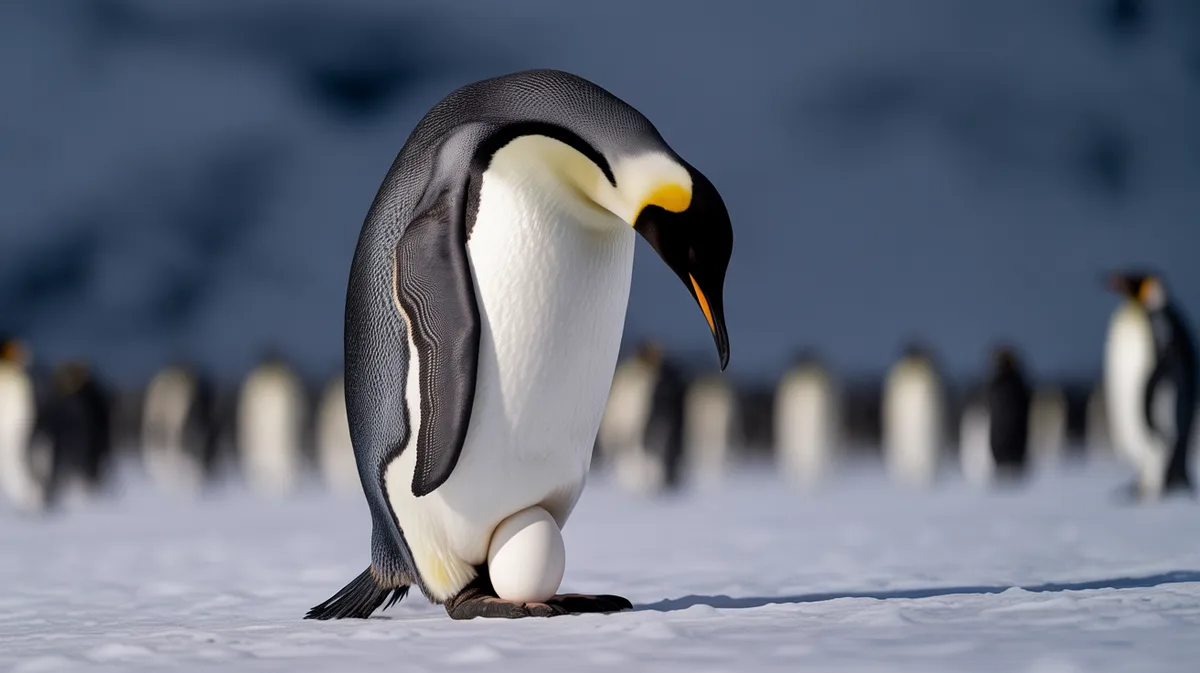
In the long polar night, our male stands in temperatures that can plunge to −40°C, with an egg cradled on top of his feet and tucked beneath a warm fold of belly skin called the brood pouch. If the egg touches the ice for more than a moment, it will freeze and die.
He has not eaten for weeks — and won't for weeks more — living entirely off the fat he built up at sea before the female left to feed.
The whole arrangement is a gamble of timing: the female lays the egg, passes it carefully to the male, and walks up to 100 kilometres to the sea, trusting him to keep it warm for two months.
Sunrise
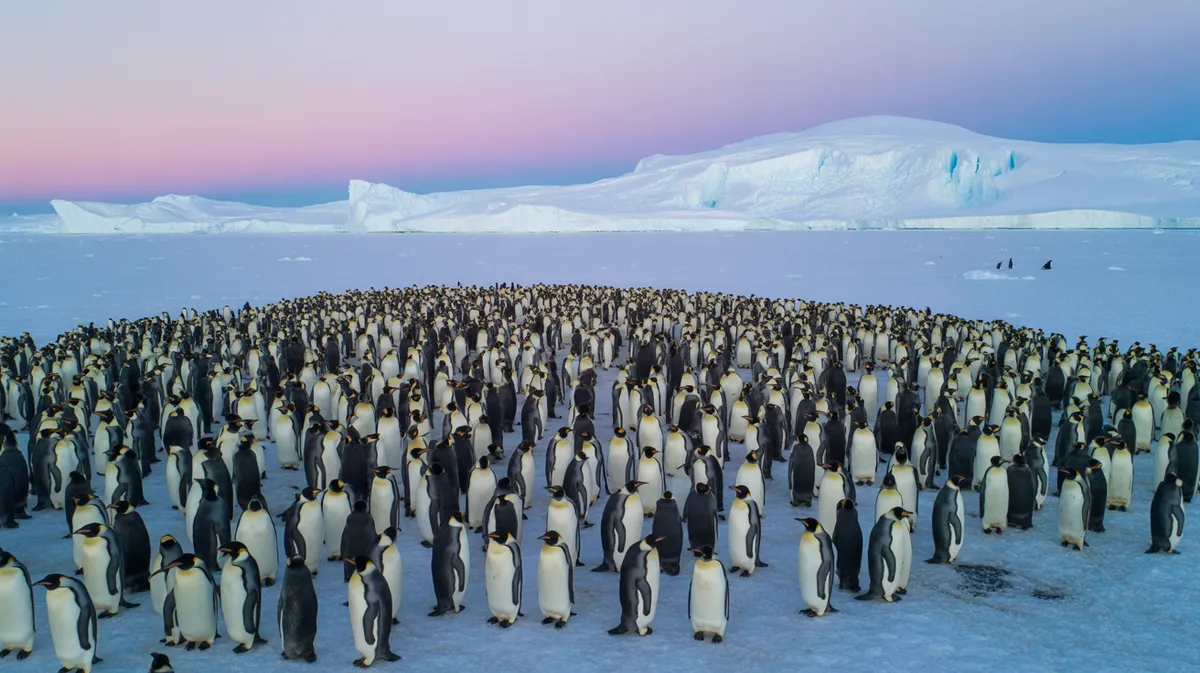
The faint midwinter twilight reveals the colony's secret weapon: the huddle. Thousands of males pack tightly together, sharing body heat, turning a deadly cold into something survivable.
The huddle is never still. It churns in slow motion, birds on the freezing windward edge gradually shuffling inward while warmer birds rotate out — a fair, constant cycle that keeps everyone alive.
A bird that spends too long stuck on the freezing edge will be quietly worked back toward the middle, so over time every penguin shares both the warmth and the cold roughly equally.
Midday
There is little to do but endure. The penguin conserves every scrap of energy, standing almost motionless, slowing his metabolism and minding the precious egg.
By packing together, huddling penguins can cut their heat loss dramatically, raising the temperature in the heart of the huddle to surprisingly cosy levels even as a blizzard rages outside.
Special air sacs and densely packed feathers trap a layer of warm air against the skin, and the penguin can even recover heat from its own breath before it leaves the body.
Afternoon
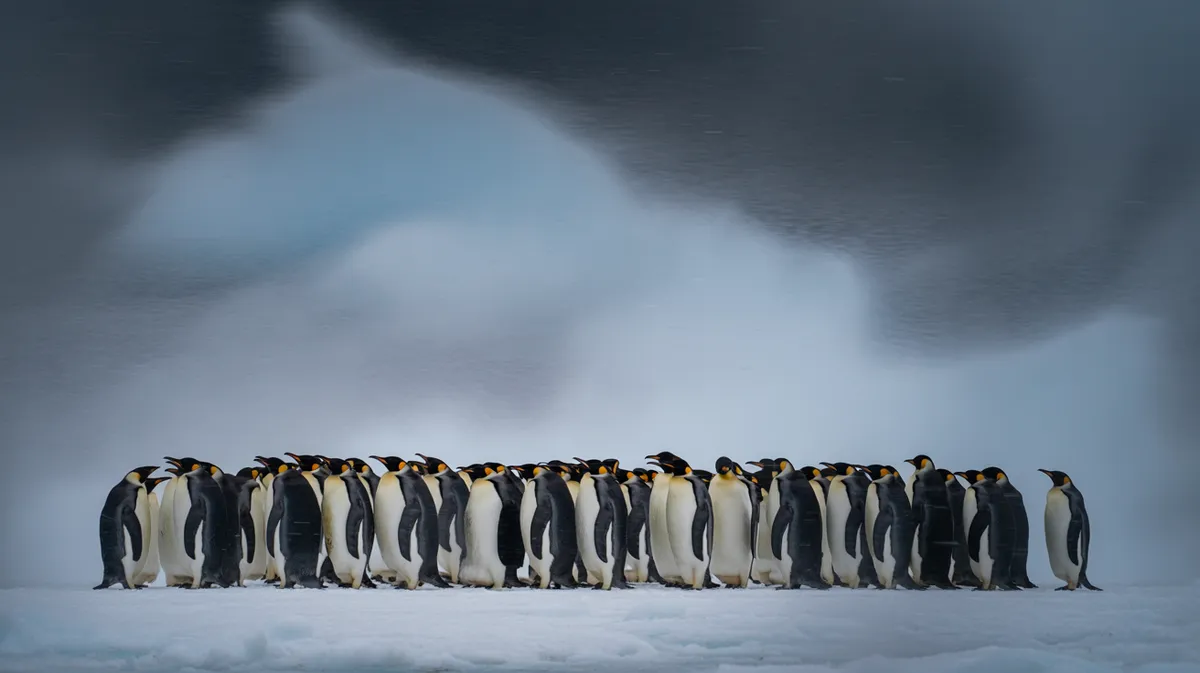
The wind is relentless, and the huddle keeps up its slow churn against it. Each bird takes its turn on the brutal outer edge, then works its way back into the warmth.
Through it all, the male keeps the egg perfectly balanced, shuffling in tiny careful steps so it never rolls onto the ice.
Emperors are the only penguins that breed in the depths of the Antarctic winter, a brutal strategy that times the chicks' independence to the food-rich summer ahead.
Dusk
As the brief twilight fades, the cold deepens further. By now many males have lost nearly half their body weight, their fat reserves dwindling with every passing day of the fast.
Still they hold on, driven by an instinct to protect the single egg that represents the whole colony's future.
To save energy, a fasting male can lower his metabolism and even let parts of his body cool, squeezing every last day out of his dwindling fat.
After dark
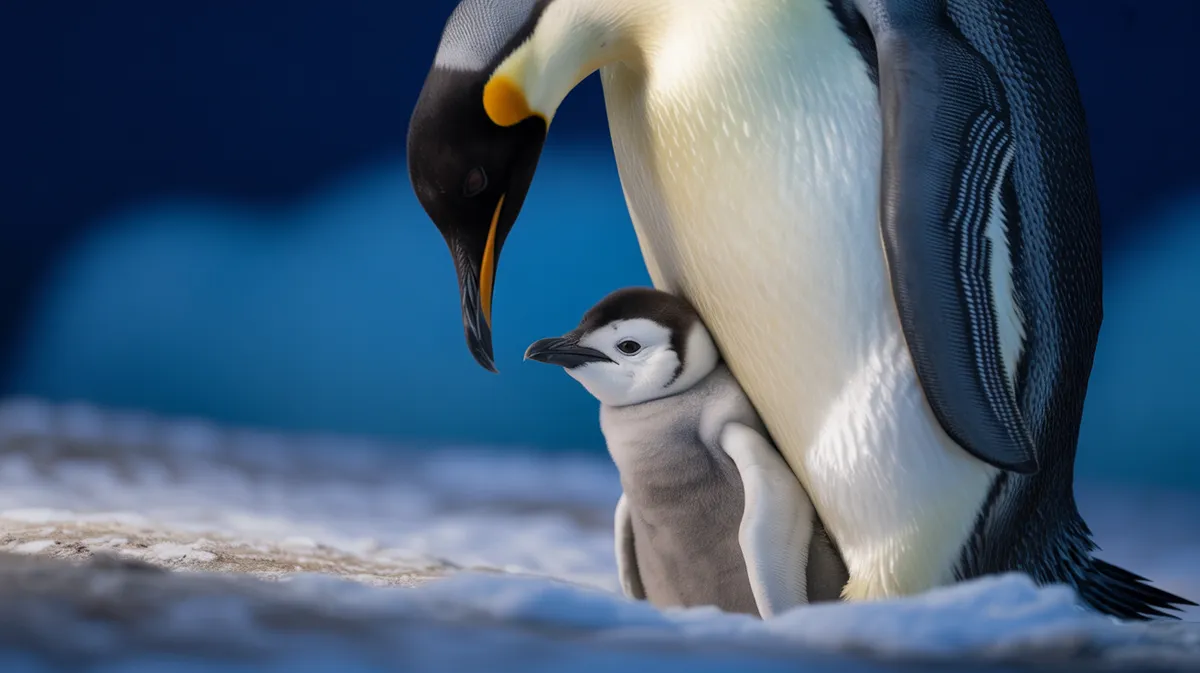
Through the long night the colony becomes a single dark, breathing mass against the storm. When the chicks finally hatch — sometimes before the females return — the famished fathers can produce a little "crop milk" from their throats to keep the newborns alive.
At last the females come back from the sea, fat and full of food, ready to take over so the exhausted, starving males can finally make their own long walk to the ocean to eat.
When the females finally return, each finds her own mate among thousands by call alone — the pair recognising each other's unique voices across the roar of the colony.
What Happens to the Chick
The male's long fast is only the beginning of the story. Once the female returns and takes over, the chick begins a race of its own.
As it grows, it leaves its parent's feet and joins a crèche — a huddle of chicks packed together for warmth while both parents shuttle to the sea for food. By summer it moults its fluffy down for waterproof feathers and heads to the ocean for the first time.
The whole schedule is timed with brutal precision to the sea ice. If the ice breaks up too early, chicks that are not yet waterproof are tipped into the sea and drown — which is why a warming Antarctic is now an existential threat to the species.
What a day reveals
An emperor penguin's midwinter day is survival distilled to its essence: stand, shield the egg, share warmth, endure. It's one of the planet's greatest examples of how cooperation and sheer parental devotion can conquer even the harshest place on Earth.
Frequently asked questions
Do male emperor penguins really hold the egg? Yes — the male balances it on his feet under a fold of skin and fasts for around two months while the female feeds at sea.
How do emperor penguins survive the cold? They huddle together by the thousand, rotating from the cold edge to the warm centre to share heat.
How long do emperor penguins go without food? Breeding males can fast for roughly four months, losing nearly half their body weight.
How cold does it get during the breeding season? Down to around −40°C, with fierce winds on top.
How long do emperor penguins fast? Breeding males can go roughly four months without food.
How deep can emperor penguins dive? Over 500 metres — deeper than any other bird.
Are emperor penguins endangered? They are increasingly threatened by the loss of the sea ice they breed on.
That's three more remarkable days. Revisit a day in the life of an octopus and a day in the life of a cheetah — and watch for more in the A Day in the Life series.