
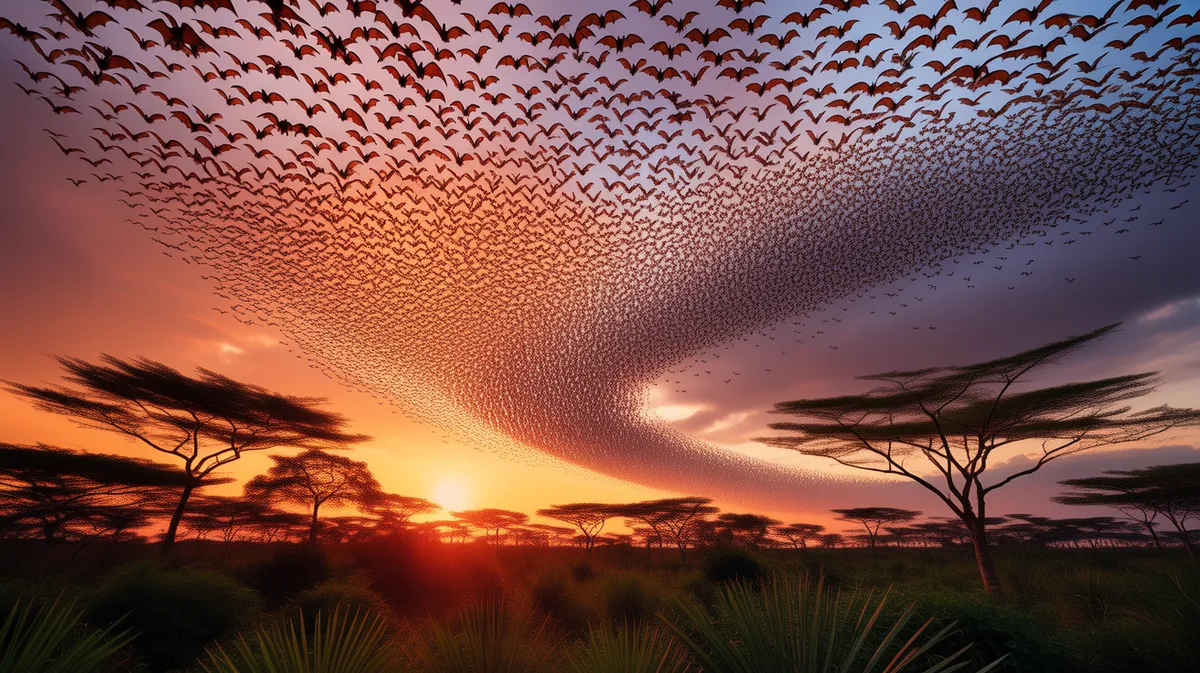
Each year, in a tiny patch of swamp forest in the heart of Africa, the sky fills with the largest gathering of mammals anywhere on the planet. Up to ten million straw-coloured fruit bats pour into one small corner of Zambia, drawn from across a continent by the promise of fruit. In this entry of our The Great Migrations series, we witness the largest mammal migration on Earth.
It is a spectacle of astonishing scale, hidden in an unexpectedly small place. See also the mass march of the Christmas Island red crabs and the thundering wildebeest migration.
Ten million bats
Every year, from around October to December, an estimated eight to ten million straw-coloured fruit bats converge on Kasanka National Park in Zambia. It is thought to be the single largest gathering of mammals on Earth.
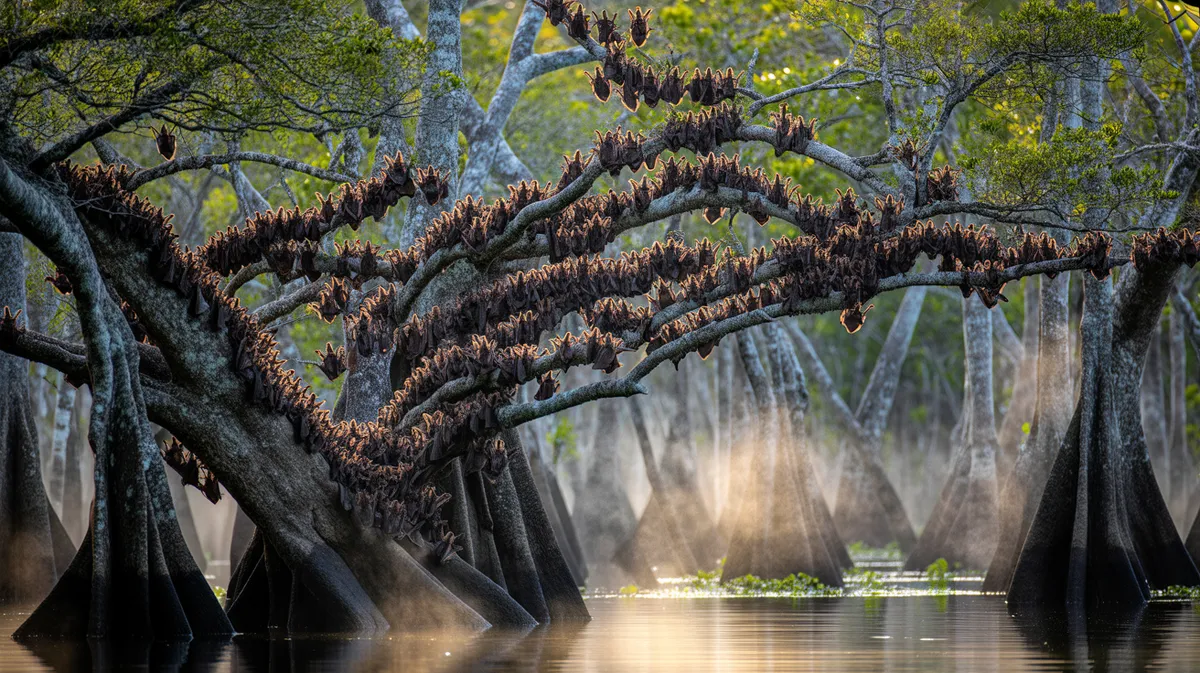
What makes it even more remarkable is the size of the stage: the bats pack into just a few hectares of swamp forest, a patch of trees you could walk across in minutes.
Into this small space squeeze more mammals than live in many entire countries.
With a wingspan approaching a metre, the straw-coloured fruit bat is a large animal, which makes the sight of millions crammed together all the more overwhelming.
A feast of fruit
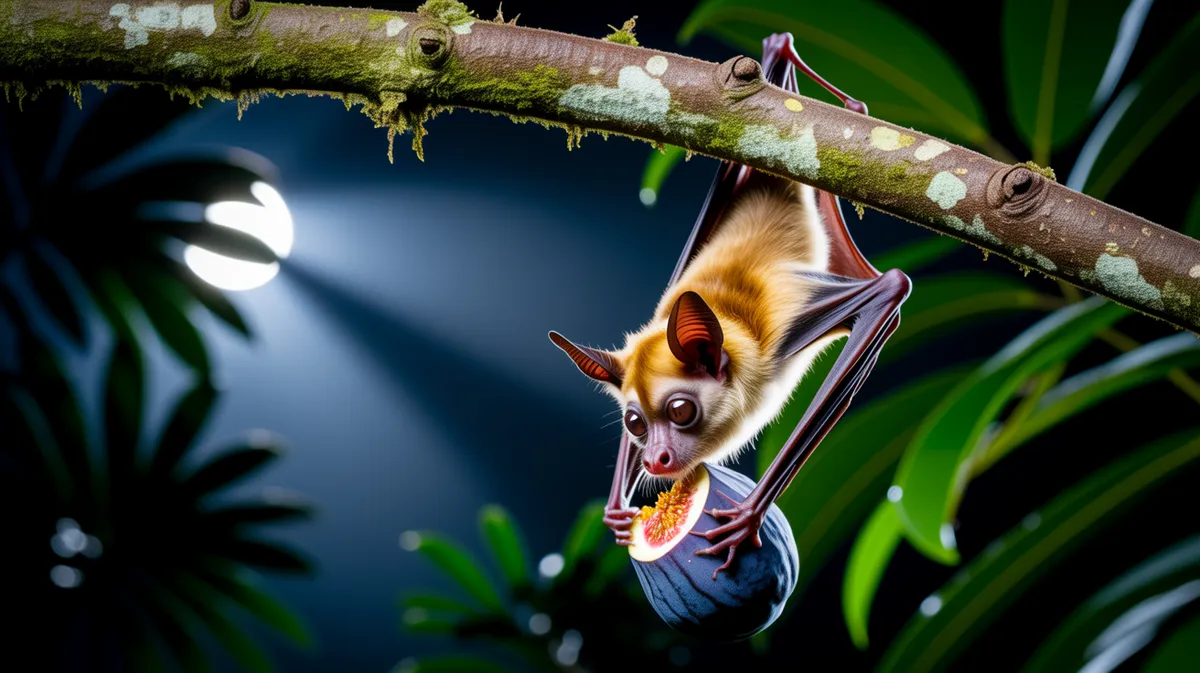
The reason they come is food. The bats' arrival is timed to the ripening of seasonal fruits — wild loquat, waterberry, and figs — that flood the region for a few short months.
A straw-coloured fruit bat can eat around twice its own body weight in fruit each night, and ten million of them make short work of the harvest.
For this brief window, the forest offers a banquet vast enough to feed one of the greatest animal congregations in the world.
Unlike insect-hunting bats, these fruit bats find their food entirely by sight and smell, with large eyes suited to spotting ripe fruit in the dark.
Rivers in the sky at dusk
By day, the bats roost so densely that whole branches snap under their combined weight. But the true spectacle comes at dusk.
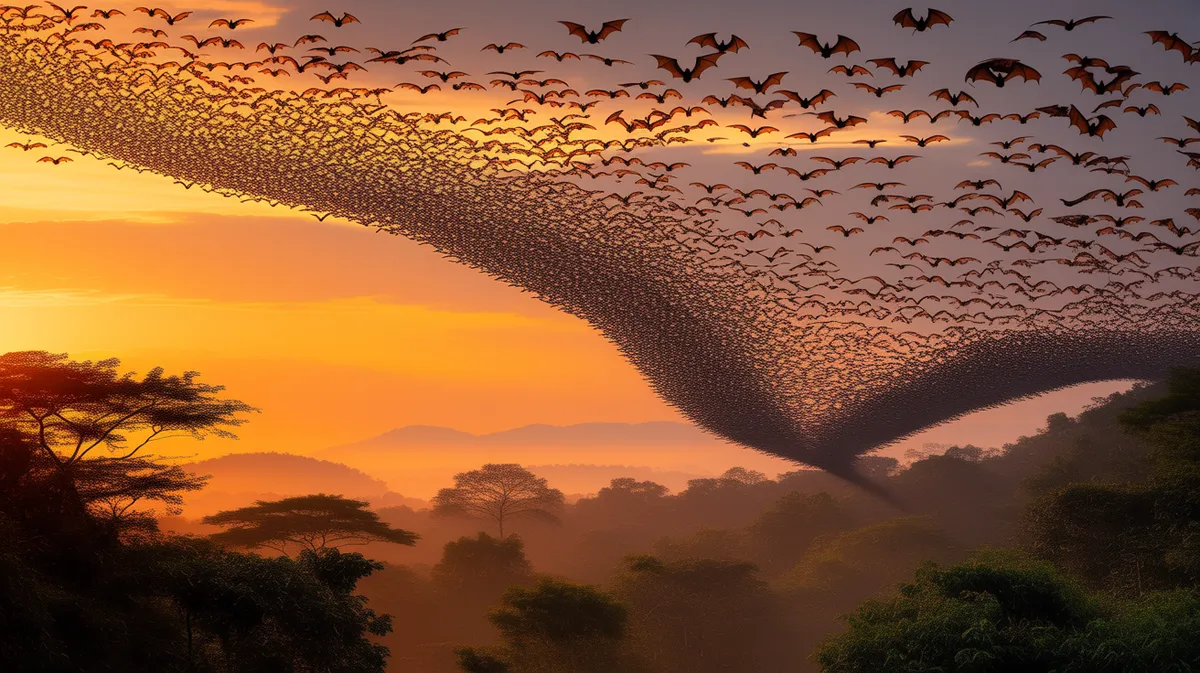
As the sun sets, the bats lift off together in vast, swirling clouds, streaming out across the sky in numbers so great they darken the horizon.
For a few minutes each evening, the air itself seems to turn to a living river, flowing out to the feeding grounds.
The nightly exodus has become a magnet for wildlife tourism, drawing visitors from around the world to watch the sky fill with wings.
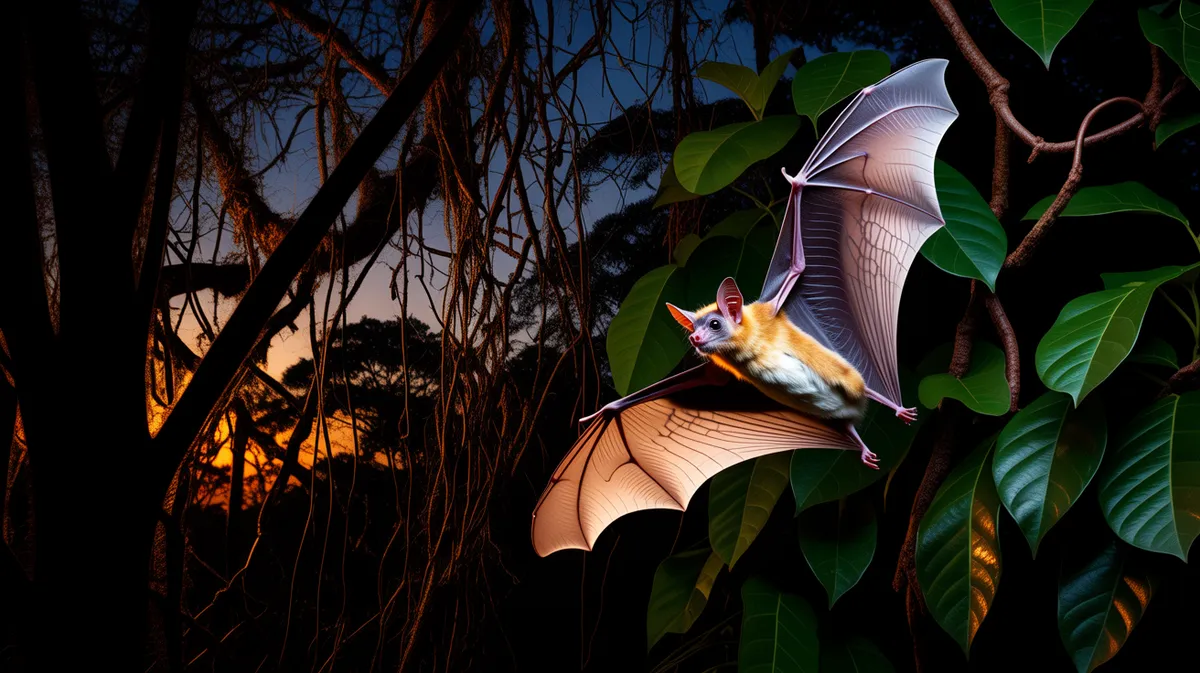
Farmers of the forest
These bats are far more than a spectacle — they are essential gardeners of Africa's forests. As they feed, they swallow seeds and later scatter them far and wide across the landscape.
Because they travel such long distances, straw-coloured fruit bats disperse seeds over enormous areas, planting new trees where few other animals reach.
Whole forests depend on these nightly deliveries, earning the bats a reputation as the "farmers" that keep the woodlands growing.
A single bat can carry seeds many kilometres from the parent tree before dropping them, spreading forests far faster than wind or ground-dwelling animals ever could.
The mystery of where they come from
For all its scale, the migration keeps its secrets. The millions of bats descend on Kasanka from across a huge swathe of central Africa, but exactly where each of them comes from is still not fully understood.
They appear as if from nowhere, gather in their millions, and then disperse again once the fruit runs out.
Tracking studies are only beginning to trace the far-flung journeys that funnel this river of bats into one small forest.
Some tracked bats have been found to travel thousands of kilometres across Africa in a year, hinting at just how far the Kasanka multitudes may roam.
A gathering at risk
Such a concentrated gathering is also a vulnerable one. Habitat loss across the bats' range, and hunting for bushmeat, put pressure on their numbers.
And because so many gather in one tiny place, a threat to that single patch of forest could ripple out across the whole population.
Protecting one small Zambian swamp turns out to be vital for a phenomenon that spans a continent.
Conservationists now regard the protection of Kasanka's small swamp forest as important not just for the bats, but for the forests across the region that depend on them.
A Park Built Around Bats
What makes the Kasanka gathering so precarious is its scale in reverse: the largest mammal migration on Earth funnels into a patch of swamp forest you could cross on foot in minutes.
That tiny footprint means the entire spectacle depends on one small protected area holding firm. Proposals for large-scale commercial farming on the park's doorstep have triggered fierce opposition, precisely because so much rides on so little land.
The bats also draw a growing stream of visitors, and that tourism revenue has become one of the strongest arguments for keeping the forest intact — a case where the animals help pay for their own protection.
The greatest gathering on Earth
The straw-coloured fruit bat migration is proof that the largest movement of mammals on the planet can hide in one of its smallest corners. In its dusk rivers of wings and its role as planter of forests, it is a wonder that deserves to be far better known.
Frequently asked questions
What is the largest mammal migration on Earth? The gathering of up to 10 million straw-coloured fruit bats in Kasanka, Zambia, each year.
Why do the bats gather? To feast on seasonal fruit that ripens across the region for a few months.
Why do the bats matter? They disperse seeds over huge distances, making them vital "farmers" that help African forests regenerate.
When does the bat migration happen? Roughly October to December, timed to the ripening of seasonal fruit.
How big is a straw-coloured fruit bat? Large — with a wingspan approaching a metre, they are among Africa's biggest bats.
Are fruit bats dangerous? No. They eat fruit, not blood, and want nothing to do with people.
Next in the series: a journey that is the mirror image of the salmon's — the European eel, and a half-million-strong gathering in the sandhill crane migration.