
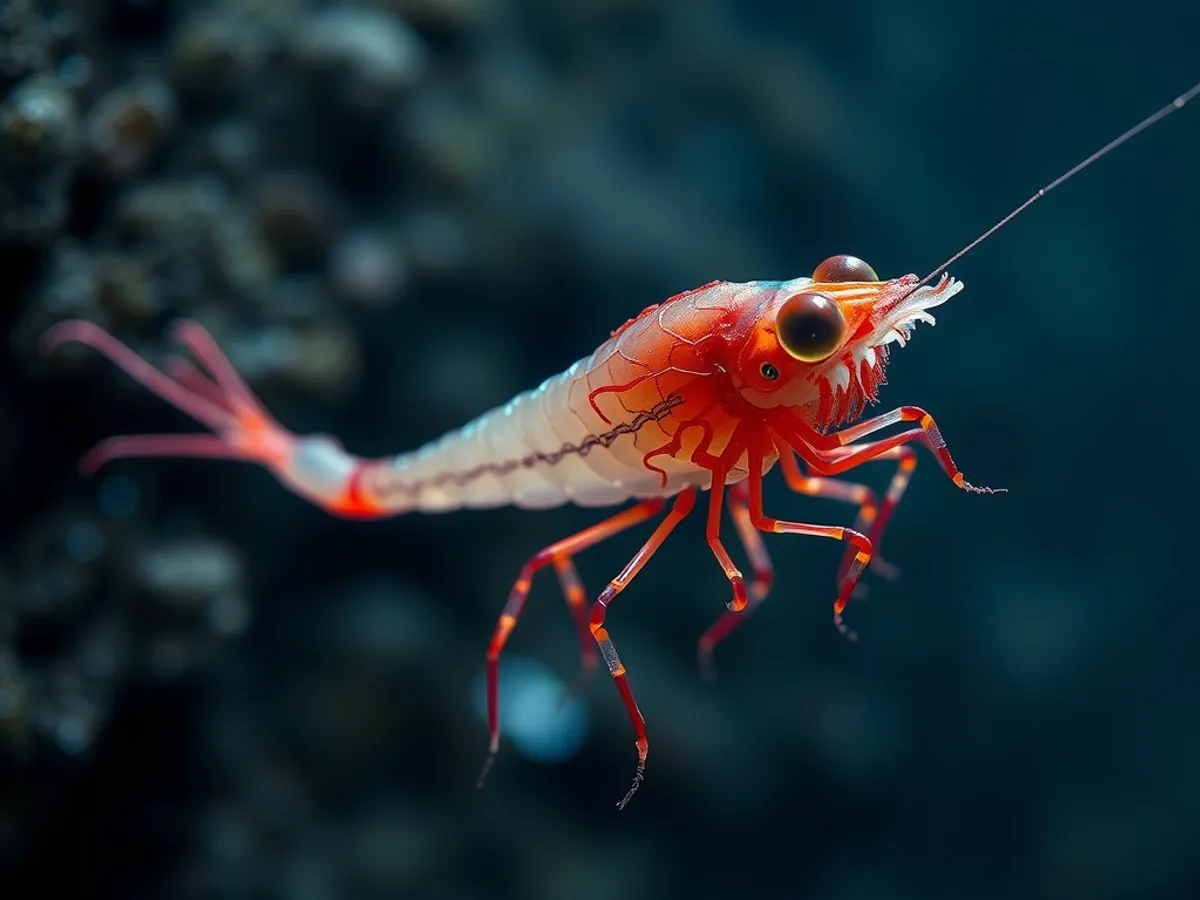
About the Antarctic Krill
Antarctic krill may be the most abundant single wild animal species on Earth by biomass: estimates put the standing stock in the hundreds of millions of tonnes, comparable to or exceeding the mass of all humans. They form swarms so dense — up to tens of thousands of animals per cubic metre — that they are visible from the air as reddish stains under the sea, and whole ecosystems from whales to penguins to crabeater seals rest on them. In winter they graze algae from the underside of sea ice, combing it off with rake-like thoracic legs, which is why the loss of winter ice is an existential threat to them. Their strangest ability is shrinking: a starving krill will moult into a smaller body, running its own growth backwards, and can do this repeatedly through a dark winter — extremely unusual among animals, and it means body size is a poor guide to age. They live five or six years, carry light-producing photophores, and migrate vertically hundreds of metres each day.
Fascinating facts
Oceanic Swarms
Antarctic krill form massive swarms that can stretch for kilometers and contain billions of individuals, providing a critical food resource for many Antarctic predators.
Bioluminescent Creatures
These krill possess light-producing organs called photophores, which may help them camouflage from predators or synchronize movements within swarms.
Tiny Plant Eaters
Antarctic krill primarily feed on phytoplankton, filtering these microscopic plants from the water using specialized feeding baskets in their front legs.
Detailed description
Antarctic krill (Euphausia superba) are small, shrimp-like crustaceans that form the backbone of the Southern Ocean ecosystem. Adults typically reach lengths of 4–6 centimeters and weigh up to 2 grams, with a translucent, laterally compressed body and prominent compound eyes. Their exoskeleton is soft and flexible, facilitating efficient swimming via rhythmic beating of their thoracic appendages (pleopods). Antarctic krill possess photophores—specialized bioluminescent organs—arranged along the underside of their body, which are thought to play roles in camouflage and communication. They are filter feeders, using fine comb-like setae on their thoracopods to sieve phytoplankton, especially diatoms, from the water column. Krill are highly social, forming dense swarms that can extend for kilometers and reach densities of 10,000–30,000 individuals per cubic meter. These swarms are dynamic, exhibiting diel vertical migration: by day, krill descend to depths of 100–300 meters to avoid predators and by night ascend to surface waters to feed. The species can live up to six years, with longevity influenced by environmental conditions. Their life cycle includes several larval stages, and juveniles often overwinter beneath sea ice, grazing on ice algae. As a keystone species, Antarctic krill support a vast array of predators, including baleen whales, seals, penguins, and fish, and their total biomass is estimated at around 500 million metric tons, making them one of the most abundant animal species on Earth.
Did you know?
An estimated 380 million tons of Antarctic krill inhabit the Southern Ocean, making them a cornerstone species for the entire Antarctic ecosystem.
Research & sources
Wikipedia summary
Antarctic krill is a species of krill found in the Antarctic waters of the Southern Ocean. It is a small, swimming crustacean that lives in large schools, called swarms, sometimes reaching densities of 10,000–30,000 animals per cubic metre. It feeds directly on minute phytoplankton, thereby using the primary production energy that phytoplankton originally derive from the sun in order to sustain its pelagic life cycle. It grows to a length of 6 centimetres (2.4 in), weighs up to 2 grams (0.071 oz), and can live for up to six years. A key species in the Antarctic ecosystem and in terms of biomass, E. superba is one of the most abundant animal species on the planet, with a cumulative biomass of approximately 500 million metric tons.
Behaviour & social structure
Antarctic krill display complex social and feeding behaviors. Swarming is their most notable social behavior, providing protection from predators and increasing feeding efficiency. Swarms can be monospecific or mixed with other zooplankton. Krill exhibit pronounced diel vertical migration: during daylight hours, they descend to deeper, darker waters (100–300 meters) to reduce predation risk, and at night, they ascend to the upper 0–50 meters to feed on phytoplankton blooms. Feeding is continuous during the productive summer months, but in winter, krill reduce metabolic rates and may feed on detritus, ice algae, or even exhibit cannibalism. Communication within swarms may involve bioluminescent signaling, though its exact function is still under study. Krill are also known to synchronize molting cycles within swarms, which may help reduce individual predation risk.
Reproduction & life cycle
Reproduction in Antarctic krill is highly seasonal, peaking during the austral summer (December–March) when food is most abundant. Males transfer spermatophores to females using specialized appendages. Females can lay up to 10,000 eggs per spawning event, with multiple spawnings per season. Eggs are released into the water column and sink to depths of 1,000–2,000 meters before hatching. The early larval stages (nauplius, metanauplius, calyptopis) ascend gradually to the surface as they develop, a process known as 'developmental ascent.' There is no parental care; survival of larvae depends on food availability and predation pressure. Juvenile krill often rely on ice-associated algae for nutrition during the winter, which is critical for their survival and recruitment into the adult population.
Adaptations & survival
Antarctic krill have evolved several adaptations to survive the extreme and variable Southern Ocean environment. Their bioluminescent photophores may provide counter-illumination camouflage or intra-species communication. The ability to form massive swarms offers protection from predators and enhances reproductive success. Krill can shrink in size and reduce metabolic rates during periods of food scarcity, a process known as 'regression.' Their digestive system is highly efficient at extracting nutrients from low-energy phytoplankton. In winter, krill can scrape ice algae from the underside of sea ice, utilizing a food source unavailable to most pelagic organisms. Their exoskeleton is thin and flexible, reducing energy costs for molting and growth. Additionally, krill can store lipids in their hepatopancreas, providing energy reserves during lean periods.
Cultural significance
Antarctic krill have limited direct significance in traditional human culture due to their remote habitat. However, they are increasingly important in modern industry, harvested for use in aquaculture, pet foods, and as a source of krill oil for human nutritional supplements. Krill are also emblematic of Antarctic marine conservation efforts, symbolizing the interconnectedness of polar ecosystems. Their ecological importance is frequently highlighted in documentaries, environmental campaigns, and scientific literature as a keystone species supporting iconic Antarctic wildlife.
Recent research
Recent research has focused on the impacts of climate change on krill distribution, physiology, and recruitment. Genomic studies have revealed adaptations to cold, low-light environments, including genes for antifreeze proteins and efficient energy metabolism. Ongoing projects are using acoustic surveys and autonomous underwater vehicles to map krill swarms and monitor population trends. Laboratory experiments have investigated the effects of ocean acidification on larval development, with some evidence of reduced survival and growth rates. There is also active research into krill's role in biogeochemical cycles, particularly their contribution to carbon sequestration via fecal pellet production and vertical migration.
Sources
Videos
Habitat
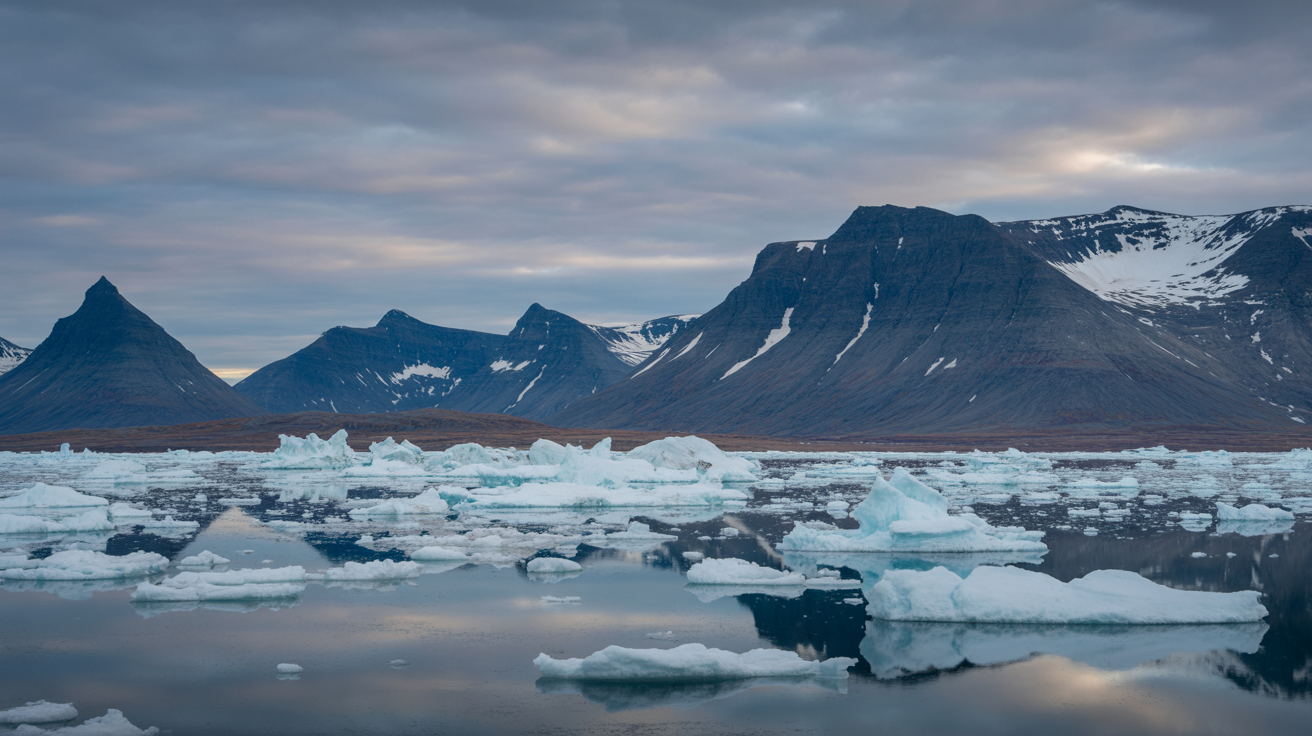
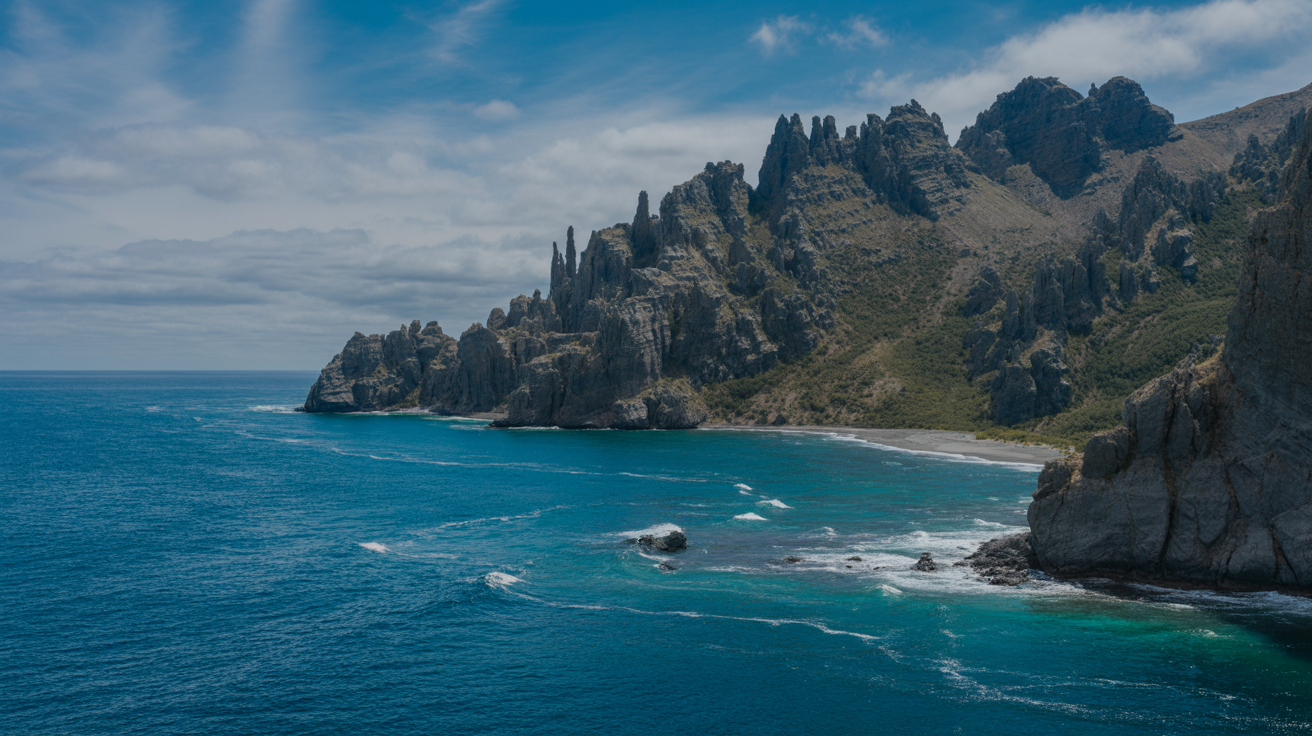
Southern Ocean
Conservation
The Antarctic Krill is currently classified as Least Concern on the IUCN Red List.
Threats & challenges
While Antarctic krill populations are currently considered stable, they face several threats. Climate change is altering sea ice dynamics and phytoplankton productivity, potentially reducing critical winter habitat and food sources. Ocean acidification may impact krill development and molting. Commercial krill fisheries, primarily for aquaculture feed and omega-3 supplements, are expanding, raising concerns about localized depletion and impacts on krill-dependent predators. The Commission for the Conservation of Antarctic Marine Living Resources (CCAMLR) manages krill fisheries, but ongoing monitoring is essential. Recent studies suggest that krill biomass may be declining in some regions, possibly linked to reduced sea ice and changing oceanographic conditions.
Taxonomy
Scientific name
Euphausia superba
- Kingdom
- Animalia
- Phylum
- Arthropoda
- Class
- Malacostraca
- Order
- Euphausiacea
- Family
- Euphausiidae
- Genus
- Euphausia
- Species
- superba
Community notes
Share your observations about the Antarctic Krill.
No community notes yet. Be the first!
Discover more wildlife
More fascinating animals from the encyclopedia.