
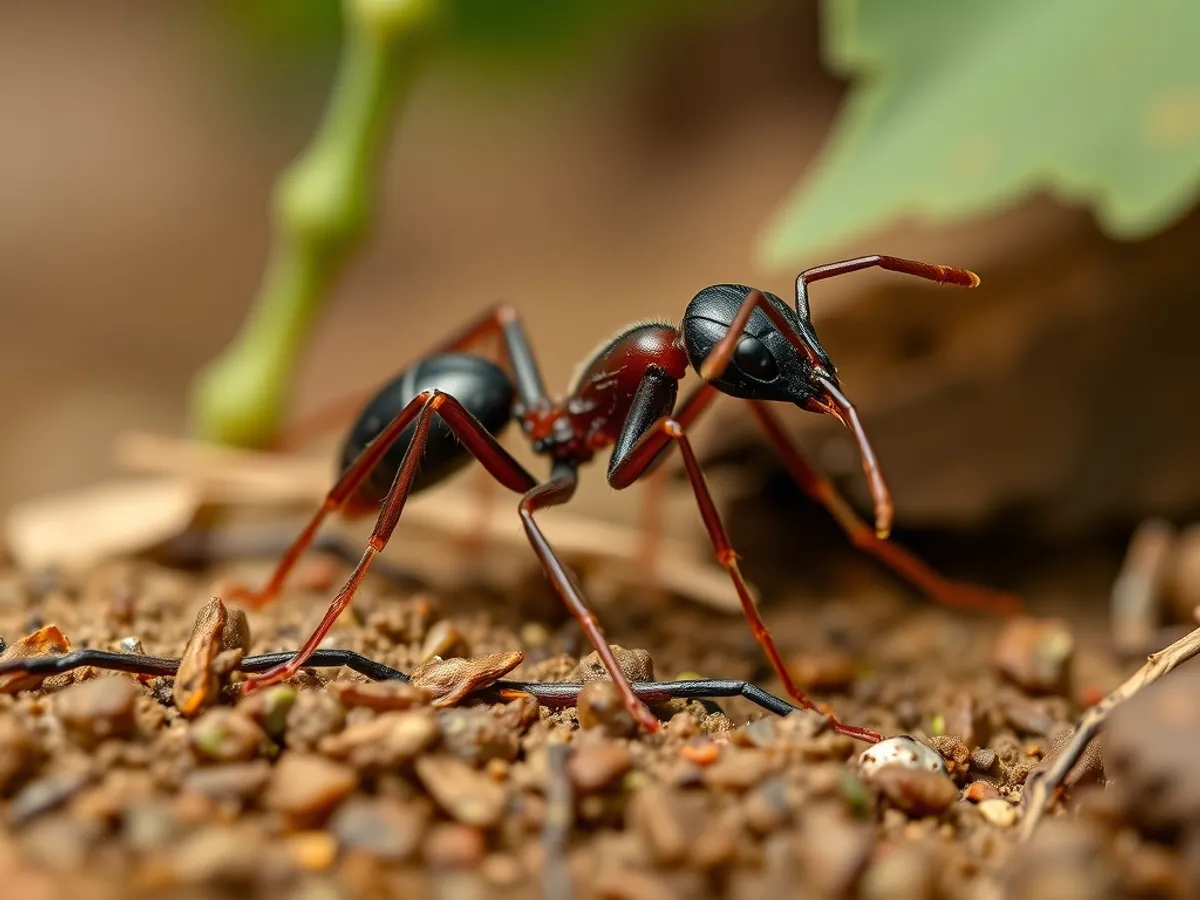
About the Argentine ant
The Argentine ant is a small, light to dark brown ant species native to South America but now found on every continent except Antarctica. It is renowned for forming massive supercolonies, sometimes spanning hundreds of kilometers, due to its lack of aggression toward other colonies of the same species. Argentine ants are highly adaptable, thriving in urban, agricultural, and natural environments where they can outcompete native ant species. Their invasive nature has made them a significant ecological and agricultural pest in many regions. Despite their tiny size, their cooperative behavior and resourcefulness make them one of the most successful invasive insects globally.
Fascinating facts
Massive Supercolonies
Argentine ants are known for forming enormous supercolonies, with millions of individuals and thousands of queens cooperating across vast areas.
Global Invaders
Originally from South America, Argentine ants have spread to every continent except Antarctica, often outcompeting native species.
Sugar Lovers
These ants have a strong preference for sweet foods and will farm aphids and other insects for honeydew.
Detailed description
The Argentine ant (Linepithema humile) is a small, slender ant species measuring 2.2–2.8 mm in length, with workers exhibiting a uniform light to dark brown coloration and lacking the stinger found in many other ant species. Their antennae are composed of 12 segments without a defined club, and their thorax is smooth and lacks spines. Argentine ants are highly polymorphic in their social organization, forming vast supercolonies that can extend over hundreds or even thousands of kilometers, particularly in introduced ranges. These supercolonies are characterized by a lack of intraspecific aggression, allowing for seamless cooperation among millions of individuals from different nests. The species is renowned for its efficient recruitment and foraging strategies, utilizing pheromone trails to coordinate large-scale resource exploitation. Colonies are polygynous, often containing dozens to hundreds of queens, which enhances their reproductive output and resilience. Argentine ants exhibit a high degree of plasticity in nesting behavior, occupying a wide range of microhabitats from soil and leaf litter to man-made structures. Their diet is omnivorous, but they show a strong preference for carbohydrate-rich substances such as honeydew produced by aphids and other hemipterans. This mutualistic relationship with sap-sucking insects can lead to significant agricultural impacts, as the ants protect these pests from natural enemies. Their remarkable adaptability, cooperative social structure, and reproductive strategies have contributed to their success as one of the world's most pervasive invasive insects.
Did you know?
A single Argentine ant supercolony in Southern Europe stretches over 6,000 kilometers along the Mediterranean coast.
Research & sources
Wikipedia summary
The Argentine ant is an ant native to northern Argentina, Uruguay, Paraguay, Bolivia and southern Brazil. This invasive species was inadvertently introduced by humans on a global scale and has become established in many Mediterranean climate areas, including South Africa, New Zealand, Japan, Easter Island, Australia, the Azores, Europe, Hawaii, and the continental United States. Argentine ants are significant pests within agricultural and urban settings, and are documented to cause substantial harm to communities of native arthropods, vertebrates, and plants within their invaded range.
Behaviour & social structure
Argentine ants are primarily active during the warmer months and exhibit pronounced diurnal and nocturnal foraging, with peak activity often occurring during cooler parts of the day. Foraging is highly organized, with workers laying persistent pheromone trails to food sources, which can be rapidly exploited by large numbers of nestmates. Their omnivorous diet includes live and dead insects, plant secretions, and especially honeydew from tended hemipterans. Unlike many ant species, Argentine ants do not display territorial aggression toward conspecifics from the same supercolony, enabling the formation of massive cooperative networks. Within the colony, division of labor is evident, with queens dedicated to egg-laying, while workers perform brood care, nest maintenance, and foraging. Communication is primarily chemical, involving a sophisticated array of pheromones for recruitment, alarm, and recognition. In invaded habitats, Argentine ants often displace native ant species through aggressive competition for resources and disruption of local ecological networks.
Reproduction & life cycle
Reproduction in Argentine ants is continuous in favorable climates, with peak nuptial activity occurring in spring and early summer. Colonies are polygynous, containing multiple queens that lay eggs year-round. Unlike many ant species, Argentine ants rarely engage in aerial nuptial flights; instead, new colonies are typically formed by budding, where a subset of workers and one or more queens leave the main nest to establish a satellite colony nearby. Eggs hatch in 12–60 days, depending on temperature and humidity, with the complete development from egg to adult worker taking approximately 2–3 months. Queens are long-lived, surviving several years, whereas workers typically live for several months. Parental care is provided by workers, who tend to eggs, larvae, and pupae, ensuring optimal conditions for development. The high reproductive rate and colony budding facilitate rapid population expansion and resilience to environmental disturbances.
Adaptations & survival
Argentine ants possess several key adaptations that underlie their invasive success. Behaviorally, their lack of intraspecific aggression among supercolony members allows for cooperative exploitation of resources on a massive scale. Their polygynous colony structure and budding dispersal enable rapid colonization and recovery from disturbances. Physiologically, they can tolerate a wide range of temperatures and moisture levels, although they prefer Mediterranean-type climates. Their ability to exploit a diverse array of food resources, particularly carbohydrate-rich honeydew, allows them to thrive in both natural and human-modified environments. Argentine ants also exhibit chemical mimicry, producing cuticular hydrocarbons that reduce aggression from other ants and facilitate integration into new environments. Their efficient pheromone-based communication system enhances foraging and nest relocation efficiency.
Cultural significance
While Argentine ants do not hold significant roles in folklore or mythology, their presence in human environments has made them a subject of scientific study and public concern. They are often cited as a textbook example of biological invasion and supercolony formation in ecology and entomology education. Their impacts on agriculture and urban infrastructure have led to their inclusion in pest management literature and public awareness campaigns. In some regions, their displacement of native ants has prompted community-based conservation efforts and research into sustainable control methods.
Recent research
Recent research has focused on the genetic and chemical mechanisms underlying supercolony formation and intraspecific recognition. Studies have revealed low genetic diversity in introduced populations, contributing to their cooperative behavior and lack of aggression. Ongoing investigations are examining the ecological impacts of Argentine ants on native biodiversity, pollination networks, and ecosystem functioning. Novel control strategies, such as RNA interference and targeted baiting systems, are being developed to mitigate their spread. Additionally, research into their mutualistic relationships with hemipteran pests is informing integrated pest management approaches in agriculture. The Argentine ant continues to serve as a model organism for studying invasion biology, social evolution, and chemical ecology.
Sources
Videos
Habitat
Urban areas, forests, grasslands, agricultural lands


Conservation
The Argentine ant is currently classified as Least Concern on the IUCN Red List.
Threats & challenges
Currently, Argentine ants face few natural threats in their introduced ranges due to the absence of specialized predators, parasites, or competitors. However, in their native range, populations are regulated by interspecific competition and environmental factors. Human-mediated dispersal remains the primary driver of their global spread, often via potted plants, soil, and commercial goods. Invasive populations can be vulnerable to extreme drought, cold temperatures, and targeted pest management strategies. Conservation challenges stem from their ecological impacts: Argentine ants disrupt native arthropod communities, reduce biodiversity, and alter ecosystem processes. Their mutualism with agricultural pests exacerbates crop damage and complicates pest management. Population trends are stable or expanding in most introduced regions, with eradication proving difficult once established.
Taxonomy
Scientific name
Linepithema humile
- Kingdom
- Animalia
- Phylum
- Arthropoda
- Class
- Insecta
- Order
- Hymenoptera
- Family
- Formicidae
- Genus
- Linepithema
- Species
- humile
Community notes
Share your observations about the Argentine ant.
No community notes yet. Be the first!
Discover more wildlife
More fascinating animals from the encyclopedia.