
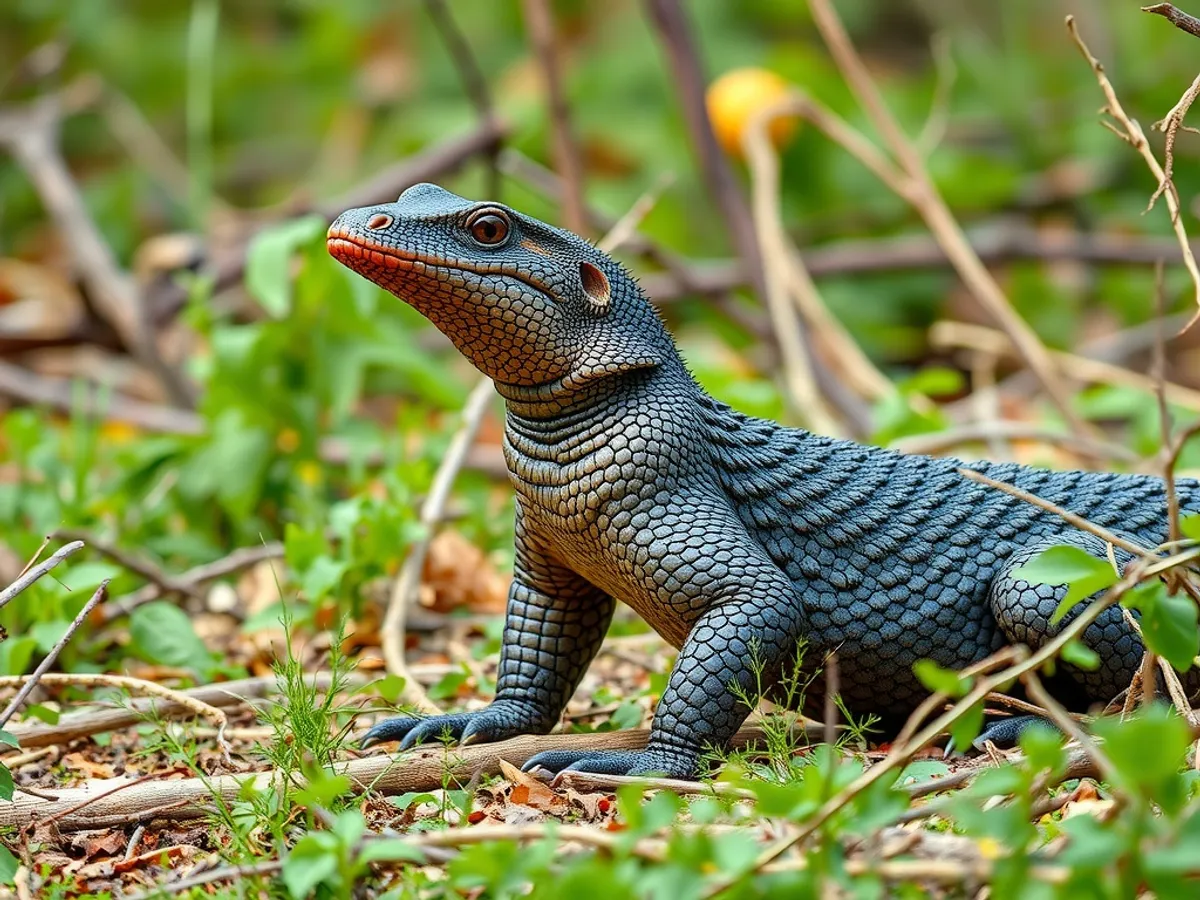
About the Argus Monitor
The Argus Monitor is a large, alert lizard native to northern Australia and southern New Guinea. It is renowned for its keen senses, powerful limbs, and distinctive pattern of yellowish spots across its brown body. Argus Monitors are highly active hunters, often seen digging for prey or basking in open woodlands and savannas. They are skilled climbers and swimmers, able to traverse a variety of environments in search of food.
Fascinating facts
Tripoding Behavior
The Argus Monitor often stands up on its hind legs and tail to get a better view of its surroundings, especially when it feels threatened or is searching for prey.
Expert Diggers
These lizards use their strong, sharp claws to dig extensive burrows, both for shelter and to hunt for insects, eggs, and small mammals underground.
Wide Range
Argus Monitors inhabit a vast range across northern Australia and southern New Guinea, adapting well to a variety of dry habitats from grasslands to forest edges.
Detailed description
The Argus Monitor (Varanus panoptes) is a robust and agile lizard, typically reaching total lengths of 100–140 cm, with some individuals exceeding 150 cm. Its body is elongated and muscular, supported by strong limbs equipped with sharp claws adapted for digging and climbing. The head is wedge-shaped with a pointed snout, and the eyes are large and alert, providing excellent vision for detecting prey and predators. The dorsal coloration is generally brown to olive, adorned with a pattern of yellowish or cream spots and ocelli, which provide camouflage in dappled light. The tail is long and laterally compressed, aiding in swimming and balance during rapid terrestrial movement. Argus Monitors are diurnal and highly active, often seen basking in the morning sun before embarking on extensive foraging excursions. They possess a forked tongue, used in conjunction with a highly developed Jacobson's organ for chemoreception, allowing them to track prey and conspecifics. The species exhibits considerable intelligence, with problem-solving abilities and complex hunting strategies. Sexual dimorphism is present, with males generally larger and possessing more prominent femoral pores than females.
Did you know?
Argus Monitors can inflate their bodies with air to appear larger and deter predators or rivals.
Research & sources
Wikipedia summary
Fan control is the management of the rotational speed of an electric fan. In computers, various types of computer fans are used to provide adequate cooling, and different fan control mechanisms balance their cooling capacities and noise they generate. This is commonly accomplished by the motherboards having hardware monitoring circuitry, which can be configured by the end-user through BIOS or other software to perform fan control.
Behaviour & social structure
Argus Monitors are solitary and territorial, with individuals occupying overlapping home ranges but rarely interacting outside of the breeding season. Their daily activity begins with basking to elevate body temperature, followed by active foraging. They are opportunistic carnivores, preying on insects, small mammals, birds, eggs, reptiles, and carrion. Hunting involves both active pursuit and ambush tactics, and they are known to excavate burrows to access hidden prey such as rodents or invertebrates. Argus Monitors are also proficient swimmers, occasionally hunting aquatic prey. When threatened, they may inflate their bodies, hiss, and lash with their tails. Social interactions are generally limited to antagonistic displays between males, which may involve ritualized combat during the breeding season. Juveniles are more secretive and arboreal, reducing predation risk.
Reproduction & life cycle
Breeding typically occurs during the wet season (November to March in northern Australia), coinciding with increased food availability. Males engage in combat for access to receptive females, using their forelimbs and tails in wrestling bouts. Females lay clutches of 7–20 eggs in deep burrows or termite mounds, which provide stable temperature and humidity for incubation. Incubation lasts approximately 90–120 days, depending on environmental conditions. There is no parental care post-oviposition; hatchlings are fully independent and exhibit rapid growth rates. Sexual maturity is reached at around 2–3 years of age. Reproductive output may vary with resource availability, and females may lay multiple clutches in a single season under optimal conditions.
Adaptations & survival
Argus Monitors possess several adaptations for survival in arid and semi-arid environments. Their keen vision and acute chemosensory abilities facilitate efficient prey detection. The powerful limbs and claws are specialized for digging, both for foraging and for creating burrows to escape extreme heat or predators. Their laterally compressed tails aid in swimming, allowing them to exploit aquatic habitats. The cryptic coloration and patterning provide camouflage against predators. Thermoregulatory behavior, such as basking and burrow use, enables them to maintain optimal body temperatures. Their high metabolic rate supports active hunting and rapid growth, while their opportunistic diet allows them to exploit a wide range of food resources.
Cultural significance
In Indigenous Australian cultures, large monitors like the Argus Monitor are sometimes featured in traditional stories and Dreamtime mythology, often symbolizing strength, cunning, or adaptability. They are occasionally hunted for food in some communities, and their presence is considered an indicator of healthy country. The striking appearance and intelligence of Argus Monitors have also made them subjects of interest in herpetoculture and wildlife education programs.
Recent research
Recent research has focused on the ecological impact of cane toad invasion on Argus Monitor populations, with studies documenting rapid declines and behavioral changes in affected areas. Ongoing work is investigating potential adaptation or learned avoidance of toxic prey. Genetic studies have clarified the taxonomy of the Varanus panoptes complex, distinguishing between subspecies and related forms. Behavioral studies have highlighted their problem-solving abilities and complex hunting strategies, contributing to our understanding of monitor lizard cognition. Conservation research is increasingly focused on mitigating the impacts of invasive species and habitat fragmentation.
Sources
Videos
Habitat
Savanna and open woodland
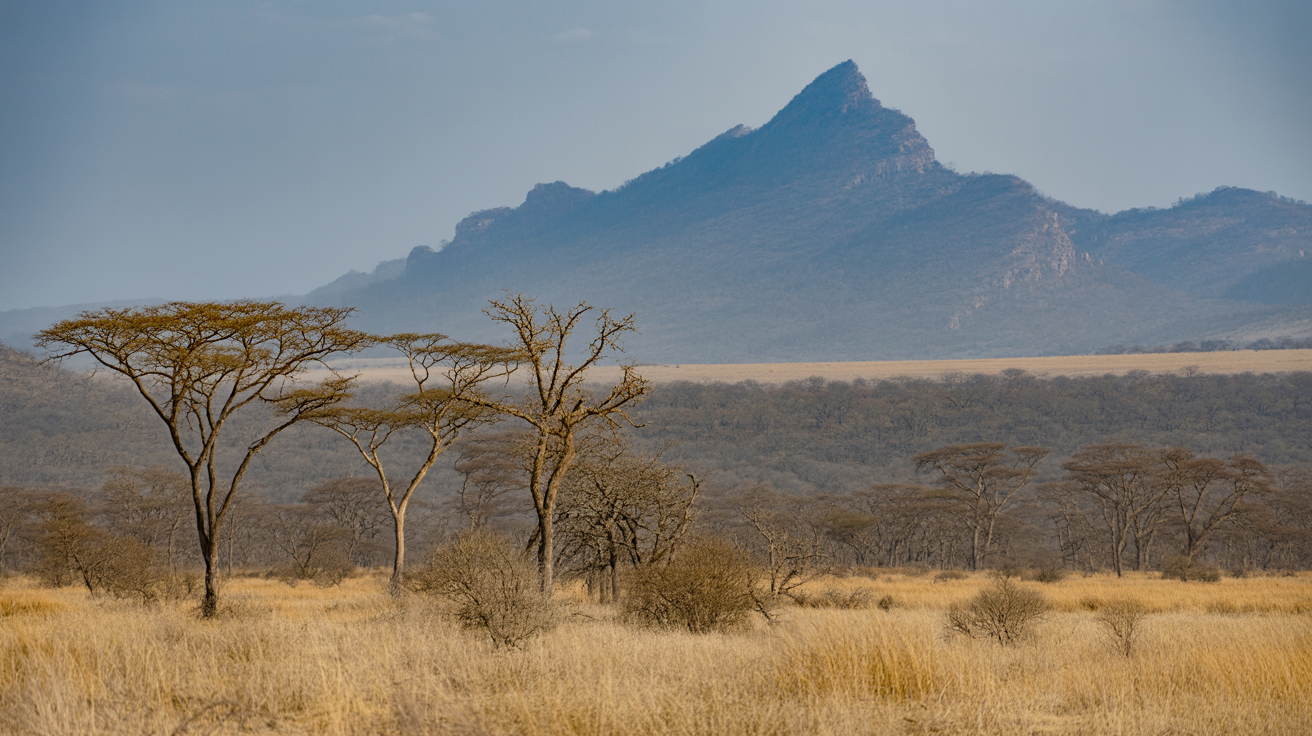 Africa
Savanna
Grasslands with scattered trees, characterized by seasonal rainfall and home to diverse grazing animals and predators.
 Various Continental Regions
Grassland
Open areas dominated by grasses rather than trees, supporting numerous herbivores and their predators.
 Global
Forest
Wooded areas with significant tree cover and diverse plant and animal communities.
Conservation
The Argus Monitor is currently classified as Least Concern on the IUCN Red List.
Threats & challenges
While currently listed as Least Concern by the IUCN, Argus Monitors face localized threats including habitat loss due to land clearing, altered fire regimes, and predation by introduced species such as feral cats and foxes. In some regions, the spread of the toxic cane toad (Rhinella marina) has led to significant population declines, as monitors are susceptible to poisoning after ingesting these invasive amphibians. Human activities, such as road construction and collection for the pet trade, also pose risks. Climate change may further impact their habitats and prey availability. Despite these challenges, the species remains widespread and adaptable, but ongoing monitoring is recommended.
Taxonomy
Scientific name
Varanus panoptes
- Kingdom
- Animalia
- Phylum
- Chordata
- Class
- Reptilia
- Order
- Squamata
- Family
- Varanidae
- Genus
- Varanus
- Species
- panoptes
Community notes
Share your observations about the Argus Monitor.
No community notes yet. Be the first!
Discover more wildlife
More fascinating animals from the encyclopedia.