
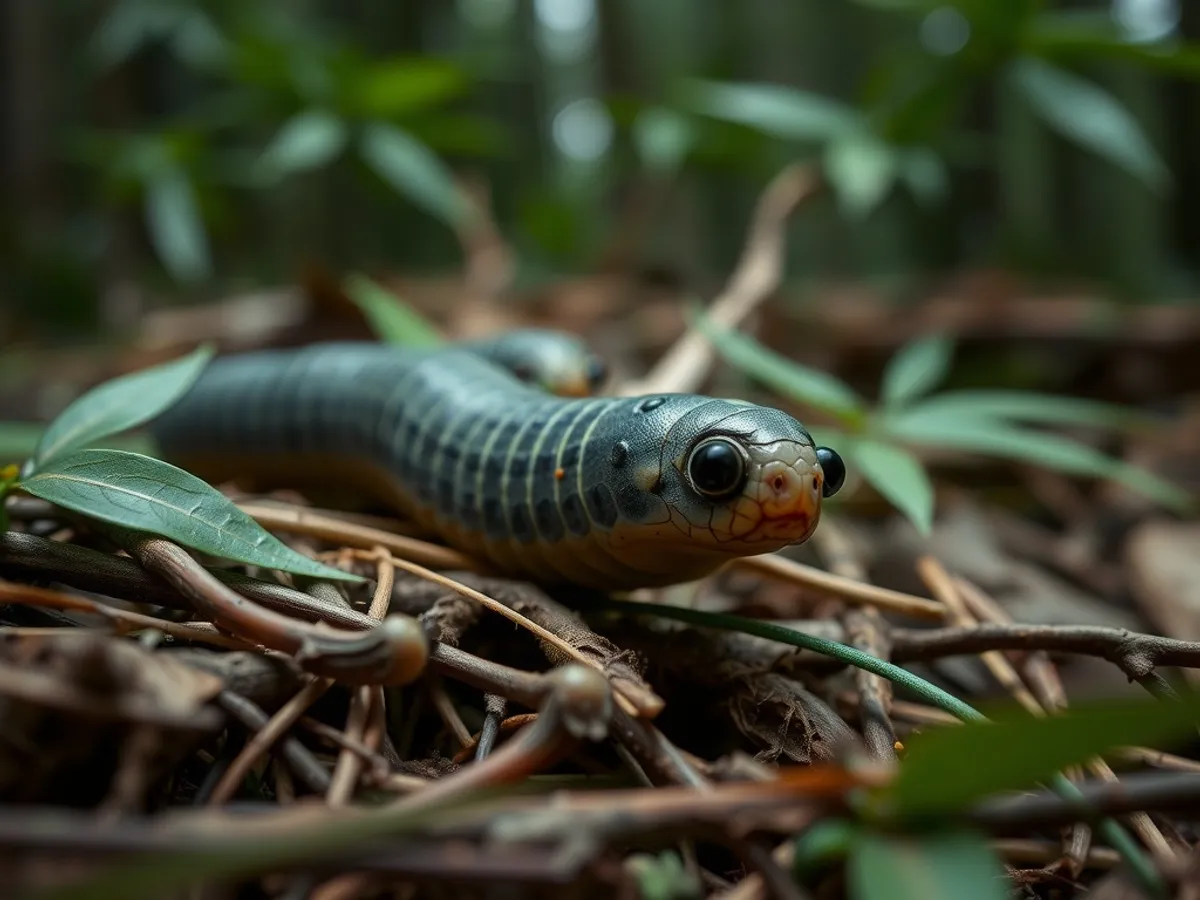
About the Bamboo Worm
The bamboo worm is the larval stage of a moth species native to Southeast Asia, particularly found inside bamboo stems. These cream-colored, soft-bodied larvae are renowned for their nutritional value and are harvested as a delicacy in countries like Thailand, Laos, and Myanmar. Bamboo worms feed on the soft tissue inside bamboo, creating small tunnels, and can be found in clusters inside culms. Despite their humble appearance, they play an important ecological role in bamboo decomposition and nutrient cycling. Their popularity as an edible insect is growing due to their rich protein content and sustainable harvesting potential.
Fascinating facts
Edible Delicacy
Bamboo worms are a popular edible insect in Southeast Asia and are often deep-fried and sold as street food.
Bamboo Specialist
These larvae only feed on soft bamboo tissue, living inside the stems until they pupate into moths.
Eco-Friendly Protein
Harvesting bamboo worms is considered sustainable and environmentally friendly compared to traditional livestock farming.
Detailed description
Omphisa fuscidentalis, commonly known as the bamboo worm, is the larval stage of a moth in the family Crambidae. The larvae are cylindrical, soft-bodied, and typically creamy-white to pale yellow, measuring 20–30 mm in length at maturity. Their bodies are segmented with a smooth cuticle, and they possess small, dark mandibles adapted for boring into bamboo tissue. The head capsule is slightly sclerotized, aiding in tunneling through the fibrous bamboo culms. Adults are medium-sized moths with a wingspan of approximately 30–35 mm, displaying light brown to ochre forewings with subtle patterning for camouflage. Bamboo worms are primarily nocturnal, with larvae remaining concealed within bamboo stems during the day and feeding on the parenchyma and vascular tissues at night. Their presence is often indicated by small entry holes and frass deposits on bamboo culms. The species exhibits a solitary to loosely gregarious larval phase, with multiple individuals sometimes occupying the same bamboo stem. Pupation occurs within the bamboo, where the larva constructs a silken cocoon lined with frass. The life cycle from egg to adult spans approximately 2–3 months, depending on environmental conditions. Their specialized bamboo diet and cryptic lifestyle make them highly adapted to their niche, and they play a significant role in the decomposition and nutrient cycling of bamboo ecosystems.
Did you know?
Bamboo worms are considered one of the most sustainable animal protein sources due to their rapid reproduction and minimal environmental impact.
Research & sources
Wikipedia summary
Omphisa fuscidentalis, the bamboo worm, is a moth of the family Crambidae. Its habitat are the bamboo groves and forests in the cooler regions of northern Thailand, northern Laos, northern Myanmar, and adjacent parts of Yunnan Province, China, it is also found in some parts of North east India. The mature caterpillars are viewed as a delicacy by the inhabitants of these regions.
Behaviour & social structure
Bamboo worm larvae are primarily sedentary, spending their entire developmental phase within the protective confines of bamboo stems. They exhibit xylophagous feeding behavior, consuming the soft inner tissues and creating linear galleries as they move. Feeding activity peaks during the night, minimizing exposure to predators and desiccation. Larvae are generally solitary, but high-density infestations can result in multiple larvae sharing a single bamboo culm, occasionally leading to competitive interactions. When threatened, larvae may retreat deeper into their tunnels or remain motionless to avoid detection. Adult moths are crepuscular to nocturnal, attracted to light sources, and exhibit erratic flight patterns. Mating and oviposition occur shortly after adult emergence, with females depositing eggs in crevices or wounds on bamboo stems. There is no evidence of parental care; the larvae are entirely independent after hatching.
Reproduction & life cycle
Reproduction in Omphisa fuscidentalis follows a typical lepidopteran pattern. Adults emerge from pupae within the bamboo, with mating occurring within a few days. Females release pheromones to attract males, and copulation generally takes place at night. After mating, females lay clusters of 20–50 eggs in protected crevices or on the surface of bamboo culms, often near existing entry holes. The incubation period for eggs is 7–10 days, depending on ambient temperature and humidity. Upon hatching, larvae bore into the bamboo to begin feeding. The larval stage lasts 30–45 days, followed by pupation, which takes place inside the bamboo and lasts 10–14 days. There is typically one to two generations per year, with breeding synchronized to the rainy season when bamboo tissues are softer and more accessible.
Adaptations & survival
Omphisa fuscidentalis exhibits several key adaptations for survival in bamboo habitats. The larvae possess robust mandibles and a streamlined body, enabling efficient tunneling through dense bamboo tissue. Their pale coloration provides camouflage within the bamboo, reducing predation risk. The ability to secrete silk allows larvae to reinforce tunnels and construct protective pupal chambers. Physiologically, they are adapted to low-oxygen environments inside bamboo, with a reduced metabolic rate and efficient oxygen uptake. Behavioral adaptations include nocturnal feeding and rapid retreat into tunnels when disturbed. The species' life cycle is closely tied to the phenology of bamboo, ensuring larval emergence coincides with periods of optimal food availability.
Cultural significance
Bamboo worms hold significant cultural and economic value in northern Thailand, Laos, Myanmar, and parts of Yunnan and Northeast India. They are considered a delicacy, known locally as 'rot duan' in Thailand, and are harvested seasonally for food. Rich in protein, fat, and micronutrients, they are consumed fried, roasted, or as an ingredient in traditional dishes. The collection and sale of bamboo worms provide supplementary income for rural communities. Their popularity has grown with the promotion of edible insects as sustainable protein sources. In local folklore, bamboo worms are sometimes associated with good fortune and the health of bamboo forests.
Recent research
Recent research has focused on the nutritional composition of bamboo worms, highlighting their high protein (up to 25–30% by dry weight) and essential amino acid content. Studies have also examined their potential as a sustainable food source, with low environmental impact compared to conventional livestock. Molecular phylogenetic analyses have clarified their taxonomic placement within Crambidae and revealed cryptic diversity among bamboo-boring moths. Ongoing ecological studies are investigating their role in bamboo decomposition and nutrient cycling, as well as the effects of harvesting on population dynamics. There is growing interest in developing semi-cultivation methods to reduce pressure on wild populations and ensure sustainable harvesting.
Sources
A Review of the Biology and Edibility of Bamboo Worms (Omphisa fuscidentalis)
Chotigeat, W. et al. (2021)
scientificMolecular Phylogeny and Systematics of Bamboo-Boring Moths
Solis, M.A. & Maes, K.V.N. (2019)
scientificVideos
Habitat
Bamboo forests and thickets


Conservation
The Bamboo Worm is currently classified as Least Concern on the IUCN Red List.
Threats & challenges
Currently, Omphisa fuscidentalis is not considered threatened and is classified as Least Concern. However, localized overharvesting for human consumption, habitat loss due to deforestation, and changes in bamboo forest management practices could pose future risks. Intensive harvesting may reduce local populations, especially if conducted unsustainably. Additionally, pesticide use in bamboo plantations can negatively impact larvae and non-target species. Climate change, affecting bamboo growth and distribution, may also influence the species' range and abundance. Despite these challenges, the species remains relatively resilient due to its wide distribution and adaptability.
Taxonomy
Scientific name
Omphisa fuscidentalis
- Kingdom
- Animalia
- Phylum
- Arthropoda
- Class
- Insecta
- Order
- Lepidoptera
- Family
- Crambidae
- Genus
- Omphisa
- Species
- fuscidentalis
Community notes
Share your observations about the Bamboo Worm.
No community notes yet. Be the first!
Discover more wildlife
More fascinating animals from the encyclopedia.