
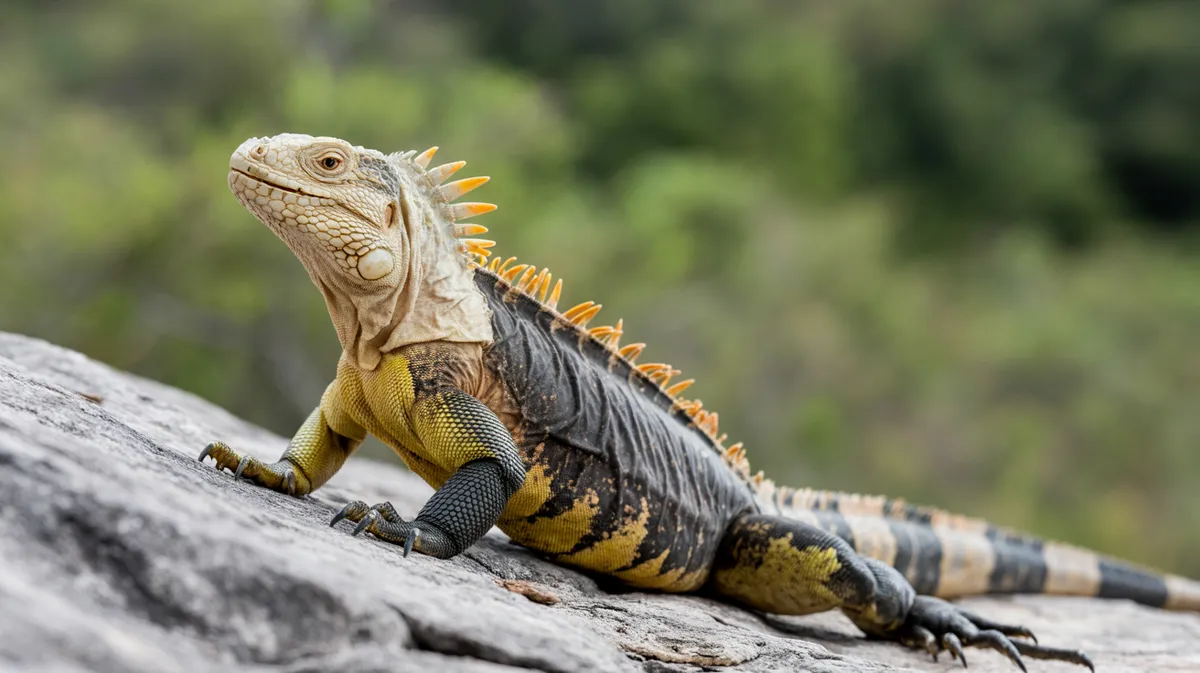
About the Black spiny-tailed iguana
The black spiny-tailed iguana is a large, agile lizard native to Central America, recognized by its distinctive black, keeled scales running along its tail. It is one of the fastest-running lizards, capable of reaching speeds up to 21 miles per hour when threatened. Males can grow over 1.3 meters in length and display prominent dorsal spines, while females are generally smaller and less vividly marked. This species is highly adaptable, often inhabiting rocky outcrops, forests, and even urban areas, where it is known for its bold and sometimes aggressive behavior.
Fascinating facts
Incredible Speed
The black spiny-tailed iguana can sprint at speeds up to 34 km/h (21 mph), making it the fastest lizard in the world.
Habitat Adaptability
This species thrives in a variety of environments, from dry forests and rocky hillsides to urban landscapes.
Defensive Tail
Its spiny tail is used as a whip-like defense mechanism against predators, delivering painful blows.
Detailed description
The black spiny-tailed iguana (Ctenosaura similis) is a robust, medium-to-large lizard, with adult males typically reaching lengths of 1.0–1.3 meters (39–51 inches) including the tail, and females averaging 0.8–1.0 meters. Its most distinctive feature is the series of sharply keeled, spiny scales that run along the tail, which serve both as a defensive mechanism and a display structure. The dorsal coloration ranges from grayish to dark brown or black, often with irregular bands or blotches that provide camouflage against rocky substrates. The head is angular with pronounced jowls in mature males, and the limbs are strong and well-adapted for climbing and rapid terrestrial locomotion. The species exhibits sexual dimorphism: males are larger, have more prominent dorsal crests, and may display brighter breeding coloration. C. similis is diurnal, basking in the sun during the day to regulate its body temperature, and is known for its remarkable speed, being one of the fastest lizards, capable of sprinting up to 34 km/h (21 mph). Its diet is highly omnivorous, including fruits, flowers, leaves, insects, small vertebrates, and occasionally carrion. The species is highly adaptable, thriving in a range of habitats from dry forests and savannas to rocky outcrops and even urban environments. Socially, it is often seen in loose aggregations, with dominant males defending territories that include several females. Vocalizations are rare, but tail-lashing, head-bobbing, and push-up displays are common forms of communication.
Did you know?
Despite their intimidating appearance and spiny tails, these iguanas are sometimes kept as pets and are even considered a delicacy in certain regions.
Research & sources
Wikipedia summary
Ctenosaura similis, commonly known as the black iguana or black spiny-tailed iguana, is an iguanid lizard native to Mexico and Central America. It has been reported in some Colombian islands in the Caribbean Sea and Pacific Ocean, and has been introduced to the United States in the state of Florida. The largest species in the genus Ctenosaura, it is commonly found in areas such as grasslands and forests.
Behaviour & social structure
Black spiny-tailed iguanas are primarily terrestrial but are also adept climbers, often seen basking on rocks, walls, or tree branches. They are highly alert and will rapidly retreat to crevices or burrows when threatened, using their spiny tails defensively. Feeding behavior is opportunistic: juveniles are more insectivorous, while adults shift towards a more herbivorous diet, though they remain omnivorous throughout life. Foraging occurs mainly in the morning and late afternoon, with midday spent basking or resting in shaded refuges. Social interactions are marked by visual displays—dominant males perform head-bobs and lateral body flattening to assert territory or attract mates. Aggression between males can escalate to physical combat, especially during the breeding season. These iguanas are known to form loose colonies, particularly in areas with abundant basking sites and food resources, but are generally solitary outside the breeding season.
Reproduction & life cycle
Ctenosaura similis is oviparous, with breeding typically occurring at the onset of the dry season (February to April, depending on locality). Males establish and defend territories, courting females through head-bobbing and tactile displays. After mating, females excavate burrows in sandy or loose soil to lay clutches of 10–30 eggs, with clutch size correlating with female body size. Incubation lasts approximately 90–100 days, with hatchlings emerging at the start of the rainy season when food is abundant. There is no parental care post-oviposition; hatchlings are independent from birth and must evade predation from birds, mammals, and larger reptiles. Sexual maturity is typically reached at 2–3 years of age.
Adaptations & survival
The black spiny-tailed iguana exhibits several adaptations for survival in arid and variable environments. Its spiny tail deters predators and is used as a whip in defense. Cryptic coloration and patterning provide camouflage among rocks and vegetation. The species is capable of rapid sprinting, which aids in escaping predators. Physiologically, it can tolerate high temperatures and conserve water efficiently, allowing it to thrive in dry habitats. Its omnivorous diet enables exploitation of diverse food sources, and its ability to utilize urban structures as refuges demonstrates behavioral flexibility. The robust claws and muscular limbs facilitate both climbing and digging, important for thermoregulation and nesting.
Cultural significance
Ctenosaura similis holds significance in several Central American cultures, where it is sometimes referred to as 'garrobo.' It is harvested for its meat and eggs, which are considered delicacies in some local cuisines. The iguana also features in regional folklore, often symbolizing agility and resilience. In modern times, it is occasionally kept as an exotic pet, though this practice is regulated due to conservation concerns. Its presence in urban areas has led to both positive and negative interactions with humans, ranging from admiration for its adaptability to conflicts over garden and crop damage.
Recent research
Recent studies have focused on the species' rapid colonization of disturbed and urban habitats, examining its ecological impacts and adaptability. Genetic analyses have revealed significant population structure across its range, with evidence of local adaptation and hybridization with related Ctenosaura species in contact zones. Research into its thermal ecology has highlighted its capacity for behavioral thermoregulation in hot, open environments. Invasive populations in Florida are being monitored for their effects on native fauna and flora. Ongoing conservation research includes population monitoring, assessment of harvest sustainability, and the development of management strategies for both native and introduced populations.
Videos
Habitat
Dry forests, rocky areas, and savannas of Central America
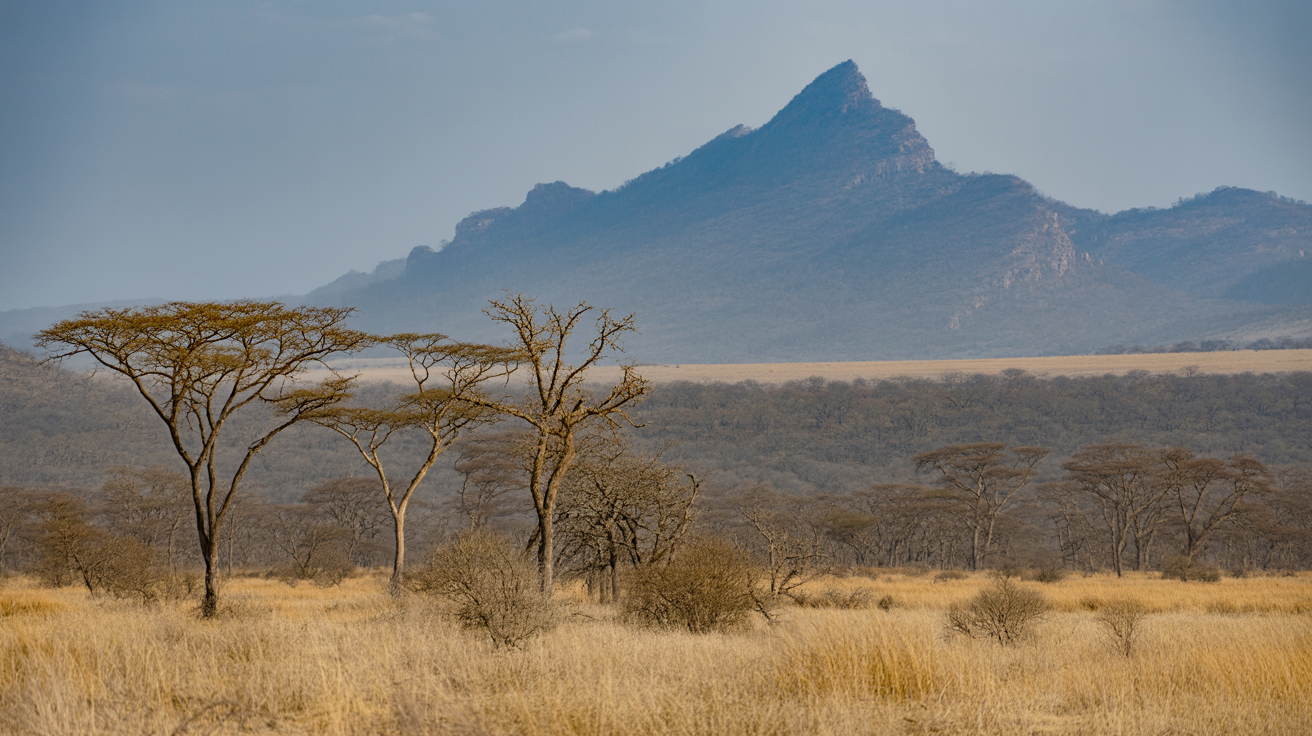 Africa
Savanna
Grasslands with scattered trees, characterized by seasonal rainfall and home to diverse grazing animals and predators.
 Various Continental Regions
Grassland
Open areas dominated by grasses rather than trees, supporting numerous herbivores and their predators.
 Elevated Terrain
Mountain
High-altitude environments with varying climates and specialized wildlife adapted to rugged terrain and thin air.
 Global
Forest
Wooded areas with significant tree cover and diverse plant and animal communities.
Conservation
The Black spiny-tailed iguana is currently classified as Least Concern on the IUCN Red List.
Threats & challenges
While currently listed as Least Concern by the IUCN, C. similis faces localized threats including habitat loss due to agriculture and urbanization, hunting for food and the pet trade, and predation by introduced species such as domestic cats and dogs. In some regions, overharvesting of eggs and adults for human consumption has led to population declines. The species' adaptability has allowed it to persist in disturbed habitats, but ongoing habitat fragmentation and illegal trade remain conservation challenges. In Florida, where it is introduced, it may compete with native species and is considered an invasive pest.
Taxonomy
Scientific name
Ctenosaura similis
- Kingdom
- Animalia
- Phylum
- Chordata
- Class
- Reptilia
- Order
- Squamata
- Family
- Iguanidae
- Genus
- Ctenosaura
- Species
- similis
Community notes
Share your observations about the Black spiny-tailed iguana.
No community notes yet. Be the first!
Discover more wildlife
More fascinating animals from the encyclopedia.