
About the Blotched Blue-tongue
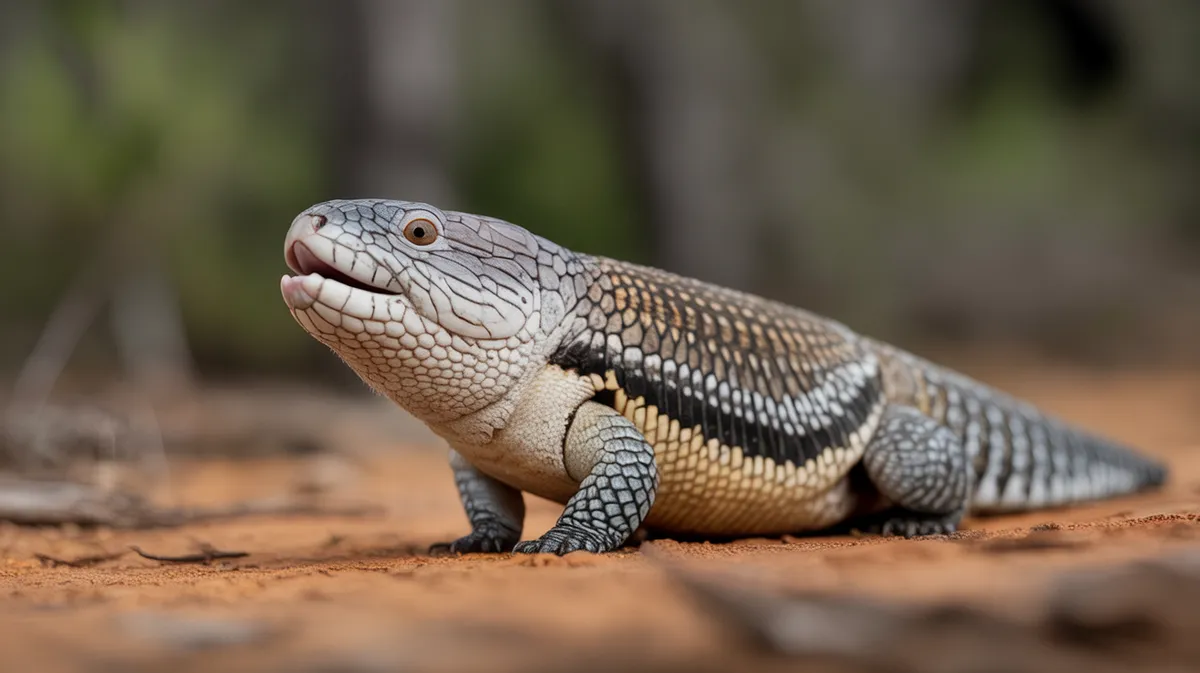
The Blotched Blue-tongue is a large, slow-moving skink native to southeastern Australia, easily recognized by its stout body, broad head, and distinctive blue tongue. Its coloration features a series of dark blotches and bands on a lighter background, providing effective camouflage among leaf litter and undergrowth. This species is diurnal and terrestrial, often basking in the sun during cooler parts of the day. It is a highly adaptable reptile, commonly found in forests, heathlands, and even suburban gardens, where it plays a crucial role in controlling insect populations.
Fascinating facts
Striking Blue Tongue
The Blotched Blue-tongue flashes its bright blue tongue as a defense mechanism to ward off predators by appearing toxic or unpalatable.
Live Birth
Unlike most lizards, this species is ovoviviparous, giving birth to live young rather than laying eggs.
Urban Adapters
Blotched Blue-tongues are commonly found in suburban gardens where they help control pests such as insects and snails.
Detailed description
The Blotched Blue-tongue (Tiliqua nigrolutea) is one of the largest skinks in Australia, with adults typically reaching 30–40 cm in total length and weighing up to 600 grams. Its robust, cylindrical body is covered in smooth, overlapping scales, with a distinctive pattern of dark blotches and bands on a background that ranges from cream to dark brown, depending on locality and subspecies. The broad, triangular head houses powerful jaws and a striking blue tongue, which is displayed as a defensive mechanism to startle predators. The limbs are relatively short but strong, equipped with five clawed toes on each foot, aiding in digging and maneuvering through dense undergrowth. The tail is thick and tapers gradually, serving as a fat storage organ during periods of food scarcity. Blotched Blue-tongues are primarily terrestrial and exhibit a slow, deliberate mode of locomotion, relying on camouflage and stillness to avoid detection. They are diurnal, emerging in the morning to bask and regulate their body temperature, and retreating to shelter during the hottest part of the day. This species is highly adaptable, thriving in a variety of habitats from montane forests to suburban gardens. Their omnivorous diet includes a wide range of plant matter, invertebrates, and occasionally small vertebrates, contributing to their ecological role as both predator and seed disperser.
Did you know?
Despite their bulky appearance, Blotched Blue-tongues can move surprisingly quickly when threatened and will hiss loudly while displaying their blue tongue to scare off predators.
Research & sources
Behaviour & social structure
Blotched Blue-tongues are solitary and territorial, with individuals maintaining overlapping home ranges but rarely interacting outside of the breeding season. They are primarily ground-dwelling, seeking refuge under logs, rocks, or dense vegetation when threatened. When approached by predators, they inflate their bodies, hiss loudly, and display their blue tongue as a warning. Feeding occurs opportunistically, with individuals foraging for fruits, flowers, fungi, snails, insects, and carrion. They use their acute sense of smell and tongue-flicking behavior to locate food. Daily activity is strongly influenced by ambient temperature, with peak activity during the morning and late afternoon in cooler months. During winter, Blotched Blue-tongues undergo brumation—a period of dormancy similar to hibernation—emerging only on warm days to bask. Social interactions are limited, though aggressive encounters may occur between males during the breeding season.
Reproduction & life cycle
Tiliqua nigrolutea is viviparous, giving birth to live young rather than laying eggs. Breeding typically occurs in late spring (October–November), following a period of increased activity and mate searching. Males may engage in combat for access to receptive females, using their powerful jaws to bite rivals. After mating, females undergo a gestation period of approximately 100–120 days. Litters usually consist of 2–10 offspring, with the number influenced by the female's size and health. Neonates are born fully developed and independent, measuring around 10–15 cm in length. There is no parental care post-birth; juveniles disperse quickly to avoid predation and competition. Sexual maturity is reached at 2–3 years of age.
Adaptations & survival
The Blotched Blue-tongue exhibits several notable adaptations for survival in temperate environments. Its cryptic coloration provides effective camouflage among leaf litter and undergrowth, reducing predation risk. The blue tongue, unique among Australian skinks, is used in deimatic (startle) displays to deter predators. The species' robust jaws and dentition enable it to consume a wide variety of tough plant material and hard-shelled invertebrates. The ability to store fat in the tail allows survival during periods of food scarcity or brumation. Behavioral thermoregulation, such as basking and seeking shade, enables precise control of body temperature in fluctuating climates. Viviparity is an adaptation to cooler environments, as internal gestation allows better temperature regulation for developing embryos.
Cultural significance
The Blotched Blue-tongue holds a place in Australian culture as a familiar and charismatic garden reptile. It is often featured in educational programs and wildlife documentaries, promoting awareness of native fauna. In some Indigenous Australian traditions, blue-tongued skinks are recognized as totem animals, though Tiliqua nigrolutea is less prominent in mythology compared to other species. The species is sometimes kept as a pet, valued for its docile nature and ease of care, but wild collection is regulated to prevent population impacts. Its role in controlling pest insects and snails is appreciated by gardeners and farmers.
Recent research
Recent research has focused on the genetic diversity and phylogeography of Tiliqua nigrolutea, revealing distinct northern and southern lineages corresponding to geographic barriers in southeastern Australia. Studies on thermoregulation have demonstrated the species' remarkable ability to exploit microhabitats for optimal body temperature maintenance. Ongoing research investigates the impacts of urbanization on movement patterns and population genetics, highlighting the species' adaptability but also the risks of genetic isolation. Investigations into the chemical composition of the blue tongue suggest its role in both visual and chemical deterrence of predators. Citizen science initiatives have contributed valuable data on distribution and seasonal activity patterns.
Sources
The Ecology and Behavior of the Blotched Blue-tongue Lizard (Tiliqua nigrolutea)
Shea, G.M. & Greer, A.E. (2018)
scientificTiliqua nigrolutea: The IUCN Red List of Threatened Species 2017
IUCN SSC Australian Reptile Specialist Group
conservationThe ecology and conservation status of the Blotched Blue-tongue Lizard (Tiliqua nigrolutea) in southeastern Australia
Cogger, H.G. & Shea, G.M. (2019)
scientificTiliqua nigrolutea: The IUCN Red List of Threatened Species 2018
IUCN SSC Amphibian and Reptile Specialist Group
conservationVideos
Habitat
Temperate forests, heathlands, and woodlands
 Africa
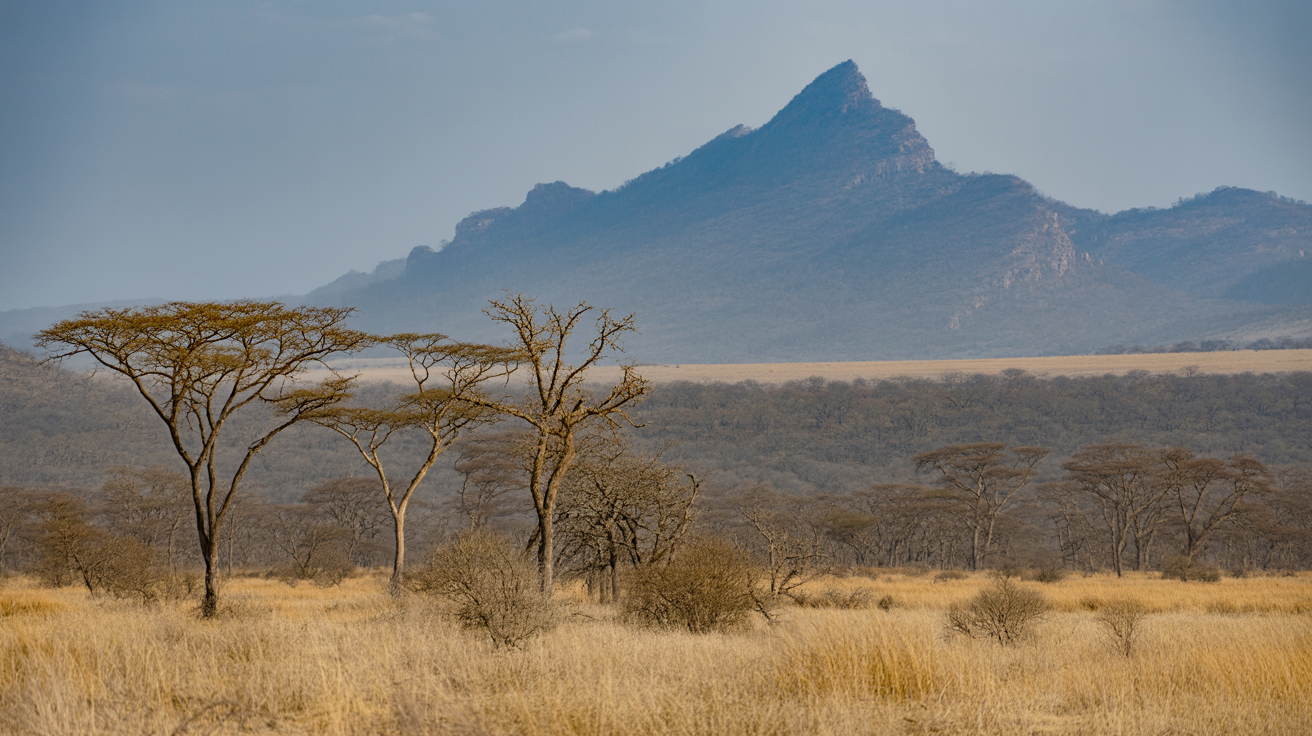
Savanna
Grasslands with scattered trees, characterized by seasonal rainfall and home to diverse grazing animals and predators.
 Various Continental Regions
Grassland
Open areas dominated by grasses rather than trees, supporting numerous herbivores and their predators.
 Elevated Terrain
Mountain
High-altitude environments with varying climates and specialized wildlife adapted to rugged terrain and thin air.
 Global
Forest
Wooded areas with significant tree cover and diverse plant and animal communities.
Conservation
The Blotched Blue-tongue is currently classified as Least Concern on the IUCN Red List.
Threats & challenges
While currently listed as Least Concern, Blotched Blue-tongues face several localized threats. Habitat fragmentation due to urban development, agriculture, and road construction reduces available shelter and foraging grounds. Predation by introduced species such as foxes, cats, and dogs is a significant cause of mortality, particularly for juveniles. Road mortality is common in peri-urban areas, as individuals often bask on warm surfaces. Pesticide use can reduce prey availability and cause secondary poisoning. Climate change may alter habitat suitability and brumation patterns, potentially impacting reproductive success. Despite these challenges, the species remains widespread and adaptable, with stable populations in many areas.
Taxonomy
Scientific name
Tiliqua nigrolutea
- Kingdom
- Animalia
- Phylum
- Chordata
- Class
- Reptilia
- Order
- Squamata
- Family
- Scincidae
- Genus
- Tiliqua
- Species
- nigrolutea
Community notes
Share your observations about the Blotched Blue-tongue.
No community notes yet. Be the first!
Discover more wildlife
More fascinating animals from the encyclopedia.