
About the Boomslang
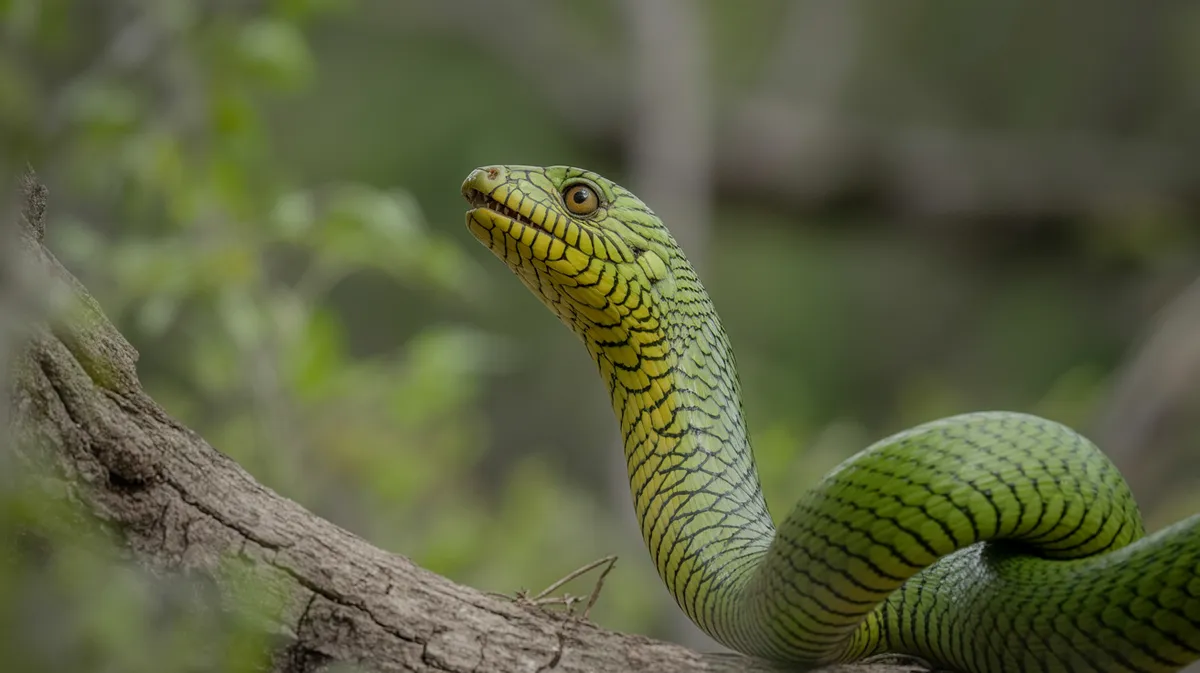
The boomslang is a rear-fanged snake, a category long dismissed as harmless, and it is one of the deadliest snakes in Africa. Its venom is a potent haemotoxin that consumes the blood's clotting factors, triggering disseminated intravascular coagulation — the victim bleeds from every orifice, from old wounds, from the gums, internally into the brain. What makes it uniquely dangerous is the delay: symptoms may not appear for 12 to 24 hours, and a bitten person, feeling fine, goes home. In 1957 the eminent herpetologist Karl Schmidt was bitten by a juvenile boomslang, judged the dose too small to matter, and kept a meticulous hour-by-hour diary of his own symptoms — nausea, bleeding, fever — until he died the next day. The snake itself is shy, arboreal and reluctant. It has enormous eyes and the best binocular vision of any African snake, which it uses to spot motionless chameleons in foliage. It also shows unusual sexual dichromatism for a snake: males are bright green, females typically brown.
Fascinating facts
Rear-fanged Venom
Unlike most venomous snakes, the Boomslang delivers its venom using fangs located at the back of its mouth, requiring a deep bite for effective envenomation.
Exceptional Vision
Boomslangs possess some of the largest eyes relative to head size among snakes, providing excellent depth perception for hunting in trees.
Arboreal Lifestyle
The Boomslang spends most of its time in trees, using its prehensile tail to navigate branches in search of prey.
Detailed description
The boomslang (Dispholidus typus) is a medium-to-large, slender-bodied arboreal snake, typically reaching adult lengths of 100–160 cm, though specimens up to 183 cm have been recorded. It is renowned for its exceptionally large eyes with round pupils, providing acute binocular vision crucial for detecting prey among dense foliage. The species exhibits marked sexual dimorphism: males often display vivid green, yellow, or black coloration, sometimes with black-edged scales, while females are generally brown or olive, aiding in camouflage. Scales are strongly keeled, giving the skin a rough texture. The head is distinct from the neck, with a short, blunt snout. Boomslangs are highly adapted for life in trees, possessing a prehensile tail and laterally compressed body, which facilitate agile movement through branches. Their rear-fanged (opisthoglyphous) dentition is specialized for delivering potent hemotoxic venom. Primarily diurnal, boomslangs are solitary and secretive, relying on stealth and patience when hunting. They are oviparous, with females laying clutches of up to 30 eggs in decaying vegetation or tree hollows. The boomslang’s unique combination of arboreal agility, cryptic coloration, and potent venom make it a highly specialized predator within its ecological niche.
Did you know?
It can open its jaws up to 170 degrees when striking, an unusually wide gape for a snake.
Research & sources
Wikipedia summary
The boomslang is a highly venomous snake in the family Colubridae. The species is native to Sub-Saharan Africa.
Behaviour & social structure
Boomslangs are predominantly diurnal and arboreal, spending most of their lives in the canopies of trees and shrubs. They are solitary, coming together only during the breeding season. Their hunting strategy is characterized by slow, deliberate movements, allowing them to approach prey undetected. Boomslangs feed primarily on birds, bird eggs, lizards, chameleons, frogs, and occasionally small mammals. They use their exceptional vision to spot prey, then strike quickly, holding on until the venom takes effect. Unlike many snakes, boomslangs do not constrict; instead, they rely on their venom to immobilize prey. When threatened, they may inflate their necks laterally to appear larger and display the inside of their mouths as a warning. Despite their potent venom, they are generally shy and will flee if given the opportunity. They are excellent climbers and can move swiftly through branches, but may descend to the ground to bask or move between trees.
Reproduction & life cycle
Boomslangs are oviparous, with breeding typically occurring during the rainy season (spring to early summer, varying by region). Males engage in ritualized combat, intertwining their bodies and attempting to push each other to the ground to establish dominance. After successful courtship, females lay between 8 and 30 elongated, leathery eggs in rotting logs, leaf litter, or other moist, concealed locations. Incubation lasts approximately 60–90 days, depending on ambient temperature and humidity. Hatchlings measure 25–46 cm in length and are fully independent at birth, receiving no parental care. Sexual maturity is reached at about 2–3 years of age. Females may lay one or two clutches per year, depending on food availability and environmental conditions.
Adaptations & survival
The boomslang exhibits several key adaptations for arboreal life and predation. Its laterally compressed body and long, prehensile tail enhance balance and maneuverability in trees. Large eyes with excellent color vision enable precise detection of prey and predators in complex foliage. The rear-fanged venom delivery system, with enlarged grooved fangs situated at the back of the maxilla, allows the snake to inject hemotoxic venom deeply into prey. The venom contains potent anticoagulants and cytotoxins, causing internal bleeding and rapid immobilization of prey. Cryptic coloration and patterning provide effective camouflage among leaves and branches. The ability to inflate the neck as a threat display is a behavioral adaptation to deter predators. Boomslangs are also highly resistant to dehydration, an important trait for survival in variable African climates.
Cultural significance
The boomslang has a notable place in African folklore and is sometimes associated with omens or supernatural powers due to its elusive nature and potent venom. Its name derives from Afrikaans, meaning 'tree snake.' The species gained international notoriety in the mid-20th century after the death of renowned herpetologist Karl Patterson Schmidt, who was bitten while examining a specimen and documented his symptoms until his death. This incident highlighted the medical significance of boomslang venom and contributed to increased scientific interest. In rural communities, the boomslang is both respected and feared, but it is not commonly used in traditional medicine or ritual practices.
Recent research
Recent research has focused on the biochemical properties of boomslang venom, which is rich in procoagulant and anticoagulant proteins, making it of interest for medical research into blood clotting disorders. Studies have also examined the evolutionary origins of rear-fanged venom delivery systems among colubrids, with the boomslang serving as a key model species. Field research using radio telemetry has provided insights into home range, habitat use, and movement patterns, revealing that individuals may occupy overlapping territories but rarely interact outside the breeding season. Ongoing genetic studies are investigating population structure and potential cryptic diversity across the species’ wide range. Conservationists are monitoring the effects of habitat fragmentation on genetic diversity and long-term viability.
Sources
Catalogue of the Snakes in the British Museum (Natural History). Volume III.
George Albert Boulenger (1896)
scientificDispholidus typus: The IUCN Red List of Threatened Species 2021
IUCN SSC Amphibian and Reptile Specialist Group (2021)
conservationVideos
Habitat
Forest and woodland
 Africa
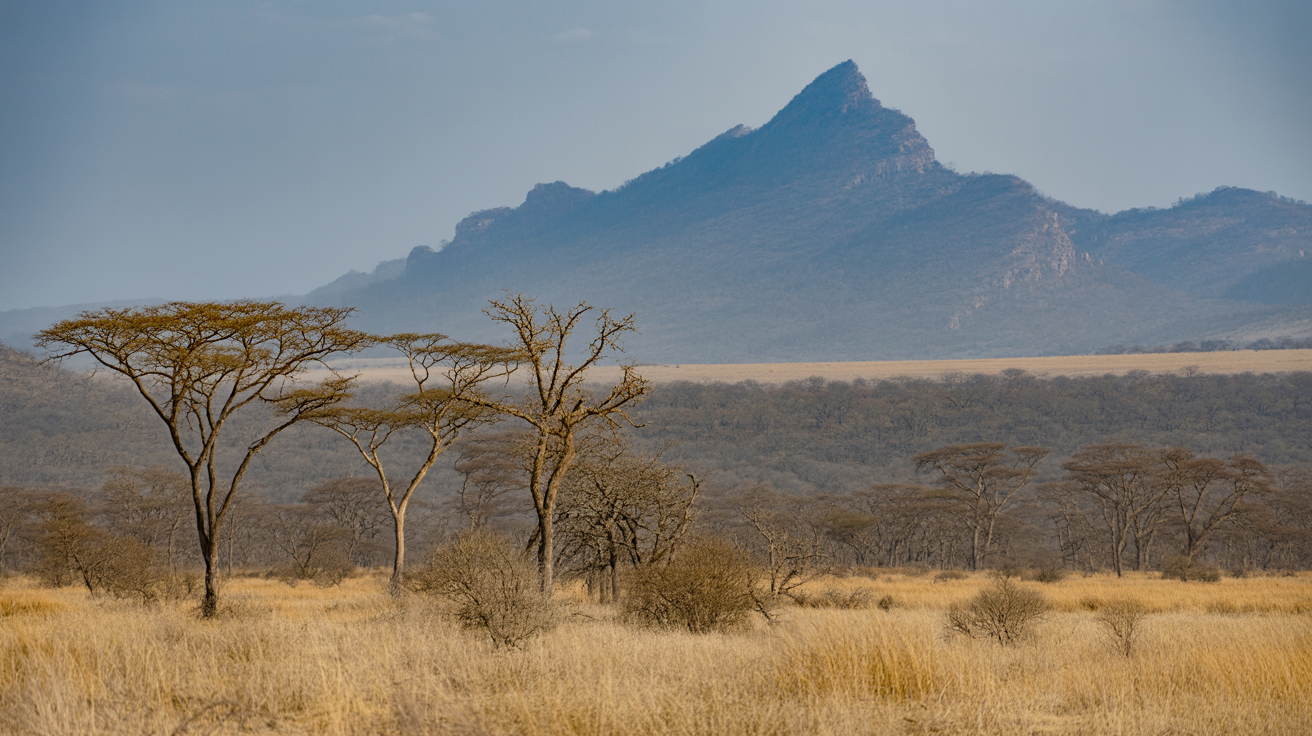
Savanna
Grasslands with scattered trees, characterized by seasonal rainfall and home to diverse grazing animals and predators.
 Various Continental Regions
Grassland
Open areas dominated by grasses rather than trees, supporting numerous herbivores and their predators.
 Global
Forest
Wooded areas with significant tree cover and diverse plant and animal communities.
Conservation
The Boomslang is currently classified as Least Concern on the IUCN Red List.
Threats & challenges
Currently classified as 'Least Concern' by the IUCN, the boomslang faces relatively few widespread threats. Localized habitat loss due to deforestation, agricultural expansion, and urbanization can impact populations, particularly in fragmented forests. Road mortality and intentional killing by humans, often due to fear of its venom, pose additional risks. However, the species’ wide distribution and adaptability to secondary habitats buffer it against significant declines. Climate change may alter prey availability and habitat structure in the future. The boomslang is not targeted by the pet trade or traditional medicine to a significant extent. Ongoing monitoring is recommended to detect potential population changes, especially in rapidly developing regions.
Taxonomy
Scientific name
Dispholidus typus
- Kingdom
- Animalia
- Phylum
- Chordata
- Class
- Reptilia
- Order
- Squamata
- Family
- Colubridae
- Genus
- Dispholidus
- Species
- typus
Community notes
Share your observations about the Boomslang.
No community notes yet. Be the first!
Discover more wildlife
More fascinating animals from the encyclopedia.