
About the Borneo Flat-headed Frog
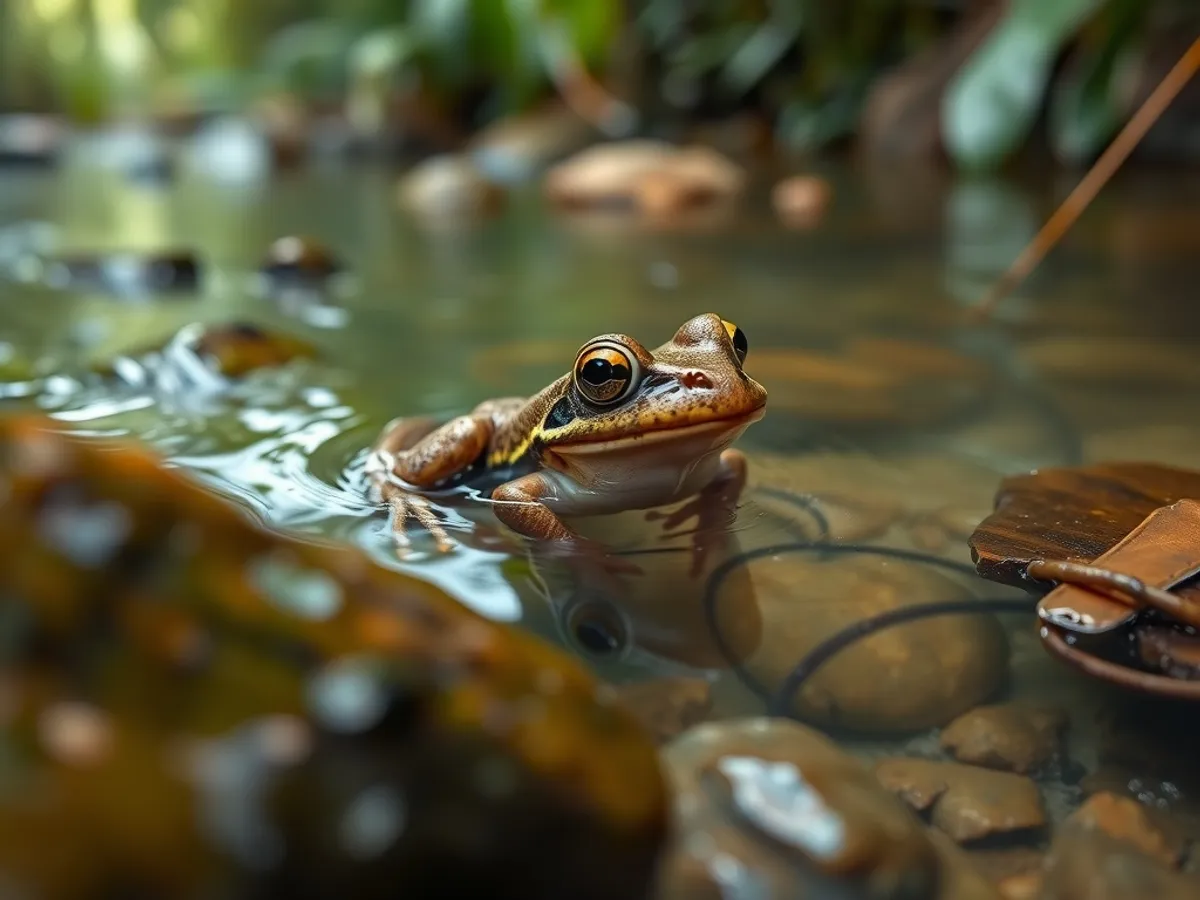
The Borneo Flat-headed Frog is a unique amphibian native to the rainforests of Borneo, Indonesia. It is renowned for being the world’s only frog species entirely lacking lungs, relying solely on its skin for respiration. This flat-bodied frog has a broad, flattened head and a smooth, dark-brown to olive-green skin, aiding its camouflage among river stones. Typically inhabiting fast-flowing, cold, clear streams, it is rarely seen due to its secretive nature and preference for pristine habitats.
Fascinating facts
Lungless Wonder
Barbourula kalimantanensis is the only frog species known to science that completely lacks lungs, relying on cutaneous respiration.
Stream Specialist
It is highly adapted to life in cold, fast-moving streams, with a flattened body and webbed feet for stability and swimming.
Rainforest Rarity
Its habitat is limited to a few pristine rainforest rivers in Borneo, making it exceptionally rare and vulnerable to habitat loss.
Detailed description
Barbourula kalimantanensis, the Borneo Flat-headed Frog, is a highly specialized amphibian measuring approximately 60–70 mm in snout-vent length, with a distinctly flattened, broad head and body adapted for life in swift, rocky streams. Its skin is smooth, dark brown to olive-green, and often mottled, providing effective camouflage against submerged stones. Notably, this species is entirely lungless, a rare adaptation among vertebrates, relying exclusively on cutaneous respiration through its highly vascularized skin. The frog's limbs are robust and webbed, particularly the hind feet, facilitating strong swimming and maneuverability in turbulent waters. Eyes are small and dorsally positioned, aiding in predator avoidance while remaining partially submerged. The species is largely aquatic, rarely venturing onto land, and is known for its cryptic, sedentary lifestyle, often remaining motionless for extended periods. Its flattened morphology reduces drag and allows it to cling tightly to substrates in fast currents. The digestive tract and internal organs are compact, reflecting space constraints due to the absence of lungs. This frog is an apex invertebrate predator within its microhabitat, preying on aquatic insects, crustaceans, and small mollusks.
Did you know?
This frog breathes entirely through its skin, making it exceptionally sensitive to pollution and changes in water quality.
Research & sources
Behaviour & social structure
The Borneo Flat-headed Frog is primarily nocturnal, emerging from crevices between rocks at dusk to forage. It exhibits sit-and-wait predatory behavior, remaining motionless and ambushing prey that drifts close in the current. Its cryptic coloration and flattened body enable it to avoid detection by both predators and prey. Social interactions are minimal; individuals are typically solitary except during the breeding season. Territoriality has not been documented, likely due to the patchy distribution of suitable microhabitats. The species is highly sensitive to water quality and temperature, rarely tolerating disturbed or silted streams. During the day, it seeks shelter under submerged rocks to avoid predation and desiccation.
Reproduction & life cycle
Breeding likely coincides with the onset of the rainy season, when stream flow increases and aquatic habitats expand. Males are thought to use tactile cues rather than vocalizations, as the absence of lungs precludes typical amphibian calls. Amplexus is presumed to be axillary, with external fertilization of eggs deposited under submerged rocks or within gravel beds. Clutch size is unknown but, based on related species, may range from 30 to 50 eggs. Eggs are gelatinous and adhere to substrates, protected from strong currents. There is no evidence of parental care post-oviposition. Larval development is poorly documented, but tadpoles are presumed to be aquatic, with specialized mouthparts for clinging to rocks and grazing on biofilm.
Adaptations & survival
The most remarkable adaptation of Barbourula kalimantanensis is its complete loss of lungs, a trait unique among known frog species. This adaptation is thought to be a response to the highly oxygenated, fast-flowing streams it inhabits, where cutaneous respiration is sufficient and the risk of buoyancy from lungs would be maladaptive. Its dorsoventrally flattened body reduces resistance to water flow and helps it maintain position in strong currents. Fully webbed feet enhance swimming and substrate grip. The skin is highly vascularized, maximizing gas exchange. Behaviorally, its sedentary, cryptic lifestyle minimizes energy expenditure and exposure to predators. Its diet is adapted to the abundant aquatic invertebrates of its habitat.
Cultural significance
Due to its cryptic habits and remote distribution, the Borneo Flat-headed Frog has little direct significance in local folklore or traditional practices. However, its unique biology has attracted international scientific interest, symbolizing the extraordinary evolutionary diversity of Borneo's rainforests. It is occasionally referenced in environmental campaigns as an emblem of the need for freshwater conservation and the protection of endemic species.
Recent research
Recent research has focused on the evolutionary loss of lungs in Barbourula kalimantanensis, with studies using micro-CT scans and histological analysis to confirm the absence of pulmonary structures and to investigate compensatory adaptations in skin vascularization. Genetic studies suggest that lunglessness evolved independently in this lineage, likely as an adaptation to high-oxygen, fast-flowing streams. Ongoing fieldwork aims to clarify its reproductive biology, larval development, and population genetics. Conservation biologists are also using environmental DNA (eDNA) techniques to detect the species in remote streams, improving survey efficiency. The frog serves as a model for studying extreme respiratory adaptations and the impacts of habitat degradation on specialized amphibians.
Sources
Barbourula kalimantanensis: The IUCN Red List of Threatened Species 2021
IUCN SSC Amphibian Specialist Group
conservationBarbourula kalimantanensis: The IUCN Red List of Threatened Species 2020
IUCN SSC Amphibian Specialist Group
conservationVideos
Habitat
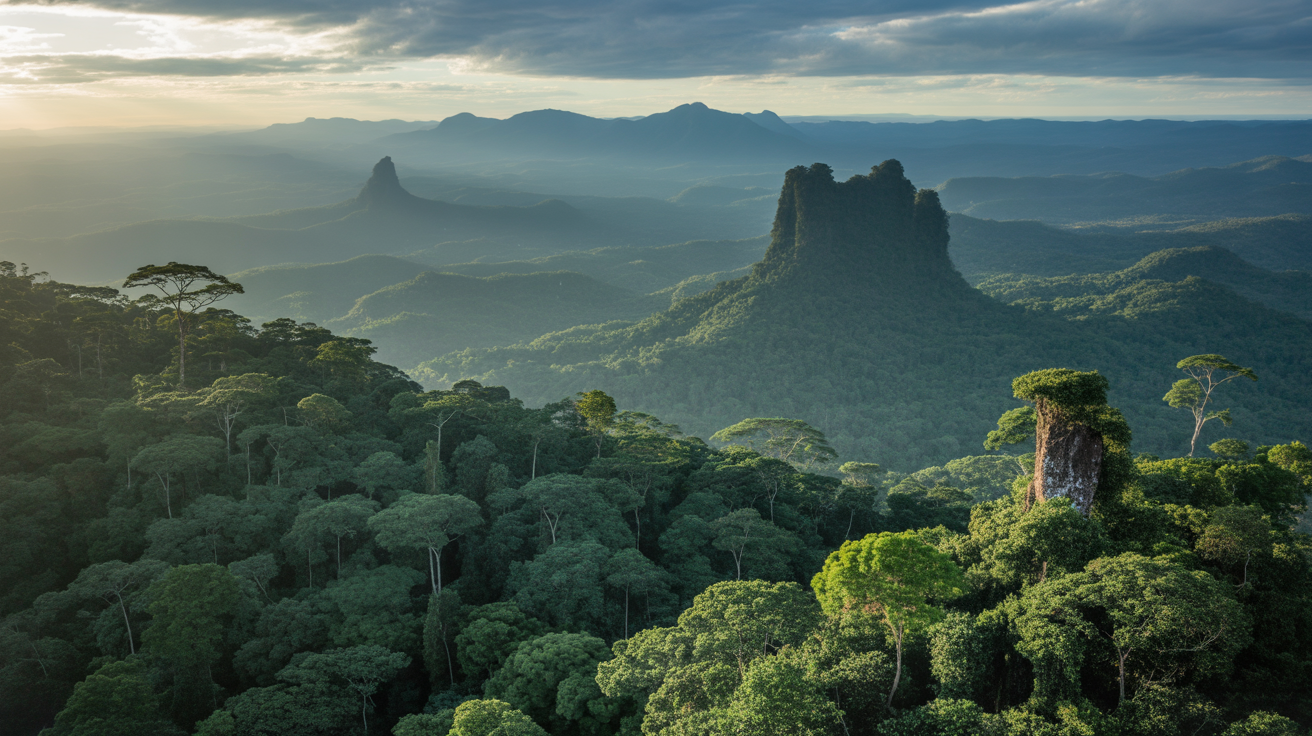
Fast-flowing, clear freshwater streams in tropical rainforest
 Tropical Regions
Rainforest
Dense, wet forests with the highest biodiversity on Earth, containing more than half of the world's plant and animal species.
 Global
Forest
Wooded areas with significant tree cover and diverse plant and animal communities.
 Global
Freshwater
Lakes, rivers, and wetlands with diverse aquatic ecosystems.
Conservation
The Borneo Flat-headed Frog is currently classified as Endangered on the IUCN Red List.
Threats & challenges
Barbourula kalimantanensis is classified as Endangered by the IUCN due to its extremely limited distribution and ongoing habitat loss. Major threats include deforestation, gold mining, and pollution, which lead to siltation and degradation of stream habitats. The species is highly sensitive to changes in water quality, temperature, and flow, making it vulnerable to even minor environmental disturbances. Illegal logging and land conversion for agriculture further fragment its habitat. Population trends are declining, with only a handful of known localities, all within central and western Kalimantan. Conservation is hampered by the species' secretive nature and the inaccessibility of its habitat, complicating population assessments and protective measures.
Taxonomy
Scientific name
Barbourula kalimantanensis
- Kingdom
- Animalia
- Phylum
- Chordata
- Class
- Amphibia
- Order
- Anura
- Family
- Bombinatoridae
- Genus
- Barbourula
- Species
- kalimantanensis
Community notes
Share your observations about the Borneo Flat-headed Frog.
No community notes yet. Be the first!
Discover more wildlife
More fascinating animals from the encyclopedia.