
About the Bowhead Whale
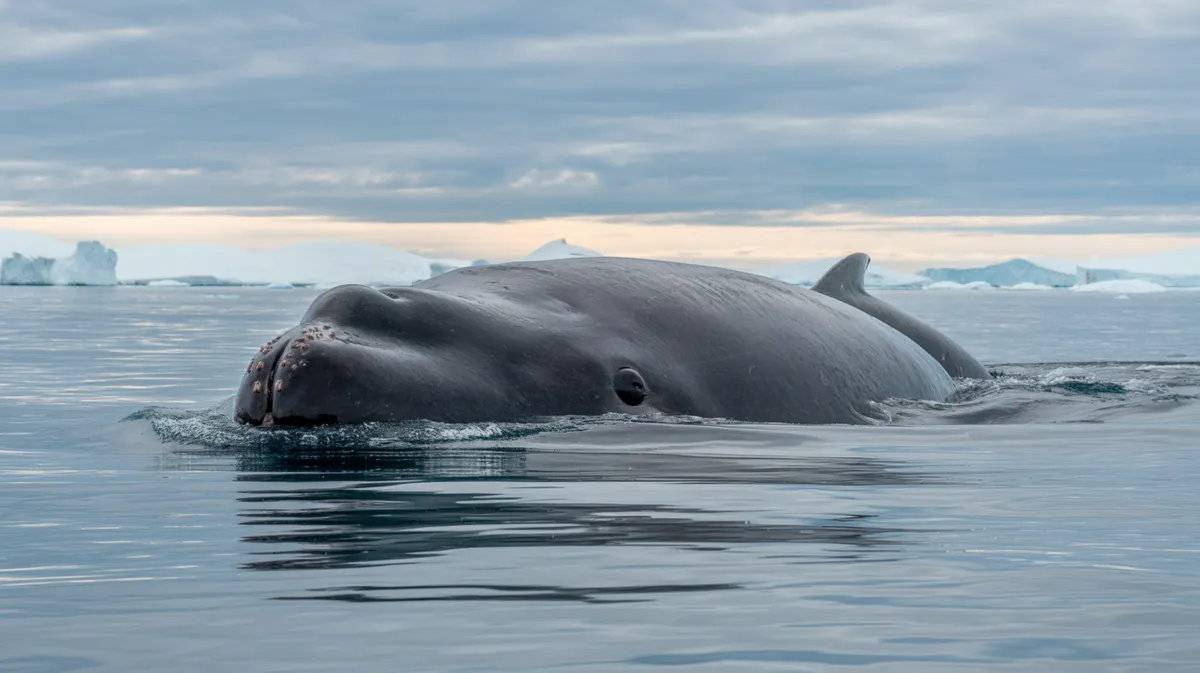
The bowhead whale is the longest-lived mammal on Earth. Stone and ivory harpoon points from the nineteenth century have been recovered from the blubber of living animals, and chemical dating of the lens of the eye has produced age estimates well beyond two hundred years, which means whales alive today were already swimming before the invention of the light bulb. It lives its entire life in Arctic waters, insulated by blubber that can approach half a metre thick — the thickest of any animal — and it does not migrate to warmer seas but instead breaks breathing holes upward through sea ice with a massive, reinforced, upward-curving skull. It has the largest mouth of any animal, filters plankton through baleen that can exceed four metres in length, and sings complex, changing songs beneath the ice. Its resistance to cancer and to ageing — a body that large should accumulate far more mutations than it does — has made its genome a serious object of study in longevity research.
Fascinating facts
Ice Breakers
Bowhead Whales can break sea ice over 60 cm (2 feet) thick with their powerful heads to create breathing holes.
Song Masters
They are known for producing complex and varied songs, which may serve as communication or mating displays.
Baleen Filters
Bowheads have up to 700 long baleen plates in their mouths, which they use to filter tiny prey like copepods and krill from the water.
Detailed description
The bowhead whale (Balaena mysticetus) is a large, robust baleen whale uniquely adapted to the Arctic and subarctic seas. Adults typically reach lengths of 14–18 meters (46–59 ft) and can weigh between 75 and 100 metric tons, with females generally larger than males. Its most distinctive feature is its massive, bow-shaped head, comprising up to 40% of its body length, and housing the largest mouth of any animal, equipped with up to 3 meters (10 ft) long baleen plates for efficient filter feeding. The bowhead has the thickest blubber layer of any whale, up to 50 cm (20 in) thick, providing insulation against freezing waters and energy storage. Its skin is dark with a white chin and lower jaw patch, and it lacks a dorsal fin, an adaptation for moving under ice. Bowheads are known for their vocalizations, which play a crucial role in communication and possibly navigation under ice. The species is highly social, often forming small groups, and exhibits complex behaviors such as breaching, spyhopping, and synchronized swimming. Bowhead whales are among the longest-lived mammals, with some individuals confirmed to be over 200 years old, as determined by aspartic acid racemization in eye lenses and traditional Inuit harpoon tips found in living whales. Their life history is characterized by slow growth, late maturity, and low reproductive rates, making population recovery from past whaling slow but steady.
Did you know?
Bowhead Whales are among the few mammals known to live over 200 years, with some confirmed individuals estimated at more than 211 years old.
Research & sources
Wikipedia summary
The bowhead whale, sometimes called the Greenland right whale, Arctic whale, and polar whale, is a species of baleen whale belonging to the family Balaenidae and is the only living representative of the genus Balaena. It is the only baleen whale endemic to the Arctic and subarctic waters, and is named after its characteristic massive triangular skull, which it uses to break through Arctic ice.
Behaviour & social structure
Bowhead whales are primarily migratory, following the advance and retreat of sea ice. They are slow swimmers, averaging 2–5 km/h (1–3 mph), but can reach bursts of 10 km/h when threatened. Feeding occurs mostly in shallow, ice-covered waters, where they use their enormous heads to break through ice up to 60 cm (24 in) thick to breathe. Bowheads are filter feeders, consuming zooplankton such as copepods, euphausiids, and amphipods by swimming with their mouths open and straining food through their baleen plates. Socially, they are observed in small pods of 2–6 individuals, though aggregations of up to 50 have been documented during feeding or migration. Vocalizations, including complex songs, are common, especially during the breeding season, and are believed to play a role in mate attraction and social cohesion. Bowheads also exhibit playful behaviors such as rolling, breaching, and rubbing against ice or each other, possibly for skin maintenance or social bonding.
Reproduction & life cycle
Bowhead whales exhibit a slow reproductive cycle. Females reach sexual maturity at 15–20 years of age, while males mature slightly later. Mating occurs primarily in late winter to early spring (March–May), often accompanied by increased vocalizations and physical displays. Gestation lasts approximately 13–14 months, with calves typically born in the spring (April–June) in areas of loose pack ice. Newborn calves are about 4–4.5 meters (13–15 ft) long and weigh around 1,000 kg (2,200 lbs). Calves nurse for 6–12 months, during which time the mother provides rich, fatty milk. Females give birth at intervals of 3–7 years, reflecting the species' slow reproductive rate. Parental care is extensive, with mothers closely attending to their calves for protection and guidance.
Adaptations & survival
Bowhead whales possess several unique adaptations for Arctic survival. Their thick blubber layer insulates them from extreme cold and provides energy reserves during periods of food scarcity. The massive, reinforced skull allows them to break through sea ice to access breathing holes. The absence of a dorsal fin reduces heat loss and enables easier movement under ice. Extremely long baleen plates (up to 3 meters) allow efficient filtration of small prey from large volumes of water. Bowheads have a highly developed sense of hearing, adapted for low-frequency sounds, which is essential for communication and navigation in the acoustically complex Arctic environment. Their blood has a high concentration of myoglobin, allowing them to store oxygen and remain submerged for up to 40 minutes.
Cultural significance
The bowhead whale holds profound cultural and spiritual importance for Indigenous Arctic peoples, particularly the Inuit, Chukchi, and Yupik. It is central to traditional subsistence hunting, which provides food, oil, and materials for tools and art. Bowhead hunting is accompanied by elaborate rituals and communal celebrations, reflecting respect for the animal and its role in sustaining Arctic communities. In mythology, the bowhead is often depicted as a wise, ancient being and a symbol of endurance and resilience in the harsh Arctic environment. The species also features in oral histories, songs, and carvings, underscoring its enduring significance.
Recent research
Recent research has focused on bowhead whale longevity, with studies confirming lifespans exceeding 200 years, making them the longest-lived mammals. Genomic analyses have identified genes associated with DNA repair and cancer resistance, providing insights into aging and disease resistance. Ongoing studies use satellite telemetry to track migration patterns and habitat use in response to climate change. Acoustic monitoring has revealed complex vocal repertoires and seasonal song variation, suggesting sophisticated communication and possibly cultural transmission of songs. Stable isotope and fatty acid analyses are used to assess diet and foraging ecology. Bowhead whales are also sentinel species for monitoring Arctic ecosystem health and the impacts of environmental change.
Videos
Habitat
Arctic Ocean and subarctic seas
 Polar Regions
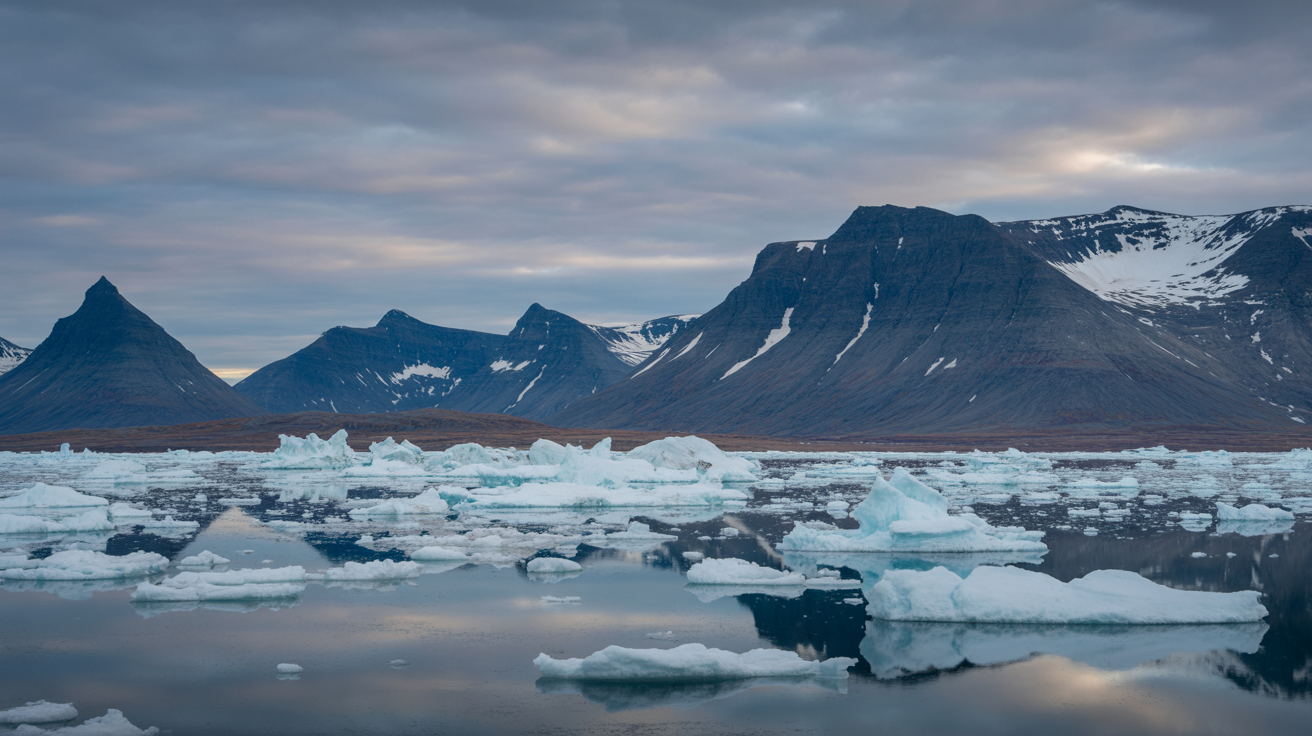
Arctic
Cold, frozen landscapes around the North Pole with specialized wildlife adapted to extreme cold.
 Polar and Subpolar Regions
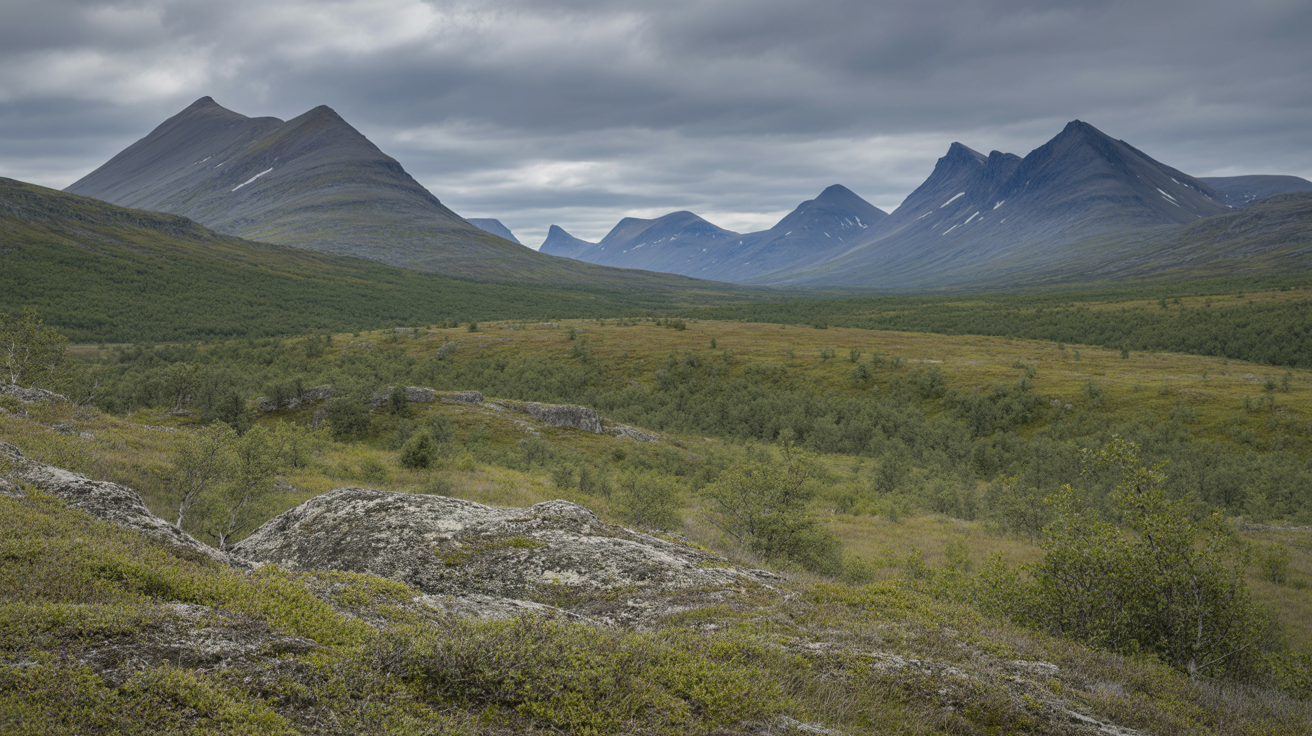
Tundra
Cold, treeless regions with permafrost supporting specialized cold-adapted wildlife.
 Global Waters
Ocean
Saltwater environments covering more than 70% of the Earth's surface, home to a vast variety of marine life.
Conservation
The Bowhead Whale is currently classified as Least Concern on the IUCN Red List.
Threats & challenges
Historically, bowhead whales were heavily targeted by commercial whalers from the 17th to early 20th centuries, leading to dramatic population declines. Today, the primary threats include climate change, which is reducing sea ice habitat and altering prey availability, and increased human activity in the Arctic, such as shipping, oil and gas exploration, and noise pollution. Although the global population has shown signs of recovery and is currently listed as Least Concern by the IUCN, some regional populations remain vulnerable. Entanglement in fishing gear and potential impacts from contaminants (e.g., heavy metals, persistent organic pollutants) are additional concerns. Indigenous subsistence hunting is regulated and generally considered sustainable, but ongoing monitoring is essential.
Taxonomy
Scientific name
Balaena mysticetus
- Kingdom
- Animalia
- Phylum
- Chordata
- Class
- Mammalia
- Order
- Cetacea
- Family
- Balaenidae
- Genus
- Balaena
- Species
- mysticetus
Community notes
Share your observations about the Bowhead Whale.
No community notes yet. Be the first!
Discover more wildlife
More fascinating animals from the encyclopedia.