
About the Bullet Ant
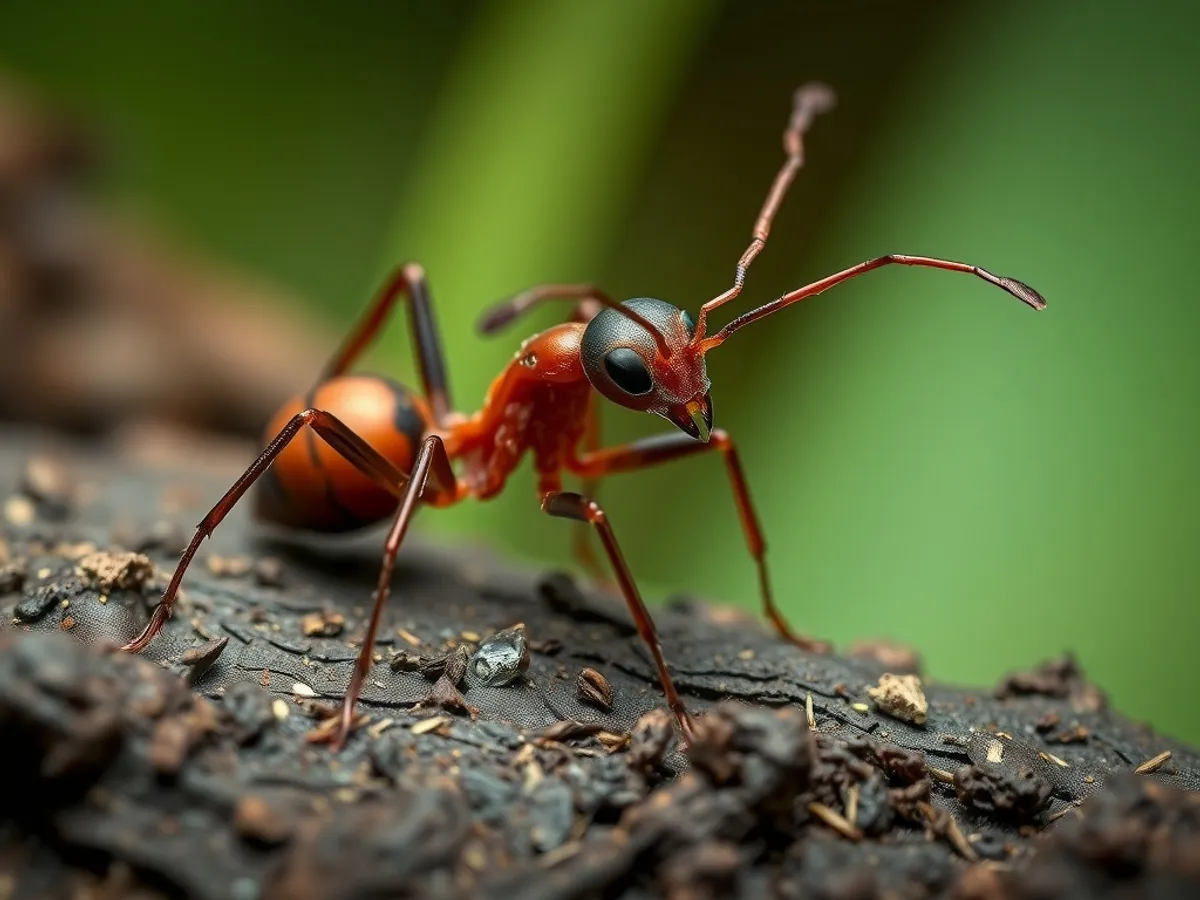
The bullet ant is named for a sting that people describe as being shot. It sits at the very top of the Schmidt sting pain index, and Justin Schmidt's own description — pure, intense, brilliant pain, like walking over flaming charcoal with a rusty nail in your heel — is the scale's maximum. The pain arrives in waves for up to twenty-four hours, accompanied by uncontrollable shaking, and the cause is poneratoxin, a neurotoxin that jams the sodium channels nerves use to reset between signals, so the nerve simply keeps firing. Among the Sateré-Mawé people of Brazil, initiation into manhood involves gloves woven full of bullet ants with the stingers turned inward, worn for minutes at a time, and endured many times over. The ant itself is large, forages alone in the rainforest canopy rather than in columns, and is not remotely aggressive — the sting is a defence of the nest, and it gives a warning first, stridulating and releasing a foul odour.
Fascinating facts
Powerful Sting
The bullet ant's sting ranks at the top of the Schmidt Sting Pain Index, causing intense pain that can last up to 24 hours.
Rainforest Resident
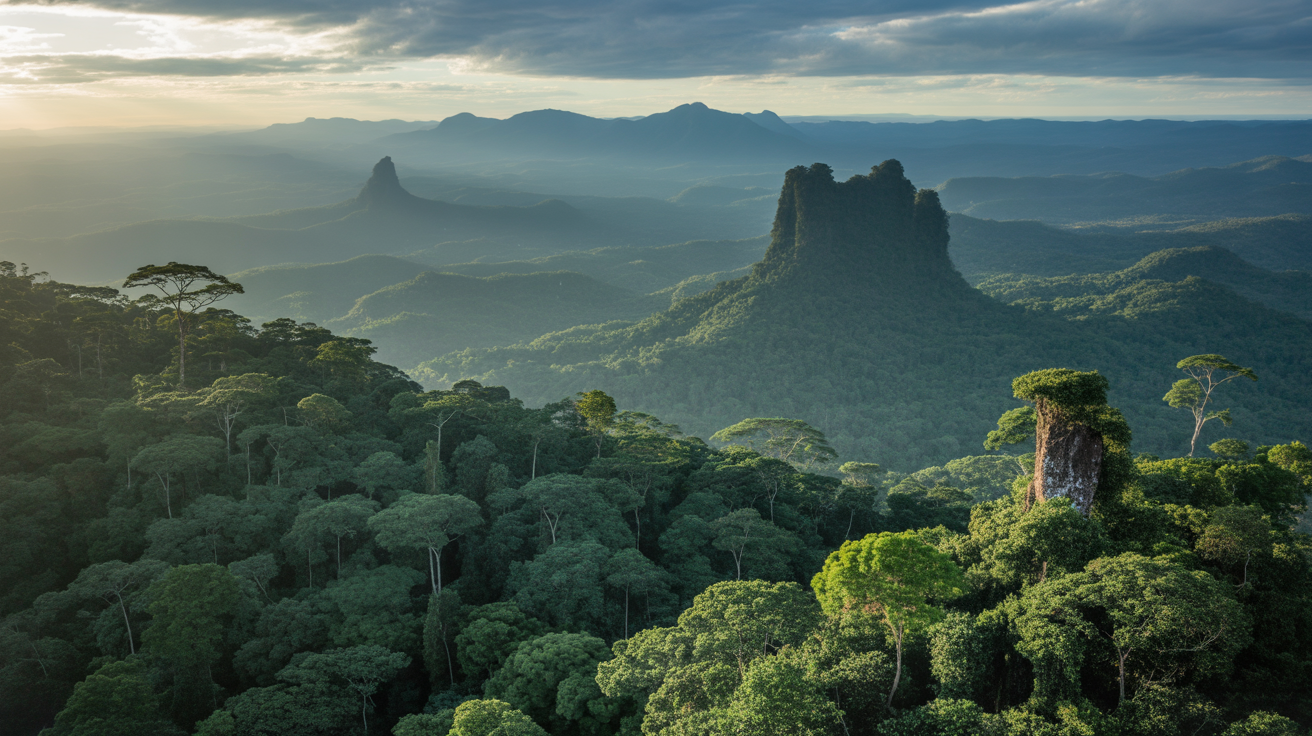
Bullet ants are commonly found in the lowland rainforests of Central and South America, especially in the Amazon Basin.
Omnivorous Diet
These ants feed on a combination of small insects, nectar, and plant sap, making them important contributors to the rainforest ecosystem.
Detailed description
Paraponera clavata, commonly known as the bullet ant, is a strikingly large ant species, with workers typically measuring 18–30 mm in length, making them among the largest ants in the world. Their bodies are robust, with a reddish-black coloration, powerful mandibles, and a conspicuous stinger at the tip of the abdomen. The exoskeleton is heavily sclerotized, providing protection against predators and environmental hazards. Bullet ants are primarily ground-dwelling but are also adept climbers, foraging both on the forest floor and in the lower canopy. Colonies are relatively small for ants, usually comprising 500–2,000 individuals, and are typically found nesting at the bases of large trees in humid lowland rainforests. The species is eusocial, with a clear division of labor between the queen, workers, and developing brood. Workers are responsible for foraging, nest defense, and brood care, while the queen is the sole reproductive female. Bullet ants are omnivorous, feeding on small arthropods, nectar, and plant exudates. Their most distinctive feature is their potent sting, which delivers a neurotoxic and proteinaceous venom that causes intense, long-lasting pain, widely regarded as the most painful insect sting known to humans. This sting serves both as a defense against predators and as a tool for subduing prey.
Did you know?
The pain from a bullet ant sting is so severe that it's been compared to being shot, which is how the ant got its common name.
Research & sources
Wikipedia summary
Paraponera clavata, commonly known as the bullet ant, is a species of ant known for its extremely painful sting. It inhabits humid lowland rainforests in Central and South America.
Behaviour & social structure
Bullet ants are primarily diurnal foragers, with peak activity occurring during early morning and late afternoon. Foraging workers travel singly or in small groups, often following established scent trails to food sources. They exhibit aggressive defensive behaviors, rapidly swarming and stinging perceived threats near the nest. Communication within the colony relies on a combination of pheromones and tactile signals, including stridulation (sound production by rubbing body parts) during alarm responses. Bullet ants are opportunistic feeders, preying on insects, spiders, and other small arthropods, as well as collecting nectar and sugary plant secretions. Cooperative brood care is observed, with workers tending to larvae and pupae in specialized nest chambers. Territoriality is pronounced, and inter-colony aggression can occur at nest boundaries. The species also exhibits mutualistic relationships with certain plants, protecting them from herbivores in exchange for food rewards.
Reproduction & life cycle
Reproduction in Paraponera clavata is characterized by a single, long-lived queen per colony. Nuptial flights typically occur at the onset of the rainy season, when winged males and virgin queens leave the nest to mate. After mating, males die, while fertilized queens shed their wings and seek suitable nesting sites. The queen establishes a new colony by laying eggs and rearing the first generation of workers alone. Eggs hatch in approximately 18–24 days, followed by a larval stage lasting 2–3 weeks and a pupal stage of similar duration. Workers exhibit alloparental care, feeding and grooming the brood. Colonies grow slowly, with the queen capable of living for several years. There is no fixed breeding season in equatorial regions, but reproductive activity may be synchronized with periods of increased rainfall and food availability.
Adaptations & survival
Bullet ants possess several remarkable adaptations for survival in the rainforest. Their large size and powerful mandibles enable them to subdue sizable prey and defend against predators. The venomous sting contains poneratoxin, a peptide neurotoxin that disrupts voltage-dependent sodium channels, causing intense pain and temporary paralysis in vertebrate attackers. The species' cryptic coloration and nocturnal nesting habits reduce predation risk. Chemosensory abilities are highly developed, facilitating efficient foraging and colony coordination. Bullet ants also exhibit behavioral flexibility, adjusting foraging strategies in response to environmental changes. Their mutualistic relationships with certain plants (myrmecophytes) provide both food and shelter, enhancing survival prospects.
Cultural significance
The bullet ant holds significant cultural importance among indigenous peoples of the Amazon, most notably the Satere-Mawe of Brazil, who use the ants in initiation rites. Young men undergo a ritual in which their hands are placed into gloves woven with live bullet ants, enduring repeated stings as a test of endurance and bravery. The pain is believed to confer strength and resilience. The bullet ant's sting has also entered popular culture as a benchmark for pain, featuring in scientific studies and media. In some regions, the ant is associated with folklore and is respected for its formidable defense.
Recent research
Recent research on Paraponera clavata has focused on the biochemical properties of its venom, particularly poneratoxin, which has potential applications in neuroscience and pain management. Studies have also explored the ant's complex social organization, communication systems, and mutualistic interactions with plants. Ongoing ecological research examines the species' role as both predator and prey within rainforest ecosystems, highlighting its importance in regulating arthropod populations. Advances in molecular genetics have provided insights into colony structure, reproductive strategies, and evolutionary relationships within the subfamily Ponerinae. The bullet ant continues to be a model organism for studying the evolution of eusociality and venom adaptation.
Videos
Habitat
Tropical rainforest

Conservation
The Bullet Ant is currently classified as Least Concern on the IUCN Red List.
Threats & challenges
Currently classified as Least Concern by the IUCN, Paraponera clavata faces localized threats from habitat destruction due to deforestation, agricultural expansion, and urbanization in Central and South America. Pesticide use and climate change may also impact populations by altering habitat structure and food availability. Despite these pressures, the species remains widespread and locally abundant in undisturbed rainforest habitats. There is little evidence of targeted exploitation or trade, though some collection occurs for scientific and educational purposes. Conservation of primary rainforest is critical for the long-term survival of bullet ant populations.
Taxonomy
Scientific name
Paraponera clavata
- Kingdom
- Animalia
- Phylum
- Arthropoda
- Class
- Insecta
- Order
- Hymenoptera
- Family
- Formicidae
- Genus
- Paraponera
- Species
- clavata
Where to see a bullet ant
1 zoo and aquarium in 1 country are recorded as keeping this species.
Community notes
Share your observations about the Bullet Ant.
No community notes yet. Be the first!
Discover more wildlife
More fascinating animals from the encyclopedia.