
About the Burmese Python
The Burmese python's invasion of the Everglades is the most complete mammal collapse ever recorded from an introduced predator. Road surveys comparing the same routes before and after the pythons established found raccoon sightings down 99.3 percent, opossums down 98.9 percent, bobcats down 87.5 percent, and marsh rabbits and foxes effectively gone from the core of the park. The snakes are almost impossible to find — they are cryptic, aquatic, and hide in sawgrass — so managers now use "scout snakes": radio-tagged males released in the breeding season, which lead researchers directly to large breeding females. The largest removed so far was a female of over 19 feet and 215 pounds, taken from Big Cypress in 2022. Physiologically the animal is a laboratory in itself. After swallowing a large meal, its intestines double in mass, its liver swells, and its heart grows by up to 40 percent within days — an extreme metabolic upregulation that makes the python a leading model for studying cardiac growth and organ plasticity.
Fascinating facts
Giant Among Snakes
Burmese pythons regularly reach lengths of 5 meters (16 feet), with some individuals exceeding 7 meters (23 feet).
Prolific Egg Layers
Females can lay between 50 to 100 eggs at a time, coiling around them to incubate and protect them until they hatch.
Aquatic Adaptations
These snakes are adept swimmers and can travel long distances in water, helping them colonize new habitats.
Detailed description
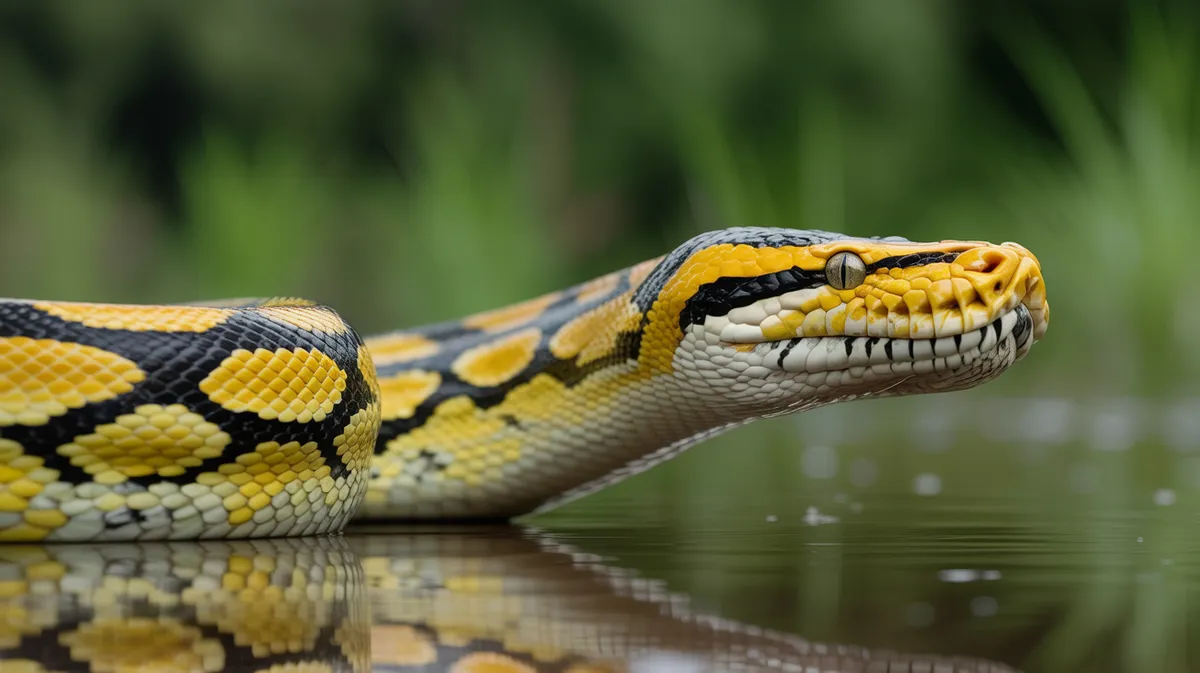
The Burmese python (Python bivittatus) is a massive, nonvenomous constrictor, ranking among the world’s largest snakes, with adults commonly reaching lengths of 3–5 meters (10–16 feet), and exceptional individuals exceeding 6 meters (nearly 20 feet) and weighing over 90 kg (200 lbs). Its robust, muscular body is covered in smooth scales with a distinctive pattern of dark brown blotches bordered by black on a tan or cream background, providing effective camouflage in dense vegetation. The head is wedge-shaped with heat-sensing pits along the upper lip, enabling detection of warm-blooded prey even in total darkness. Burmese pythons are primarily terrestrial but are excellent swimmers, capable of remaining submerged for up to 30 minutes. They are solitary and secretive, spending much of their time concealed in burrows, hollow logs, or dense undergrowth. Their diet consists mainly of mammals and birds, but larger individuals have been recorded preying on reptiles and even alligators. Burmese pythons are ambush predators, using their powerful bodies to constrict and suffocate prey before ingestion. Reproduction is oviparous, with females laying large clutches of eggs and exhibiting maternal brooding behavior by coiling around the eggs and shivering to regulate temperature. Their adaptability to diverse habitats, from forests and grasslands to agricultural areas and wetlands, has contributed to their success both in their native range and as invasive species elsewhere.
Did you know?
Despite their enormous size, Burmese pythons are capable climbers and will often ascend trees in search of food or shelter.
Research & sources
Wikipedia summary
The Burmese python is one of the largest species of snakes. It is native to a large area of Southeast Asia and is listed as Vulnerable on the IUCN Red List. Until 2009, it was considered a subspecies of the Indian python, but is now recognized as a distinct species. It is an invasive species in Florida as a result of the pet trade.
Behaviour & social structure
Burmese pythons are predominantly nocturnal, becoming most active at dusk and during the night. They are ambush hunters, remaining motionless for extended periods until suitable prey approaches. Using their acute sense of smell and heat-sensitive pits, they detect and strike at prey with remarkable speed. After constricting and suffocating their victim, they swallow it whole, often consuming prey as large as deer or pigs. Feeding is infrequent, sometimes only a few times per year, due to their slow metabolism. Social interactions are minimal outside of the breeding season, as these snakes are solitary by nature. During the dry season, they may aestivate in burrows to avoid desiccation. Invasive populations in Florida have demonstrated opportunistic feeding and altered activity patterns, sometimes becoming more diurnal.
Reproduction & life cycle
Burmese pythons reach sexual maturity at 2.5–4 years of age, with females generally maturing later and growing larger than males. Breeding occurs during the cooler months (typically November to March in their native range), triggered by seasonal temperature changes. Males locate females by following pheromone trails. Courtship involves tactile stimulation, and multiple males may compete for a single female. Females lay 12–36 eggs per clutch, though exceptionally large females may lay over 80. The eggs are deposited in hidden, humid locations, and the female coils around them, providing protection and using muscular contractions ('shivering thermogenesis') to maintain optimal incubation temperatures (31–32°C). Incubation lasts 60–80 days, after which hatchlings emerge fully independent and measuring 45–60 cm (18–24 inches) in length. There is no parental care after hatching.
Adaptations & survival
Burmese pythons possess several key adaptations for survival. Their cryptic coloration provides effective camouflage in varied habitats, aiding both predation and predator avoidance. The presence of labial heat-sensing pits allows them to detect endothermic prey in low-light conditions. Their jaws are highly flexible, with ligaments enabling them to swallow prey much larger than their head diameter. The digestive system is highly adaptable, with organs such as the heart and intestines increasing in size after feeding to accommodate large meals. Behavioral adaptations include the ability to swim long distances and climb trees when young. Females’ ability to thermoregulate eggs through shivering is a notable reproductive adaptation. Their tolerance for a wide range of habitats and diets has facilitated their spread as an invasive species.
Cultural significance
Burmese pythons hold cultural significance in several Southeast Asian societies. They are featured in local folklore and mythology, often symbolizing strength, transformation, or protection. In some regions, python meat is consumed as a delicacy, and their skins are used for leather products. Live pythons are sometimes kept as status symbols or for religious ceremonies, particularly in Buddhist traditions where snakes are associated with spiritual guardianship. The species’ docile temperament has made it popular in the global pet trade, though this has contributed to invasive populations and ecological concerns.
Recent research
Recent research has focused on the ecological impact of invasive Burmese pythons in Florida, revealing dramatic declines in mammal and bird populations within affected areas. Genetic studies have clarified the species’ distinction from the Indian python (Python molurus), supporting its classification as a separate species. Ongoing studies are examining their physiological adaptations to large, infrequent meals and their remarkable capacity for organ regeneration post-feeding. Conservation research in Southeast Asia is exploring population genetics, habitat requirements, and the effects of habitat fragmentation. Innovative tracking methods, such as radio telemetry and environmental DNA (eDNA) sampling, are being employed to monitor both native and invasive populations.
Sources
The Burmese Python is a New Species of Python from Southeast Asia
J. R. Burbrink, F. Kraus, et al. (2008)
scientificPython bivittatus: The IUCN Red List of Threatened Species 2012
Stuart, B., Nguyen, T.Q., Thy, N., Grismer, L., Chan-Ard, T., Iskandar, D., Golynsky, E., Lau, M.W.N.
conservationVideos
Habitat
Tropical and subtropical forests, grasslands, marshes, and swamps
 Various Continental Regions
Grassland
Open areas dominated by grasses rather than trees, supporting numerous herbivores and their predators.
 Global
Forest
Wooded areas with significant tree cover and diverse plant and animal communities.
 Global
Freshwater
Lakes, rivers, and wetlands with diverse aquatic ecosystems.
Conservation
The Burmese Python is currently classified as Vulnerable on the IUCN Red List.
Threats & challenges
In their native range, Burmese pythons face threats from habitat loss due to deforestation, wetland drainage, and agricultural expansion. They are also hunted for their skin, meat, and use in traditional medicine, as well as for the international pet trade. These pressures have contributed to population declines, leading to their Vulnerable status on the IUCN Red List. Invasive populations, particularly in the Florida Everglades, pose ecological threats by preying on native wildlife, including endangered species, and competing with native predators. Control and eradication efforts are ongoing but challenging due to the snake’s secretive nature and reproductive capacity. Disease, such as inclusion body disease (IBD), has also been reported in captive and wild populations.
Taxonomy
Scientific name
Python bivittatus
- Kingdom
- Animalia
- Phylum
- Chordata
- Class
- Reptilia
- Order
- Squamata
- Family
- Pythonidae
- Genus
- Python
- Species
- bivittatus
Where to see a burmese python
12 zoos and aquariums in 3 countries are recorded as keeping this species.
 Santa Barbara Zoological Gardens🇺🇸 Santa Barbara, United States
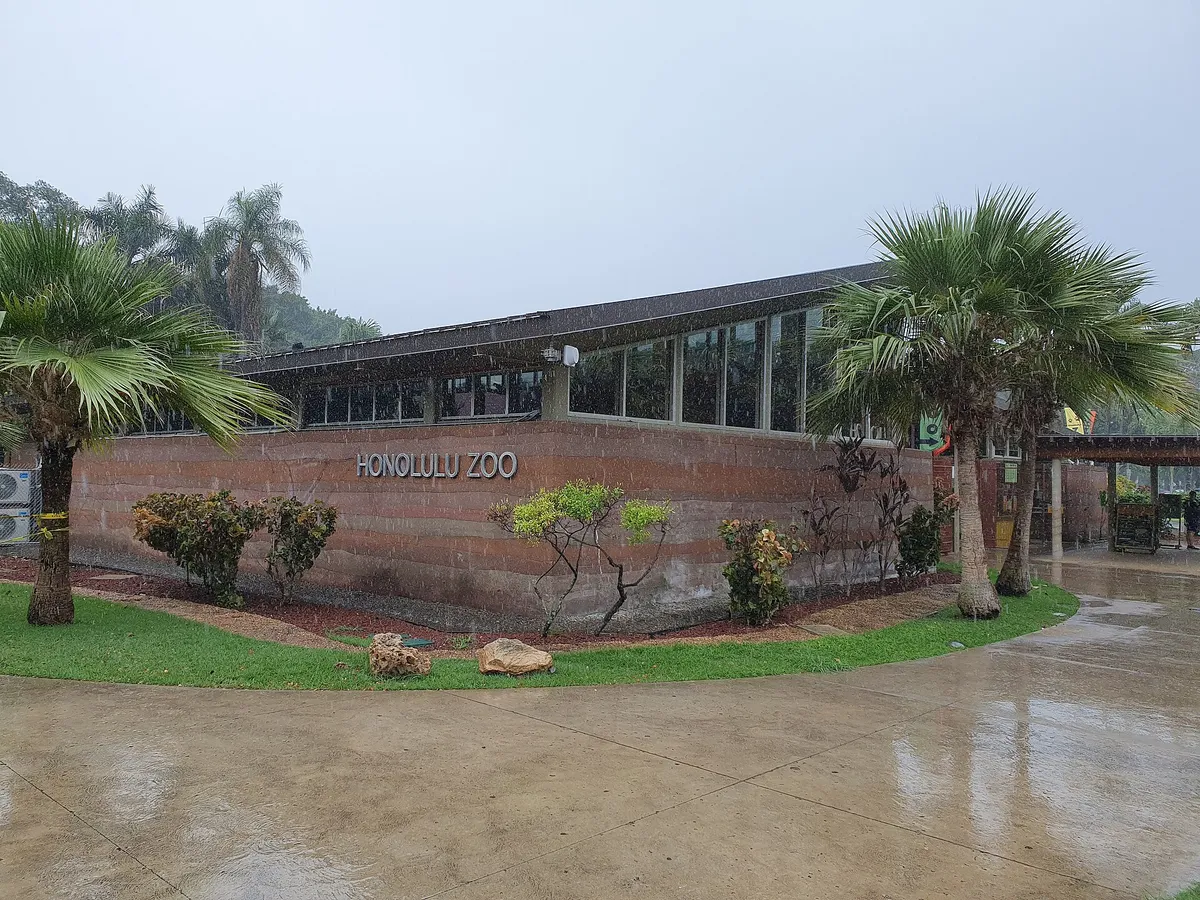 Honolulu Zoo🇺🇸 Honolulu, United States
 Brevard Zoo🇺🇸 Melbourne, United States
 Memphis Zoo🇺🇸 Memphis, United States
- 🦁Dakota Zoo🇺🇸 Bismarck, United States
Community notes
Share your observations about the Burmese Python.
No community notes yet. Be the first!
Discover more wildlife
More fascinating animals from the encyclopedia.