
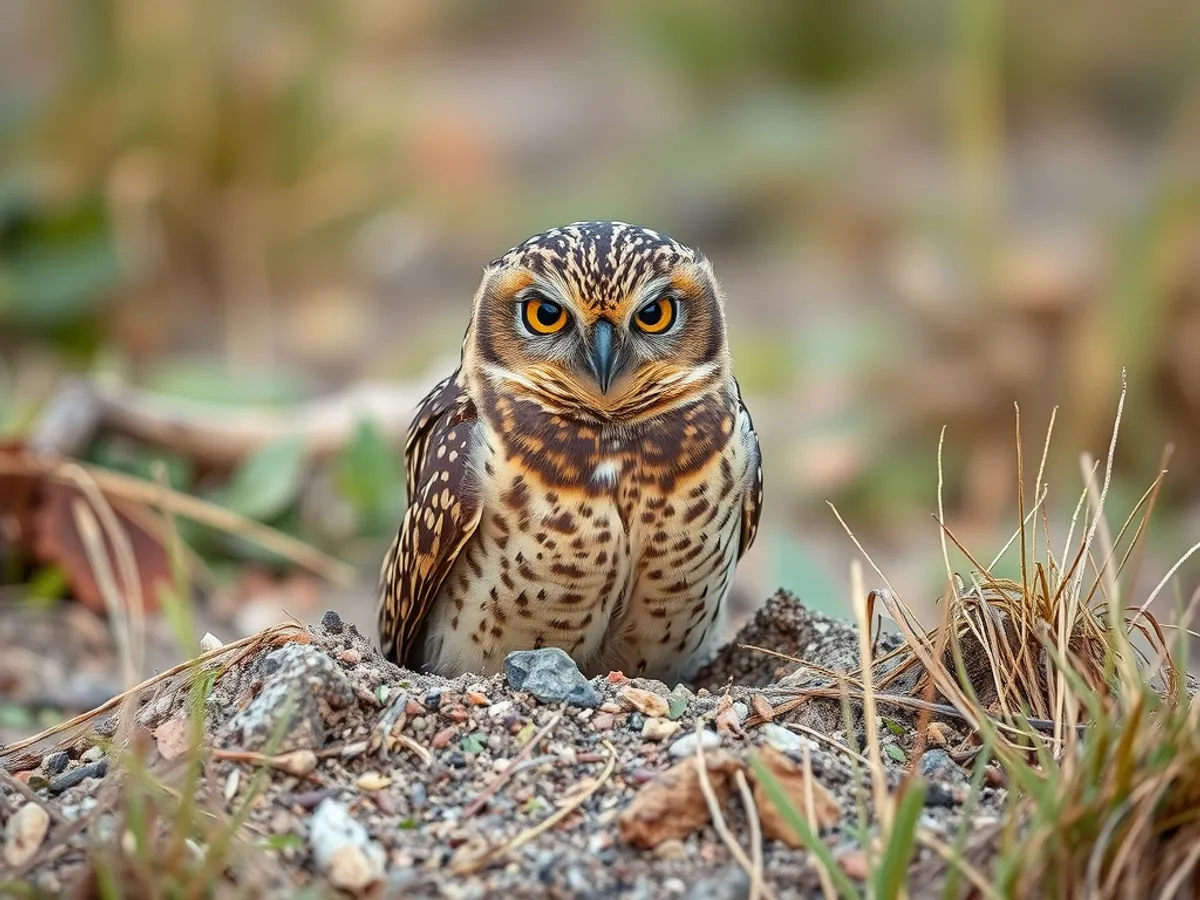
About the Burrowing Owl
The burrowing owl is an owl that lives in a hole in the ground, is active in daylight, and stands on absurdly long legs — every one of those is unusual for an owl. Across most of the western United States it does not dig, but moves into a burrow already excavated by prairie dogs or ground squirrels, which makes it a direct casualty of prairie dog eradication; the Florida subspecies digs its own. Its most remarkable behaviour is farming by proxy: it collects mammal dung and scatters it around the burrow entrance. A controlled experiment published in Nature in 2004 removed the dung from some burrows and found the owls that kept dung eaten ten times more dung beetles — the dung is bait, and the owl is fishing for insects with it. Its chicks have a second trick: threatened in the dark of the burrow, they produce a buzzing, rattling hiss that closely mimics a cornered rattlesnake, and it is widely interpreted as acoustic mimicry aimed at burrowing mammals that would recognise the sound.
Fascinating facts
Underground Homes
Burrowing Owls nest and roost in underground burrows, often taking over holes dug by mammals like prairie dogs or ground squirrels.
Daytime Hunters
Unlike most owls, Burrowing Owls are often active and hunt during daylight hours, particularly at dawn and dusk.
Creative Decorators
They sometimes place animal dung around their burrow entrances, which helps attract dung beetles—a favorite food—and may also deter predators.
Detailed description
The Burrowing Owl (Athene cunicularia) is a small, ground-dwelling owl, typically measuring 19–28 cm (7.5–11 in) in length with a wingspan of 50–61 cm (20–24 in), and weighing between 140–240 grams (5–8.5 oz). It is characterized by long legs, a rounded head lacking ear tufts, and bright yellow eyes. Its plumage is mottled brown and white, with a distinctive white 'eyebrow' and throat patch. Unlike most owls, it is primarily diurnal, being active during both day and night, though it tends to hunt more at dawn and dusk (crepuscular). Burrowing Owls are highly terrestrial, spending much of their time on the ground or perched on low posts. They are adept runners and can sprint short distances to capture prey or evade predators. Socially, they may nest in loose colonies, especially where burrow availability is high. Their vocalizations include a variety of calls, from soft coos to harsh alarm notes and a distinctive 'who-who' used in territorial displays. The species exhibits marked sexual monomorphism, with males and females similar in appearance, though females may appear slightly darker during the breeding season due to feather wear.
Did you know?
Unlike most owls, Burrowing Owls are often active during the day, especially during the early morning and late afternoon.
Research & sources
Wikipedia summary
The burrowing owl, also called the shoco, is a small, long-legged, primarily terrestrial—though not flightless—species of owl native to the open landscapes of North and South America. They are typically found in grasslands, rangelands, agricultural areas, deserts, or any other open, dry area with low vegetation. They nest and roost in burrows, and, despite their common name, do not often construct these dwellings themselves, rather repurposing disused burrows or tunnels previously excavated and inhabited by other species, such as American badgers, foxes, ground squirrels or prairie dogs, among others.
Behaviour & social structure
Burrowing Owls exhibit a diverse behavioral repertoire adapted to open habitats. They are opportunistic hunters, feeding primarily on insects (such as beetles, grasshoppers, and crickets), small mammals (mice, voles), reptiles, amphibians, and occasionally small birds. Hunting is typically done by walking, running, or short flights from a perch, and they may also hover briefly before pouncing. During the day, they often stand alert at the entrance of their burrow, scanning for predators and prey. They use a variety of vocalizations and body postures to communicate, including bobbing or bowing displays. When threatened, they may emit a rattlesnake-like hiss to deter intruders. Socially, Burrowing Owls may form loose colonies, particularly in areas with abundant burrows, and will sometimes share burrow systems with other species. They engage in sun-bathing and dust-bathing behaviors, which may help with parasite control.
Reproduction & life cycle
Breeding season varies geographically, typically occurring from March to August in North America and during the austral spring and summer in South America. Burrowing Owls are generally monogamous, with pairs forming long-term bonds. Courtship involves aerial displays, vocalizations, and mutual preening. Females lay 2–12 eggs (most commonly 6–8) in a nest chamber at the end of a burrow, which may be lined with dried grasses, feathers, and even animal dung (thought to mask scent and attract insects for food). Incubation lasts 28–30 days and is performed solely by the female, while the male provides food. After hatching, both parents feed the chicks, which fledge at 44–53 days old but may remain near the natal burrow for several weeks. Juvenile survival is highly variable and dependent on predation risk and food availability.
Adaptations & survival
Burrowing Owls have evolved several unique adaptations for their terrestrial lifestyle. Their long legs facilitate running and sprinting after prey, as well as providing a better field of view above low vegetation. Their plumage provides excellent camouflage against the soil and grasses of their habitat. They possess a high tolerance for heat and aridity, often being active during the hottest parts of the day. The use of burrows offers protection from predators and extreme weather. Behavioral adaptations include the use of animal dung to attract insects and mask their scent, and a rattlesnake-mimicking hiss to deter mammalian predators. Their vision is adapted for both day and night activity, with a high density of rod and cone cells in the retina.
Cultural significance
Burrowing Owls hold cultural significance in various regions. In the Caribbean, particularly Aruba, the 'shoco' is a national symbol and features on the island's currency and stamps. In Native American folklore, owls are often associated with wisdom, prophecy, or, in some cases, omens. The Burrowing Owl's unusual diurnal habits and ground-dwelling behavior have made it a subject of fascination and local myth. Conservation efforts in some areas have leveraged its charismatic appeal to promote habitat protection and environmental education.
Recent research
Recent research has focused on the Burrowing Owl's use of urban and agricultural landscapes, revealing a degree of adaptability to modified environments, provided burrows and prey remain available. Studies using GPS and radio telemetry have improved understanding of their dispersal, migration, and habitat use. Genetic analyses indicate significant subspecific variation across its range, with up to 20 recognized subspecies. Research into their vocalizations and anti-predator behaviors has highlighted the complexity of their communication and mimicry strategies. Conservation studies have examined the effectiveness of artificial burrows and habitat restoration in supporting declining populations.
Videos
Habitat
Grasslands, prairies, deserts, and open scrublands
 Arid Regions
Desert
Arid lands with minimal rainfall, extreme temperatures, and specialized wildlife adapted to harsh conditions.
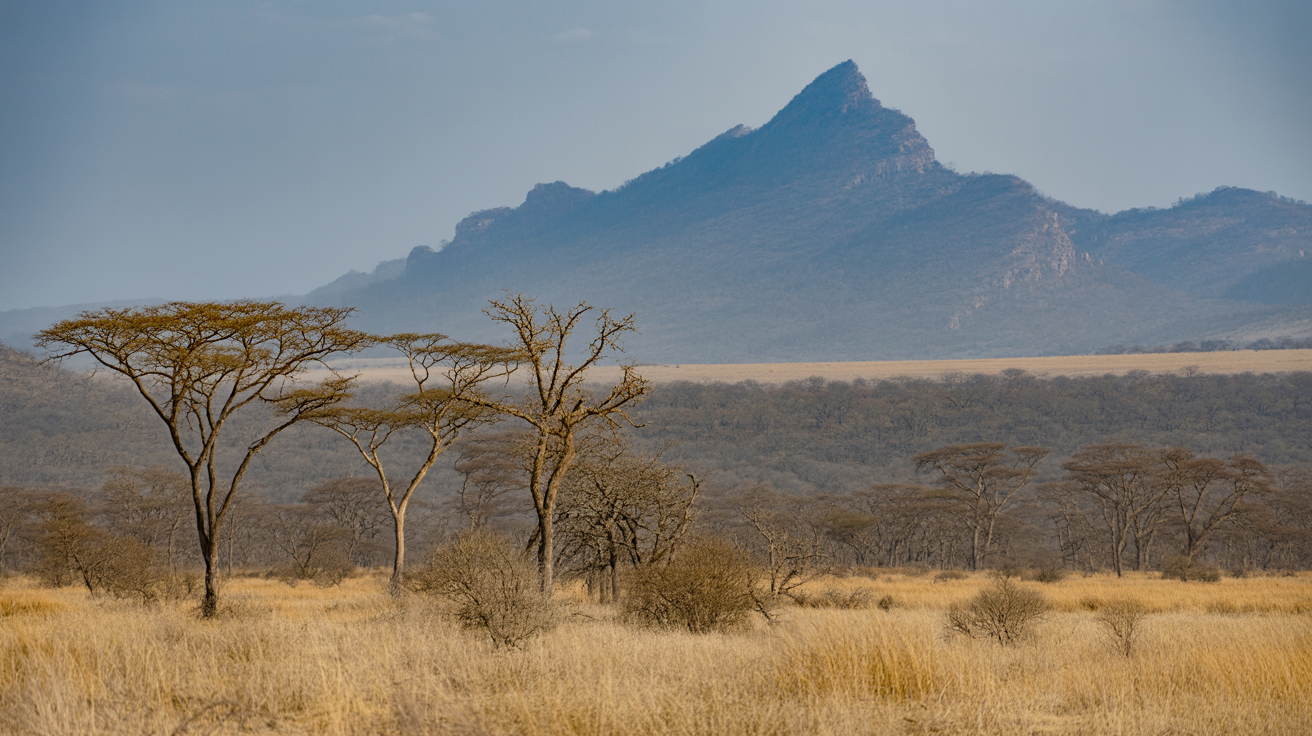 Africa
Savanna
Grasslands with scattered trees, characterized by seasonal rainfall and home to diverse grazing animals and predators.
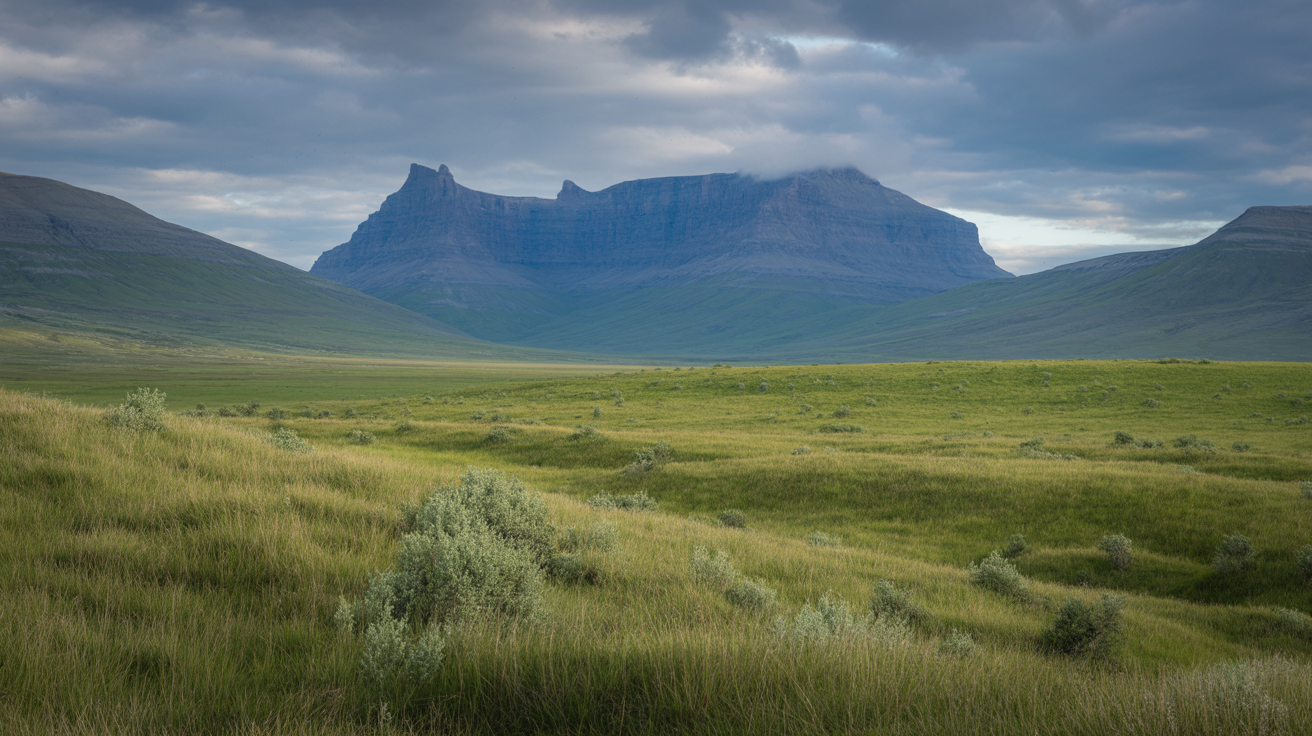 Various Continental Regions
Grassland
Open areas dominated by grasses rather than trees, supporting numerous herbivores and their predators.
Conservation
The Burrowing Owl is currently classified as Least Concern on the IUCN Red List.
Threats & challenges
Although classified as Least Concern globally, Burrowing Owls face significant localized threats. Habitat loss and fragmentation due to agriculture, urbanization, and land conversion are primary concerns, as these activities reduce the availability of suitable burrows and foraging grounds. The widespread eradication of burrowing mammals (such as prairie dogs) further limits nesting sites. Pesticide use can reduce prey abundance and cause secondary poisoning. Road mortality, predation by domestic animals, and disturbance from human activities also pose risks. Some populations, particularly in Canada and parts of the United States, have experienced significant declines and are considered threatened or endangered at the regional level.
Taxonomy
Scientific name
Athene cunicularia
- Kingdom
- Animalia
- Phylum
- Chordata
- Class
- Aves
- Order
- Strigiformes
- Family
- Strigidae
- Genus
- Athene
- Species
- cunicularia
Where to see a burrowing owl
7 zoos and aquariums in 3 countries are recorded as keeping this species.
 Calgary Zoo🇨🇦 Calgary, Canada
- 🦁Charles Paddock Zoo🇺🇸 Atascadero, United States
 Sacramento Zoo🇺🇸 Sacramento, United States
 Tierpark und Fossilium Bochum🇩🇪 Bochum, Germany
- 🦁Salisbury Zoo🇺🇸 United States
Community notes
Share your observations about the Burrowing Owl.
No community notes yet. Be the first!
Discover more wildlife
More fascinating animals from the encyclopedia.