
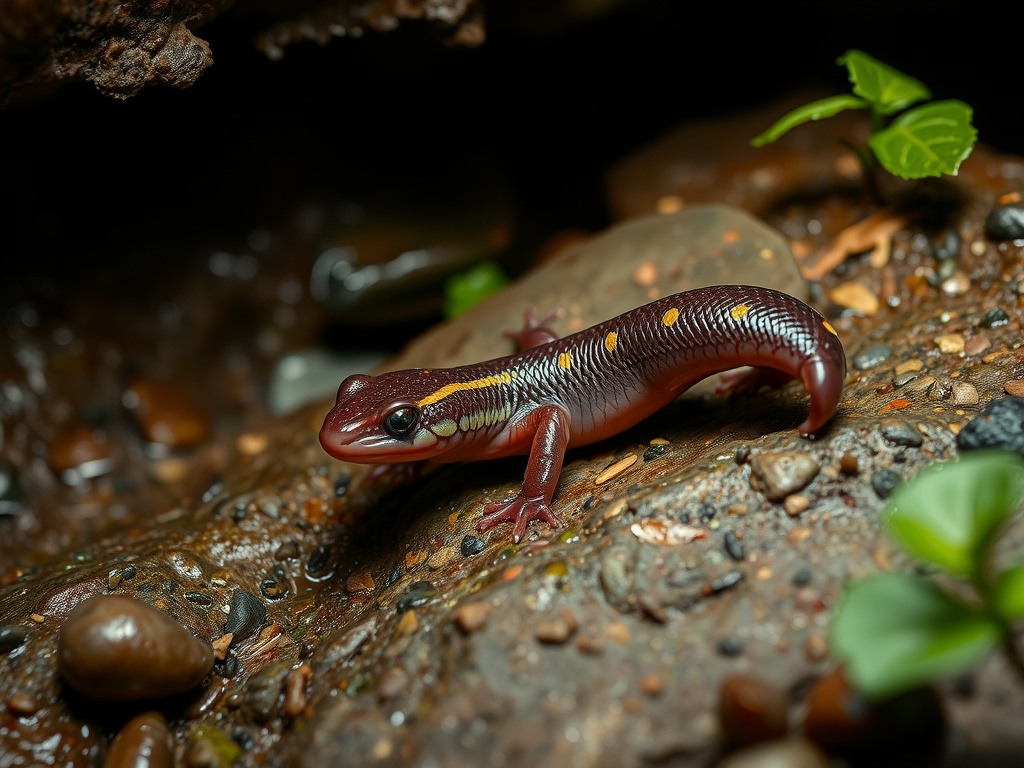
About the Cave Salamander
The Cave Salamander is a slender, brightly colored amphibian known for its striking orange to reddish body adorned with scattered black spots. Native to the eastern and central United States, it thrives in moist, rocky environments, particularly near cave entrances and limestone crevices. This salamander is highly adapted to the low-light, humid conditions found in caves, but it can also be found in forests near streams and springs. Its long limbs and tail aid in climbing and navigating the rugged terrain of its habitat, and it is primarily nocturnal, emerging at night to hunt for small invertebrates.
Fascinating facts
Expert Climbers
Cave Salamanders possess long limbs and slender toes, allowing them to expertly navigate and climb the rocky crevices of their habitats.
Brightly Colored
Their vibrant orange or red bodies with black spots make them one of the most visually striking salamanders in North America.
Not Strictly Troglobitic
Unlike true cave-dwellers, Cave Salamanders frequently venture outside caves, especially during rainy periods to forage.
Detailed description
The Cave Salamander (Eurycea lucifuga) is a slender, medium-sized plethodontid amphibian, typically measuring between 10 and 18 cm in total length, with a laterally compressed tail that accounts for nearly half its length. Its skin is smooth and moist, exhibiting a vivid orange to reddish coloration, heavily marked with irregular black spots, providing camouflage among leaf litter and rocky substrates. The species possesses large, prominent eyes adapted for low-light environments, reflecting its crepuscular and nocturnal activity patterns. Limbs are long and agile, with well-developed toes that facilitate climbing on wet, vertical surfaces within caves and rocky outcrops. Unlike many other cave-dwelling salamanders, E. lucifuga retains full pigmentation and functional eyesight, as it often inhabits the twilight zones of caves rather than deep, aphotic regions. Its lungs are absent, as with all plethodontids, and respiration occurs entirely through the skin and buccal cavity, necessitating consistently moist microhabitats. The Cave Salamander is primarily solitary, except during the breeding season, and exhibits secretive behavior, often hiding under rocks or within crevices during the day. Its diet consists mainly of small arthropods and other invertebrates, which it captures using a projectile tongue. The species is an important ecological indicator, sensitive to changes in water quality and habitat disturbance.
Did you know?
Unlike many cave-dwelling animals, the Cave Salamander retains normal eyesight and pigmentation throughout its life.
Research & sources
Wikipedia summary
A cave salamander is a type of salamander that primarily or exclusively inhabits caves, a group that includes several species. Some of these animals have developed special, even extreme, adaptations to their subterranean environments. Some species have only rudimentary eyes. Others lack pigmentation, rendering them a pale yellowish or pinkish color.
Behaviour & social structure
Eurycea lucifuga is predominantly nocturnal, emerging from shelter at dusk to forage along cave walls, moist forest floors, and stream banks. It uses both visual and chemosensory cues to locate prey, including insects, spiders, springtails, and other small invertebrates. The salamander employs a sit-and-wait strategy or slow, deliberate movements to ambush prey, extending its sticky tongue rapidly to capture food. Social interactions are minimal outside of the breeding season, with individuals maintaining small, overlapping home ranges. When threatened, the Cave Salamander may exhibit tail autotomy (voluntary tail loss) as a defense mechanism, distracting predators and allowing escape. It is highly sensitive to desiccation and rarely ventures far from moist refuges. During periods of drought or cold, individuals may enter a state of torpor, reducing metabolic activity until favorable conditions return.
Reproduction & life cycle
Breeding in Eurycea lucifuga typically occurs in late autumn or early spring, depending on local climate and water availability. Courtship involves a series of tactile and chemical cues, with males performing a tail-straddling walk to guide females over deposited spermatophores. Fertilization is internal, as the female picks up the spermatophore with her cloaca. Females lay clutches of 20–90 eggs in moist, protected crevices within caves or under rocks near streams. The eggs are attached singly or in small clusters and are guarded by the female for several weeks, a behavior that reduces predation and fungal infection. Embryonic development lasts 2–3 months, after which aquatic larvae hatch and remain in water for 6–18 months, depending on environmental conditions. Metamorphosis into terrestrial juveniles is completed when larvae reach approximately 30–40 mm in length. Parental care is limited to egg guarding; post-hatching, juveniles are independent.
Adaptations & survival
Key adaptations of E. lucifuga include its elongated limbs and prehensile tail, which enable efficient climbing in complex, vertical cave environments. Its large eyes enhance visual sensitivity in dim light, while chemoreceptors in the snout aid in detecting prey and conspecifics. The absence of lungs and reliance on cutaneous respiration is an adaptation to the consistently humid microclimate of caves and riparian zones. Skin secretions may deter some predators and help maintain skin moisture. Unlike many obligate cave salamanders, E. lucifuga retains pigmentation and normal eye development, reflecting its use of both cave entrances and adjacent terrestrial habitats. Its reproductive strategy, including egg guarding, increases offspring survival in the relatively stable but resource-limited cave environment.
Cultural significance
Eurycea lucifuga has played a modest role in regional folklore, sometimes referred to as the 'cave puppet' by early settlers in Kentucky. Its presence in caves has contributed to local myths about mysterious underground creatures. The species is of scientific importance as one of the first North American cave salamanders described and has been used as a model organism in studies of cave adaptation, amphibian ecology, and environmental monitoring. It holds no known traditional medicinal or economic uses but is valued by naturalists and conservationists for its role as an indicator of ecosystem health.
Recent research
Recent research on Eurycea lucifuga has focused on its population genetics, revealing moderate genetic differentiation among populations, likely due to limited dispersal between isolated cave systems. Studies have examined its microhabitat preferences, demonstrating a reliance on specific humidity and temperature ranges. Investigations into its reproductive ecology have highlighted the importance of stable cave environments for successful egg development. Ongoing research is assessing the impacts of emerging amphibian diseases, such as chytridiomycosis, though E. lucifuga appears less susceptible than some sympatric species. The species has also been included in broader studies of plethodontid lungless salamanders to understand evolutionary pathways of cave adaptation.
Videos
Habitat
Caves, rocky forests near streams and springs
 Elevated Terrain
Mountain
High-altitude environments with varying climates and specialized wildlife adapted to rugged terrain and thin air.
 Global
Forest
Wooded areas with significant tree cover and diverse plant and animal communities.
 Global
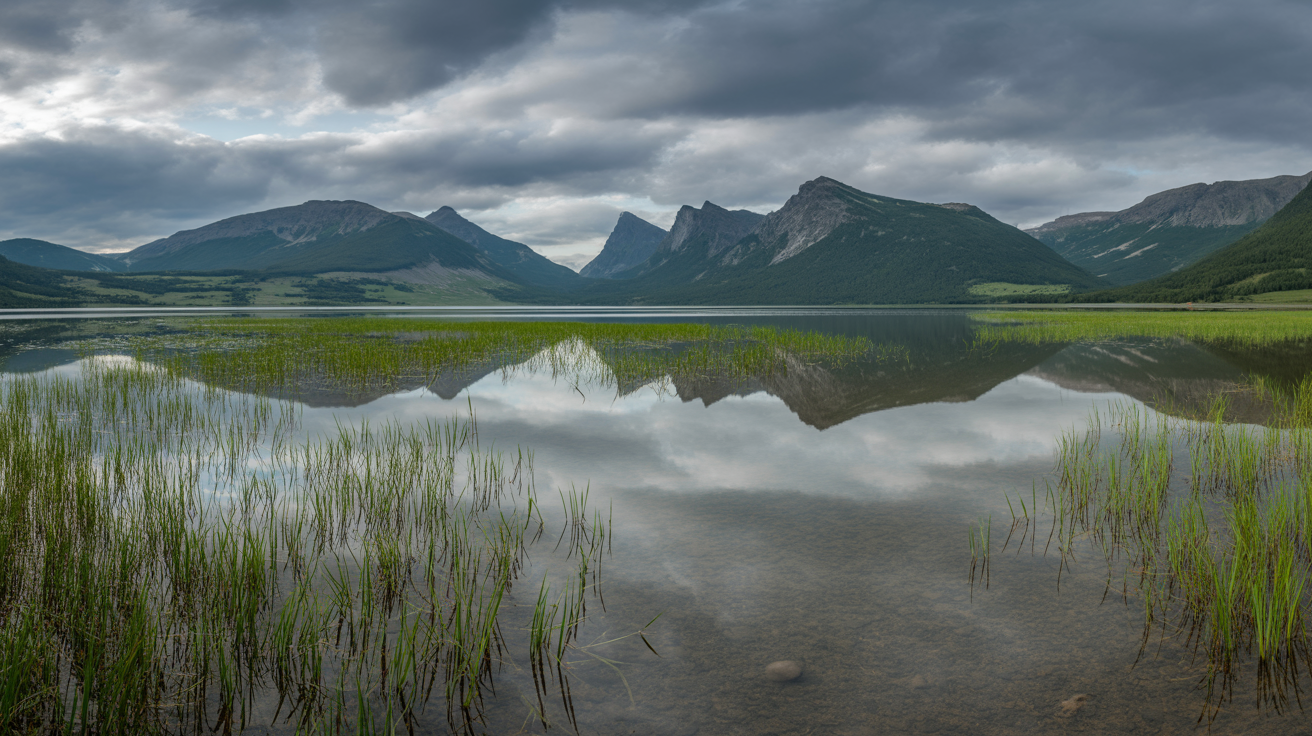
Freshwater
Lakes, rivers, and wetlands with diverse aquatic ecosystems.
Conservation
The Cave Salamander is currently classified as Least Concern on the IUCN Red List.
Threats & challenges
While currently listed as Least Concern, Eurycea lucifuga faces several localized threats, including habitat destruction from quarrying, deforestation, and urban development, which can degrade cave and stream habitats. Water pollution from agricultural runoff, pesticides, and sedimentation poses significant risks, as the species is highly sensitive to changes in water quality. Human disturbance of caves, such as recreational caving and vandalism, can disrupt breeding sites and microhabitats. Climate change may alter hydrological regimes, affecting the availability of moist refuges critical for survival. Despite these challenges, populations remain stable across much of the range, but continued monitoring is essential due to the species’ ecological sensitivity.
Taxonomy
Scientific name
Eurycea lucifuga
- Kingdom
- Animalia
- Phylum
- Chordata
- Class
- Amphibia
- Order
- Caudata
- Family
- Plethodontidae
- Genus
- Eurycea
- Species
- lucifuga
Community notes
Share your observations about the Cave Salamander.
No community notes yet. Be the first!
Discover more wildlife
More fascinating animals from the encyclopedia.