
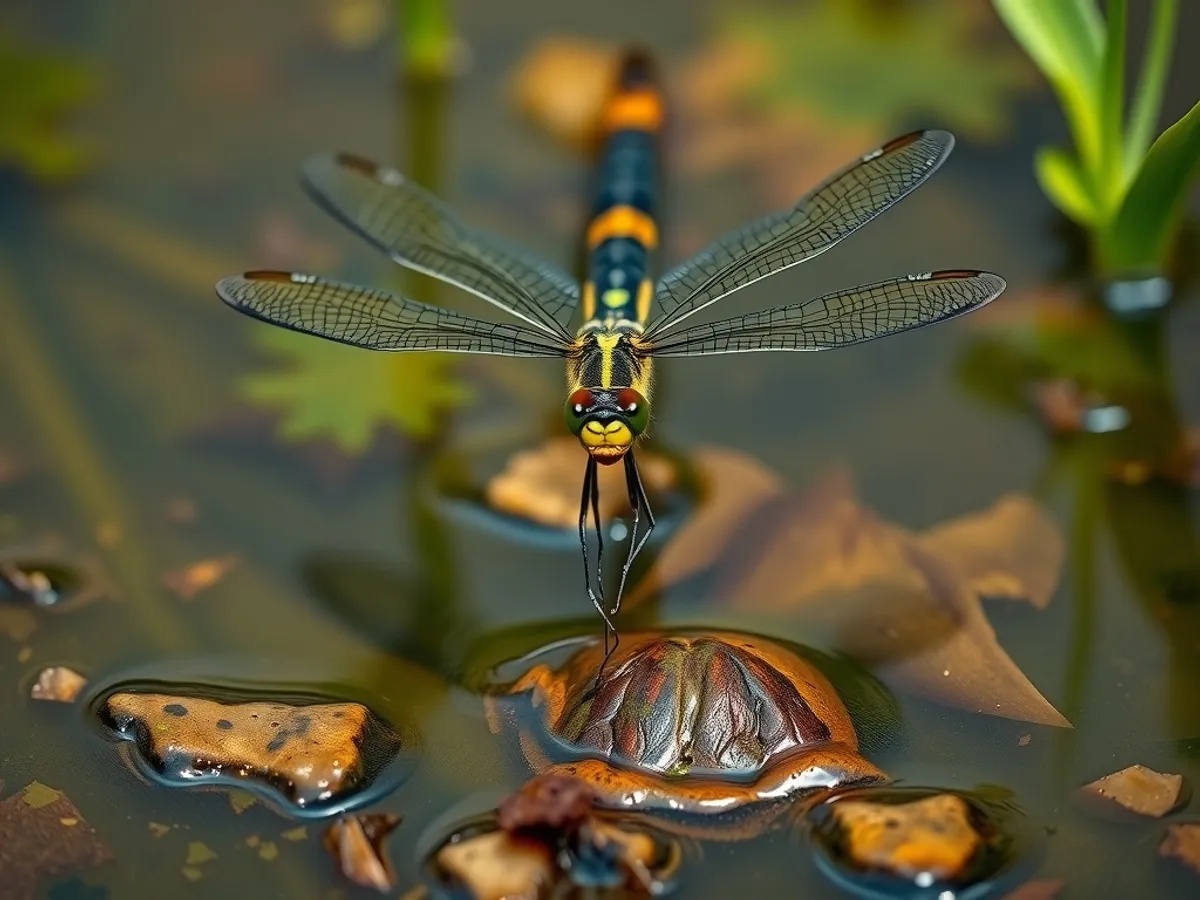
About the Emperor Dragonfly
The Emperor Dragonfly is one of the largest and most striking dragonflies in Europe, easily recognized by its vibrant blue abdomen and bright green thorax. Males are particularly colorful, while females display a greener hue overall. These agile fliers are often seen patrolling over ponds, lakes, and slow-moving rivers, where they catch prey mid-air with impressive speed and precision. Their formidable hunting abilities and territorial nature make them apex aerial predators among insects. The Emperor Dragonfly plays an important ecological role as both predator and prey in freshwater habitats.
Fascinating facts
Master Hunter
Emperor Dragonflies catch and eat other flying insects, including butterflies, moths, and even other dragonflies, using their legs to form a basket mid-flight.
Aquatic Beginnings
The larvae, called nymphs, live underwater for up to two years and are voracious predators of tadpoles, small fish, and aquatic insects.
Spectacular Metamorphosis
When ready to transition to adulthood, the nymph crawls out of the water and molts, emerging as a fully-formed dragonfly capable of flight within hours.
Detailed description
The Emperor Dragonfly (Anax imperator) is among the largest dragonflies in Europe, with adults typically measuring 66–84 mm in body length and boasting a wingspan of 100–110 mm. Males are distinguished by their vivid sky-blue abdomens marked with a prominent black dorsal stripe, while females are generally greener with similar patterning. The thorax is bright green in both sexes, and the eyes are large, hemispherical, and blue-green, providing exceptional visual acuity. The wings are clear with a subtle amber tint at the base and are held horizontally at rest. The robust, elongated abdomen and powerful thoracic muscles enable rapid, agile flight, allowing the species to hover, dart, and even fly backward. Nymphs (larvae) are aquatic, heavily armored, and predatory, growing up to 50 mm before emerging. Adults are highly territorial, with males patrolling defined stretches of water and aggressively repelling rivals. The species is univoltine, producing one generation per year, and adults are most active from late spring through early autumn. Their presence is often an indicator of healthy, well-vegetated freshwater habitats.
Did you know?
Despite their fierce appearance, Emperor Dragonflies are harmless to humans and do not sting or bite.
Research & sources
Wikipedia summary
The emperor dragonfly or blue emperor is a large species of hawker dragonfly of the family Aeshnidae. It is the largest dragonfly in most of Europe, including the United Kingdom, although exceeded in some areas by other species.
Behaviour & social structure
Emperor Dragonflies are solitary and highly territorial, especially males, which patrol and defend linear territories along the margins of ponds, lakes, and slow-flowing rivers. They are diurnal, with peak activity during warm, sunny conditions. Hunting is performed on the wing; they capture a wide variety of flying insects, including other dragonflies, damselflies, butterflies, bees, and even small moths. Prey is seized with their spiny legs and consumed mid-flight. Males spend much of the day in continuous flight, rarely perching except in poor weather or at night. Females are more secretive, often staying near dense vegetation except when ovipositing. Both sexes use visual cues for navigation and prey detection, relying on their acute compound eyes. Social interactions are limited to brief, often aggressive encounters between males and short mating events.
Reproduction & life cycle
Breeding occurs from May to August, with males establishing and defending territories to attract females. Mating takes place in flight, forming the characteristic 'wheel' position typical of Odonata. Copulation is brief, lasting several minutes. After mating, females lay eggs (oviposit) singly into submerged or emergent aquatic vegetation, often away from the territories of males to avoid harassment. Each female may lay several hundred eggs over her lifespan. The eggs hatch after 2–5 weeks, depending on water temperature. The aquatic nymphal stage lasts 1–2 years, during which the larvae are voracious predators. They undergo multiple molts before emerging as adults, typically at night or early morning, climbing out of the water to complete metamorphosis. There is no parental care after oviposition.
Adaptations & survival
Anax imperator exhibits several adaptations for predation and survival. The adults' large, multifaceted eyes provide nearly 360-degree vision, essential for detecting prey and rivals. Their powerful, direct flight muscles and aerodynamic body shape allow for high-speed chases, rapid acceleration, and agile maneuvers. The legs are equipped with spines, forming a basket to snatch prey in flight. Larvae possess extendable, hinged lower jaws (labium) for ambushing aquatic prey. Both life stages are cryptically colored to avoid predators. Adults' territoriality ensures optimal access to breeding sites and food resources. The ability to tolerate a range of freshwater habitats, including artificial ponds, enhances their resilience.
Cultural significance
Dragonflies, including Anax imperator, have long been symbols of agility, transformation, and adaptability in various European cultures. They are often associated with summer and healthy wetlands. In folklore, dragonflies were sometimes viewed with superstition, but modern appreciation emphasizes their role as beneficial predators of pest insects. They are popular subjects in nature photography and environmental education, serving as flagship species for wetland conservation.
Recent research
Recent research on Anax imperator has focused on its expanding range in response to climate change, with documented northward movements in the UK and Scandinavia. Studies have examined its role as a top invertebrate predator in freshwater ecosystems, influencing community structure and biodiversity. Molecular analyses have clarified its phylogenetic relationships within the Aeshnidae. Ongoing research includes the impact of water quality on larval development and the use of dragonflies as bioindicators for wetland health.
Videos
Habitat
Freshwater ponds, lakes, and slow-moving rivers with abundant vegetation
 Various Continental Regions
Grassland
Open areas dominated by grasses rather than trees, supporting numerous herbivores and their predators.
 Global
Forest
Wooded areas with significant tree cover and diverse plant and animal communities.
 Global
Freshwater
Lakes, rivers, and wetlands with diverse aquatic ecosystems.
Conservation
The Emperor Dragonfly is currently classified as Least Concern on the IUCN Red List.
Threats & challenges
Currently assessed as Least Concern by the IUCN, the Emperor Dragonfly faces localized threats from habitat loss, water pollution, and the drainage or eutrophication of wetlands. The use of pesticides and herbicides can impact both larvae and adult populations. Climate change may alter the distribution and phenology of the species, but it has also enabled range expansion northward in recent decades. Invasive aquatic plants and fish can disrupt larval habitats. Despite these challenges, the species remains widespread and adaptable, with stable or increasing populations in much of its range.
Taxonomy
Scientific name
Anax imperator
- Kingdom
- Animalia
- Phylum
- Arthropoda
- Class
- Insecta
- Order
- Odonata
- Family
- Aeshnidae
- Genus
- Anax
- Species
- imperator
Where to see an emperor dragonfly
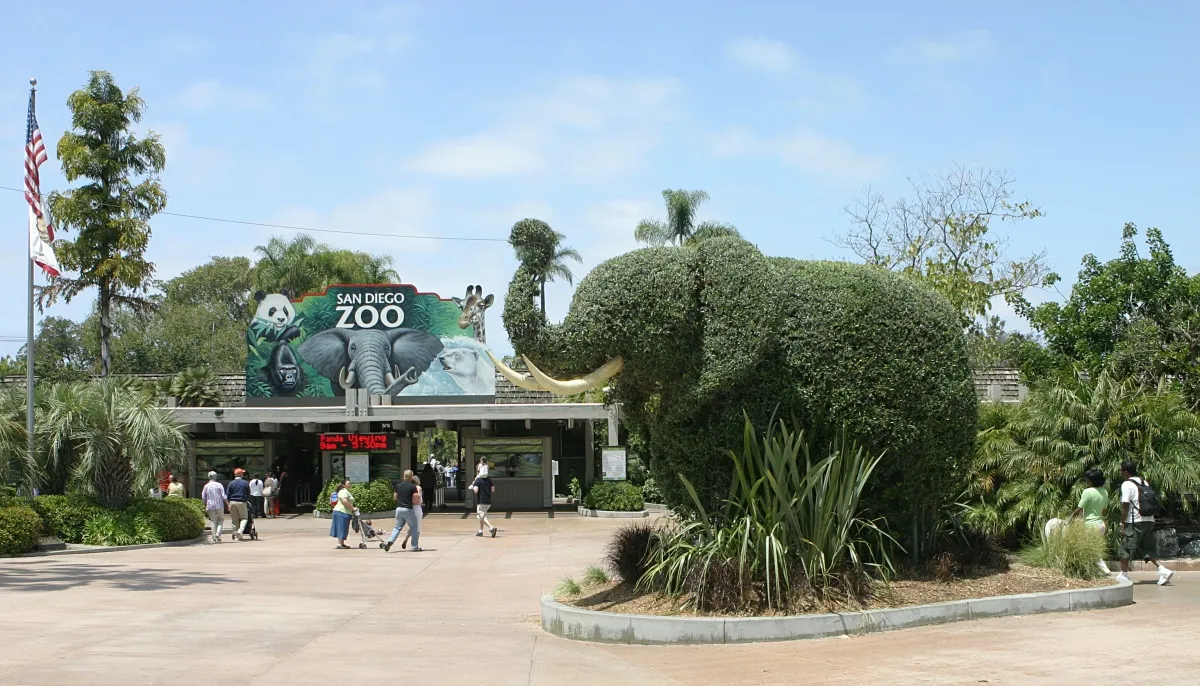
1 zoo and aquarium in 1 country are recorded as keeping this species.
Community notes
Share your observations about the Emperor Dragonfly.
No community notes yet. Be the first!
Discover more wildlife
More fascinating animals from the encyclopedia.