
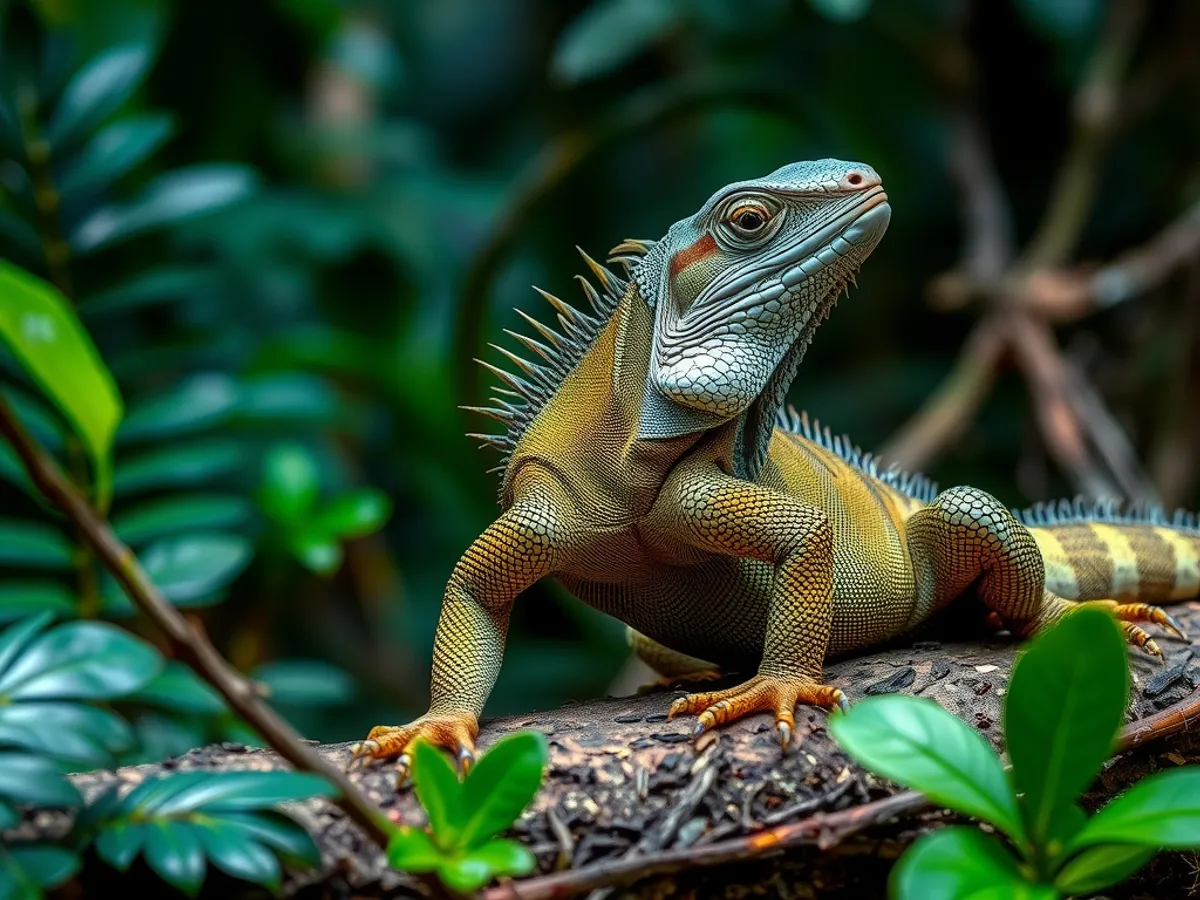
About the Fiji Banded Iguana
The Fiji Banded Iguana is a strikingly colorful lizard species endemic to the islands of Fiji. Males are bright green with pale blue or white bands, while females are typically solid green. This arboreal reptile thrives in the moist forests and coastal woodlands of its island habitat. Renowned for its agility and sharp vision, the Fiji Banded Iguana plays an important ecological role as both a seed disperser and prey species. Sadly, habitat loss and introduced predators have placed this unique iguana at risk of extinction.
Fascinating facts
Arboreal Lifestyle
Fiji Banded Iguanas spend most of their lives in trees, skillfully navigating branches with their long toes and sharp claws.
Colorful Communication
Males use their vibrant bands and head bobbing to communicate with other iguanas, especially during mating season or territorial disputes.
Critical Conservation
With populations declining due to habitat destruction and invasive species, the Fiji Banded Iguana is classified as Endangered by the IUCN.
Detailed description
The Fiji Banded Iguana (Brachylophus fasciatus) is a medium-sized, arboreal lizard distinguished by its vibrant coloration and striking banded patterning. Adult males typically reach a snout-to-vent length of 18–22 cm (7–8.5 in), with total lengths including the tail up to 60 cm (24 in). Males display a vivid emerald green base color adorned with pale blue or whitish transverse bands, while females are usually solid green or may exhibit faint banding. The species possesses a laterally compressed body, long limbs, and a prehensile tail, all adaptations for an arboreal lifestyle. Its head is angular with a pronounced rostral scale, and the eyes are large with keen vision, aiding in detecting predators and food. The skin is covered in fine, granular scales, and both sexes have a dewlap, though it is more pronounced in males. Fiji Banded Iguanas are diurnal, spending most of their time in the forest canopy, where their coloration provides camouflage among the leaves. They are primarily herbivorous, feeding on a variety of leaves, flowers, and fruits, and play an important role as seed dispersers in their ecosystem. The species is known for its agility and can leap considerable distances between branches. When threatened, it may freeze, flee, or drop to the ground to escape predators. Their lifespan in the wild is estimated at 10–15 years, but individuals in captivity have been recorded living up to 25 years.
Did you know?
Unlike many other iguanas, the Fiji Banded Iguana is one of the few members of its genus found outside the Americas, isolated in the South Pacific.
Research & sources
Wikipedia summary
Brachylophus bulabula, commonly known as the Central Fijian banded iguana is a species of iguanid lizard endemic to some of the larger central and northwestern islands of Fiji, where it occurs in Fijian wet forest. It was described by a team led by a scientist from the Australian National University in 2008. It is one of the few species of iguana found outside of the New World and one of the most geographically isolated members of the family Iguanidae. Initially also reported from Gau Island, in 2017 this population was described as a separate species, B. gau. They can grow up to 2 feet long and have an average lifespan of 10-15 years. However, there have been some captive Fiji banded iguanas that have lived as long as 25 years. Fijian banded iguana typically are found in tropical wet islands that are typically 650-1700 feet above sea level. They also like to bask in temperatures ranging from 75–95 °F (24–35 °C). The areas that are most suitable for Fiji banded iguanas are Viti Levu, Vanua Levu, Ovalau, Viwa, and Kadavu. Males are typically are green with blue stripes and the females are green with white stripes.
Behaviour & social structure
Fiji Banded Iguanas are solitary and territorial, with males defending small home ranges that overlap with those of several females. They are most active during the day, basking in sunlight to regulate their body temperature, with preferred basking temperatures ranging from 28–35°C (82–95°F). Feeding occurs primarily in the morning and late afternoon, focusing on leaves, flowers, and soft fruits such as hibiscus, Ficus, and other native flora. Iguanas use visual signals, such as head-bobbing, dewlap extension, and body posturing, to communicate with conspecifics, particularly during territorial disputes or courtship. When disturbed, they may remain motionless to avoid detection or rapidly flee through the canopy. They rarely descend to the ground except to lay eggs or move between trees. In captivity, they have been observed to recognize individual keepers and may display curiosity or wariness depending on prior experiences.
Reproduction & life cycle
The breeding season for Fiji Banded Iguanas typically coincides with the onset of the wet season (November to March). Males engage in ritualized displays to attract females and deter rivals, including head-bobbing and lateral body compression to accentuate their bands. After successful courtship, copulation occurs, and females lay clutches of 3–6 eggs in moist soil or leaf litter, usually in concealed locations on the forest floor. The incubation period lasts approximately 120–150 days, depending on temperature and humidity. Hatchlings are fully independent at birth, measuring about 10–12 cm (4–5 in) in total length, and exhibit cryptic coloration to avoid predation. There is no parental care post-oviposition. Sexual maturity is reached at around 3–4 years of age.
Adaptations & survival
Brachylophus fasciatus exhibits several adaptations for arboreal living, including a prehensile tail for balance and grasping branches, long toes with sharp claws for climbing, and laterally compressed bodies that facilitate movement through dense foliage. Their vivid green coloration, with or without bands, provides effective camouflage among leaves, while the ability to change skin tone slightly aids in thermoregulation and concealment. The species' keen vision allows for precise navigation and detection of predators or food items. Behavioral adaptations include freezing when threatened and rapid, agile movement through the canopy. Their herbivorous diet is supported by a robust, serrated dentition suited for cropping vegetation.
Cultural significance
The Fiji Banded Iguana holds cultural significance in Fijian tradition, often regarded as a symbol of the islands' unique biodiversity and natural heritage. It appears in local folklore and is sometimes associated with forest spirits or used as a totem animal. The iguana is featured in conservation awareness campaigns and has become an emblematic species for environmental education in Fiji. Historically, some indigenous communities viewed the iguana as a good omen, though there is no evidence of widespread traditional use for food or medicine.
Recent research
Recent molecular studies have clarified the taxonomy of the genus Brachylophus, leading to the recognition of several distinct species, including B. bulabula and B. gau, which were previously grouped with B. fasciatus. Ongoing research focuses on population genetics, habitat requirements, and the impacts of invasive species. Conservation programs, including captive breeding and habitat restoration, are being implemented in collaboration with local communities and international organizations. Notably, radio-telemetry studies have provided insights into home range size, movement patterns, and habitat preferences, informing management strategies. There is also interest in the evolutionary origins of the genus, as Brachylophus is one of the few iguanid lineages outside the Americas, with biogeographic studies suggesting ancient transoceanic dispersal.
Sources
A new species of Brachylophus (Squamata: Iguanidae) from Fiji, with a revised phylogeny and biogeography of Pacific iguanas
J. S. Keogh, D. L. Edwards, R. N. Fisher, P. S. Harlow (2008)
scientificVideos
Habitat
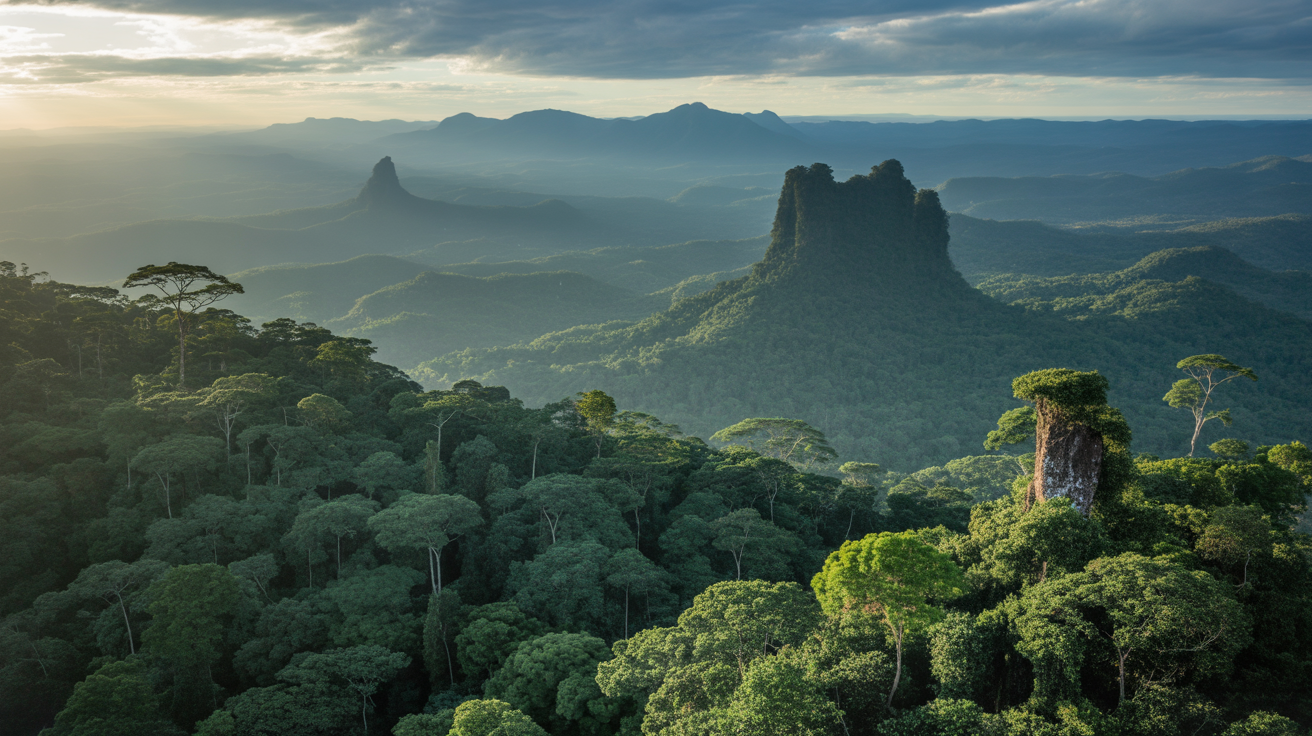
Tropical rainforest and coastal woodland

Conservation
The Fiji Banded Iguana is currently classified as Endangered on the IUCN Red List.
Threats & challenges
The primary threats to the Fiji Banded Iguana are habitat loss due to deforestation, agricultural expansion, and urban development. Introduced predators such as rats, mongooses, and feral cats pose significant risks, particularly to eggs and juveniles. Illegal collection for the pet trade has also contributed to population declines. Climate change, resulting in altered rainfall patterns and increased frequency of cyclones, further threatens their forest habitat. The species is classified as Endangered by the IUCN, with population trends showing a continuing decline. Conservation efforts are hampered by limited resources, lack of enforcement of protective legislation, and ongoing habitat fragmentation.
Taxonomy
Scientific name
Brachylophus fasciatus
- Kingdom
- Animalia
- Phylum
- Chordata
- Class
- Reptilia
- Order
- Squamata
- Family
- Iguanidae
- Genus
- Brachylophus
- Species
- fasciatus
Where to see a fiji banded iguana
5 zoos and aquariums in 3 countries are recorded as keeping this species.
 Belfast Zoo🇬🇧 Belfast, United Kingdom
 Henry Doorly Zoo and Aquarium🇺🇸 Omaha, United States
 Karlsruhe Zoo🇩🇪 Germany
- 🦁Colchester Zoo🇬🇧 United Kingdom
- 🦁Tulsa Zoo🇺🇸 Tulsa, United States
Community notes
Share your observations about the Fiji Banded Iguana.
No community notes yet. Be the first!
Discover more wildlife
More fascinating animals from the encyclopedia.