
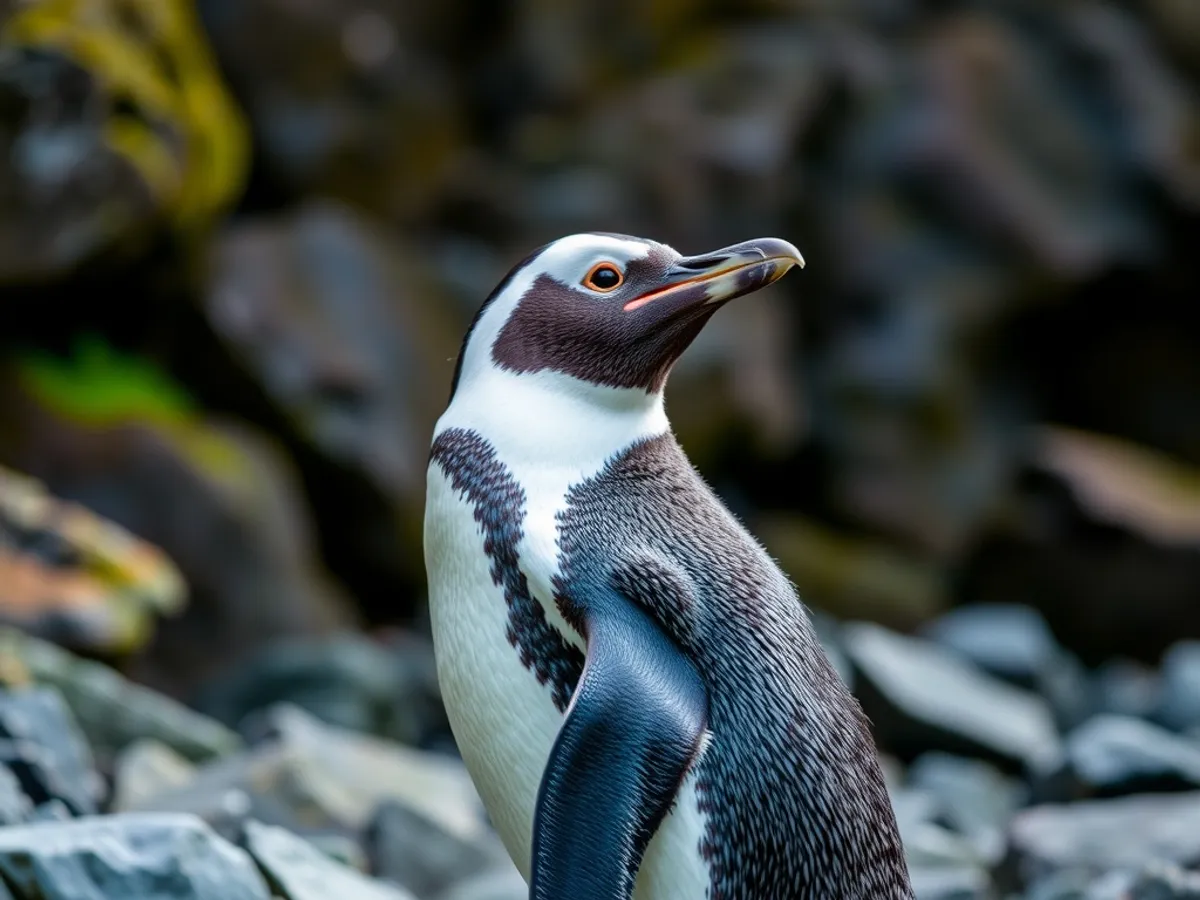
About the Fiordland Penguin
The Fiordland Penguin, also known as the Fiordland Crested Penguin, is a medium-sized penguin native to the temperate rainforests and rugged coastlines of New Zealand's South Island. It is recognized by its thick yellow eyebrow-like crests that extend from its bill over its eyes and a dark, slate-blue back with a white underside. This shy and elusive bird nests in dense coastal vegetation and rocky crevices, making it one of the most difficult penguins to observe in the wild. Its population is threatened by introduced predators and habitat disturbance, resulting in a declining trend.
Fascinating facts
Forest Nesters
Unlike most penguins, Fiordland Penguins nest under thick forest canopy or in rock crevices, providing excellent camouflage from predators.
Diverse Diet
Their diet consists mainly of squid, krill, small fish, and crustaceans, which they hunt during long, nocturnal foraging trips at sea.
Crested Appearance
Their distinctive yellow eyebrow crests are unique among penguin species and are especially pronounced in adults during the breeding season.
Detailed description
The Fiordland Penguin (Eudyptes pachyrhynchus) is a medium-sized crested penguin, standing approximately 60 cm (24 in) tall and weighing between 2.5 and 4 kg (5.5–8.8 lbs), with males generally larger than females. Its most distinctive feature is the broad, bright yellow eyebrow-like superciliary stripe that extends from the base of the bill and sweeps back over each eye, forming a prominent crest. The plumage is slate-blue to black on the dorsal side and white on the ventral side, providing camouflage both from aerial and underwater predators. The bill is robust, thick, and orange-brown, while the feet are pale pink with black soles. The eyes are reddish-brown. Fiordland Penguins are highly secretive and favor nesting in dense temperate rainforest, under tree roots, or among boulders and caves along rugged coastlines. They are primarily nocturnal on land, often returning to their nests under the cover of darkness to avoid predators. Their vocalizations are generally low and guttural, used mainly for mate recognition and territory defense. The species is monogamous during the breeding season, forming long-term pair bonds. Outside the breeding season, they are solitary at sea, ranging widely in the subantarctic waters. Their elusive nature and preference for inaccessible habitats have contributed to the challenges in studying their population and ecology.
Did you know?
Fiordland Penguins can travel over 1,000 kilometers at sea outside the breeding season, venturing as far as Tasmania and the southern Australian coast.
Research & sources
Wikipedia summary
The Fiordland penguin, also known as the Fiordland crested penguin, is a crested penguin species endemic to New Zealand. It currently breeds along the south-western coasts of New Zealand's South Island as well as on Stewart Island/Rakiura and its outlying islands. Because it originally ranged beyond Fiordland, it is sometimes referred to as the New Zealand crested penguin. It is occasionally found in Australia.
Behaviour & social structure
Fiordland Penguins are crepuscular to nocturnal when on land, minimizing exposure to avian predators such as the New Zealand falcon and introduced mammals. At sea, they are diurnal foragers, diving to depths of 20–80 meters (occasionally up to 120 meters) in pursuit of prey. Their diet consists mainly of small fish (e.g., sprats, anchovies), cephalopods (notably squid), and crustaceans (krill and amphipods). Foraging trips can last from a few hours to several days, especially during the chick-rearing stage. Socially, they are less gregarious than other crested penguins, nesting in loose colonies or as solitary pairs, often with considerable spacing between nests. Aggressive interactions are rare but may occur over nest sites. On land, they use a combination of vocalizations and visual displays to communicate, including head shaking and crest raising. Daily routines involve returning to the nest at dusk or night, with both parents alternating incubation and chick-feeding duties.
Reproduction & life cycle
The breeding season begins in June or July, with pairs reuniting at traditional nesting sites. Nests are constructed in concealed locations, often lined with grass, leaves, and twigs. Females typically lay two eggs, but the first-laid (A-egg) is significantly smaller and rarely survives, a phenomenon common in Eudyptes penguins. The incubation period lasts about 30–36 days, shared by both parents in long shifts. After hatching, only the larger second chick (from the B-egg) is usually raised, as the smaller chick seldom survives due to sibling competition and limited food resources. Chicks are brooded for the first 3–4 weeks, then left in the nest while both parents forage. Fledging occurs at 10–11 weeks, after which juveniles disperse to sea. Sexual maturity is reached at 5–7 years, and pair bonds are often maintained across multiple seasons.
Adaptations & survival
Fiordland Penguins possess several adaptations for their rugged, temperate rainforest environment. Their dense, waterproof plumage insulates against cold, wet conditions, while their strong claws and legs enable them to climb steep, slippery terrain to reach nesting sites far from the shore. The cryptic coloration helps avoid detection by predators both above and below water. Their crested plumes may play a role in mate selection and species recognition. Physiologically, they have a high oxygen-carrying capacity in their blood and muscles, supporting deep and prolonged dives. Behavioral adaptations include nocturnal land activity to evade predators and the use of concealed nesting sites for protection.
Cultural significance
In Māori culture, the Fiordland Penguin is known as 'tawaki.' According to Māori legend, tawaki was a god who disguised himself as a penguin and descended to earth, hence the species' regal appearance and crest. The penguin features in local folklore and is considered a taonga (treasured) species. While not traditionally hunted, its presence is respected, and it is sometimes used as a symbol of the unique biodiversity of New Zealand's southern coasts.
Recent research
Recent research has focused on satellite tracking of post-breeding dispersal, revealing that Fiordland Penguins travel vast distances into the Tasman Sea and subantarctic waters. Genetic studies have clarified their relationship to other Eudyptes species, supporting their status as a distinct lineage. Ongoing population monitoring uses automated camera traps and acoustic sensors to estimate colony sizes and breeding success. Studies on diet through stable isotope analysis have provided insights into seasonal and regional variation in foraging. Conservation research is investigating the effectiveness of predator control and the resilience of penguin populations to climate-driven changes in marine ecosystems.
Videos
Habitat
Temperate coastal rainforest and rocky shorelines
 Global Waters
Ocean
Saltwater environments covering more than 70% of the Earth's surface, home to a vast variety of marine life.
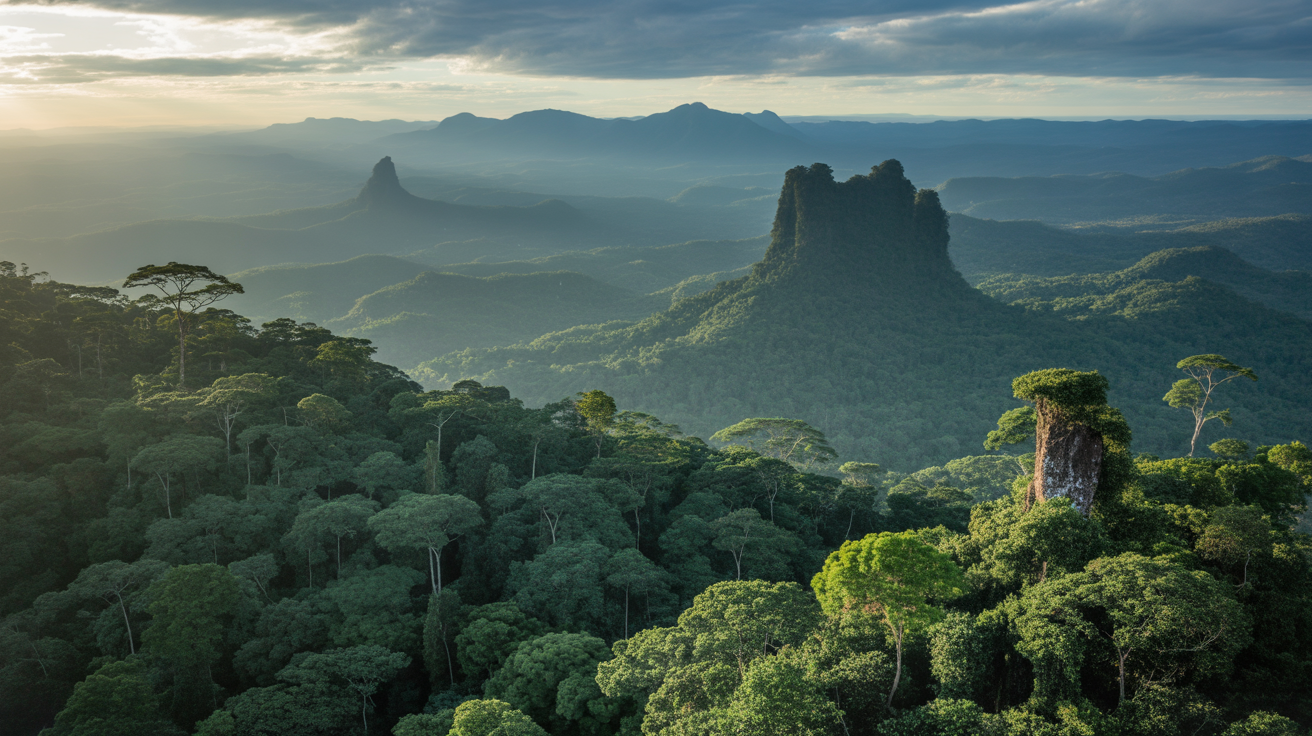 Tropical Regions
Rainforest
Dense, wet forests with the highest biodiversity on Earth, containing more than half of the world's plant and animal species.
 Global
Forest
Wooded areas with significant tree cover and diverse plant and animal communities.
Conservation
The Fiordland Penguin is currently classified as Vulnerable on the IUCN Red List.
Threats & challenges
The primary threats to Fiordland Penguins are predation by introduced mammals (stoats, rats, dogs, cats, and possums), which prey on eggs, chicks, and occasionally adults. Habitat loss and disturbance from forestry, tourism, and coastal development further reduce suitable breeding sites. Marine threats include entanglement in fishing gear, competition for food resources, and the impacts of climate change on prey availability. Oil spills and pollution pose additional risks. The population is estimated at 5,500–7,000 breeding pairs and is believed to be declining, leading to its IUCN status as Near Threatened. Conservation efforts focus on predator control, habitat protection, and monitoring of population trends.
Taxonomy
Scientific name
Eudyptes pachyrhynchus
- Kingdom
- Animalia
- Phylum
- Chordata
- Class
- Aves
- Order
- Sphenisciformes
- Family
- Spheniscidae
- Genus
- Eudyptes
- Species
- pachyrhynchus
Community notes
Share your observations about the Fiordland Penguin.
No community notes yet. Be the first!
Discover more wildlife
More fascinating animals from the encyclopedia.