
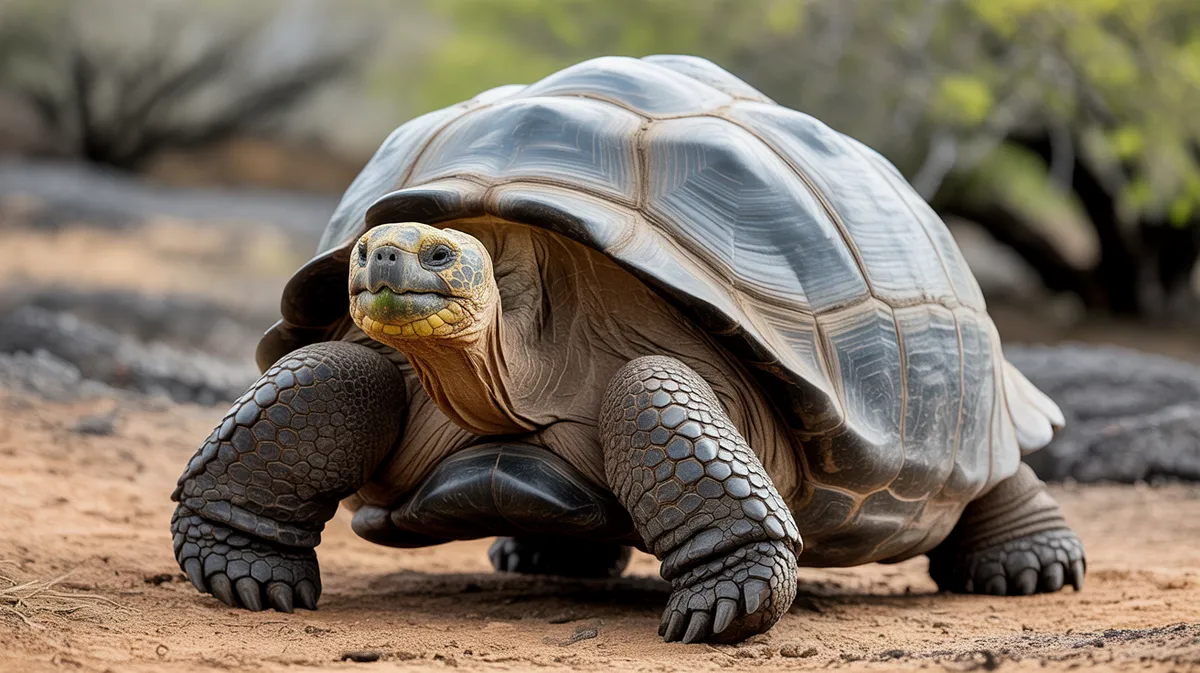
About the Galápagos Tortoise
The Galápagos tortoise is the largest tortoise alive, and its shell varies from island to island in a way that helped shape the theory of evolution. On lush, wet islands the shells are domed and the animals graze low vegetation; on arid islands they are "saddlebacked", flared upward at the front so the tortoise can stretch its neck high and reach the cactus pads that are the only food on offer. It is extraordinarily long-lived, well past a century, and extraordinarily slow-metabolising: it stores water and fat and can survive as much as a year without eating or drinking. That endurance nearly destroyed it. Whaling and sealing ships stacked live tortoises in their holds as fresh meat that would keep for months without food or care, and hundreds of thousands were taken. Introduced goats, rats and pigs finished what the whalers started, stripping vegetation and eating eggs. Several island populations were lost outright, and the survivors persist today largely because of captive breeding and the systematic removal of invasive mammals.
Fascinating facts
Shell Shapes
Galápagos Tortoises have two main shell types: domed and saddleback, which help them access different kinds of vegetation.
Ecosystem Engineers
By trampling plants and dispersing seeds, these tortoises play an essential role in maintaining the ecology of their island habitats.
Longevity
Some individuals have been known to live well over 150 years, making them among the longest-lived vertebrates on Earth.
Detailed description
The Galápagos tortoise (Chelonoidis niger) is the largest extant species of tortoise, with adult males commonly reaching carapace lengths of 120–150 cm (47–59 in) and weights of 250–300 kg (550–660 lb), though exceptional individuals can exceed 400 kg (880 lb). Their shells exhibit two main morphotypes: domed, which are rounded and high, and saddleback, which are raised at the front, an adaptation linked to feeding strategies and island habitats. The skin is thick, wrinkled, and dark gray to brown, providing protection from the harsh equatorial sun. Their limbs are columnar and robust, supporting their massive bodies, while their long necks allow them to reach high or low vegetation depending on shell shape. Galápagos tortoises are ectothermic, relying on basking to regulate body temperature, and can survive for up to a year without food or water due to their slow metabolism and ability to store large amounts of water in their bladders. They are primarily diurnal, spending much of the day grazing on grasses, leaves, cacti, and fruits. Lifespans in the wild are typically 80–120 years, with some individuals exceeding 150 years in captivity. Their slow pace and gentle demeanor belie a complex social structure, with dominance hierarchies often established through neck-raising displays. The species is distributed across several islands in the Galápagos archipelago, with distinct subspecies adapted to specific ecological niches.
Did you know?
The oldest recorded Galápagos Tortoise lived to be at least 176 years old!
Research & sources
Wikipedia summary
The Galápagos tortoise or Galápagos giant tortoise is a very large species of tortoise in the genus Chelonoidis. The species comprises 15 subspecies. It is the largest living species of tortoise, and can weigh up to 417 kg (919 lb). They are also the largest extant terrestrial cold-blooded animals (ectotherms).
Behaviour & social structure
Galápagos tortoises are primarily solitary but may congregate in areas with abundant food or water, especially during the dry season. They are most active in the early morning and late afternoon, spending midday hours resting in mud wallows or shaded areas to avoid overheating. Feeding involves slow, methodical grazing, with domed tortoises favoring ground vegetation and saddlebacks browsing higher shrubs and cacti. Social interactions are generally peaceful, though males may engage in ritualized dominance contests, stretching their necks and raising their bodies to appear larger. Aggression is rare and usually limited to head-butting or shoving. Tortoises use established trails, known as 'tortoise highways,' to move between feeding and nesting sites. They are known for their remarkable homing ability and seasonal migrations between lowland and highland habitats in response to rainfall and food availability.
Reproduction & life cycle
Mating occurs primarily during the hot season (January to May), with males competing for access to females through neck-stretching displays and occasional physical contests. Courtship involves the male circling the female, biting her legs or shell, and mounting. Copulation is accompanied by loud vocalizations. Females travel several kilometers to reach suitable nesting sites, often sandy or volcanic soils with good drainage. Each clutch consists of 2–16 spherical, leathery eggs, which are buried in a shallow nest and incubated by solar heat for 90–120 days. There is no parental care after egg-laying; hatchlings are independent from birth and face high predation rates from introduced species. Sexual maturity is reached at 20–25 years, and females may lay multiple clutches per season, depending on food availability.
Adaptations & survival
Galápagos tortoises exhibit several unique adaptations to their island environment. The two shell morphotypes—domed and saddleback—are believed to be evolutionary responses to different vegetation structures: domed shells are advantageous in humid highlands with abundant ground vegetation, while saddlebacks enable access to higher foliage in arid lowlands. Their slow metabolism allows them to survive prolonged periods without food or water, a crucial adaptation for life on islands with seasonal resource scarcity. The ability to store water in the bladder and pericardial cavity provides a reservoir during droughts. Their thick, scaly skin minimizes water loss and offers protection from abrasive vegetation and volcanic substrates. Behavioral thermoregulation, such as basking and wallowing, helps maintain optimal body temperature in fluctuating island climates.
Cultural significance
The Galápagos tortoise is an iconic symbol of the Galápagos Islands and played a pivotal role in Charles Darwin's formulation of the theory of evolution by natural selection. Tortoises feature prominently in local folklore and are a flagship species for Ecuadorian conservation efforts. Their image appears on Ecuadorian coins, stamps, and tourism materials, and they are celebrated in educational and ecotourism programs. Historically, they were exploited for food and oil by sailors, but today they are protected by law and revered as living treasures of the islands.
Recent research
Recent genetic studies have clarified the evolutionary relationships among Galápagos tortoise subspecies, revealing complex patterns of divergence and hybridization. Notably, the rediscovery of individuals with partial ancestry from the extinct Pinta and Floreana subspecies has spurred efforts to restore lost lineages through selective breeding. Advances in satellite telemetry have shed light on tortoise migration patterns and habitat use, informing conservation management. Ongoing research examines the impacts of climate change on nesting success and hatchling survival, as well as the role of tortoises as ecosystem engineers in seed dispersal and vegetation dynamics. Captive breeding and head-starting programs have been instrumental in boosting wild populations and reintroducing tortoises to islands where they were extirpated.
Videos
Habitat
Volcanic islands with arid lowlands, grasslands, and humid highlands
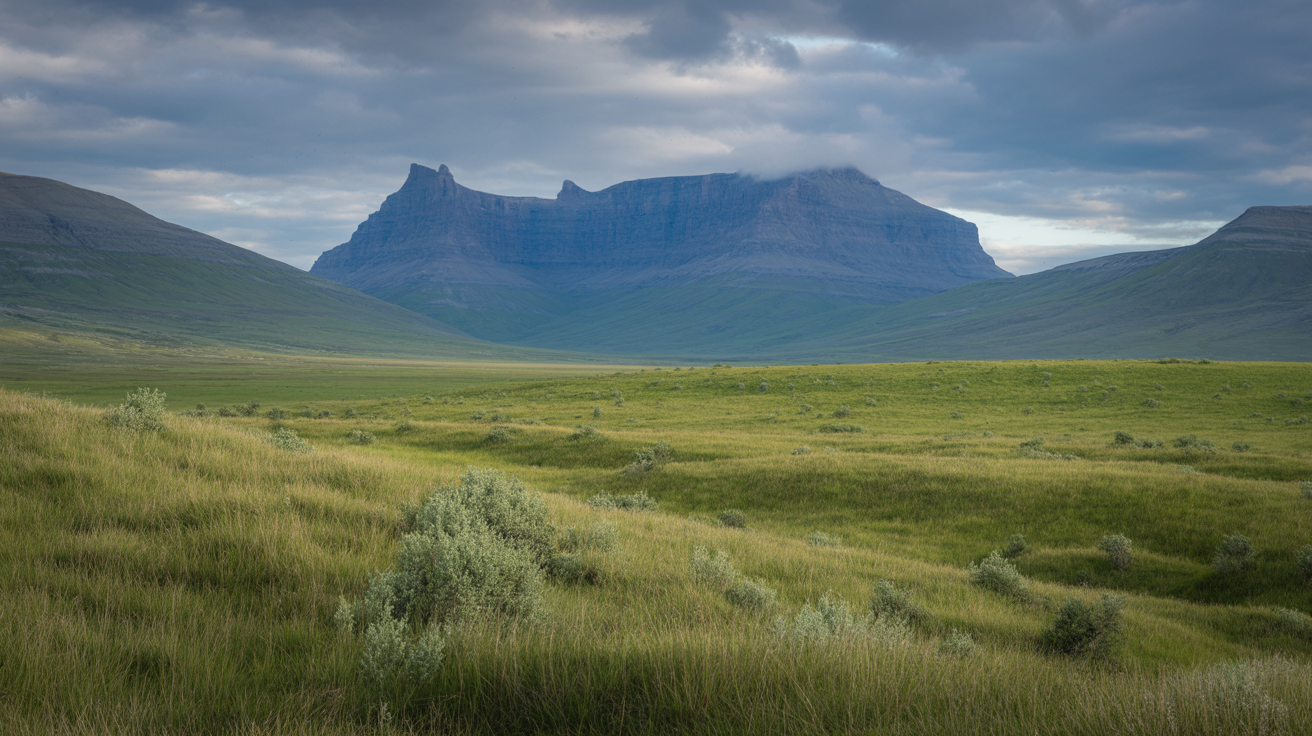 Various Continental Regions
Grassland
Open areas dominated by grasses rather than trees, supporting numerous herbivores and their predators.
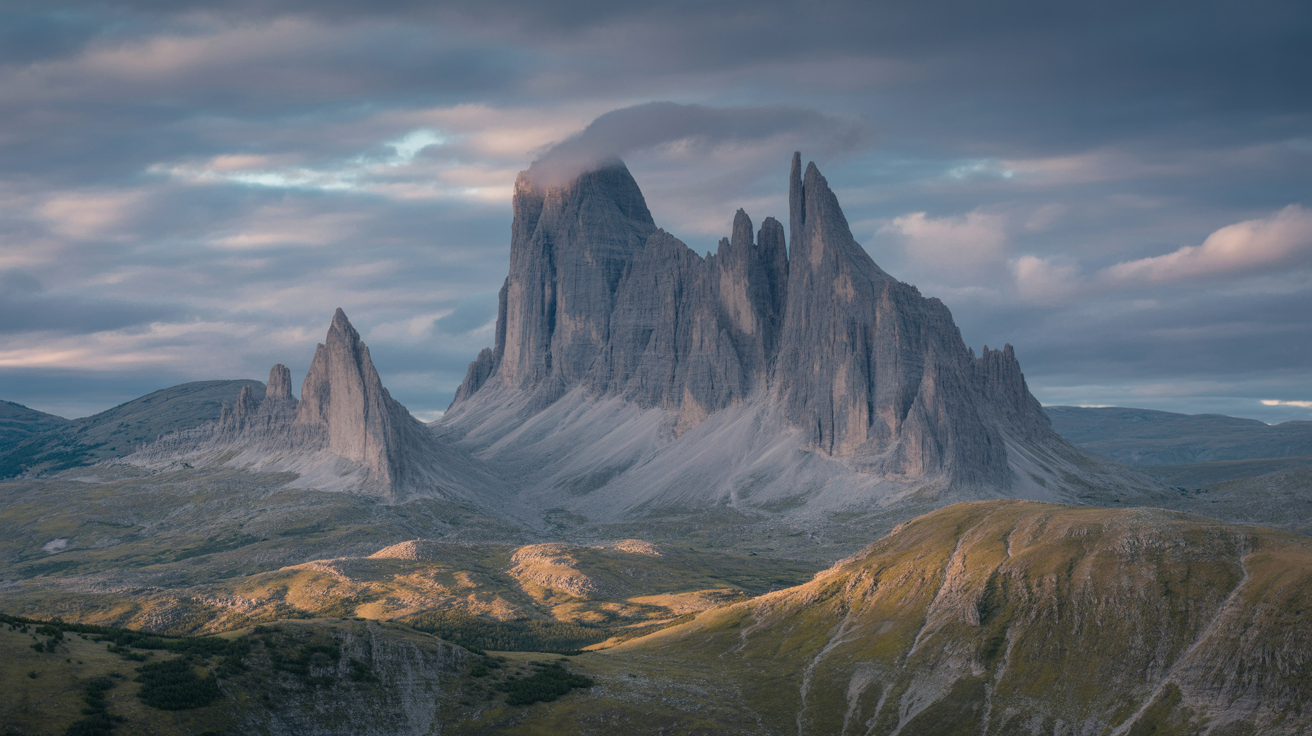 Elevated Terrain
Mountain
High-altitude environments with varying climates and specialized wildlife adapted to rugged terrain and thin air.
 Global
Forest
Wooded areas with significant tree cover and diverse plant and animal communities.
Conservation
The Galápagos Tortoise is currently classified as Vulnerable on the IUCN Red List.
Threats & challenges
Major threats to Galápagos tortoises include habitat destruction from agricultural expansion, invasive species (such as rats, pigs, dogs, and goats) that prey on eggs and hatchlings or compete for food, and historical overexploitation by whalers and settlers who harvested tortoises for meat and oil. Introduced plants can alter native vegetation communities, reducing food availability. Although populations have rebounded in some areas due to intensive conservation programs, many subspecies remain critically endangered or extinct. Climate change poses additional risks by altering rainfall patterns and nesting success. Ongoing challenges include maintaining genetic diversity, preventing hybridization among subspecies, and managing human-wildlife conflict as tourism increases.
Taxonomy
Scientific name
Chelonoidis nigra
- Kingdom
- Animalia
- Phylum
- Chordata
- Class
- Reptilia
- Order
- Testudines
- Family
- Testudinidae
- Genus
- Chelonoidis
- Species
- nigra
Community notes
Share your observations about the Galápagos Tortoise.
No community notes yet. Be the first!
Discover more wildlife
More fascinating animals from the encyclopedia.