
About the Giant Clam
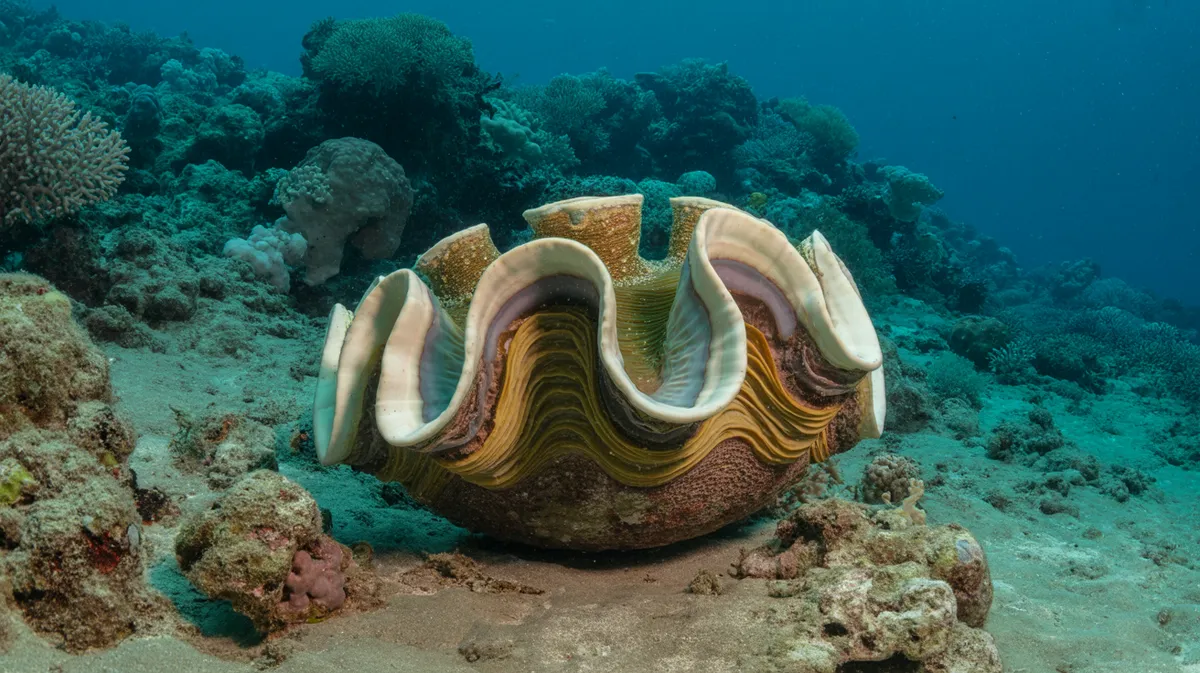
Tridacna gigas can exceed 1.2 m across and 200 kg, and it is not really living on the plankton it filters. Most of its food is made in-house: the enormous fleshy mantle that bulges out between the shell valves is a farm, packed with symbiotic algae that photosynthesise and hand over sugars, and the clam positions itself in bright, shallow reef water and simply opens up to the sun. What makes this more than an ordinary coral-style partnership is the optics. The mantle contains layers of specialised cells called iridocytes — the source of the clam's brilliant blue, green and gold shimmer — which scatter and redistribute incoming light, filtering out damaging wavelengths and channelling the useful ones deep into the tissue so that algae several layers down still get usable light. It is a living lens system, and it lets the clam grow algae in three dimensions rather than on a flat surface. Giant clams are broadcast spawners, releasing hundreds of millions of eggs into the water; they are hermaphrodites but release sperm and eggs at different times to avoid fertilising themselves. And the famous man-eating clam of pearl-diving lore is a myth: the shell closes far too slowly to trap anything, and a large adult cannot even close fully.
Fascinating facts
Colorful Mantle
The mantle of the giant clam displays brilliant colors due to light-reflecting cells, which help protect its symbiotic algae from excess sunlight.
Largest Bivalve
Tridacna gigas is the largest bivalve mollusk in the world, easily surpassing all other clam species in size and weight.
Solar Power
By hosting millions of zooxanthellae in their tissues, giant clams rely on solar energy for up to 70% of their nutritional needs.
Detailed description
The giant clam (Tridacna gigas) is the largest extant bivalve mollusk, with individuals commonly reaching shell lengths of 1.2 meters and weights exceeding 200 kilograms, though exceptional specimens have been recorded up to 1.5 meters and over 250 kilograms. Its thick, heavy shell is characterized by 4–6 prominent, fluted folds and a series of scutes (scaly protrusions) along the edges. The mantle, which is often vividly colored with iridescent blues, greens, and browns, extends beyond the shell margins and contains symbiotic zooxanthellae—photosynthetic algae that provide the clam with most of its nutritional needs through the products of photosynthesis. Giant clams are sessile as adults, cementing themselves to the substrate via a byssus gland, but juveniles are capable of limited movement. They possess two siphons: an inhalant siphon for drawing in water and plankton, and an exhalant siphon for expelling filtered water. The clam's tissues are sensitive to light and touch, allowing it to retract the mantle rapidly in response to threats. With a lifespan that can exceed 100 years, T. gigas plays a significant ecological role in reef environments by contributing to calcium carbonate deposition and providing habitat for various reef organisms. Their filter-feeding activity also helps maintain water clarity and nutrient cycling within coral reef ecosystems.
Did you know?
A single giant clam can produce millions of eggs in one spawning event.
Research & sources
Wikipedia summary
Tridacna gigas, the giant clam, is the best-known species of the giant clam genus Tridacna. Giant clams are the largest living bivalve molluscs. Several other species of "giant clam" in the genus Tridacna are often misidentified as Tridacna gigas.
Behaviour & social structure
Giant clams are primarily sedentary, remaining fixed in one location after their juvenile stage. They exhibit diurnal behavior, with the mantle expanding during daylight hours to maximize sunlight exposure for their symbiotic algae, and retracting partially at night or when disturbed. While they do not actively hunt, they feed by filtering phytoplankton and organic particles from the water, supplementing their nutrition through the photosynthetic activity of zooxanthellae. The mantle contains numerous photoreceptors that detect changes in light intensity, triggering rapid closure of the shell when shadows or movement are detected—an anti-predator response. Socially, giant clams are solitary but may occur in dense aggregations in suitable habitats, especially on outer reef slopes and lagoonal patch reefs. They do not exhibit territoriality or complex social interactions, but their proximity can facilitate synchronized spawning events.
Reproduction & life cycle
Tridacna gigas is a protandrous hermaphrodite, beginning life as a male and later developing female reproductive organs. Spawning typically occurs during the warmest months, often synchronized with lunar cycles and environmental cues such as temperature and salinity changes. During mass spawning events, clams release sperm and eggs into the water column, where external fertilization occurs. A single large female can release over 500 million eggs in one event. The fertilized eggs develop into free-swimming trochophore larvae within 12–15 hours, progressing to veliger larvae, which settle and metamorphose into juveniles after about 8–10 days. There is no parental care; survival rates are low due to predation and environmental hazards. Sexual maturity is reached at approximately 8–10 years, depending on environmental conditions.
Adaptations & survival
Giant clams have evolved several unique adaptations for survival in nutrient-poor coral reef environments. Their symbiotic relationship with zooxanthellae allows them to harness solar energy, making them highly efficient at nutrient acquisition. The mantle's iridophores (light-reflecting cells) optimize light penetration for photosynthesis while providing UV protection. The thick, heavy shell and strong adductor muscles offer defense against predators such as triggerfish and humans. Their ability to rapidly close the shell in response to tactile or light stimuli is a key anti-predator adaptation. Juveniles can move short distances to find optimal light conditions before cementing themselves permanently. The byssus gland secretes strong fibers that anchor the clam to the substrate, preventing displacement by currents or wave action.
Cultural significance
Giant clams have long held cultural significance in Indo-Pacific societies, featuring in local myths as 'man-eating clams'—a misconception, as there are no verified cases of clams harming humans. Their shells have been used for centuries as water basins, religious artifacts, and decorative items. In some cultures, the shells are believed to possess protective or spiritual properties. The species is also a symbol of marine biodiversity and conservation in regions such as the Philippines and Australia, where it is featured in educational and ecotourism initiatives.
Recent research
Recent research has focused on the genetic diversity and population structure of Tridacna gigas to inform conservation and restocking programs. Advances in larval rearing and aquaculture techniques have improved survival rates, supporting restoration efforts. Studies on the clam's symbiotic relationship with zooxanthellae have provided insights into coral-algal symbiosis and resilience to climate change. Ongoing monitoring of wild populations using molecular markers and remote sensing is helping to assess recovery and guide management strategies. Notably, research into the clam's shell microstructure has implications for biomineralization and materials science.
Videos
Habitat
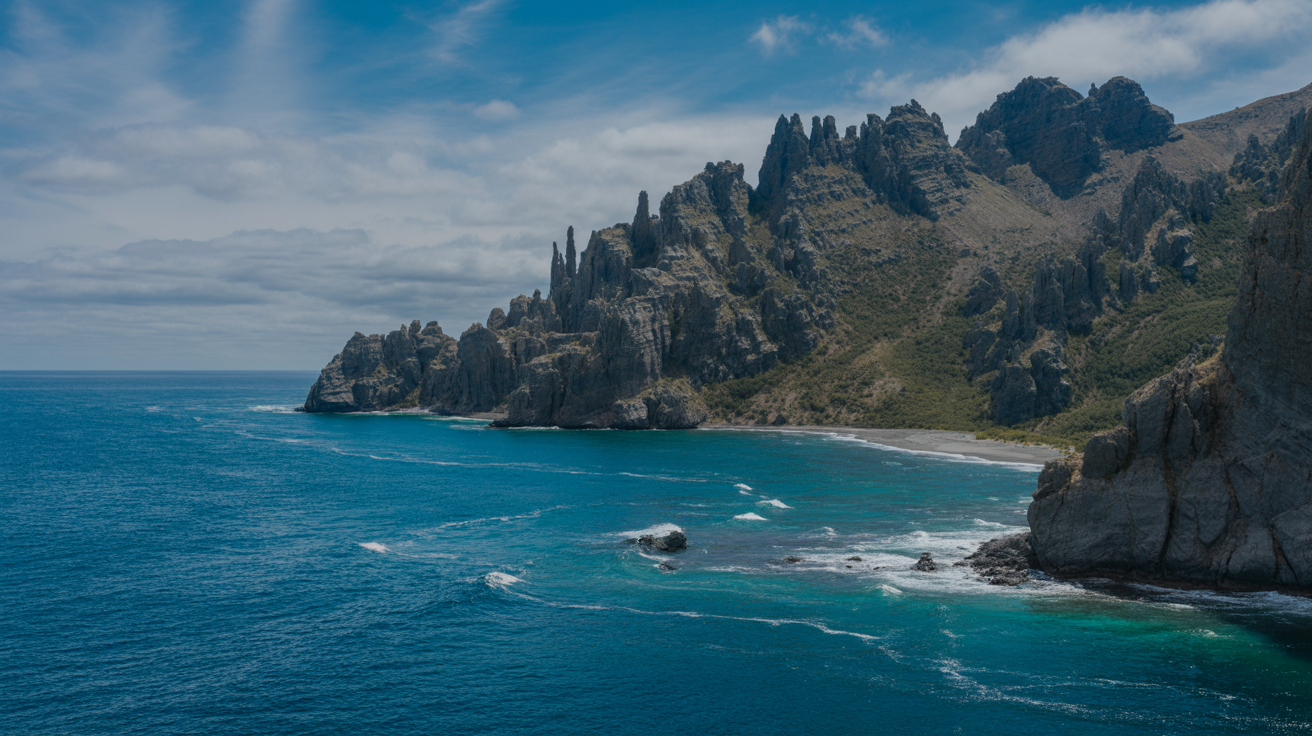
Coral reefs in shallow tropical marine waters
Conservation
The Giant Clam is currently classified as Vulnerable on the IUCN Red List.
Threats & challenges
Tridacna gigas faces significant threats from overharvesting for meat, shells, and the aquarium trade, as well as habitat loss due to coral reef degradation, pollution, and climate change. Illegal and unsustainable collection has led to dramatic population declines throughout its range, prompting its listing as Critically Endangered by the IUCN and inclusion in CITES Appendix II. Ocean warming and acidification threaten both the clams and their symbiotic algae, potentially reducing growth rates and reproductive success. Restoration efforts are complicated by slow growth and late sexual maturity, making population recovery challenging. Some regions have implemented aquaculture and restocking programs, but wild populations remain fragmented and vulnerable.
Taxonomy
Scientific name
Tridacna gigas
- Kingdom
- Animalia
- Phylum
- Mollusca
- Class
- Bivalvia
- Order
- Veneroida
- Family
- Cardiidae
- Genus
- Tridacna
- Species
- gigas
Where to see a giant clam
1 zoo and aquarium in 1 country are recorded as keeping this species.

Community notes
Share your observations about the Giant Clam.
No community notes yet. Be the first!
Discover more wildlife
More fascinating animals from the encyclopedia.