
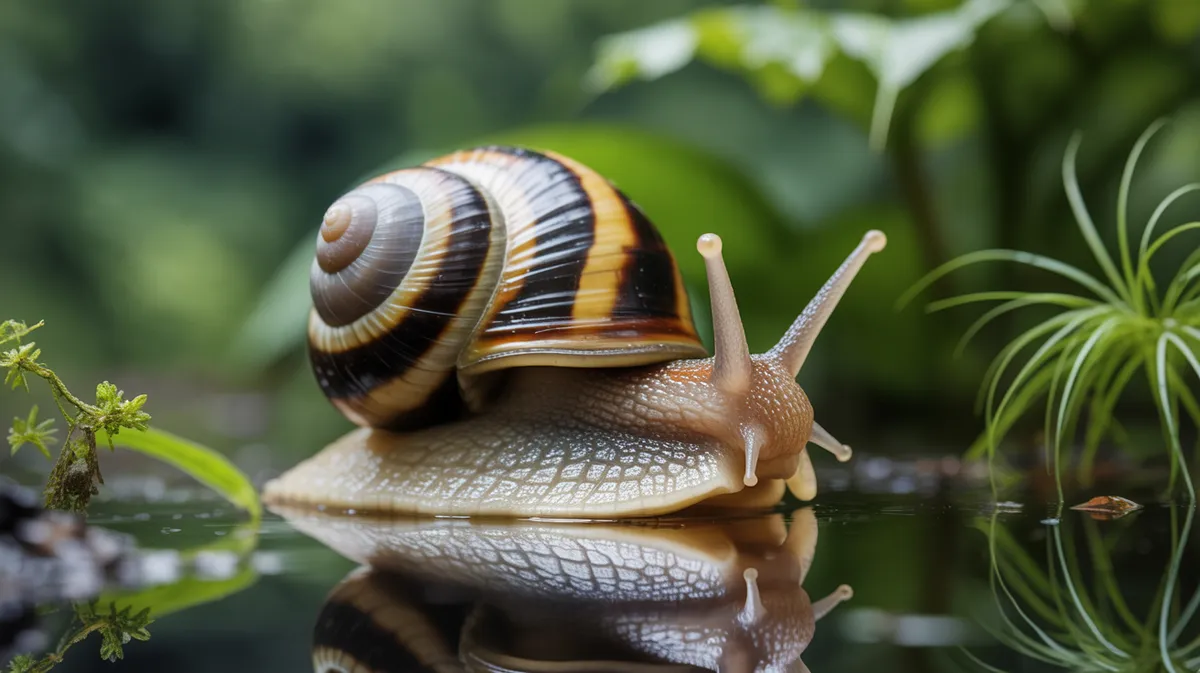
About the Giant panda snail
The giant panda snail is one of Australia's largest land snails, easily recognized by its large, rounded shell and distinctive dark brown and cream banding. This nocturnal invertebrate inhabits subtropical and tropical rainforests along the eastern coast of Australia, particularly in New South Wales and Queensland. It plays an important ecological role as a decomposer, feeding mainly on fungi and decaying plant material. The species is slow-moving and spends much of its time hidden under leaf litter or logs, emerging during humid nights or after rain. Despite its remarkable size, it is rarely seen due to its secretive habits and preference for dense, moist environments.
Fascinating facts
Australia’s Largest Land Snail
The giant panda snail is the largest land snail native to Australia, with adult shells reaching up to 9 centimeters across.
Fungi Eater
This species primarily feeds on fungi, playing a vital role in nutrient recycling within rainforest ecosystems.
Rain-Loving and Nocturnal
Giant panda snails are most active at night and during or after rainfall, helping them avoid dehydration in their humid rainforest habitat.
Detailed description
The giant panda snail (Hedleyella falconeri) is the largest terrestrial gastropod native to Australia, with adult shells reaching up to 10 cm in diameter and the animal itself extending up to 20 cm in length when fully extended. Its shell is globular, thick, and heavy, displaying a striking pattern of dark brown and creamy yellow bands, which provide camouflage among the rainforest leaf litter. The snail's body is soft, muscular, and typically a dark grey to black color, with two pairs of tentacles: the upper pair bearing eyes and the lower pair used for tactile and chemical sensing. Hedleyella falconeri is primarily nocturnal, emerging at night or during periods of high humidity to forage, and spends daylight hours concealed beneath logs, rocks, or dense leaf litter to avoid desiccation. It is a slow-moving detritivore, feeding mainly on fungi, decaying wood, and leaf litter, playing a crucial role in nutrient cycling within its ecosystem. The species is solitary, with individuals rarely interacting outside of the breeding season. Reproduction is hermaphroditic, with both individuals exchanging sperm during copulation. Eggs are large, round, and laid in moist soil or under rotting logs, where they develop over several weeks. The snail's slow metabolism and robust shell offer protection from many predators, although it is still vulnerable to introduced species and habitat disturbance.
Did you know?
Giant panda snails are hermaphrodites, possessing both male and female reproductive organs, and can exchange sperm with other individuals during mating.
Research & sources
Wikipedia summary
Hedleyella falconeri, the giant panda snail, is a species of air-breathing land snail, a terrestrial pulmonate gastropod mollusc in the family Caryodidae. It is the largest species of land snail to be found in Australia.
Behaviour & social structure
Giant panda snails are most active during humid, wet conditions, often after rainfall, when the risk of desiccation is minimized. Their foraging behavior is methodical; they use chemosensory tentacles to locate food sources such as fungi, decaying plant matter, and occasionally soft fruits. Feeding occurs primarily at night, with individuals moving slowly across the forest floor, leaving a characteristic slime trail. Social interactions are minimal outside of mating, as the species is largely solitary. When threatened, the snail retracts deeply into its shell and secretes a thick mucus that may deter some predators. During dry periods or drought, Hedleyella falconeri may aestivate, sealing its shell aperture with a temporary mucus layer (epiphragm) to retain moisture.
Reproduction & life cycle
Hedleyella falconeri is a simultaneous hermaphrodite, possessing both male and female reproductive organs. Mating typically occurs during the wet season (spring to early summer), when environmental conditions favor egg survival. Courtship involves reciprocal tactile stimulation with tentacles, followed by the exchange of spermatophores. After fertilization, each snail lays clutches of 10–20 large, calcareous eggs, each approximately 1.5–2 cm in diameter, in moist, protected sites such as under logs or deep leaf litter. Incubation lasts 4–8 weeks, depending on temperature and humidity. There is no parental care after egg-laying; hatchlings are independent and must fend for themselves from birth. Sexual maturity is reached in approximately 2–3 years.
Adaptations & survival
The giant panda snail exhibits several adaptations for survival in the rainforest environment. Its large, thick shell provides protection from physical damage and predation, while also reducing water loss. The snail's nocturnal and crepuscular activity patterns minimize exposure to desiccating conditions and diurnal predators. Its ability to aestivate during dry spells allows it to survive periods of low humidity. The chemosensory tentacles are highly developed, enabling efficient detection of food sources and mates in the dense undergrowth. The species' slow metabolism and detritivorous diet allow it to exploit a wide range of decaying organic matter, contributing to its ecological success.
Cultural significance
The giant panda snail has limited direct cultural significance but is occasionally referenced in Australian natural history literature and educational programs as an example of unique and charismatic invertebrate fauna. Its impressive size and striking appearance make it a subject of interest for naturalists and ecotourism in rainforest regions. There are no known traditional uses or significant roles in Indigenous Australian mythology or folklore.
Recent research
Recent research on Hedleyella falconeri has focused on its ecological role as a decomposer and its interactions with rainforest fungi. Studies have highlighted its importance in nutrient cycling and soil health. Genetic analyses are ongoing to clarify its phylogenetic relationships within Caryodidae and to assess population structure across fragmented habitats. Conservation research is monitoring the impacts of habitat loss and climate change, with some studies investigating the species' potential as an indicator of rainforest ecosystem health. Notably, a 2022 study used radio-tracking to document movement patterns and habitat preferences, revealing strong fidelity to moist microhabitats and limited dispersal ability.
Videos
Habitat
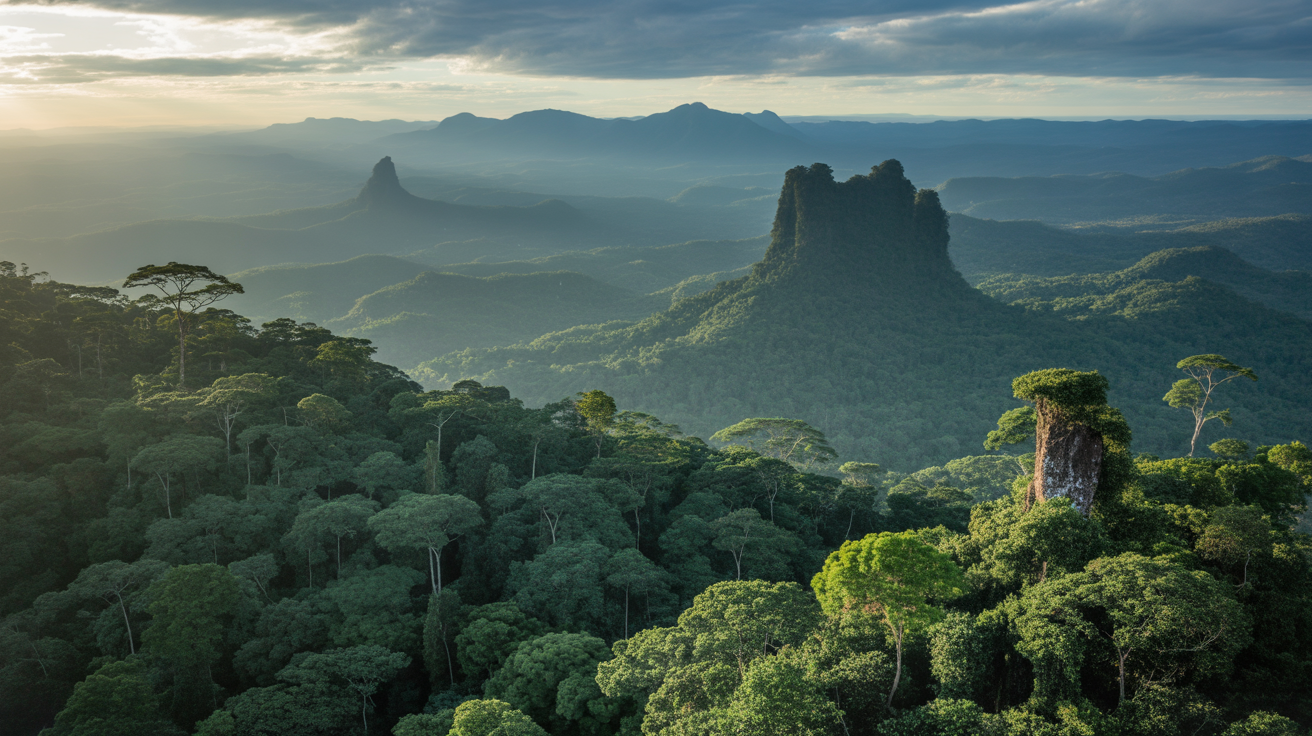
Rainforest

Conservation
The Giant panda snail is currently classified as Least Concern on the IUCN Red List.
Threats & challenges
Although currently listed as Least Concern, Hedleyella falconeri faces several localized threats. Habitat loss and fragmentation due to logging, agriculture, and urban development in eastern Australian rainforests reduce available habitat and microclimatic conditions necessary for survival. Introduced predators such as rats, birds, and carnivorous snails (e.g., Euglandina rosea) pose additional risks, particularly to eggs and juveniles. Climate change, with increased frequency of droughts and altered rainfall patterns, may further threaten populations by reducing suitable moist microhabitats. Despite these challenges, the species remains relatively widespread in protected rainforest reserves.
Taxonomy
Scientific name
Hedleyella falconeri
- Kingdom
- Animalia
- Phylum
- Mollusca
- Class
- Gastropoda
- Order
- Stylommatophora
- Family
- Caryodidae
- Genus
- Hedleyella
- Species
- falconeri
Community notes
Share your observations about the Giant panda snail.
No community notes yet. Be the first!
Discover more wildlife
More fascinating animals from the encyclopedia.