
About the Giant Sable Antelope
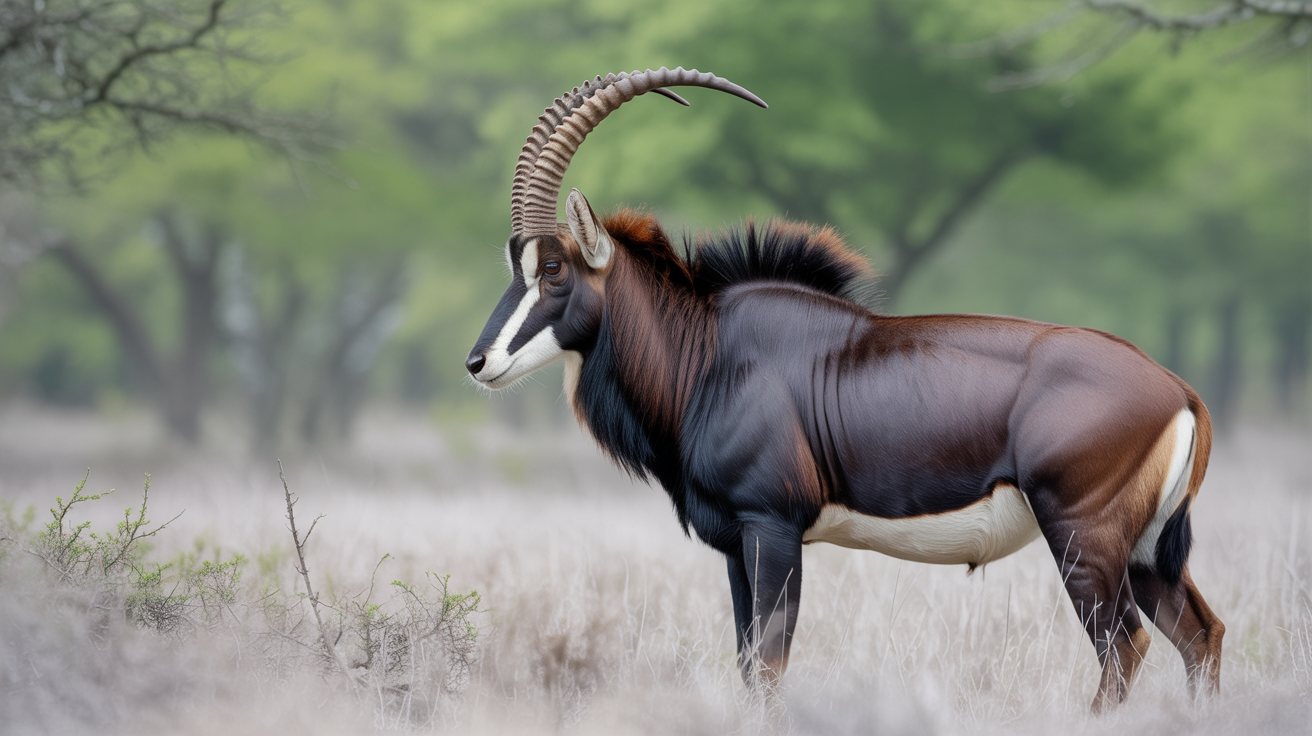
The Giant Sable Antelope is a critically endangered and majestic subspecies of the sable antelope, found only in central Angola. Notable for its striking, backward-curving horns, which can reach lengths of up to 1.65 meters (5.4 feet), both males and females display impressive horn development, though males are generally larger and darker in color. Males are deep black with a white facial mask and underparts, while females and juveniles are chestnut to dark brown. These antelopes inhabit dense woodlands and savanna-forest mosaics, where they graze on grasses and browse leaves. Due to habitat loss and poaching, their numbers have plummeted, making them one of Africa's rarest large mammals.
Fascinating facts
Spectacular Horns
The horns of the Giant Sable Antelope can reach up to 1.65 meters (5.4 feet) in length, making them one of the longest among all antelope species.
National Emblem
The Giant Sable Antelope is an iconic national symbol of Angola, featured on the country's currency, stamps, and coat of arms.
Woodland Specialist
Unlike most antelopes that prefer open savannas, the Giant Sable Antelope thrives in dense woodlands and forested areas.
Detailed description
The giant sable antelope (Hippotragus niger variani) is a large, powerfully built bovid, distinguished by its robust, muscular frame and striking sexual dimorphism. Adult males typically stand 117–140 cm at the shoulder and weigh between 220–270 kg, while females are slightly smaller, averaging 200–230 kg. Both sexes possess spectacular, ringed horns, with males' horns reaching up to 165 cm (5.4 ft) and females' up to 120 cm (3.9 ft). The pelage of mature males is a glossy jet-black, contrasting sharply with white facial markings, underparts, and rump, while females and juveniles exhibit a rich chestnut to dark brown coat. The giant sable antelope's body is adapted for moving through dense woodland, with a relatively short neck, elongated legs, and a compact torso. Their large, mobile ears enhance auditory acuity, aiding in predator detection. Socially, they form matriarchal herds of 10–30 individuals, led by a dominant female, while mature males are often solitary or form small bachelor groups. The species is diurnal, with peak activity during early morning and late afternoon, and spends midday resting in shaded thickets. Their diet consists primarily of high-quality grasses, herbs, and foliage, with a preference for fresh regrowth following seasonal fires. The giant sable antelope is highly territorial, with males marking boundaries using preorbital gland secretions and dung middens. Their alert posture, with head held high and horns swept back, is a characteristic anti-predator display.
Did you know?
Despite their grandeur and symbolic status, fewer than 100 mature individuals are believed to survive in the wild today.
Research & sources
Wikipedia summary
The giant sable antelope, also known in Portuguese as the palanca negra gigante, is a large, rare subspecies of the sable antelope native and endemic to the central highlands of Angola, occurring specifically in two areas: Cangandala National Park and Luando Natural Strict Reserve.
Behaviour & social structure
Giant sable antelopes are primarily grazers, feeding selectively on a variety of grasses, particularly during the wet season when new growth is abundant. During the dry season, they supplement their diet with leaves, herbs, and shoots from shrubs and trees. They are known for their cautious and elusive nature, often retreating into dense woodland when disturbed. Social groups are structured around adult females and their offspring, with a strict hierarchy maintained through displays and occasional sparring. Males establish and defend territories, using horn displays, vocalizations, and scent-marking. Daily routines involve grazing during the cooler hours, followed by extended periods of ruminating and resting in concealed locations. Vigilance is high, with group members taking turns scanning for predators such as leopards and hyenas. Communication includes snorts, grunts, and visual signals, particularly during social interactions and alarm situations.
Reproduction & life cycle
Breeding in giant sable antelopes is seasonal, typically peaking at the end of the rainy season (April–May), coinciding with optimal forage availability. Males engage in ritualized displays and horn clashes to establish dominance and access to receptive females. After successful mating, females undergo a gestation period of approximately 8–9 months (about 270 days), usually giving birth to a single calf between December and February. Calves are concealed in dense vegetation for the first few weeks of life, with mothers visiting periodically for nursing. Weaning occurs at 6–8 months, but juveniles may remain with the maternal herd for up to two years. Parental care is primarily provided by the mother, who is highly protective and will aggressively defend her calf if threatened. Sexual maturity is reached at 2.5–3 years for females and around 4–5 years for males.
Adaptations & survival
The giant sable antelope exhibits several adaptations for survival in its woodland-savanna habitat. Its dark, glossy coat provides camouflage in shaded forest environments, while the contrasting white markings may serve as visual signals within the herd. The long, backward-curving horns are used for defense against predators and in intraspecific combat for dominance. Their large, flexible ears enhance hearing, crucial for early predator detection. The species is highly mobile, capable of swift, agile movement through dense undergrowth. Behavioral adaptations include group vigilance, cryptic resting behavior, and the use of dung middens for territory marking and social communication. Their selective feeding strategy allows them to exploit seasonal changes in plant availability, and their ability to browse during dry periods aids survival when grasses are scarce.
Cultural significance
The giant sable antelope is a national symbol of Angola, featured prominently on currency, postage stamps, and the national airline's logo. Known locally as the 'palanca negra gigante,' it holds significant cultural and spiritual value, representing strength, resilience, and beauty. Traditional beliefs regard the animal as a totem of good fortune and a guardian of the land. The species' rarity and majesty have made it an emblem of national pride and a flagship for conservation efforts in Angola. There is no evidence of traditional use for food or medicine, likely due to its protected status and symbolic importance.
Recent research
Recent advances in non-invasive genetic sampling (e.g., fecal DNA analysis) have provided critical insights into population structure, genetic diversity, and relatedness among remnant herds. Camera trap studies have improved understanding of habitat use, group dynamics, and calf survival rates. Ongoing research focuses on the impacts of habitat fragmentation, disease prevalence, and the effectiveness of anti-poaching patrols. Conservation translocation and captive breeding programs are under consideration to bolster wild populations. Collaborative efforts between Angolan authorities, international NGOs, and local communities are central to ongoing research and recovery initiatives.
Sources
Videos
Habitat
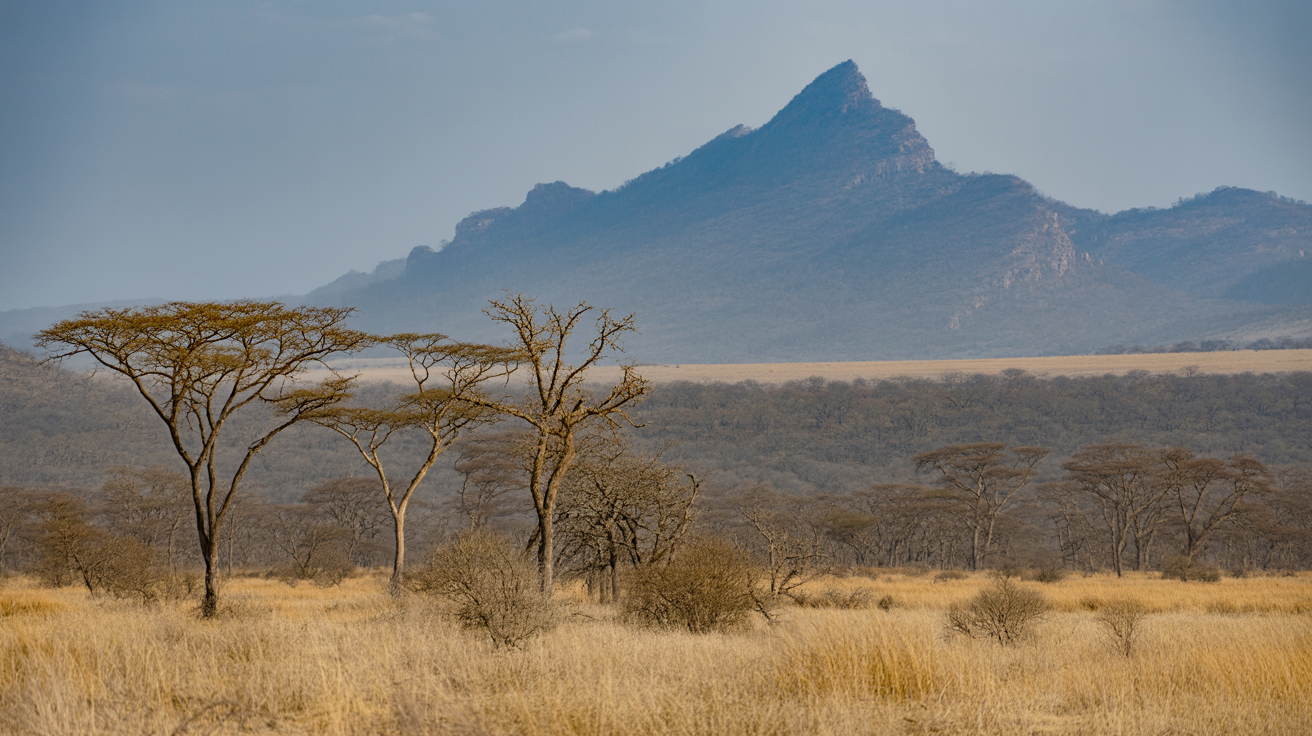
Woodland and savanna-forest mosaics
 Africa
Savanna
Grasslands with scattered trees, characterized by seasonal rainfall and home to diverse grazing animals and predators.
 Various Continental Regions
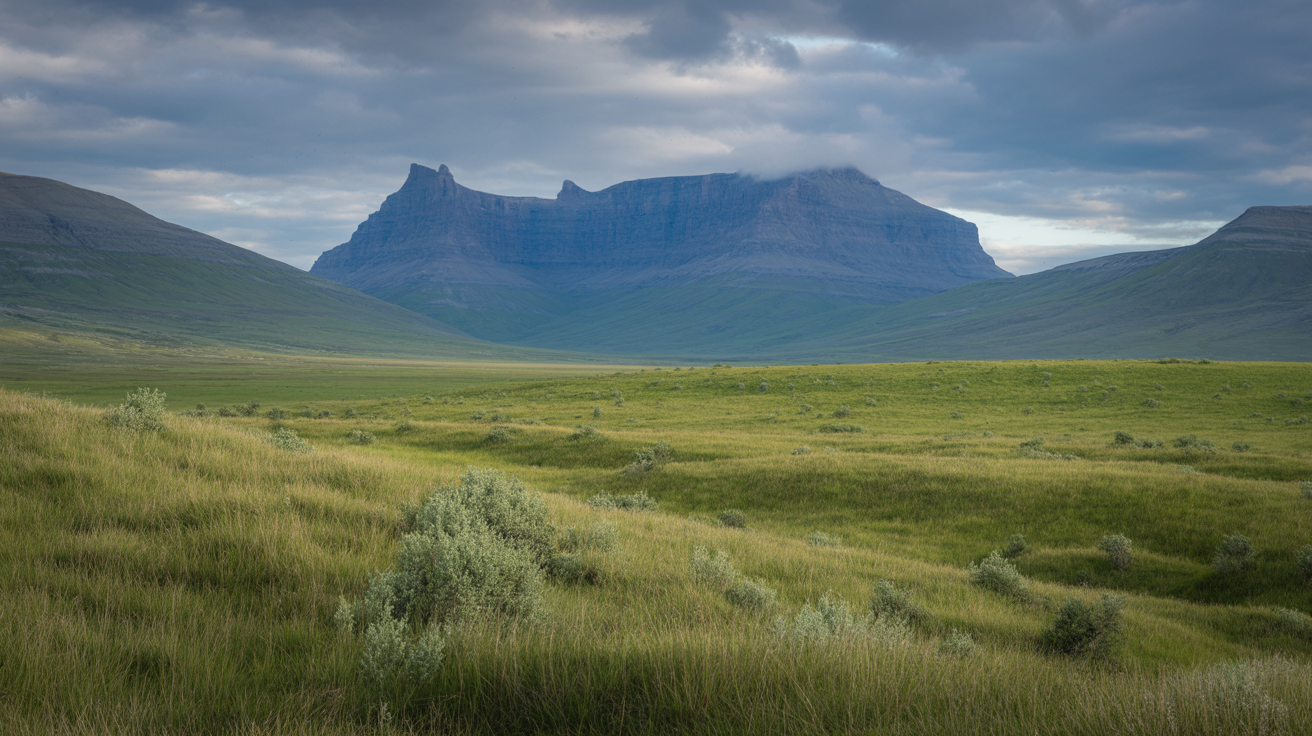
Grassland
Open areas dominated by grasses rather than trees, supporting numerous herbivores and their predators.
 Global
Forest
Wooded areas with significant tree cover and diverse plant and animal communities.
Conservation
The Giant Sable Antelope is currently classified as Critically Endangered on the IUCN Red List.
Threats & challenges
The giant sable antelope faces critical threats from habitat loss due to agricultural expansion, logging, and human settlement. Poaching for bushmeat and trophy horns has historically decimated populations, especially during periods of civil unrest in Angola. Limited distribution—restricted to Cangandala National Park and Luando Reserve—makes the subspecies highly vulnerable to stochastic events and genetic bottlenecks. Ongoing challenges include insufficient law enforcement, habitat fragmentation, and competition with livestock. Recent surveys estimate fewer than 100 mature individuals remain, with populations showing slow recovery due to low reproductive rates and high calf mortality. Conservation efforts are hampered by limited funding, logistical difficulties, and the need for community engagement.
Taxonomy
Scientific name
Hippotragus niger variani
- Kingdom
- Animalia
- Phylum
- Chordata
- Class
- Mammalia
- Order
- Artiodactyla
- Family
- Bovidae
- Genus
- Hippotragus
- Species
- niger variani
Community notes
Share your observations about the Giant Sable Antelope.
No community notes yet. Be the first!
Discover more wildlife
More fascinating animals from the encyclopedia.